27 min read
On this page
- + Indiana’s two-part vehicle tax system
- + The real cost: two bills, every year
- + Why Indiana vehicle tax hurts more
- • The double trap: sales tax AND annual excise
- • Highest rate among all neighboring states
- • EV penalty: $242 every year
- + Who Indiana vehicle tax hits hardest
- + The Montana solution
- + Is this legal?
- + Four Indiana owners who made the switch
- + Who this is built for
- + How Zero Tax Tags gets you registered
- + Frequently asked questions
Indiana vehicle tax is two bills, not one. That’s the part most buyers don’t understand until the second envelope arrives.
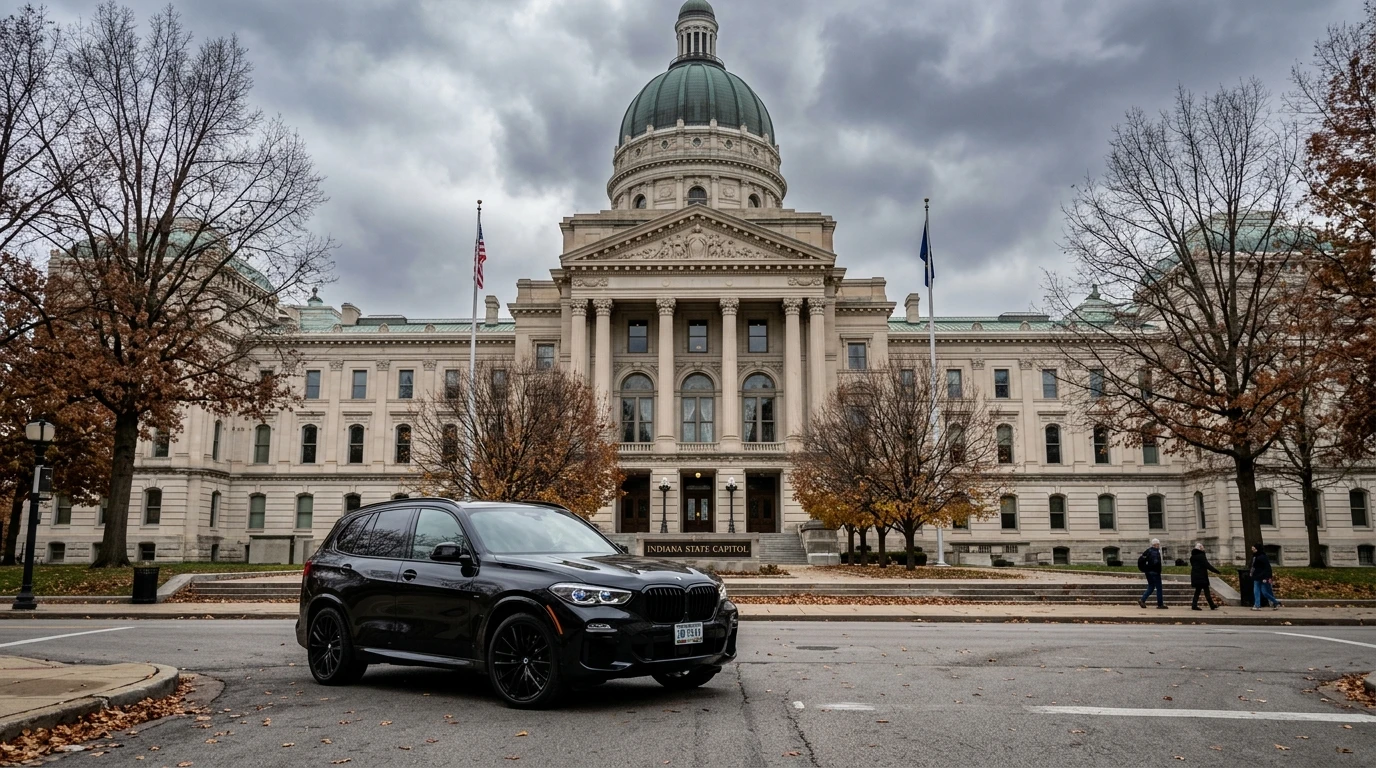
Jennifer is a Vice President of Operations at a logistics company in Carmel. Mid-forties, sharp, runs a department of forty people. Last spring she found exactly what she wanted on a private-party listing in Zionsville: a 2024 BMW X5 xDrive50e, low mileage, $88,000 cash deal. She wrote the check, took delivery, and drove it to the BMV branch on a Tuesday morning to title it in her name.

The clerk pulled up her paperwork and printed the bill. Indiana sales tax at 7%, no trade-in credit because it was a private sale. Total due: $6,160. Jennifer paid it. She had budgeted for it. She figured that was the last conversation she’d have with the state about taxes on this car.
It wasn’t.
Eleven months later, a renewal notice arrived in her mailbox. Annual Excise Tax on her Class 17 vehicle, year one of the depreciation schedule: $461. Hamilton County surtax stacked on top. Base registration fee. Transportation Infrastructure Improvement Fee. The total wasn’t catastrophic, but the principle stung. She had already paid Indiana more than six thousand dollars on this car. Why was Indiana sending her another bill?
Then it hit her. This wasn’t a one-time renewal. This was every year, forever, on a car she had already paid full sales tax on.
Your neighbor in Kentucky paid 6% once and was done. The driver in Ohio paid 5.75% once and never thought about it again. You’re in Indiana. You paid 7% up front, the highest rate of any neighboring state, and now you get a bill every single year for the privilege of keeping the car you already bought.
What if you didn’t have to pay either one?
Indiana Vehicle Tax: The 7% Sales Tax AND the Annual Excise Trap
Indiana runs two completely separate vehicle tax systems, and you pay into both. The first hits you at purchase. The second hits you every year for as long as you own the car. Most states pick one approach. Indiana takes both.

The first system is the sales tax. Per the Indiana Bureau of Motor Vehicles, the rate is a flat 7% applied to the full purchase price of any vehicle, with one narrow exception. If you’re buying from a licensed Indiana dealer and trading in your old vehicle, the trade-in value is subtracted from the taxable amount. So a $90,000 SUV with a $20,000 trade-in is taxed on $70,000 instead of the full sticker. That’s a one-time relief, and only if you’re at a dealership.
If you buy private, the way most enthusiasts and savvy shoppers do to avoid dealer markup, you owe 7% on the entire price. No trade-in credit applies. A $90,000 private purchase generates a $6,300 sales tax bill that hits your wallet the day you go to title the car.
The second system is the Annual Excise Tax. This one is structured like a property tax on your vehicle, but it’s based on the original Manufacturer’s Suggested Retail Price rather than current market value. Indiana sorts every passenger vehicle into one of seventeen MSRP classes. Class 1 covers the cheapest cars (under $1,500 MSRP, almost no one) at a flat $12 per year. Class 17 covers anything originally priced $42,500 or higher and starts at $532 in year one, declining over a published schedule as the vehicle ages.
The excise tax never disappears completely. It declines for a decade, then settles at a small floor that you keep paying as long as the vehicle is registered. So a new $65,000 Ford F-250 owner pays roughly $1,908 in cumulative excise over the first five years alone, on top of the $4,550 sales tax already collected at purchase. A new $95,000 Range Rover owner is on the same Class 17 schedule. Same $532 starting point. Same five-year cumulative bill of about $1,908 in excise, on top of $6,650 in sales tax.
Indiana vehicle tax equals two separate hits: 7% sales tax at purchase plus an annual Excise Tax based on your vehicle’s original sticker price, paid every renewal until the car is old enough to age into the minimum bracket.
The Real Cost of Indiana Vehicle Tax: Two Bills, Every Year

Most states make a choice. They either tax you heavily at purchase and leave you alone afterward, or they keep registration cheap up front and bill you every year on assessed value. Indiana refuses to choose. It charges full sales tax on the day you buy, then sends you an excise bill every renewal cycle for the rest of the vehicle’s useful life.
Here’s what that combination costs Indiana drivers across five years of ownership. The Montana LLC column reflects Zero Tax Tags pricing for vehicles under $150,000 MSRP, with the luxury tier substituted where applicable.
Same story up and down the price range. Once a vehicle crosses about $40,000, the gap between Indiana’s stacked structure and a Montana LLC widens fast. By the time you’re buying a luxury SUV, an EV, or a motorhome, you’re talking five-figure territory.
Most states pick a lane. They either charge sales tax at purchase or they tax the car annually. Indiana charges both. Full sales tax up front, then excise tax every single year after that.
Why Indiana Vehicle Tax Hurts More Than You Think
The Double Trap: Sales Tax AND Annual Excise
Indiana belongs to a small club of states that imposes both a substantial sales tax and a recurring MSRP-based excise tax on the same vehicle. Most states picked one model decades ago and stuck with it. Texas, Tennessee, Florida lean heavily on sales tax. New Hampshire and Connecticut lean on annual property-style assessments. Indiana decided both could coexist, and the bill payers are the ones who notice.
Take Jennifer’s BMW X5 again. She paid $6,160 in sales tax at purchase. Her year-two excise will be $461. Year three drops to $398. Year four, $340. Year five, $284. Year six, $234. Year seven, $190. Year eight, $149. Year nine, $95. Year ten, $50. Year eleven and beyond, that $50 floor keeps repeating. Add it up across the first ten years and Jennifer pays Indiana approximately $2,651 in excise tax alone, on top of the $6,160 sales tax she already paid. That’s $8,811 of state vehicle tax on one car, before you factor in county surtaxes, the base registration fee, the Transportation Infrastructure Improvement Fee, and any optional plate add-ons.
None of that money buys her anything she didn’t already own. The car was hers the day she signed the title. She’s just paying rent to the state on her own vehicle.
The Kentucky driver across the river paid 6% once. The Ohio driver paid 5.75% once. You’re in Indiana, and you paid 7% plus you’ll be paying again next year.
Indiana Has the Highest Sales Tax Rate Among All Its Neighbors
Geography matters here. Indiana is bordered by four states, and Indiana charges more vehicle sales tax than any of them. Ohio sits at 5.75%. Michigan at 6%. Kentucky at 6%. Illinois at 6.25% on the state line, with municipal stacking inside Cook County. Indiana sits alone at a flat 7%.
On a $95,000 Range Rover Sport, the math is unforgiving. Indiana collects $6,650 in sales tax. Ohio would have collected $5,463 on the same vehicle. The Indiana premium is $1,187 in additional tax, charged because the buyer happens to garage the vehicle in Indianapolis instead of twenty miles east in Cincinnati. The cars are identical. The buyer is identical. The state line is the only difference.
For a $200,000 Class A motorhome, the gap widens. Indiana takes $14,000. Ohio would have taken $11,500. That’s $2,500 of pure geographic surcharge for the privilege of registering the rig in your home state.
Indiana’s 7% rate is not an accident. It’s been the state’s primary vehicle revenue tool since long before most neighboring states adopted theirs. It’s also the highest flat rate in the region.
Indiana Penalizes EV Owners $242 Every Year
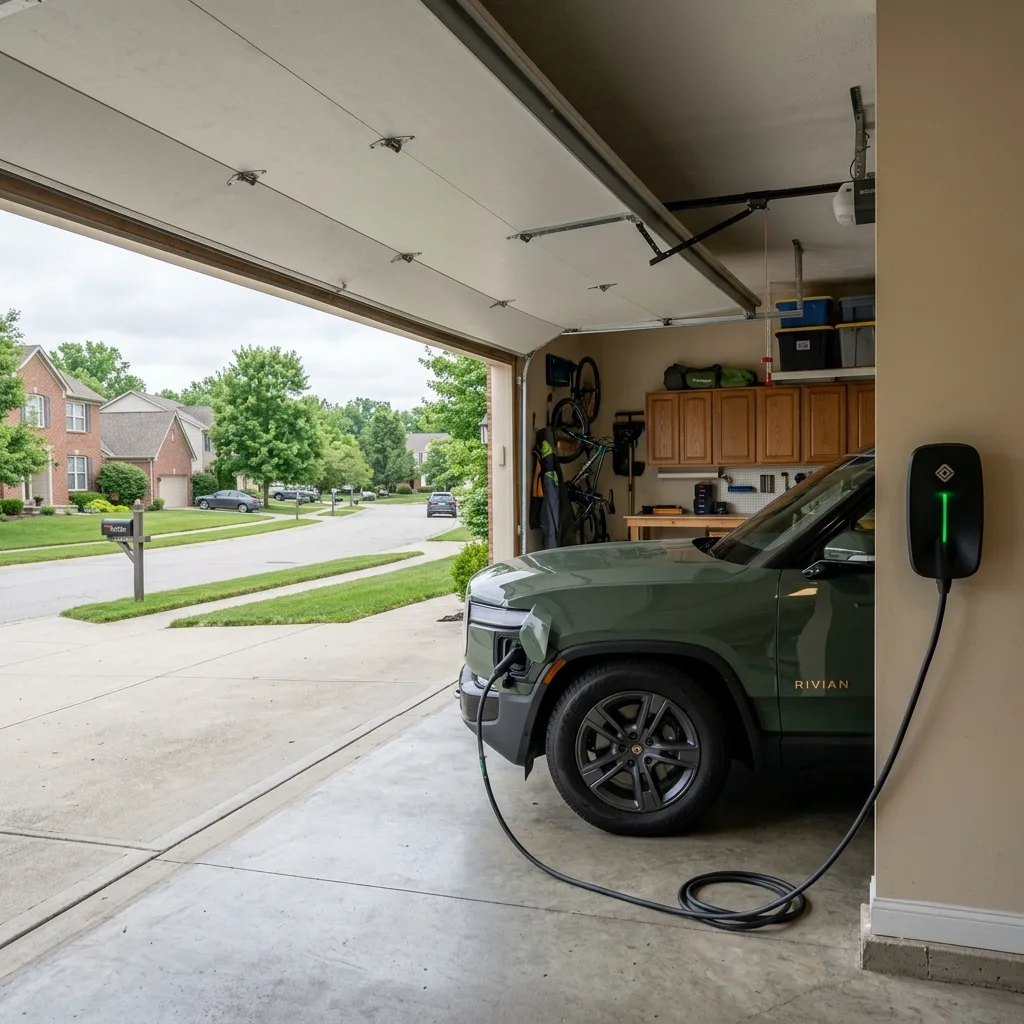
Here’s a contradiction you can’t unsee once you notice it. Indiana is one of the largest electric vehicle manufacturing states in the country. Stellantis runs a major assembly plant in Kokomo. Battery plant investments and EV component manufacturing have been pouring into the state for years. The official policy stance is that Indiana wants to be a hub of the electric vehicle economy.
And yet, when an Indiana resident actually buys one of those vehicles, the state charges $242 every single year as a supplemental registration fee. The official rationale is that EV drivers don’t buy gasoline, so they don’t pay gas tax, so the state needs to recover the lost revenue somehow. The math doesn’t really support that argument at $242 a year, which is roughly double what a comparable gas vehicle owner pays in fuel tax over the same mileage. But the rationale isn’t really the point. The point is that Indiana wants the manufacturing jobs and also wants to charge the customers extra for buying the product.
Plug-in hybrids face the same treatment at a lower rate of $81 per year. That fee is also flat, also annual, also permanent. It doesn’t decline with vehicle age. It doesn’t phase out. You pay it as long as you register the vehicle in Indiana.
Over ten years of ownership, an EV driver pays $2,420 in supplemental fees alone, on top of the original 7% sales tax on the vehicle, on top of the standard Class 17 excise tax that any other Class 17 vehicle would owe. Three separate revenue streams from one car.
Montana charges $130 a year for a battery EV under 6,000 pounds and $70 a year for a plug-in hybrid. Lower than Indiana, but the larger savings come from the elimination of sales tax and excise tax entirely.
Indiana builds electric vehicles. Then charges the people who buy them $242 every year for the privilege of skipping the gas station.
Who Indiana Vehicle Tax Hits Hardest
The Indiana tax system is broad enough that almost every driver pays something, but the pain is concentrated in five recognizable groups, each with its own version of the same story.
The first group is the Carmel, Zionsville, and Fishers professionals. The northern Indianapolis suburbs have been among the fastest-growing wealthy zip codes in the Midwest for fifteen years. Salesforce, Eli Lilly, Cummins, and a thick layer of regional executive talent have driven median household incomes well above the national average. The vehicles in those driveways reflect the income. BMW X5s, Audi Q7s, Range Rovers, Porsche Cayennes, GMC Yukons, all priced between $80,000 and $200,000. Sales tax bills running $5,600 to $14,000. Annual excise stacking $400 to $532 a year on top, with Hamilton County surtax layered above.
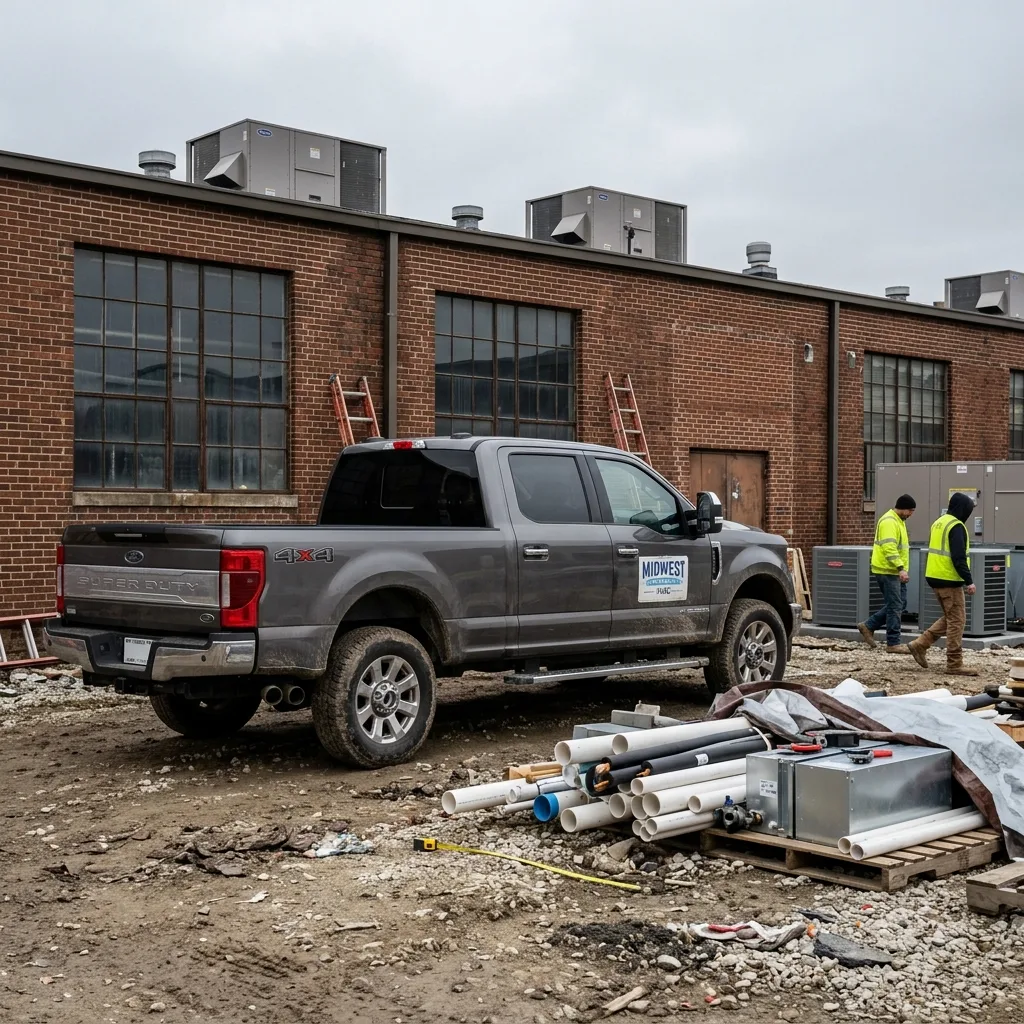
The second group is the Fort Wayne and South Bend contractors. Different demographic, same trap. Heavy-duty work trucks, the Ford F-250 and F-350, the Ram 2500, the GMC Sierra HD, are essentially mandatory for HVAC, plumbing, electrical, landscaping, and construction businesses across the region. These trucks routinely cross $65,000 and reach $90,000 fully equipped. That’s a $4,550 to $6,300 sales tax check on day one, plus Class 17 excise running $532 declining annually, plus county wheel tax on commercial vehicles in counties that impose it.
The third group is the Lake County Chicago commuters. A meaningful share of the population in Gary, Hammond, Schererville, and Crown Point work in the Loop, take the South Shore Line into the city, and chose Indiana residence specifically to escape Cook County and Illinois state taxes. The vehicle math doesn’t work the way they expected. Illinois charges 6.25% on vehicles. Indiana charges 7%, plus the annual excise that Illinois doesn’t have. The commute saved them on income tax. The vehicle moved the wrong direction.
The fourth group is the EV early adopters. Indianapolis tech workers, Bloomington university faculty, Carmel professionals who bought Tesla Model Ys, Rivian R1Ts, Ford F-150 Lightnings, or Hyundai Ioniq 5s. They paid 7% at purchase, then discovered the $242 annual surcharge applies on top of standard registration. The car they bought to reduce ongoing fuel costs ended up locked into a permanent $242 line item.
The fifth group is the RV owners, and this one carries an extra layer of irony. Elkhart County, Indiana is the RV manufacturing capital of the world. Roughly 80% of all recreational vehicles built in North America come out of factories within an hour’s drive of Goshen and Elkhart. Indiana residents who buy a Thor, Forest River, Jayco, or Newmar coach factory-direct are buying a product made in their state, sold in their state, and taxed at 7% by their state. A $200,000 Class A motorhome generates a $14,000 sales tax bill, plus annual excise on the high end of the seventeen-class table.
The Montana Solution: Eliminate Both the Sales Tax and the Annual Excise
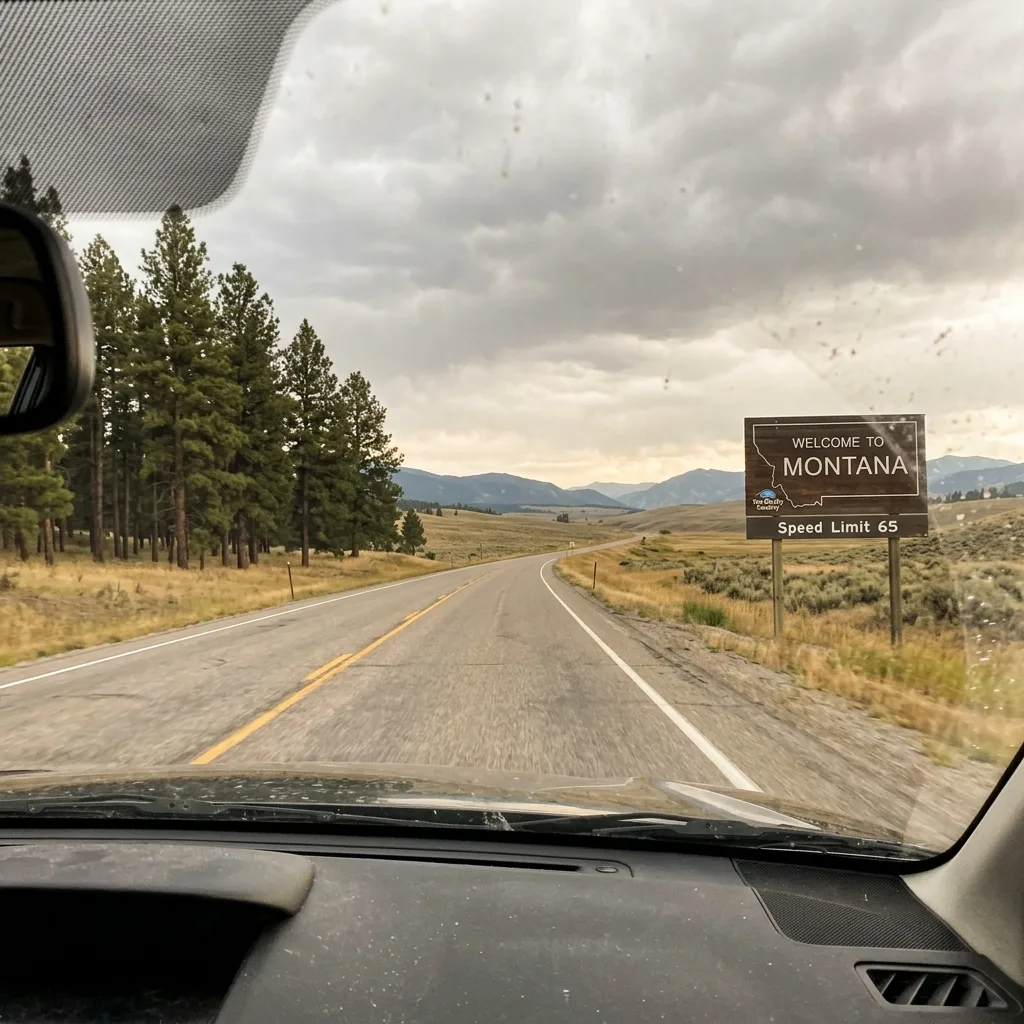
Montana doesn’t tax vehicle sales. It never has. There’s no statewide vehicle sales tax, no use tax on the purchase price, no surcharge tied to MSRP. When a vehicle is titled in Montana, the state collects a registration fee based on the vehicle’s age and weight class, and that’s the entire transaction.
Montana also doesn’t run an annual excise tax on what your vehicle originally cost. Registration is flat and age-graduated. A new vehicle pays one rate. An older vehicle pays a lower rate. Once a vehicle hits eleven years of age, Montana issues a permanent registration that never renews. You pay once and the plate stays valid for the life of the vehicle.
For an Indiana driver, this matters because a Montana LLC can hold title to your vehicle, register it in Montana, and remove both Indiana hits at once. Not just the sales tax at purchase, which is the savings most people focus on, but the ongoing annual excise tax that quietly compounds for the next decade or longer.
Montana doesn’t charge sales tax on vehicles. It never has. And it doesn’t charge an annual excise tax on what your car cost new. Those are Indiana’s choices, not universal laws.
Here’s how the year-by-year math works on Jennifer’s $95,000 Range Rover Sport scenario, comparing the Indiana path to the Montana LLC path through Zero Tax Tags.
The Indiana column doesn’t even include county surtax, which adds $7.50 to $25 on top of every annual excise bill in roughly half of all Indiana counties. The Montana LLC structure removes that line item entirely.
What most clients miss in the savings calculation is the multi-vehicle math. The $200 LLC formation fee is paid once. After that, every additional vehicle the household owns can be added to the same LLC without forming a new entity. A Carmel family with a Range Rover, a BMW X5, and a Ford F-150 in the driveway pays the LLC once and runs all three vehicles through it. The Indiana side of that same household is paying three separate sales tax bills and three separate annual excise bills, every year.
Is Montana LLC Vehicle Registration Actually Legal?

Yes. Unambiguously yes. Montana has explicitly permitted non-resident LLC vehicle registration for more than four decades. The structure is built into Montana statute, supported by the state’s Secretary of State office, and processed routinely by Montana county treasurers as a normal title and registration transaction.
The mechanics are straightforward and legitimate. A Montana LLC is a real Montana business entity. It’s registered with the Montana Secretary of State. It maintains a registered agent at a physical Montana address. It files an annual report and pays a small annual fee to remain in good standing. The LLC is the legal owner of the vehicle. The title is issued in the LLC’s name. The registration and plates are issued to the LLC.
This is the same legal structure used by ranches, partnerships, family offices, fleet operators, and small businesses across every state in the country. An LLC owning a vehicle is one of the most common asset-holding arrangements in American commercial law.
The federal Commerce Clause protects the right of business entities to form in one state and own property used across state lines. Courts have consistently affirmed that legitimate entity structuring for tax minimization is a recognized and protected activity. Thomas v. Bridges establishes that taxpayers are entitled to arrange their affairs to minimize their tax burden through lawful means.
This is a well-established legal structure. Montana law has welcomed non-resident LLC registrations for over forty years. Thousands of Indiana vehicle owners use it every year.
That’s why smart Indiana vehicle owners, from Carmel executives to Elkhart RV buyers, have been registering through Montana LLCs for years. The entities are real. The savings are the natural result of choosing the more favorable state of formation.
Four Indiana Vehicle Owners Who Made the Switch
Jennifer, Carmel — The BMW and the Double Bill
Jennifer, the VP of Operations from the opening of this article, is a real client profile. Forty-six years old, runs operations for a logistics company headquartered in Carmel, drives roughly 14,000 miles a year. The 2024 BMW X5 xDrive50e was a planned upgrade after her previous lease ended. She found the right car on a private listing in Zionsville for $88,000, saved roughly $4,000 versus dealer pricing, and went to title it in her name expecting one tax bill.
The Indiana sales tax came in at $6,160. No trade-in credit applied because the seller was a private party. She paid it. Eleven months later the renewal notice arrived, and the Class 17 annual excise hit at $461 for year one of the depreciation schedule, with Hamilton County surtax stacked on top.
A colleague at the office had registered her own vehicle through a Montana LLC and forwarded Jennifer the Zero Tax Tags information. The math was direct. Indiana five-year cost on the X5: $7,910. Zero Tax Tags five-year cost: $2,371. Net savings approximately $5,539.
Jennifer put it directly: “I understood the sales tax. I budgeted for it. What I didn’t understand was why Indiana also wanted to bill me every year on a car I had already paid them for. The Montana structure made all of that go away.”
Marcus, Fort Wayne — The F-350 Problem
Marcus is fifty-two, owns a small commercial HVAC company in Fort Wayne with eleven employees and a fleet of work trucks. His personal driver, the one he uses for site visits and client meetings, is a 2024 Ford F-350 Super Duty Lariat at $78,000.
The Indiana sales tax on that purchase was $5,460. The Class 17 annual excise in year one ran $532. Allen County, where Fort Wayne sits, charges its own wheel tax on top. The five-year cost projection in Indiana came to approximately $7,160 in state vehicle taxes alone, before Marcus accounted for the personal property tax exposure on commercial-use vehicles or any of the other small line items that quietly add up.
Through Zero Tax Tags, Marcus formed a Montana LLC, transferred title to the LLC, and registered the F-350 with Montana plates. Year one cost: $899. Renewals at $368 per year. Five-year total: $2,371. Net savings: approximately $4,789.
Marcus’s take: “I run a small business. $4,789 over five years isn’t life-changing money, but it’s two months of fuel for the fleet. It’s a new piece of diagnostic equipment. It’s the difference between hiring a part-timer and not. There’s no reason for Indiana to take it just because I bought my truck instead of leasing it.”
The Garcias, Fishers — The Rivian and the $242 Surprise

Sofia and David Garcia live in Fishers, in Hamilton County. Both are mechanical engineers, both work in the Indianapolis tech corridor, and they bought a 2024 Rivian R1S for $80,000 last summer. They had been planning the EV transition for two years and chose the R1S specifically because it could replace both their daily driver and their weekend SUV in one vehicle.
The Indiana sales tax on the purchase was $5,600. The annual EV supplemental fee, which they hadn’t fully understood at the dealership, came in at $242. The standard Class 17 excise tax stacked on top at $532 in year one. Hamilton County added its surtax. Total year-one tax and fee exposure was over $6,374, on a vehicle they had already negotiated hard on price.
The frustration wasn’t the dollars exactly. It was the layering. They had read about the 7% sales tax. They had not internalized the $242 annual EV fee, the Class 17 excise, or the county surtax. When the renewal notice arrived, they realized they had stepped into a tax structure with four separate components, all charging at once.
Through Zero Tax Tags, they registered the Rivian under a Montana LLC at $899 in year one. Montana’s EV fee for a battery vehicle is $130 per year, lower than Indiana’s $242. Five-year cost: $899 plus four renewals of $368 plus five years of $130 EV fees, for a total of about $3,021. Versus Indiana’s projected five-year cost of approximately $7,000+. Net savings: well over $4,000.
Sofia’s take got at the contradiction directly. “Indiana brags about being an EV manufacturing state. Then they charge people who buy EVs more than people who buy gas trucks. We picked Montana because the math just stopped making sense in Indiana.”
The Hendersons, Elkhart — The RV Capital Irony

Tom Henderson is sixty-eight, retired from a career in industrial sales, and lives outside Elkhart with his wife. They had been planning their retirement RV purchase for five years and eventually settled on a 2024 Thor Palazzo Class A motorhome at $195,000, picked up directly from the factory outlet less than thirty miles from their house.
The Indiana sales tax on that purchase was $13,650. The annual excise on a motorhome at that MSRP runs in the upper tier of the seventeen-class motorhome table, scaling down over a decade but starting at substantial year-one numbers. Across the first five years, the Hendersons’ projected Indiana state vehicle cost on the Palazzo was somewhere north of $20,000, all in.
The irony was not lost on Tom. Elkhart County builds something like four out of every five recreational vehicles produced in North America. The factories employ his neighbors. The supply chain is local. The product was made within driving distance of his garage. And then Indiana charged him $13,650 in sales tax to drive the rig home.
Through Zero Tax Tags, the Hendersons registered the Palazzo under a Montana LLC. RVs over $150,000 fall into the luxury surcharge tier at $1,699 in year one. Renewals are minimal. Ten-year savings over the Indiana baseline projected to well over $15,000.
Tom, close to verbatim: “Elkhart County builds the RVs that the rest of the country drives. And Indiana taxes the people who buy them harder than almost any other state in the region. Montana made more sense the moment we ran the numbers.”
Who Benefits Most from Montana LLC Registration
The savings calculation is straightforward. The bigger the vehicle purchase, and the longer you intend to keep it, the more the Montana LLC structure earns back. These are the profiles where the math works most reliably:
- Carmel, Zionsville, and Fishers professionals with vehicles in the $70,000 to $200,000 range. Sales tax savings alone fund the LLC structure many times over.
- Fort Wayne and South Bend contractors running $65,000 to $100,000 work trucks, particularly Class 17 heavy-duty pickups that face the maximum excise tier.
- Elkhart County RV buyers purchasing factory-direct from Indiana manufacturers. Registering the rig through a Montana LLC eliminates the largest single tax hit any RV buyer in the country faces.
- EV owners facing the layered combination of 7% sales tax at purchase plus $242 annual surcharge plus standard excise tax. The Montana structure removes all three simultaneously.
- Indianapolis collectors and motorsports enthusiasts with multiple vehicles. The single LLC formation fee covers the whole collection.
- Lake County Chicago commuters who moved to Indiana for the income tax benefit and discovered the vehicle tax math runs the wrong direction.
- Multi-vehicle households across any Indiana county. The LLC pays for itself on vehicle one and runs free on vehicles two, three, and four.
- Anyone purchasing a vehicle above $40,000. The break-even line sits roughly there. Above that price point, the Montana structure produces measurable savings in year one alone.
How Zero Tax Tags Gets You Registered
Zero Tax Tags handles the complete Montana LLC vehicle registration process from start to finish. You never travel to Montana. You never visit a county treasurer’s office. You don’t deal with the registered agent. You don’t track filing deadlines. We handle every step, and the plates show up at your door.
Pricing is straightforward and consistent across all clients.
The $200 LLC formation fee is paid once. Every subsequent vehicle you add to the LLC pays only the registration portion. The structure scales well for multi-vehicle households.
| Day 1: | Submit your paperwork through our secure portal. We review for completeness and file your Montana LLC the same day. |
| Days 1–2: | Montana LLC formation complete — same business day in most cases, second business day at the latest. |
| Days 2–4: | Title transferred into the LLC name at the Montana county treasurer. |
| Days 4–7: | Permanent Montana plates shipped directly to your door within 3–5 business days of title completion. |
The whole process takes about a week. By the end of that week, your vehicle is titled and plated in Montana, the LLC is in good standing, and Indiana’s annual excise bill on that vehicle stops arriving.
Who This Is Built For
Zero Tax Tags is built for Indiana vehicle owners who recognize the math has gotten out of hand. The Indianapolis tech executive driving a Porsche Cayenne Turbo. The Carmel surgeon with a Range Rover in the garage. The Elkhart retiree picking up a factory-direct Class A motorhome. The Fort Wayne contractor running an F-350 as a daily and a Sierra HD as a backup. The Fishers engineering couple who bought the Rivian and got blindsided by the $242 surcharge.
What these clients have in common is that the dollars at stake are real. A few hundred dollars saved on a $25,000 sedan is meaningful but tight. Several thousand dollars saved on an $80,000 SUV is the kind of money that changes household decisions. Tens of thousands saved on a luxury motorhome over the ownership lifetime is in a different category entirely.
The math has a soft floor. Vehicles under $20,000 are usually a tougher fit because the absolute savings narrow toward the cost of the structure itself. If your vehicle sits in that range, call us and we’ll run a free calculation. We’ll tell you honestly whether it’s worth doing or whether you should keep your Indiana plates and invest the energy elsewhere.
If your vehicle is worth $25,000 or more, the math almost always works in your favor. Call us before you hand Indiana that check.
Frequently Asked Questions
Will Indiana flag my Montana plates?
Montana plates are issued by the state of Montana to a Montana LLC, which is a legitimate business entity registered with the Montana Secretary of State. The vehicle is owned by that entity. Plates from any state are routinely visible on the road, and Montana plates in particular are common across the country because of the longstanding use of Montana LLCs by businesses, fleet operators, and individual owners.
Do I need to visit Montana?
No. Zero Tax Tags handles every step of the process from our offices, working with our Montana registered agent and the appropriate Montana county treasurer. You complete a secure intake online, send us the necessary documentation, and we manage the LLC formation, title transfer, and registration. The plates arrive at your address by mail.
What happens when I sell?
The vehicle is owned by the LLC, and the LLC sells the vehicle the same way any other entity-owned vehicle gets sold. We assist with the title transfer at the time of sale, including releasing the LLC’s interest and processing any required Montana paperwork. If you’re buying a replacement vehicle and want it titled under the same LLC, we can roll it forward without forming a new entity.
Can I insure a Montana-plated vehicle in Indiana?
Yes. Major insurance carriers write coverage on Montana-plated, LLC-titled vehicles every day. The vehicle is insured under the LLC as the owner, and the policy reflects the actual operating address and driver. Our team can refer you to insurance brokers familiar with the structure if your current carrier isn’t comfortable with it.
Does this work for leased vehicles?
Generally no, because the leasing company is the title holder and won’t transfer title to a third party LLC. The Montana LLC structure is most effective for vehicles you purchase outright or finance through a loan that allows the LLC to hold title. If you’re considering leasing versus buying, the Montana LLC math is one more reason the buying side often wins.
How much does Zero Tax Tags charge?
Vehicles under $150,000 MSRP cost $899 in year one, which includes the $699 service fee plus the $200 LLC formation fee. Annual renewals run $368 for vehicles 0 to 4 years old or $237 for vehicles 5 to 10 years old. Vehicles eleven years and older, plus all motorcycles, ATVs, UTVs, trailers, and boats, are permanent at the one-time $899 fee with no renewals ever. Luxury vehicles over $150,000 add an $825 surcharge in year one. Motorhomes over $150,000 add an $800 surcharge in year one.
Can I register multiple vehicles under one LLC?
Yes, and this is one of the structural advantages of the LLC approach. The $200 LLC formation fee is paid once. Every additional vehicle you add to the LLC pays only the service fee, no second LLC required. A household with three vehicles in the driveway runs all three through one entity.
What about Indiana’s annual Excise Tax — is that also eliminated?
Yes. The annual Excise Tax is Indiana’s tax, collected by Indiana on Indiana-registered vehicles. When your vehicle is titled and registered in Montana through your LLC, the vehicle is no longer Indiana-registered, and Indiana’s excise tax on that vehicle is no longer owed. This is the part of the savings calculation that surprises most clients, because the focus tends to fall on the headline sales tax savings while the recurring excise tax quietly compounds in the background.
See how Montana LLC registration helps vehicle owners in other high-tax states:
- Arizona VLT: How to Stop Paying $1,000 Every Single Year
- Virginia Car Tax: Stop Paying the Highest Vehicle Tax in America
- Idaho Vehicle Tax: The 6% Sales Tax Trap and Montana Solution
- North Carolina Vehicle Tax: The Tag Tax Trap
- Arkansas Vehicle Tax: The Hidden Wealth Extraction System
Ready to Stop Overpaying Indiana Vehicle Tax?
Indiana vehicle owners have saved millions with Montana LLC registration. You’re next.