23 min read
On this page
- + What Kentucky actually charges
- + The road ban: KRS 189.515 and the SB 63 confusion trap
- + The real cost of the Kentucky tax
- + Where Kentucky riders actually ride
- + The Montana solution
- + Is this legal?
- + Who this is built for
- + How Zero Tax Tags works
- + What Zero Tax Tags is built for
- + Frequently asked questions
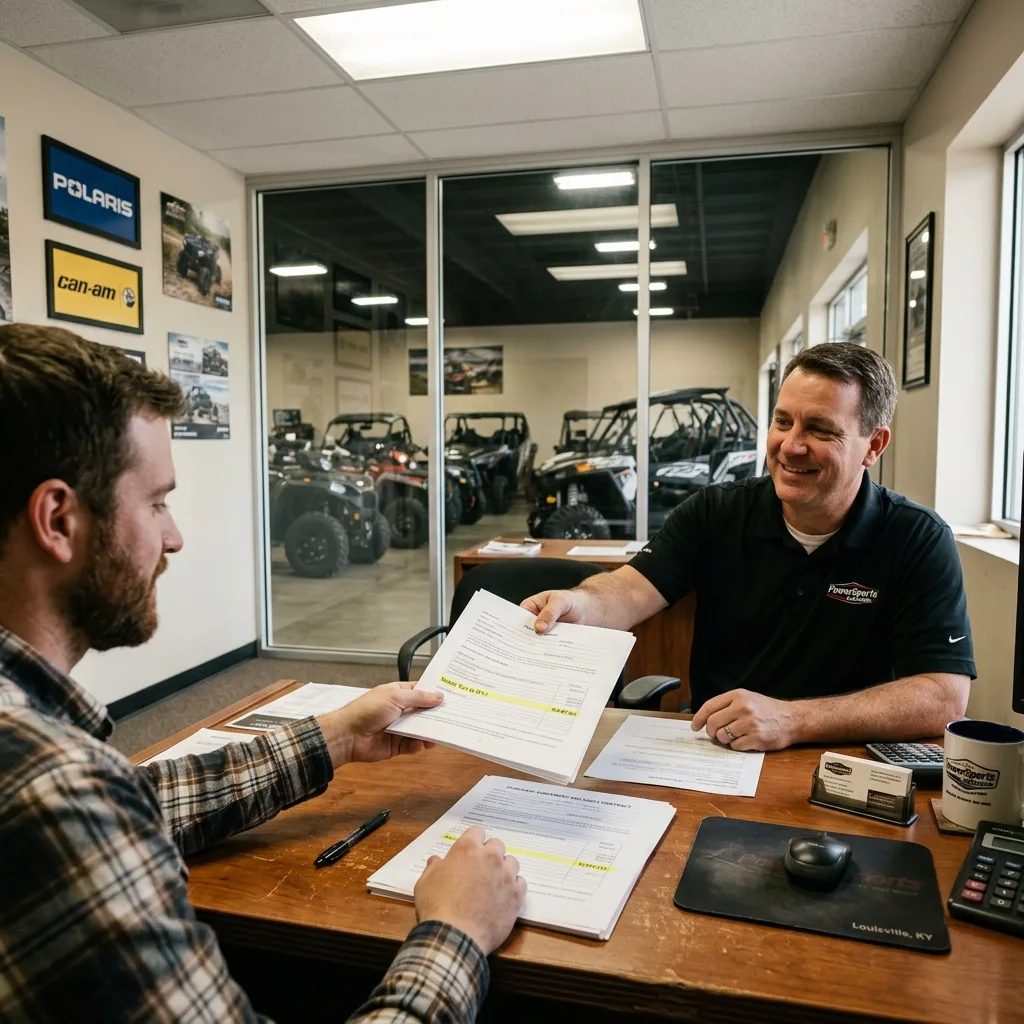
You walk into the dealership in Lexington or Bowling Green or Pikeville. You sign the paperwork on a brand new Polaris RZR Pro R or a Can-Am Defender HD10 or a fully kitted Yamaha Wolverine. The salesman shakes your hand, slides the keys across the desk, and then quietly slides one more piece of paper toward you.
The sales tax bill.
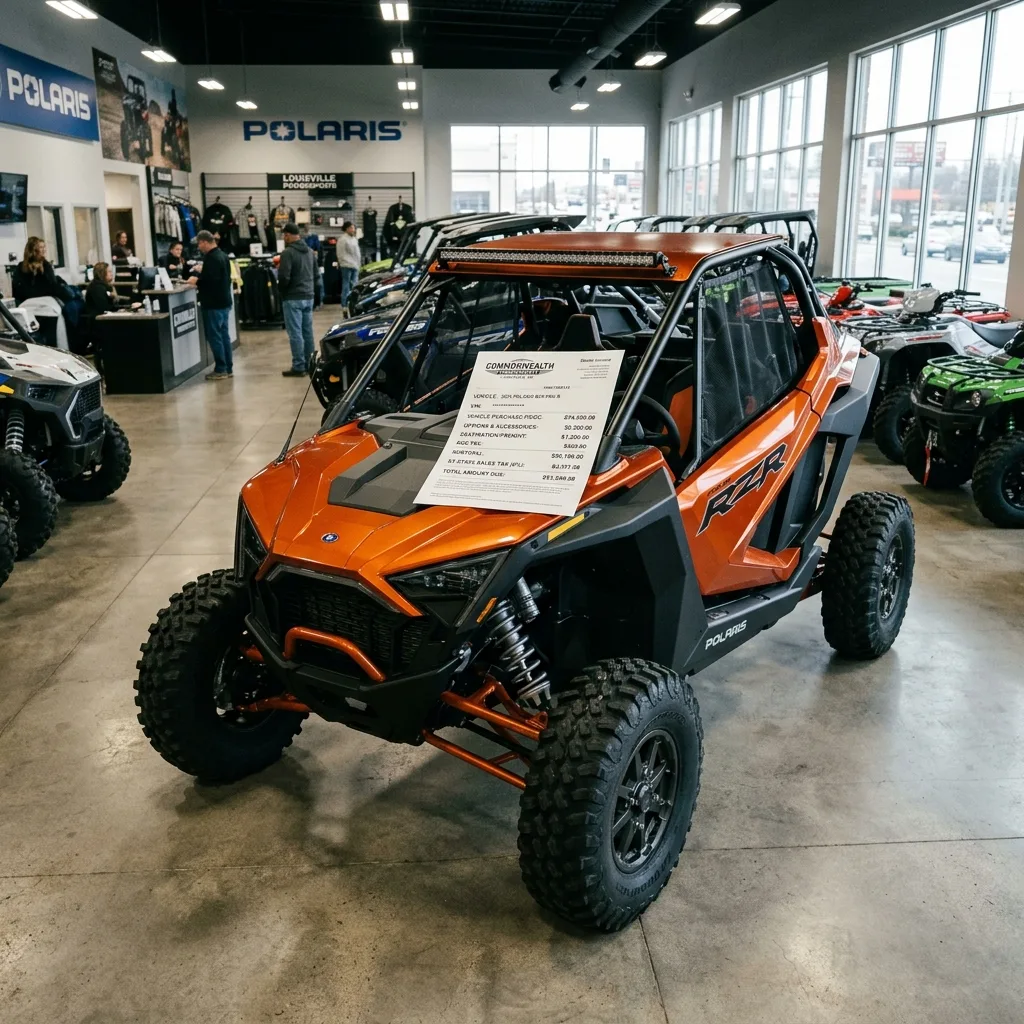
Six percent of the entire purchase price. Not negotiable. Not refundable. Not amortized over anything. Kentucky’s ATV and UTV sales tax hits the second the contract is signed, before you’ve turned a wheel, before you’ve smelled the trail, before the tires have touched anything but the dealer’s polished concrete floor.
On a $12,000 sport ATV, that’s $720 gone before the first ride. On a $35,000 turbo UTV with a cab and heat, you just handed the Commonwealth $2,100 for the privilege of buying something you already paid for. And on a $50,000 ranch-spec side-by-side loaded with attachments? Three thousand dollars in tax on a machine you’ll mostly use on private trails and farm property — places the state has zero claim on and zero infrastructure on.
This article is about why Kentucky owners are quietly registering their off-road machines in Montana instead. Why a one-time $749 or $849 fee — total, forever, no annual renewal — is replacing the 6% sales-tax handshake at Kentucky dealers. And why a permanent Montana plate beats the Kentucky title-plus-no-plate-plus-confusing-SB-63-county-opt-in mess by a country mile.
If you’ve been buying ATVs and UTVs in Kentucky for the last twenty years, you’ve watched the Commonwealth quietly tighten the screws on a hobby that used to feel completely unregulated. Titling rules tightened. Helmet rules clarified. SB 63 added a new licensing concept on top of the existing ban. Each layer adds paperwork, money, and confusion to what should be a simple proposition: I bought a machine, I’d like to ride it. Kentucky’s response has become increasingly: yes, but first.
The Montana option exists because another state built a smarter framework. None of this is a workaround or a hack. It’s interstate commerce — the same boring legal mechanism that lets every Fortune 500 company incorporate in Delaware and every RV manufacturer sell to buyers in fifty states. Off-road owners are simply discovering what corporate America has known for decades.
What Kentucky actually charges
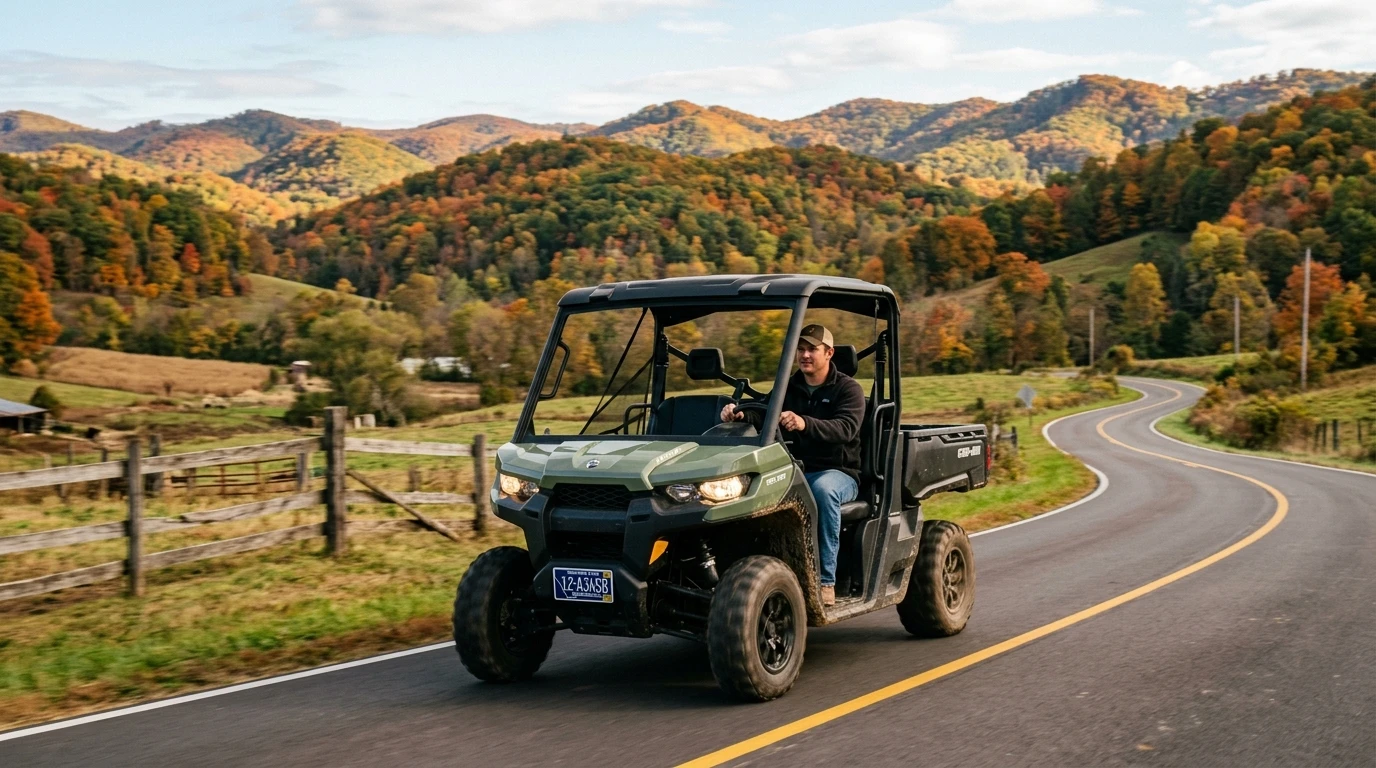
Kentucky doesn’t tax ATVs and UTVs through some hidden, complicated mechanism. The state is refreshingly blunt. Six percent. Flat. Statewide. On the full purchase price of the machine.
There are no significant county add-ons, no city surcharges, no special off-road excise stacked on top. That’s actually one of the few things Kentucky gets right compared to neighbors like Indiana or Tennessee. The bad news is that 6% on a $35,000 side-by-side is still $2,100, and the rate applies whether you’re buying new, buying used from a dealer, or buying private-party in many cases through the titling process.
Kentucky also requires you to title the machine. That’s a $15 one-time fee, processed through Form TC 96-182 at your county clerk’s office. The title proves ownership. Fine. But here’s where things get strange.
Kentucky does not issue a traditional motor vehicle registration plate for off-road-only ATVs and UTVs. No annual sticker, no permanent plate, no DMV-style registration the way most states handle it. The state titles your machine, takes its 6% on the front end, and walks away. No annual renewal — that part’s fine. But you also have no plate, no registration document, and no formal proof your machine is street-legal anywhere outside the narrow exceptions covered below.
So a Kentucky buyer ends up in this position: you pay 6% on the front, pay $15 to title, and end up with a machine legally restricted to off-road use, private property, narrow agricultural exemptions, and very specific road-crossing scenarios. No plate. No registration card. No clear path to public road use without the SB 63 hoop — which is its own mess, as we’ll get to shortly.
The 6% is what stings. Kentucky is taking thousands of dollars out of the deal up front for a machine the state then refuses to fully register or plate. The Commonwealth wants the tax revenue without taking on any of the infrastructure responsibility.
And the dealer probably didn’t explain one wrinkle at the counter. The 6% applies to the full purchase price including options — lift kits, winches, audio systems, roof packages, factory accessories rolled into the deal. Trade-in credit doesn’t always apply cleanly to off-road vehicles the way it does for cars. The result is that the actual tax bite on a fully optioned UTV often runs higher than buyers expect when they sit down to sign. Dealers don’t volunteer this because it doesn’t help close the deal.
The agricultural exemption sounds like a way out, but the bar is higher than people think. Form 51A165 requires that more than 25% of your gross income come from farming. The Department of Revenue interprets “exclusive farm use” strictly. A weekend hobby farm doesn’t qualify. A horse property for pleasure riding doesn’t qualify. A few acres with chickens and a vegetable garden don’t qualify. Real working farms qualify, and the form is genuinely useful to that small slice of buyers. The majority of Kentucky ATV and UTV owners pay the 6%.
The road ban: KRS 189.515 and the SB 63 confusion trap
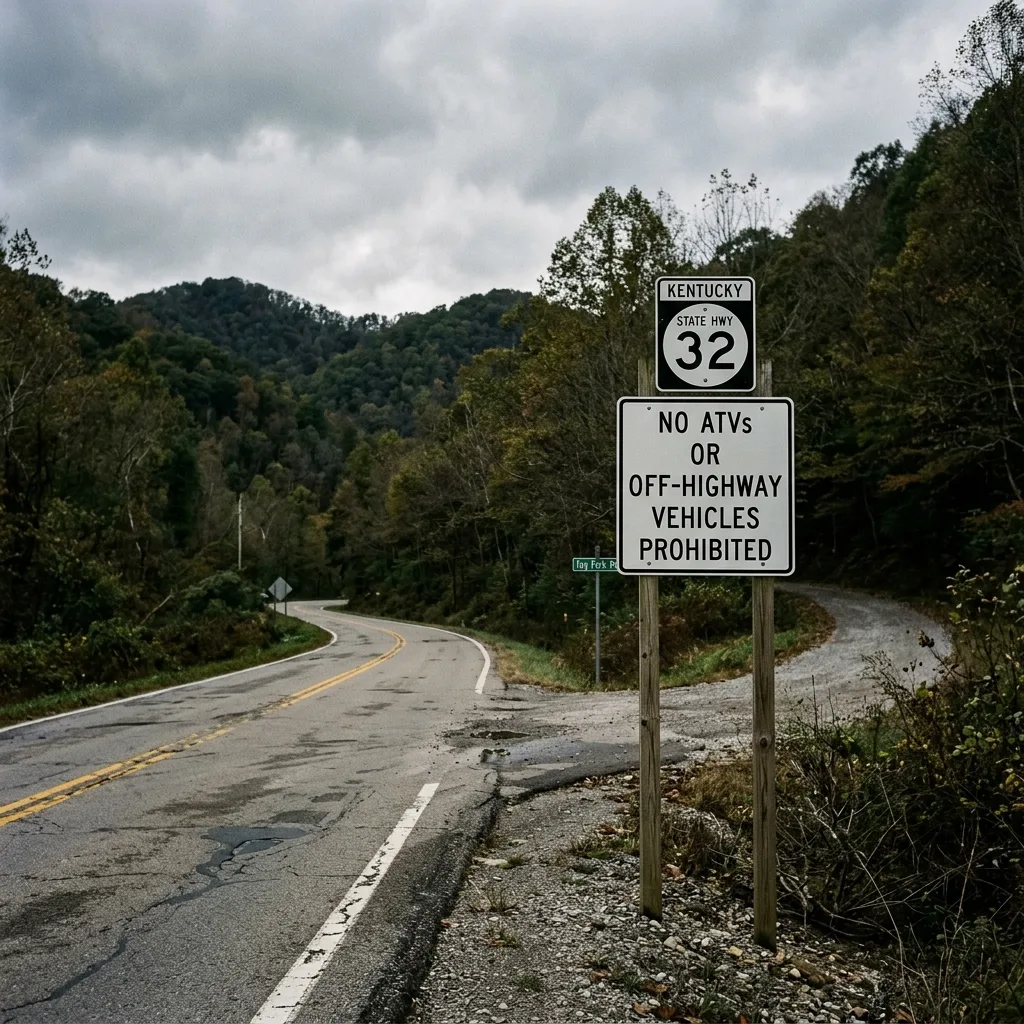
Kentucky Revised Statute 189.515 governs whether your ATV or UTV can touch a public road. The short version: it can’t. Not in any meaningful way. The statute lays out a near-total ban on ATVs and UTVs operating on public highways, with three narrow exceptions:
- Crossing a public highway — perpendicular only, maximum 0.2 miles, no riding along the road.
- Farm or agricultural activities on two-lane roads where the operator is engaged in actual farming.
- Emergency maintenance by authorized personnel.
The operator needs a valid driver’s license, must wear approved headgear (farm-use riders are exempt from the helmet requirement), and is otherwise expected to keep the machine off public asphalt entirely. If you’ve been quietly riding from your house to the gas station two miles down the road on your side-by-side, KRS 189.515 has not been on your side.
Then in June 2025, Senate Bill 63 went into effect and changed the conversation. Sort of. The law created a brand new category called the Street-Legal Special Purpose Vehicle, or SLSPV. On paper, it sounded like a fix. In practice, it’s a maze.
SB 63 lets counties and cities opt in to allow street-legal UTVs. Each individual locality has to pass its own ordinance. Most Kentucky counties had not done so as of mid-2026. Your county may allow it. The county next door may not. The county your trailer rolls through to reach a riding park may have a different rule entirely.
If your county has adopted SB 63, you can register a qualifying UTV as an SLSPV for $10 per year plus a one-time $25 inspection fee. To qualify, the machine must have headlights, taillights, brake lights, reflectors, turn signals, a horn, a muffler, a windshield, and a speedometer. You cannot drive it on interstates. You cannot drive it on any highway with a speed limit over 55 mph. And your operating range tops out at 20 miles from your registered address on marked highways.
Read that again. Twenty miles from your registered address. On marked highways only. With a county-by-county opt-in that most counties haven’t taken. Inspections, equipment requirements, ongoing renewals. If you cross a county line that hasn’t adopted SB 63, you’re back under KRS 189.515.
Now compare that to a Montana permanent plate. One filing. One fee. Forever. The plate is a real motor vehicle registration issued by a real state. No county opt-in, no 20-mile leash, no inspection clock running. The reason Kentucky owners increasingly choose Montana isn’t that Kentucky’s rules are vague — it’s that they’re tangled.
The real cost of the Kentucky tax
The 6% Kentucky sales tax sounds modest until you see what it does at the price points where serious ATV and UTV buyers play.
Stretch this over a five-year window and add the SB 63 angle. Say your county opts in and you register your UTV as an SLSPV. That’s $10 per year plus a $25 inspection on top of your initial 6% hit. The Kentucky path keeps bleeding.
Net savings on a single $35,000 UTV over five years: $1,341. And that’s just one machine. Add a second ATV to the same LLC for $549 and the numbers tilt further. A trailer, a dirt bike, a couple of toys for the family — the spread keeps growing in the Montana column.
Higher-end builds make the math even starker. The Polaris RZR Pro R Ultimate 4 lists at $43,499. A loaded Can-Am Maverick R X RS Smart-Shox can clear $45,000. A four-seat Honda Pioneer 1000-5 Trail with the full accessory package runs roughly $26,000. The 6% on those builds runs $2,610, $2,700, and $1,560 respectively. A Montana plate runs $849. The difference isn’t theoretical money — it’s a real cash gap that you either keep or hand to the Commonwealth.
And there’s a multiplier nobody calculates at the dealership. Most serious riders don’t own a single machine for five years and stop. They trade, they upgrade, they add a second machine for the spouse, they pick up a dirt bike for the kid. Each transaction in Kentucky triggers a fresh 6% bite. Each transaction through a Montana LLC at the second-vehicle rate stays in the low hundreds. Over a decade, the Kentucky path costs serious owners five figures in unnecessary tax. The Montana path doesn’t.
Where Kentucky riders actually ride
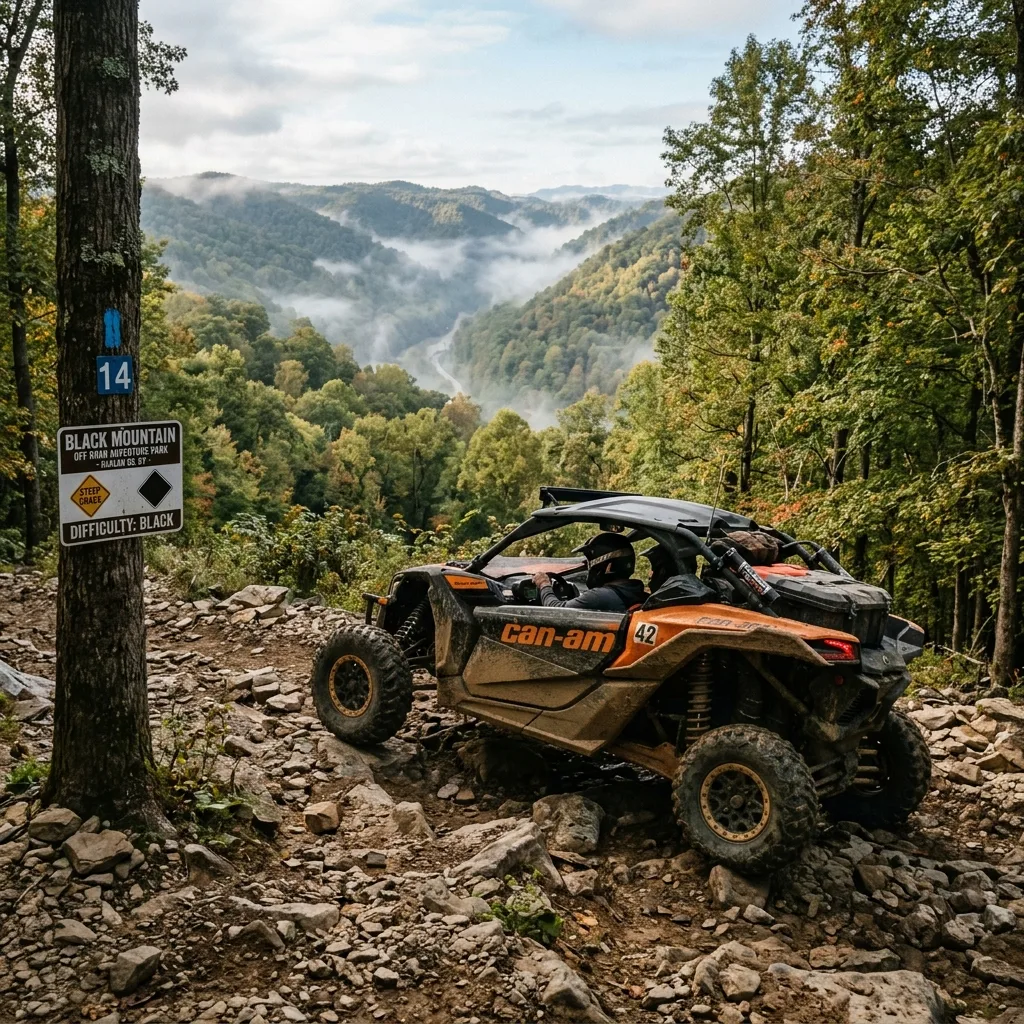
Eastern Kentucky sits on top of old coal land, and Appalachian topography has handed riders some genuinely serious terrain. Most of the western world has no idea how good the off-road options are here. Here’s where Kentucky owners are actually taking their machines — and why a Montana permanent plate makes more sense when you start hauling the rig to all of them.
Black Mountain Off-Road Adventure Park (Evarts, Harlan County)
If there’s a flagship Kentucky off-road park, this is it. 7,000 acres, more than 150 miles of trails, and an operator (Harlan County Outdoor Recreation Board Authority) that treats the place like a real destination. You’ll see ATVs, side-by-sides, full-size 4×4 trucks, buggies, and rock crawlers all sharing the property. Difficulty is color-coded so you know what you’re getting into before you commit to a trail. The park runs sunrise to sunset year-round and adds a zipline canopy tour for the non-riders in your group. RV parks on site mean you can park the toy hauler and stay the weekend.
Rush Off-Road (Rush, Boyd County)
Another 7,000-acre property, this time near Ashland. Rush has a reputation for steep climbs, rocky sections, and mud crossings that punish a poorly-prepped rig. Over 100 miles of trails, all skill levels, ATVs and Jeeps welcome. The drive in from any city in the state is part of the experience.
Mine Made Paradise (Leburn / Hindman, Knott County)
This one is enormous — 43,000+ acres of reclaimed coal land turned into one of the largest off-road parks in the eastern U.S. 32 miles of dirt bike trails plus more than 100 miles for ATVs and UTVs, with water crossings scattered throughout. Family-owned campground on site. Mine Made doesn’t require a separate permit on the land itself — just show up, sign in, and ride.
Wildcat Adventure & Off Road Park (East Bernstadt, Laurel County)
2,000 acres with over 100 miles of trails and full-hookup RV sites and cabins that turn a weekend trip into a low-stress affair. All skill levels welcome. The central Kentucky location pulls in riders from Lexington, Louisville, and well beyond.
Dirt Nasty Off Road Park (Morehead, Rowan County)
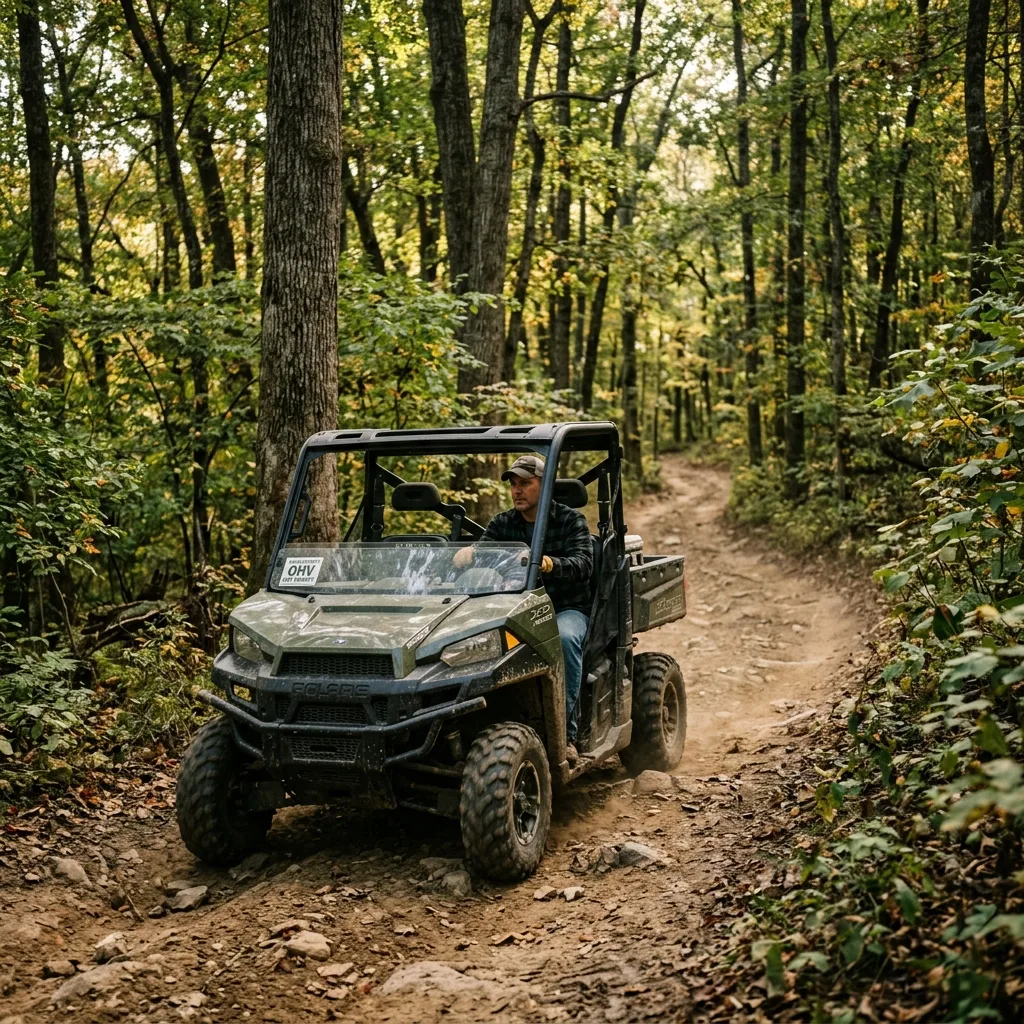
Smaller in acreage (300 acres) but memorable. Dirt Nasty packs rock cliffs, natural waterfalls, caves, a creek, and a genuine rock arch into one of the more visually striking riding areas in the state. Welcomes ATVs, side-by-sides, Jeeps, trucks, and dirt bikes. If your goal is photos and stories as much as miles, this is the park.
Daniel Boone National Forest — Redbird Crest Trail (Leslie / McCreary Counties)
National-forest riding on the Redbird Crest is a different animal. 100+ miles of trails, with a main loop of roughly 69-70 miles climbing through rugged mountain ridgetops totaling more than 9,000 feet of elevation gain. You’ll need an OHV pass — $15/day or $60/annual — and your machine must be 50 inches wide or less with a working spark arrestor. This is where you find out whether your suspension setup was a good investment.
Land Between the Lakes OHV Area (Trigg / Christian Counties)
Western Kentucky’s big-name destination. The OHV area inside Land Between the Lakes National Recreation Area runs 300+ miles of trails and forest roads, open to ATVs, UTVs, and dirt bikes 50 inches wide or less. The OHV sticker is $5/day or $30 annual. Mud is a year-round feature. So is the wildlife — elk and bison both call the area home, and you’ll catch glimpses of them between trail sections.
Breaks Interstate Park (Pike County)
Right on the Kentucky-Virginia line, Breaks straddles two states and runs OHV operations differently from the others on this list. Riding here is guided tour only — no general-admission day passes — but the tours take you over genuinely rugged Appalachian ridges overlooking the Russell Fork Gorge. Tours run 4-6 hours at $50-100 per person across 4,500+ acres. The country you’ll cover is territory the average rider never gets to see.
Every one of these parks has riders rolling in from out of state — Tennessee, Ohio, West Virginia, Virginia, Indiana. The plate diversity in the parking lots tells the story. Riders who haul their machines across state lines benefit from a registration that travels with them, not a Kentucky title with an SB 63 sticker that may or may not be honored where they’re going. A Montana permanent plate works the same at Black Mountain, at Rush, at Mine Made, at Land Between the Lakes — and it’s the same plate when you take the rig to Hatfield-McCoy in West Virginia or Brimstone in Tennessee next year.
The Montana solution
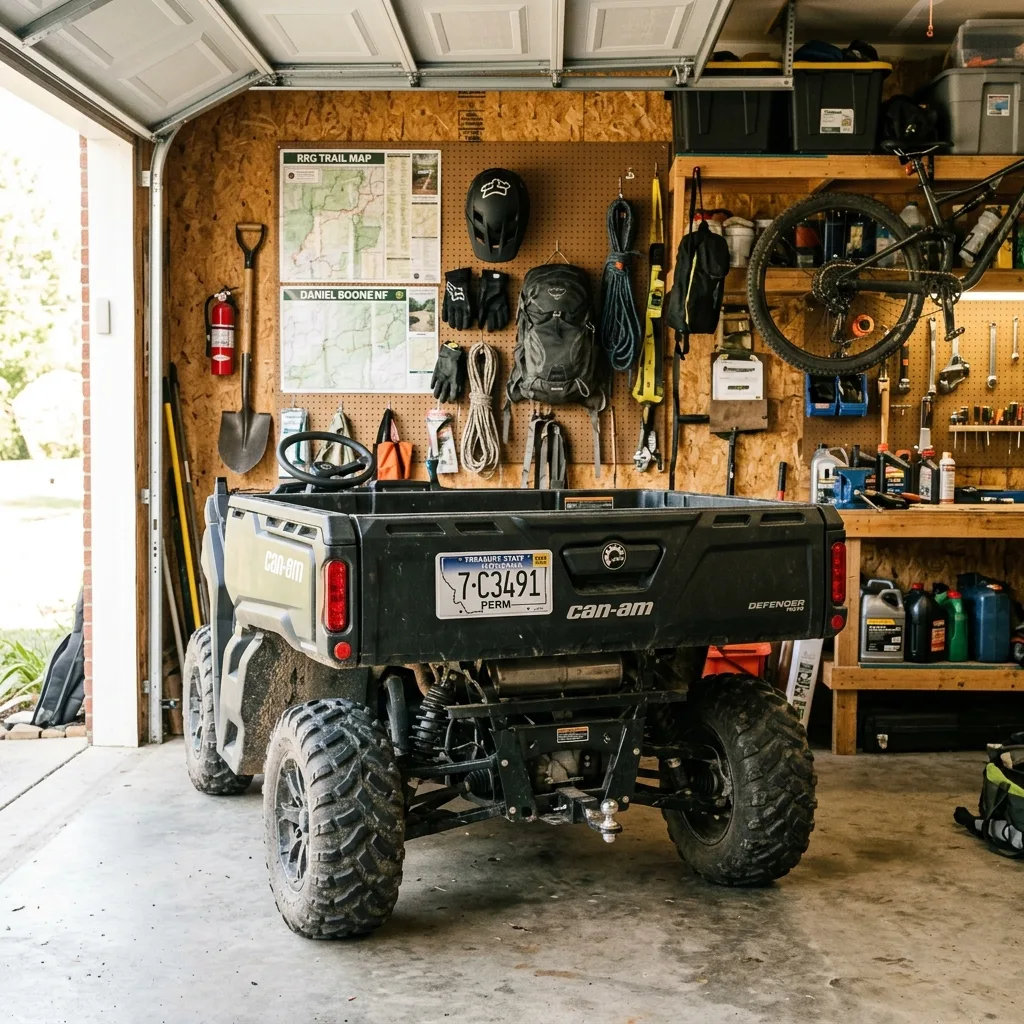
Montana doesn’t charge sales tax. The state has built a registration framework that makes it straightforward for an LLC headquartered in Montana to own a vehicle, title it, and register it under a permanent plate. Plenty of states have variations on this — Montana’s version is just unusually clean.
Here’s how it works. Zero Tax Tags forms a Montana LLC with you as the sole member. The LLC owns the machine. It gets titled to the LLC at a Montana county treasurer’s office. The LLC registers the machine, and because Montana offers a permanent plate option for ATVs, UTVs, trailers, boats, motorhomes, and similar vehicles, you walk away with a plate that never expires, never renews, and never costs another dollar in annual fees.
The pricing is fixed:
One time. Forever. Whether you keep the machine three years or thirty, the registration cost is fixed. No annual sticker, no renewal envelope in January, no county clerk to visit, no SB 63 inspection clock, nothing. The plate hangs on the back of the machine and stays there for the life of the vehicle.
Kentucky charges 6% on the front and gives you no plate at all. Montana charges a flat fee and gives you a plate that never expires. The math is rarely close, and the convenience isn’t either.
Is this legal?
Yes, and it’s not even particularly close. Montana LLC registration is a description of how interstate commerce works in the United States — not a workaround or a gray-area trick.
The legal foundation is the Commerce Clause of the U.S. Constitution, which limits the ability of individual states to regulate vehicles owned and registered out of state. The case that off-road owners most often point to is Thomas v. Bridges, a Louisiana Supreme Court decision that explicitly recognized a Montana LLC can legitimately own a vehicle and that the state where the LLC’s member lives cannot retroactively claim sales tax on the LLC’s property. The court framed this as ordinary tax minimization — the same structuring used by every Fortune 500 company that incorporates in Delaware.
The fundamentals matter. The LLC is real. It has a real Montana address, a real registered agent, real organizational documents on file with the Montana Secretary of State. The vehicle is titled to that LLC. The LLC is the owner. The plate is issued to the LLC. None of this is hidden, fictional, or fabricated.
Many of our clients use their machines in multiple states throughout the year — Kentucky parks one weekend, West Virginia trails the next, a summer trip to Colorado, family land in Tennessee on holidays. That kind of multi-state use is a fact of life for serious riders. A Montana plate accommodates it cleanly.
Who this is built for
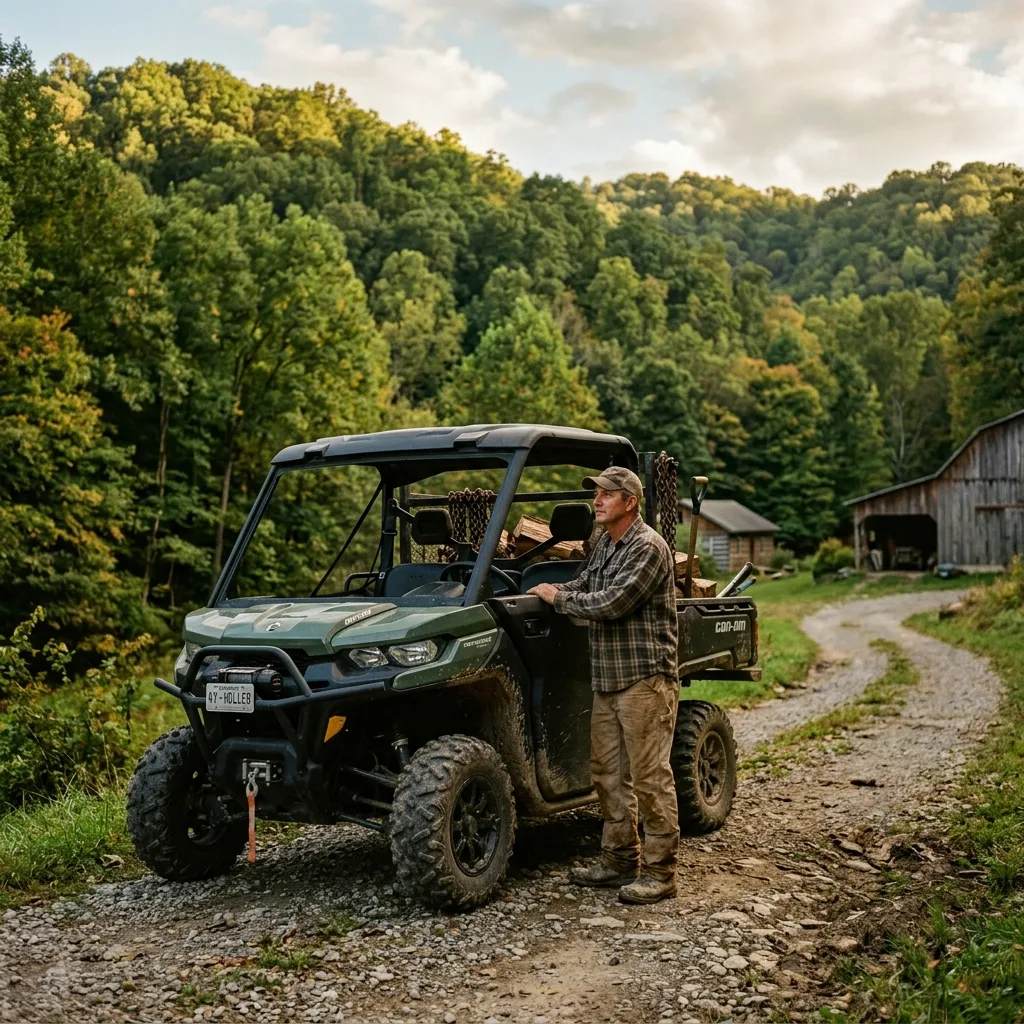
The Kentucky owners who get the most out of Montana registration share a few traits. They’ve bought — or are about to buy — a serious machine. They ride often. They take the rig to multiple parks. And they’re tired of writing checks to the Commonwealth for a plate that doesn’t exist.
The eastern Kentucky coal country owner with a Can-Am Defender HD10
Harlan, Letcher, Perry, Pike — eastern Kentucky has more side-by-sides per capita than just about anywhere east of the Mississippi. A Defender HD10 loaded with a winch, a roof, a windshield, and a real cargo box runs north of $25,000 before you’ve put a single mile on it. The 6% Kentucky tax on that build hits $1,500. Our client lives on family land, rides Black Mountain every other weekend, and hauls the rig to West Virginia twice a year. Montana plate. $849, one time. He’s mostly thrilled he no longer has to research whether his county opted into SB 63 every time he wants to drive a half-mile down a country road.
The Louisville tech professional with a Polaris RZR Pro R
Software engineer at a Louisville company, makes good money, decided he was tired of golf. Bought a Polaris RZR Pro R for around $36,000, lifts it, tunes it, runs it at Rush Off-Road on weekends. The Kentucky 6% on his build was $2,160. He’d already done the math when he showed up at Zero Tax Tags. The Montana setup paid for itself before he’d ridden the machine ten times.
The Bluegrass region horse farm owner with multiple UTVs
Central Kentucky horse country is a quiet but enormous UTV market. Real working farms use side-by-sides daily — fence inspections, hay deliveries, hauling tack, getting around 200-acre properties faster than a truck can manage. Our client runs a Thoroughbred operation outside Versailles. She owns a Polaris Ranger Crew XP 1000 for general farm work and a smaller Yamaha Wolverine RMAX2 for her trainer to use on rounds. Total Montana cost: $849 for the first machine, $649 for the second on the same LLC. Total cost in Kentucky: 6% on roughly $50,000 worth of UTVs is $3,000. The arithmetic explains itself.
The collector with multiple ATVs
One of our favorite client profiles. Retired gentleman in central Kentucky who has spent decades collecting Honda four-strokes — a vintage 1986 TRX250R, a TRX450R, a couple of modern Honda Foreman 520s for trail riding, and a rare 2008 TRX700XX in the corner. He’s not buying one at a time anymore; he picked up three machines in a single calendar year. The 6% on those purchases combined would have been north of $3,000. Multiple machines on a single Montana LLC at the second-vehicle rate keeps the total well under that, and every machine he adds in the future rides on the same permanent plate framework.
How Zero Tax Tags works

The actual process is much simpler than the explanation of why it works. We’ve moved it to a seven-day timeline that handles every step of Kentucky ATV/UTV registration through Montana without you ever leaving the state.
| Day 1: | You submit your paperwork through our secure portal. We file your Montana LLC with the Secretary of State the same day. |
| Days 1-2: | Montana LLC formation completes. You receive your articles of organization, EIN, and operating documents. |
| Days 2-4: | We transfer the vehicle title to the LLC at the Montana county treasurer’s office. Title work is processed in your LLC’s name. |
| Days 4-7: | Your permanent Montana plate is issued and shipped directly to your Kentucky address. You bolt it on and ride. |
One week, start to finish. No trips to Montana required, no follow-up filings, no annual renewal mailers arriving at your house. The plate arrives, you mount it, and the entire registration question is behind you for the life of the machine.
What Zero Tax Tags is built for
The eastern Kentucky weekender who hits Black Mountain twice a month. The Louisville professional who decided a $36,000 UTV is a perfectly reasonable hobby budget. The working farm in Versailles or Paris that uses UTVs as core operational equipment. The collector who keeps three or four machines and wants them all under one tidy registration umbrella. That’s who we built this for.
Our cost structure rewards keeping a machine. Every year you own the vehicle past year one, the Montana savings compound while Kentucky owners face renewed friction with whatever the next legislative session brings. SB 63 is just the most recent version of that friction.
A Montana plate is a real plate. Other states recognize it. It travels with you to Hatfield-McCoy in West Virginia, to Brimstone in Tennessee, to the Smokies, to the Rockies, to wherever you decide to point the trailer. It doesn’t care what county you’re driving through.
The Kentucky path right now is a maze of titling, SB 63 county research, inspection scheduling, and renewal tracking. The Montana path is one filing, one fee, one plate. Forever. If you value your time — and at the price points Kentucky ATV and UTV buyers operate at, you probably do — that difference matters.
Frequently asked questions
How long does the whole process take?
Seven days, end to end. Day one you submit paperwork. By day seven you have a permanent Montana plate on your machine. No trips to Montana required.
What’s included in the $749 (ATV) or $849 (UTV) price?
Everything. Montana LLC formation with the Secretary of State, registered agent, EIN, operating agreement, title transfer to the LLC at the Montana county treasurer, permanent plate registration, and the plate shipped to your Kentucky address. No hidden fees, no surprise add-ons.
Is this actually legal?
Yes. The structure is grounded in the U.S. Commerce Clause and reinforced by case law including Thomas v. Bridges. The Montana LLC is a real entity that owns a real vehicle and is registered in a real state. This is standard interstate tax structuring — the same approach Fortune 500 companies use when they incorporate in Delaware.
What about Kentucky’s agricultural exemption — wouldn’t that solve my problem?
It might, if you qualify. Form 51A165 requires that more than 25% of your gross income come from agricultural activities, and Kentucky interprets “exclusive farm use” strictly. Most riders don’t qualify, and the ones who do still end up with a machine that has limited road status and no permanent plate. The Montana route doesn’t depend on your income source or farm status.
How does SB 63 compare to a Montana plate?
SB 63 is a county-by-county opt-in. If your county adopted the ordinance, you can register a qualifying UTV as a Street-Legal Special Purpose Vehicle for $10/year plus a $25 inspection. You’re limited to roads with speed limits of 55 mph or lower, no interstates, and a 20-mile radius from your registered address. A Montana permanent plate has no county opt-in, no inspection, no radius limit, no annual renewal, and is recognized across state lines.
Can I still ride the machine after I get the Montana plate?
Yes. Ride it exactly the way you would have anyway — on private property, at off-road parks, in OHV areas, on farm land, anywhere you’d take the machine. The plate changes how the machine is registered and how much you paid in tax. It doesn’t change where you can ride.
What types of vehicles qualify?
ATVs, UTVs, side-by-sides, dirt bikes, trailers, RVs, boats, fifth wheels, classic cars, exotic cars, and most other titled vehicles. ATVs run $749 and UTVs run $849.
Is there a discount for a second machine?
Once your Montana LLC is established, additional vehicles drop the LLC formation fee. A second ATV runs $549. A second UTV runs $649. There’s no cap on the number of machines you can hold under the same LLC.
What happens if I sell the machine later?
You transfer the title the same way you would with any other vehicle. The LLC stays in place and can be used for your next vehicle, or you can wind it down. Most clients keep the LLC active because they tend to add machines over time.
Do I have to live in Kentucky to use this service?
No. We serve clients in every state. Kentucky’s 6% sales tax and the SB 63 patchwork are particularly painful — which is why this article exists — but the same Montana structure helps owners in Ohio, Indiana, Tennessee, West Virginia, Virginia, and beyond.
See how Montana LLC registration helps owners in other high-tax states:
Ready to stop paying Kentucky’s 6% tax?
Kentucky ATV and UTV owners have saved millions with Montana LLC registration. You’re next.