26 min read
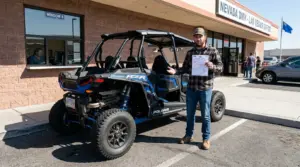
Nevada has some of the most absurdly good off-road terrain in North America. The Logandale Trails system unrolls 200 miles of red slickrock and desert wash an hour north of Las Vegas. Sand Mountain rises 600 feet out of the Lahontan basin near Fallon and behaves like a private dune playground for anyone with a turbo and the patience to wait out summer. Nellis Dunes sits on the edge of the city, 10,000 acres of free riding before breakfast. Moon Rocks looks like the surface of another planet. Winnemucca’s 60-square-mile dune complex is so big you can lose your group on it.
Now the catch. Nevada Revised Statute 490.082 explicitly bans your UTV from ever wearing a Nevada license plate. Not a paperwork hurdle. A flat statutory prohibition. Your Can-Am, your Polaris, your Kawasaki Mule — none of them can be converted to street-legal status in this state. You can cross a public road at an intersection. You can travel up to two miles on pavement to reach an OHV staging area. Beyond that, you’re an unregistered vehicle on a public highway. And before you even ride, Clark County wants 8.375 percent sales tax at purchase: $3,769 on a $45,000 X3 MAX Turbo RR. Plus $20 every year, forever, for the OHV decal. Montana charges $749 once. Permanent plate. Reciprocity recognized statewide. This is the story of how Nevada riders are quietly fixing both problems at the same time.
On this page
Nevada’s OHV Registration System
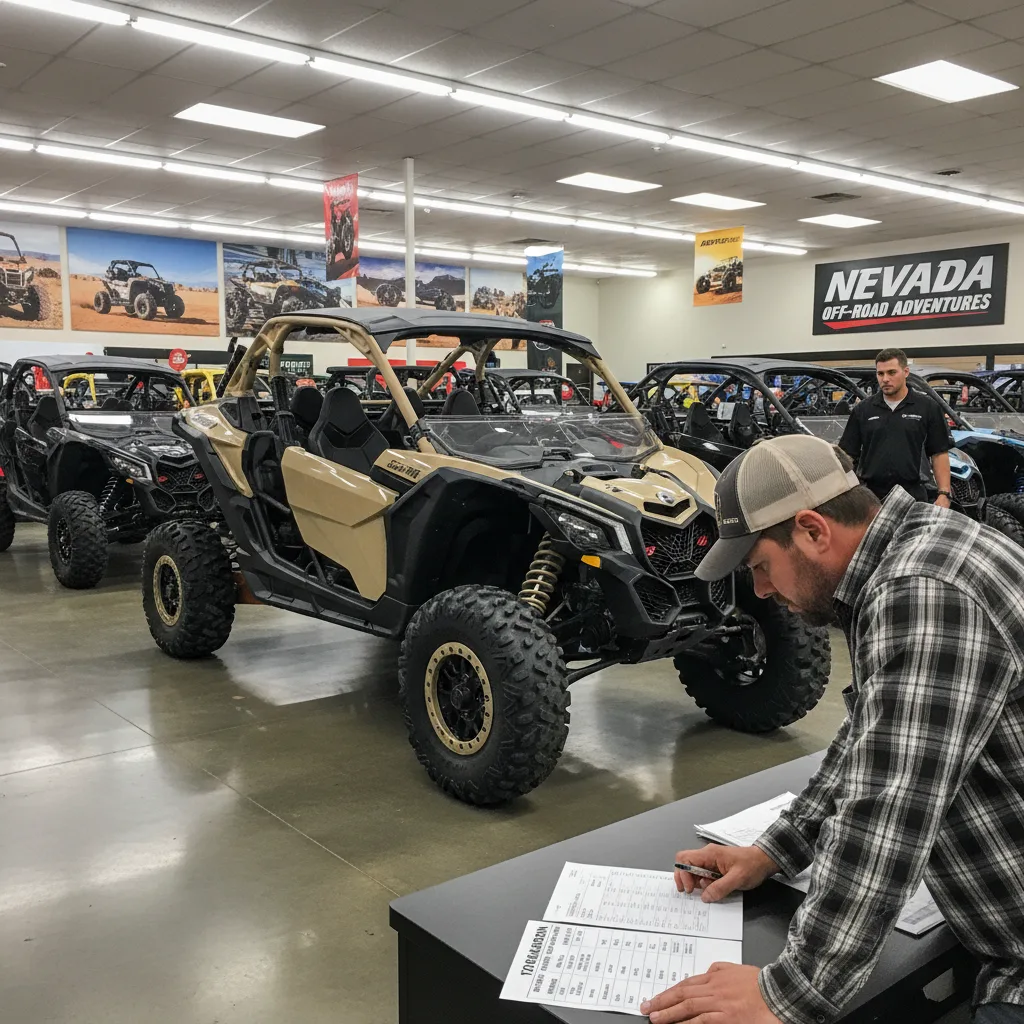
Nevada treats UTVs and large ATVs as off-highway vehicles. That sounds neutral. It is not. Under NRS Chapter 490, the entire registration framework for these machines exists in a separate legal universe from cars and trucks. There is no DMV title path that lets you drive your Can-Am to the grocery store. There is no inspection station that will sign off on a turn-signal kit and a horn. The state has, by deliberate statutory choice, walled off the entire category.
The mechanism is simple. Every OHV manufactured in 1976 or later with an engine displacement over 70cc must register with the Department of Motor Vehicles. You pay $20 per year, or $60 for a three-year decal. You attach the decal to your machine. You’re legal to ride on designated OHV trails and BLM lands. That is the entire universe of where you can operate. Cross a paved road at an intersection? Fine. Travel up to two miles on pavement to reach a staging area? Fine. Drive three miles to the next trail system because there’s no connecting OHV route? Now you’re an unregistered vehicle on a public highway and you’re stopping for a sheriff’s deputy.
NRS § 490.082 — The Wall: Nevada law explicitly prohibits the conversion of Large All-Terrain Vehicles and Utility-Terrain Vehicles (side-by-side passenger configuration) to street-legal status. Only two-wheeled motorcycles may be converted for on-road use under NRS Chapter 490. The legislature drew a hard line. Your UTV will never wear Nevada plates. There is no DMV workaround, no specialty tag, no exception for low-volume or specially equipped vehicles.
Then there is the sales tax. Buy a UTV from a Nevada dealer and you pay the combined state and county rate at the point of purchase. Clark County (Las Vegas, Henderson, North Las Vegas, Boulder City) is the worst at 8.375 percent. Washoe County (Reno, Sparks) comes in at 8.265 percent. Carson City and most rural counties hover around 7.6 percent. The state base is 6.85 percent, and counties layer optional add-ons on top. Tax is due at delivery. There is no installment option, no exemption for off-road-only use, no agricultural waiver that gets you out of it. A $45,000 machine bought in Henderson costs you $3,769 in tax before the decal goes on.
And there is no permanent plate option in Nevada. The state will never sell you a one-time, lifetime OHV registration. You pay annually or three-yearly. Forever. Every year you own the machine. Every year a renewal notice arrives. Every year you write another check. Twenty dollars sounds harmless until you own three machines and twenty years pass.
The Two-Mile Rule and What It Doesn’t Get You: NRS § 490 lets an OHV travel up to two miles on a paved road to reach an OHV-designated area. That distance assumes your trailhead is essentially next door. It is not designed to connect trail systems, get you to a fuel station, or move you between staging areas. Outside that two-mile bubble, you have no road rights at all. A Montana-plated UTV operating under NRS § 482.385 reciprocity is treated entirely differently. It enters Nevada as an out-of-state registered vehicle, not as an unregistered OHV.
Where Nevada Riders Actually Ride: Best OHV Areas by Region
Nevada gets dismissed as a flyover desert by people who have never actually ridden it. Riders who live here know better. The state has some of the most varied OHV terrain in the country: slickrock that looks airlifted from Moab, sand dunes that rival Glamis, volcanic moonscapes near Reno, alpine routes through Elko County’s high country. Ten of the most-ridden destinations, broken down by region, with the terrain notes and practical access details that matter when you’re loading the trailer at 5 a.m.

Las Vegas & Southern Nevada
Logandale Trails System. An hour north of Las Vegas via I-15. Two hundred miles of marked trails across 45,000 acres of BLM land. Free to ride. The terrain is the appeal here. Red slickrock, narrow sandstone washes, exposed climbs, and routes that link directly into the buffer zone around Valley of Fire State Park. Beginner through advanced loops, well-marked from the Logandale staging area. Best season is October through April. Summer high temperatures hit 110 degrees in the shade, and there’s no shade. Most regulars treat Logandale as a winter and shoulder-season destination and migrate north for July and August.
Nellis Dunes Recreation Area. Directly north of Las Vegas on Nellis Road, accessible from the 215 in under thirty minutes. Ten thousand acres, completely free, open year-round. The terrain is rolling low dunes, open desert, and a series of natural hill climbs that draw side-by-sides, sport quads, and dirt bikes in roughly equal numbers. This is the after-work playground for Vegas locals. You can ride at sunset on a Wednesday and be home by full dark. Weekends get busy. Bring your own water; there is none on site.
Eldorado Canyon. Near the town of Nelson, southeast of Las Vegas on the way to Lake Mohave. Free BLM access. Historic mining country with abandoned headframes, narrow technical canyons, and desert ridgelines that overlook the Colorado River. The terrain is intermediate to advanced. Loose decomposed granite, washouts, and exposed shelf trails. Day trip from Henderson. Spring and fall only; summer is genuinely dangerous.
Valley of Fire State Park (adjacent OHV access). The park itself is a $15-per-vehicle scenic drive with no internal OHV access. The BLM land surrounding it, particularly to the north near Logandale, offers staging and trail systems that put you within sight of the park’s signature red rock without the day-use fee. Most Logandale riders pair the two: park drive in the morning, trail riding in the afternoon.
Central Nevada
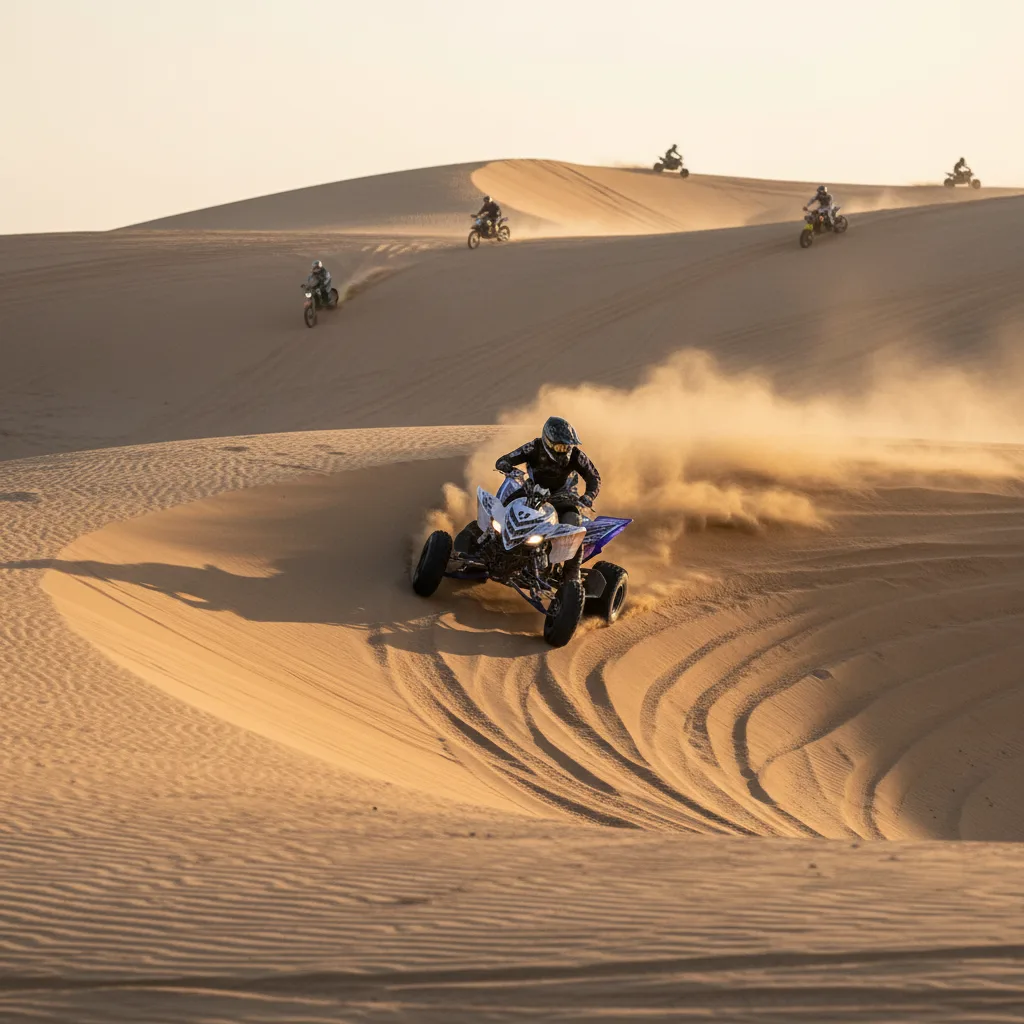
Sand Mountain Recreation Area. Twenty-five miles east of Fallon on Highway 50. A single 600-foot dune complex rising out of the Lahontan Valley, plus 4,795 acres of surrounding open desert. This is a fee area: $40 for a 1-to-7-day permit, $90 for an annual pass. The dune is unique because it produces a low-frequency rumble when conditions are right, the sound of moving sand under your tires. All OHV types welcome. Primitive camping on-site, vault toilets, no water hookups. Open year-round but summer is brutal. The serious season runs from late September through May.
Amargosa Valley OHV Area. South-central Nevada, near the Death Valley border. Free BLM access. Genuinely remote. The terrain is open desert and wide washes with very little vertical relief. The draw here is solitude. You can ride for hours and not see another rig. Self-sufficient riders only; the nearest fuel and water are 30 miles away. Best October through April.
Reno & Northern Nevada
Moon Rocks OHV Area. Twenty minutes north of Reno off Pyramid Lake Highway. Nineteen thousand acres, free, open year-round. The terrain looks like a science-fiction set: weathered volcanic rock formations rising out of high desert, twisting natural rock gardens, slot-style narrow runs, and whoop sections that punish poorly tuned suspension. Intermediate to advanced. This is technical riding, not high-speed dune work. The volcanic rock is hard on tires; bring a spare.
Peavine Mountain Trails. On the western edge of Reno, accessible from multiple staging points. Over 100 miles of routes climbing from 4,500 to 8,200 feet of elevation. Free BLM and Forest Service land. Terrain ranges from open sagebrush desert at the base to ponderosa pine forest near the summit, with rocky technical climbs in between. Intermediate riders can pick easy loops; advanced riders chain the summit routes for full-day adventures. Snow closes parts of the upper system from December through April.
Rural & Remote Nevada
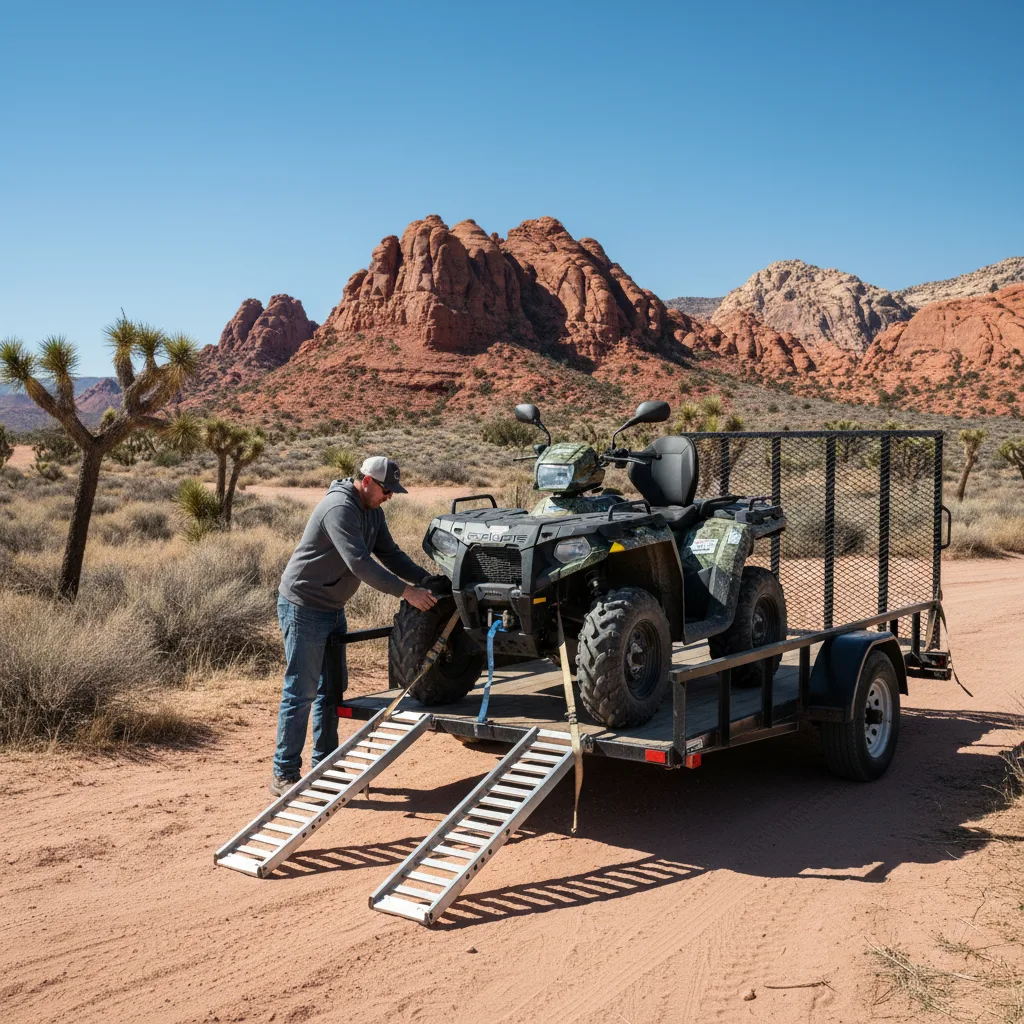
Winnemucca Sand Dunes. Seven and a half miles north of Winnemucca on Highway 95. Thirty-eight thousand acres, completely free, primitive camping. The Winnemucca complex is multiple smaller dune islands separated by sagebrush flats, which makes it one of the most family-friendly dune destinations in the West. Dunes top out around 100 feet, which is forgiving compared to Glamis or Sand Mountain. Open year-round. There are no services here. No fuel, no water, no cell signal in most of the complex. Bring everything you need and a backup of everything.
Elko County OHV Routes. Northeastern Nevada, accessible from the town of Elko via multiple ranch and BLM roads. Two hundred-plus miles of routes through high-desert sagebrush country and Ruby Mountain foothills. Free. The unusual feature here is summer riding: temperatures stay in the 80s and low 90s when southern Nevada is uninhabitable. This is the place to ride in July if you live in the state. Be aware that some routes cross active ranch land; respect closures and gates.
Across all ten of these destinations, the same constraint applies. Your Nevada-registered UTV can run the trails. It cannot connect them. It cannot drive to the gas station in town. It cannot travel from Logandale to Valley of Fire on the highway. A Montana plate, recognized under reciprocity, removes the connector problem entirely. You ride the trails you came for, and you have the road option when you need it.
The Real 5-Year Cost of Nevada ATV Registration
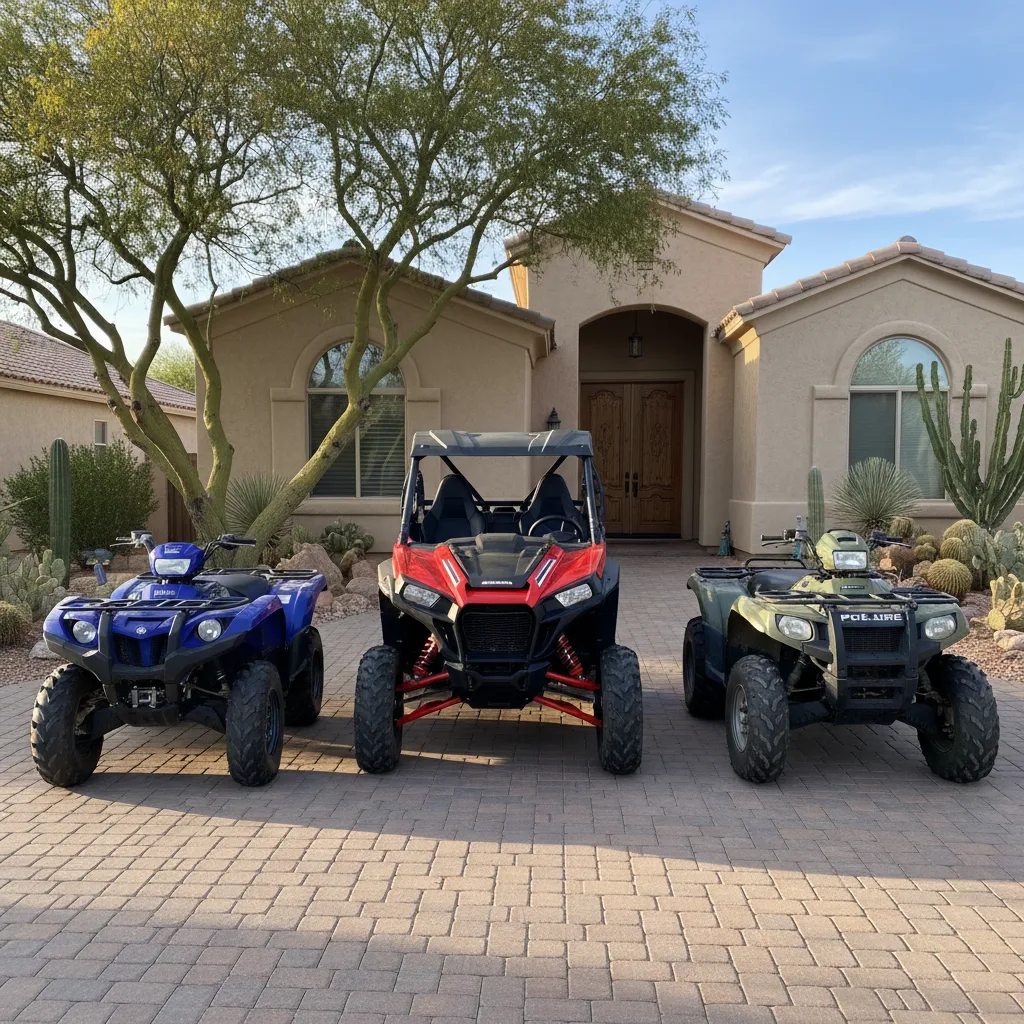
The financial case for Montana is straightforward. Nevada charges sales tax at purchase and an OHV fee every year forever. Montana charges a flat one-time service cost and never bills you again. The table below assumes you’re buying in Clark County at the 8.375 percent rate, the most common scenario for Nevada UTV buyers because Las Vegas dealerships handle the bulk of state inventory. Annual OHV fees are calculated at $20 per year times five years.
Reno and Washoe County buyers pay 8.265 percent, which lands a $45K X3 MAX at $3,719 in sales tax. Five-year savings versus Montana: $3,070. Carson City buyers at 7.6 percent pay $3,420 on the same machine and save $2,771 over five years. Rural counties (Elko, Churchill, Lyon) average roughly 7.6 percent as well.
The savings number above understates the long-term picture for one reason: Montana’s plate is permanent. There is no five-year ceiling on Montana’s advantage. At year ten, you’ve paid $200 more in Nevada OHV fees ($20 per year continuing forever) while the Montana plate keeps generating zero recurring cost. At year twenty, the gap widens by another $200. The Montana decision is a one-time financial event with a permanent tail.
The Compounding Effect: One Montana LLC can hold multiple vehicles. A Las Vegas buyer with two UTVs and a side-by-side trailer pays Montana once and saves on all three machines simultaneously. The math compounds the more equipment you own.
The Montana LLC Solution
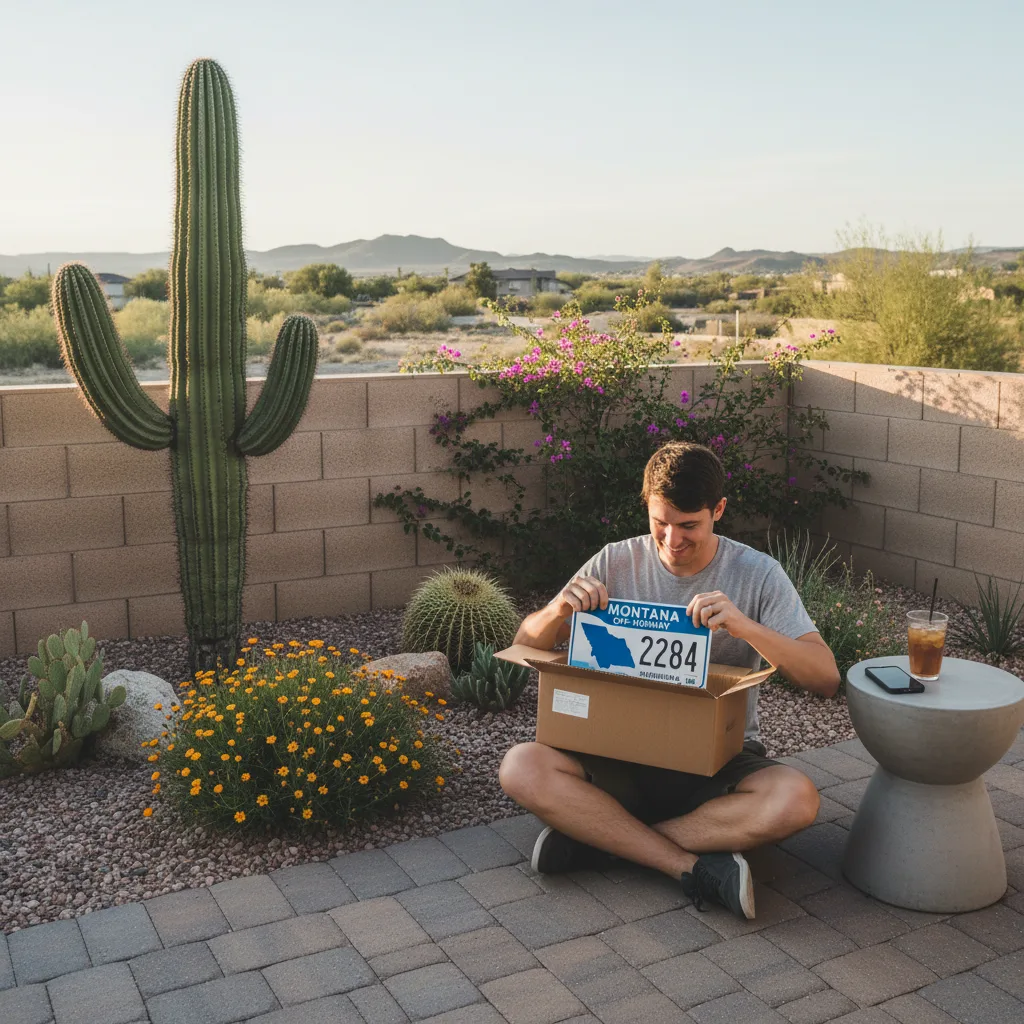
The Montana mechanism is older than most of the laws used to attack it. Montana imposes zero sales tax on vehicle purchases. Montana law allows a properly formed LLC to hold title to a vehicle as its registered owner. Montana issues permanent plates for off-highway vehicles, meaning you register the machine one time and never renew. Combined, these three facts make Montana the most attractive registration jurisdiction in the United States for any vehicle owner whose home state imposes high sales tax or annual fees.
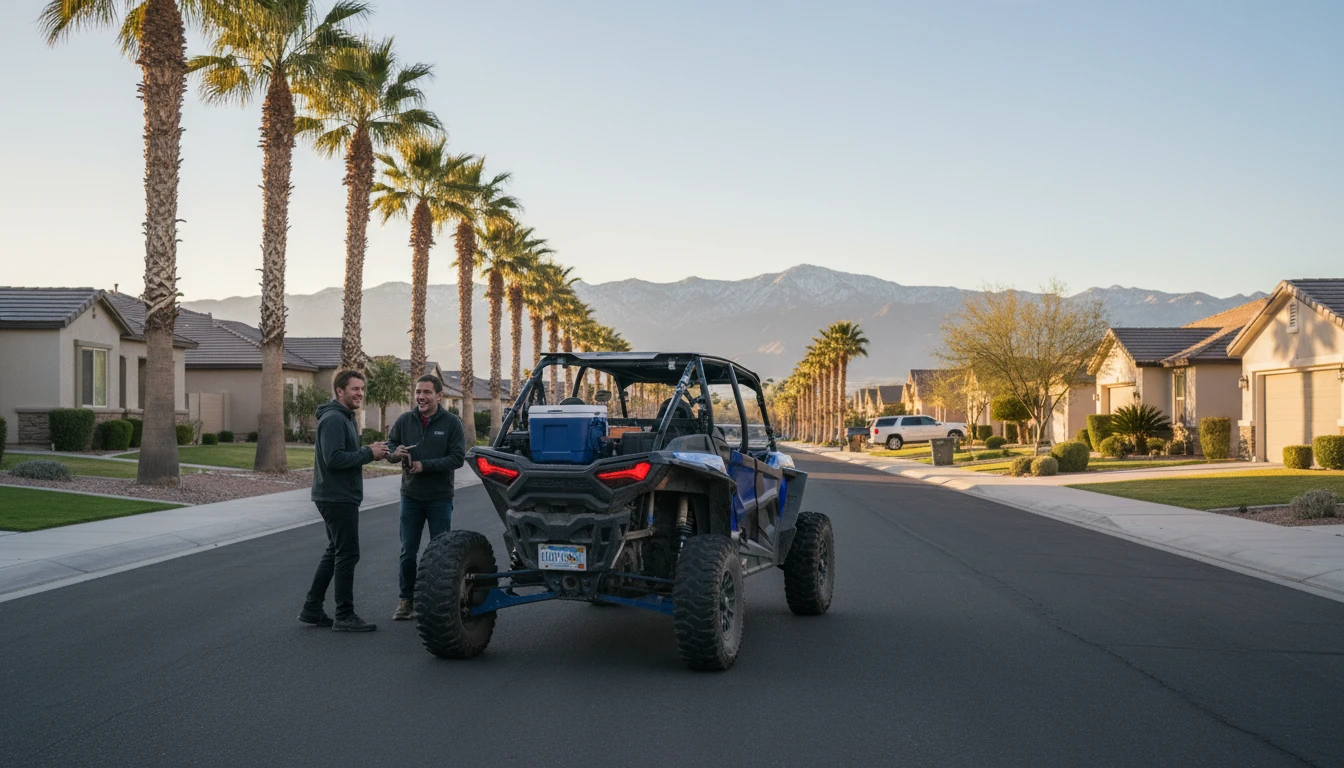
For a Nevada UTV owner, the workflow is clean. You form a Montana LLC. The LLC purchases the vehicle (or takes title from you if you already own it). Montana titles and plates the vehicle in the LLC’s name. You’re now a Montana-registered owner. When you operate the vehicle in Nevada, it is treated under NRS § 482.385 as an out-of-state registered vehicle, the same way Nevada treats a California car driving across Hoover Dam or a Utah truck pulling into Las Vegas for the weekend. Reciprocity applies. Nevada is not entitled to a second sales tax on a vehicle already registered in another state.
The most important point for Nevada riders specifically: this approach also routes around NRS § 490.082. The Nevada statute prohibits Nevada from issuing a street-legal title or plate for a UTV. It does not prohibit Nevada from recognizing an out-of-state plate. A Montana-registered UTV crossing into Nevada is not a Nevada-registered OHV trying to convert. It is an out-of-state registered vehicle operating under reciprocity. The two statutes (490.082 and 482.385) coexist because they govern different things. One controls Nevada’s own registration choices. The other controls how Nevada treats vehicles registered elsewhere.
Cost: $749 total. That breaks down as $549 for the service (LLC formation, registered agent, Montana title transfer, plate procurement, shipping to your door) plus $200 in Montana state fees. After year one: $0. Forever. No renewals. No annual decals. No mailed reminders.
One Montana LLC. One plate. Nevada recognizes it statewide. Under NRS § 482.385, your Montana-registered UTV is an out-of-state vehicle for the entire time you operate it in Nevada. The same statute protects every California, Arizona, and Utah visitor who drives across a Nevada border. You are using the same legal doctrine they use, deliberately and lawfully.
Case Studies

The Henderson Buyer: $45K X3 MAX, Clark County 8.375%
A real estate developer in Henderson buys a Can-Am X3 MAX Turbo RR fully loaded at $45,000 from a Las Vegas dealership. At signing, Clark County’s 8.375 percent sales tax adds $3,769 to the price. He pays it because the dealer’s finance manager tells him there is no other option, which is technically true if you only consider Nevada DMV pathways. Over the next five years, he also pays $100 in OHV fees ($20 annual × 5 years). His five-year total cost of registration and tax: $3,869.
Then his neighbor mentions Montana. The neighbor has a Yamaha YXZ1000R on Montana plates and runs Logandale every other weekend without any registration friction. The developer runs the math. Montana LLC: $749 total, one-time. Savings over five years: $3,120. Savings over ten years: $3,220 (the OHV decal would have cost another $100). Savings over twenty years: $3,420. He restructures his next purchase, a Polaris RZR Pro R for his teenage daughter, through the same LLC. Two machines, one entity, one plate apiece, zero recurring cost. He estimates lifetime savings across both machines and any future additions at well over $10,000.
The Reno Tech Professional: $35K Defender, Washoe County 8.265%
A software engineer in Sparks owns a 40-acre parcel in the foothills near Verdi and a smaller cabin near Peavine. She buys a Can-Am Defender MAX HD9 at $35,000 from a Reno dealership. Washoe County’s 8.265 percent applies, costing her $2,893 in sales tax at the point of purchase. The Defender is part work vehicle (hauling fence posts, checking water tanks, dragging a small trailer) and part recreational, with Peavine Mountain trails ten minutes from her property.
Five-year Nevada cost: $2,893 in sales tax plus $100 in OHV fees, totaling $2,993. She instead chose Montana before her purchase closed. The dealership processed the sale as an out-of-state delivery to the Montana LLC. Her total cost was $749 plus the negotiated machine price with no Nevada tax added. Five-year savings: $2,244. She also routes legally between her property’s private road, the BLM trail network behind her parcel, and the public roads she occasionally has to cross to reach a fuel station, all under reciprocity instead of the two-mile rule.
The Vegas Family Buyer: $25K Maverick Sport, Clark County
A married couple in northwest Las Vegas with two teenage kids buys a four-seat Can-Am Maverick Sport at $25,000 from a Henderson dealership. Their plan is straightforward weekend riding at Nellis Dunes (twenty minutes away) and longer trips to Logandale in the fall. Clark County’s 8.375 percent adds $2,094 to the sticker. They write the check.
The friction surfaces later. They want to camp at Logandale for a long weekend and end up running short on fuel. The nearest gas station is roughly five miles by road from the staging area. Their Nevada OHV registration legally lets them go two miles. The remaining three miles must be done on a trailer. They learn this after the fact, sitting in the truck negotiating which adult is making the round trip with the gas cans. After year one, they restructure through Montana for their next machine, a smaller youth quad for their younger child. Five-year savings on the Maverick alone: $1,445. The added flexibility of road access under reciprocity was, in their words, the more valuable benefit.
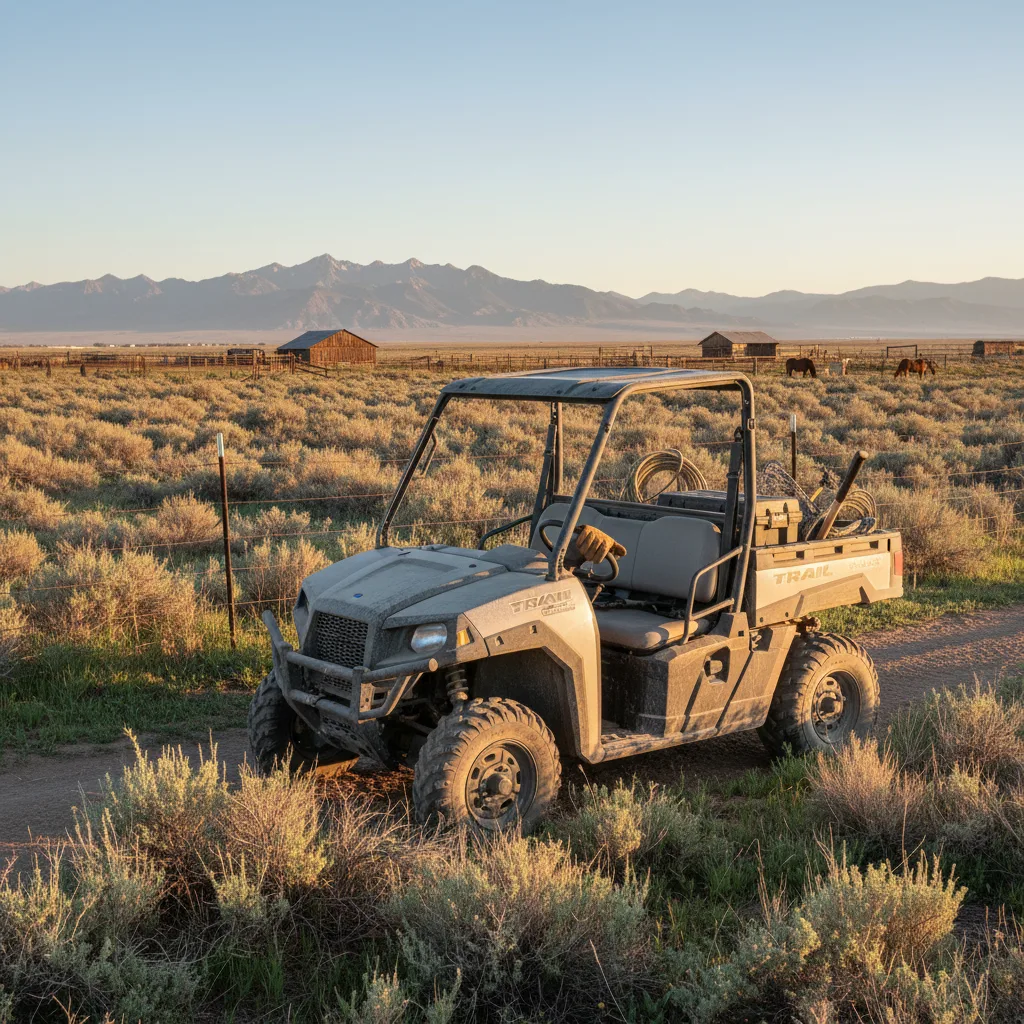
The Rural Rancher: $15K Entry UTV, Elko County ~7.6%
A cattle operation outside Elko buys a Polaris Trail 450 at $15,000 as a basic ranch chore vehicle: moving hay, checking water sources, running fences. Elko County’s combined rate of roughly 7.6 percent adds $1,140 in tax at purchase. The Polaris is barely on a public road, ever. Almost all its use is on private ranch land and BLM grazing leases. The owner assumes (incorrectly) that Nevada offers some kind of agricultural exemption for working ranch UTVs. It does not. The $20 annual OHV registration and the sales tax both still apply.
Five-year Nevada cost: $1,140 in tax plus $100 in OHV fees, totaling $1,240. Montana LLC: $749 once, no recurring fees. Net five-year savings: $491. The numbers are smaller than the high-end case studies because the machine price is smaller, but the Montana option also gave him road access between his deeded property and a leased grazing parcel four miles away that he previously had to trailer between. For a working ranch, that operational flexibility is worth more than the dollar savings.
Is This Legal?
Yes. The Montana LLC structure is recognized in Nevada under two interlocking statutes and a body of case law that has held up consistently for decades.
First, NRS § 482.385 establishes that Nevada honors out-of-state vehicle registrations. The statute is explicit: a vehicle properly registered in another state is recognized when operated in Nevada. Montana is another state. A Montana-titled vehicle owned by a Montana LLC is registered in Montana. Nevada’s recognition obligation applies.
Second, the foundational case law for LLC-based vehicle ownership across state lines is Thomas v. Bridges, a Louisiana Supreme Court decision that held a Montana LLC’s vehicle ownership and registration were valid against a home-state challenge. The court found that a properly formed LLC is a separate legal person with its own residency, and the home state was not entitled to ignore that legal personhood for tax purposes. The reasoning has been applied (and quietly accepted) in dozens of states since.
The critical factor is that the LLC must be real. A real LLC has articles of organization filed with the Montana Secretary of State. A real Federal Employer Identification Number. A real Montana registered agent with a Montana street address. Real annual reports filed with the state. Real banking and real ownership records. The structure we build for clients is all of these things, fully documented, fully compliant with Montana law. It is not a paper fiction. It is a Montana business that happens to own a vehicle.
And critically for Nevada specifically: NRS § 490.082 does not apply. That statute governs Nevada’s own choices about which vehicles it will register for street use. It says Nevada will not issue a street-legal title to a UTV. It says nothing about whether Nevada must recognize an out-of-state plate. Those are different legal questions controlled by different statutes. The Montana plate enters Nevada under reciprocity (NRS 482.385), not under Nevada’s internal OHV registration scheme (NRS 490).
Who This Is Built For
The Montana structure fits a specific set of Nevada buyers. If you’re in any of these categories, the economics are clear.
- Las Vegas and Henderson buyers. Clark County’s 8.375 percent is the highest combined sales tax rate in Nevada. Any UTV purchase over about $9,000 already exceeds the Montana cost in tax savings alone, before counting recurring OHV fees.
- Logandale and Valley of Fire regulars. The trail system itself is free, but connecting between staging areas, fueling, and accessing nearby BLM land all benefit from road registration. Montana plates make those connections legal under reciprocity.
- Ranch operators in central and northern Nevada. Ranch UTVs frequently cross public roads between deeded parcels, leased grazing land, and access points. Montana registration replaces the two-mile rule with full reciprocity.
- Buyers of $25,000+ machines. At this price point, sales tax savings alone exceed the Montana service cost by a wide margin. The decision is essentially automatic from a financial standpoint.
- Multi-machine owners. A single Montana LLC can hold multiple vehicles. The LLC formation cost is paid once, and each additional machine added to the entity costs only the per-vehicle registration fee. Couples with two UTVs, families with adult and youth machines, and ranches with multiple work vehicles all benefit disproportionately.
- Buyers who want trail-system flexibility. If your riding plan involves connecting trail systems via short stretches of public road, fueling at a town gas station, or crossing more than two miles of pavement to reach a destination, Montana registration is the only legal pathway in Nevada.
- Anyone planning to take the machine out of Nevada. Montana registration travels. Your machine can ride in Utah, Arizona, California, Idaho, and back through Nevada without re-registration in any of them.
If your vehicle is under $15,000 and stays entirely on private land, call us for a free break-even calculation. For nearly every other Nevada UTV buyer, the math and the access benefits favor Montana.
Our Process

Zero Tax Tags handles the entire pathway. You provide the vehicle information and the buyer details. We handle Montana from end to end.
The flat cost is $749. That number breaks down as $549 for our service plus $200 in Montana state fees. The service portion covers LLC formation (articles of organization filed with the Montana Secretary of State), registered agent service at a Montana address, Federal Employer Identification Number application, title transfer or initial titling at the Montana county treasurer’s office, license plate procurement, and shipping to your Nevada address. The $200 covers Montana’s state filing fees and the permanent OHV registration.
After year one: $0. The Montana plate is permanent for OHVs. There are no renewal cycles, no annual decal purchases, no mailed notices. Your annual LLC obligation in Montana is a $20 annual report filing, which we handle for clients who use our renewal management service (a separate, optional offering). Many clients prefer to handle the annual report themselves; it’s a five-minute online form on the Montana Secretary of State website.
The service is fully managed. You do not need to travel to Montana. You do not need to set up a Montana mailing address. You do not need to file anything with Nevada because Nevada is not involved in the registration; the vehicle is registered in Montana and operates in Nevada under reciprocity. Our team handles every Montana-side step, prepares the documents, ships the plates, and provides you with the title and registration paperwork for your records.
Timeline: Day 1 to Permanent Plates
The full process takes about a week from start to finish. Most of that time is Montana’s processing, not ours. We move as quickly as the state offices allow.
| Day 1: | You submit paperwork through our online intake. We file your LLC articles of organization with the Montana Secretary of State the same day. |
| Days 1–2: | LLC formation completes. Montana issues the formation certificate. We secure the EIN from the IRS and assign the registered agent. |
| Days 2–4: | Title transfer is processed at the Montana county treasurer’s office. The vehicle is now titled in the LLC’s name and assigned its permanent registration. |
| Days 4–7: | Permanent plates are produced by the state and shipped directly to your door anywhere in Nevada. You receive the title, registration, and plates as a complete package. |
That is the entire process. After Day 7, you are a Montana-registered owner with a permanent plate, full reciprocity in Nevada, and zero recurring registration cost.
FAQs
Can I drive a Montana-plated UTV on Nevada public roads?
Yes, with one caveat. NRS § 482.385 recognizes valid out-of-state registrations. A Montana-plated UTV is treated the same way Nevada treats a California car or a Utah truck passing through. The caveat is that road use should match how the machine is equipped. UTVs operating on public roads should have the required safety equipment (lights, mirrors, horn) consistent with Montana’s vehicle equipment standards. Most modern UTVs ship with this equipment from the factory.
Do I still need the Nevada OHV registration decal?
No. Nevada’s OHV registration requirement applies to vehicles registered in Nevada. A Montana-registered vehicle is not subject to Nevada’s OHV decal scheme; it operates under reciprocity. You will not need to purchase or display a Nevada OHV decal on a Montana-plated machine.
What’s the NRS § 490.082 ban and does Montana get around it?
NRS § 490.082 prohibits Nevada from issuing a street-legal Nevada title or plate to a UTV. The statute controls Nevada’s internal registration choices. It does not control how Nevada treats vehicles registered elsewhere. A Montana-registered UTV enters Nevada as an out-of-state vehicle under NRS § 482.385 reciprocity. The two statutes govern different questions and coexist without conflict. The Montana path does not circumvent NRS § 490.082; it operates outside the statute entirely.
How long does the process take?
About one week, end to end. Day 1 is paperwork submission and LLC filing. Days 1–2 are LLC formation. Days 2–4 are title transfer in Montana. Days 4–7 are plate production and shipping to your Nevada address. Total time from your initial submission to plates in your hand is typically 7 business days.
What happens at renewal?
For the vehicle: nothing. Montana issues permanent OHV plates that never expire. There are no annual renewal cycles, no decals to purchase, no expiration date stickers. For the LLC: a Montana annual report is required, which costs $20 and takes about five minutes to file online with the Montana Secretary of State. Many clients handle this themselves; we offer an optional managed renewal service for clients who prefer to delegate it.
Can I retitle a UTV I already bought in Nevada?
Yes. The process is the same. Your Nevada-titled machine is transferred to the Montana LLC, which then takes ownership and registers the vehicle in Montana. The only consideration is that you have already paid Nevada sales tax on the original purchase, which is not refundable. The savings going forward are the elimination of recurring OHV fees and the addition of full road reciprocity. For older purchases, the financial case is weaker; for recent purchases or new acquisitions, it’s automatic.
Is the LLC reusable for future vehicles?
Yes, and this is one of the largest advantages of the Montana approach. A single LLC can hold any number of vehicles. Once your LLC exists, adding a second UTV, a boat, a trailer, an RV, or a classic car costs only the per-vehicle registration fee, not the full $749. Multi-vehicle families and ranch operations realize the largest cumulative savings by consolidating all titles under one Montana entity.
What about insurance?
Insurance is independent of registration. Most major carriers (Progressive, Geico, State Farm, USAA, Allstate, and specialty powersports carriers) write policies on Montana-registered vehicles owned by an LLC. The vehicle is insured under the LLC’s name with you (and any other authorized operators) listed as a named insured driver. We provide all documentation required by your carrier and can connect you with brokers who routinely write Montana-LLC-owned UTV policies.
See how Montana LLC registration helps off-road and vehicle owners in other states:
- Utah ATV & UTV Registration 2026: Sales Tax, Street-Legal Rules, and the Montana Fix
- Texas ATV & UTV Registration 2026: The Sales Tax Trap and the Street-Legal Loophole
- Nevada Vehicle Tax: The Hidden 8.25% Cost
Nevada Has the Dunes. Montana Has the Plate.
Nevada is home to Logandale, Sand Mountain, Nellis Dunes, and some of the best desert OHV riding in the world. You don’t need to pay 8.375% in Clark County sales tax and $20/year forever to access any of it. Montana LLC registration is $749 once. Permanent plate. About a week to your door.