
25 min read
On this page
- + The Marcus Chen Story: A $92k BMW and Three Tax Surprises
- + How Illinois vehicle tax actually works
- + Chicago vs. collar counties vs. downstate
- + The private party bracket trap (RUT-50)
- + 5-year cost tables: $60k, $90k, $120k vehicles
- + Who gets hit hardest in Illinois
- + The Montana LLC solution
- + Is this actually legal?
- + Three Illinois case studies
- + Our Process
- + Frequently asked questions
The Marcus Chen Story: A $92k BMW and Three Tax Surprises
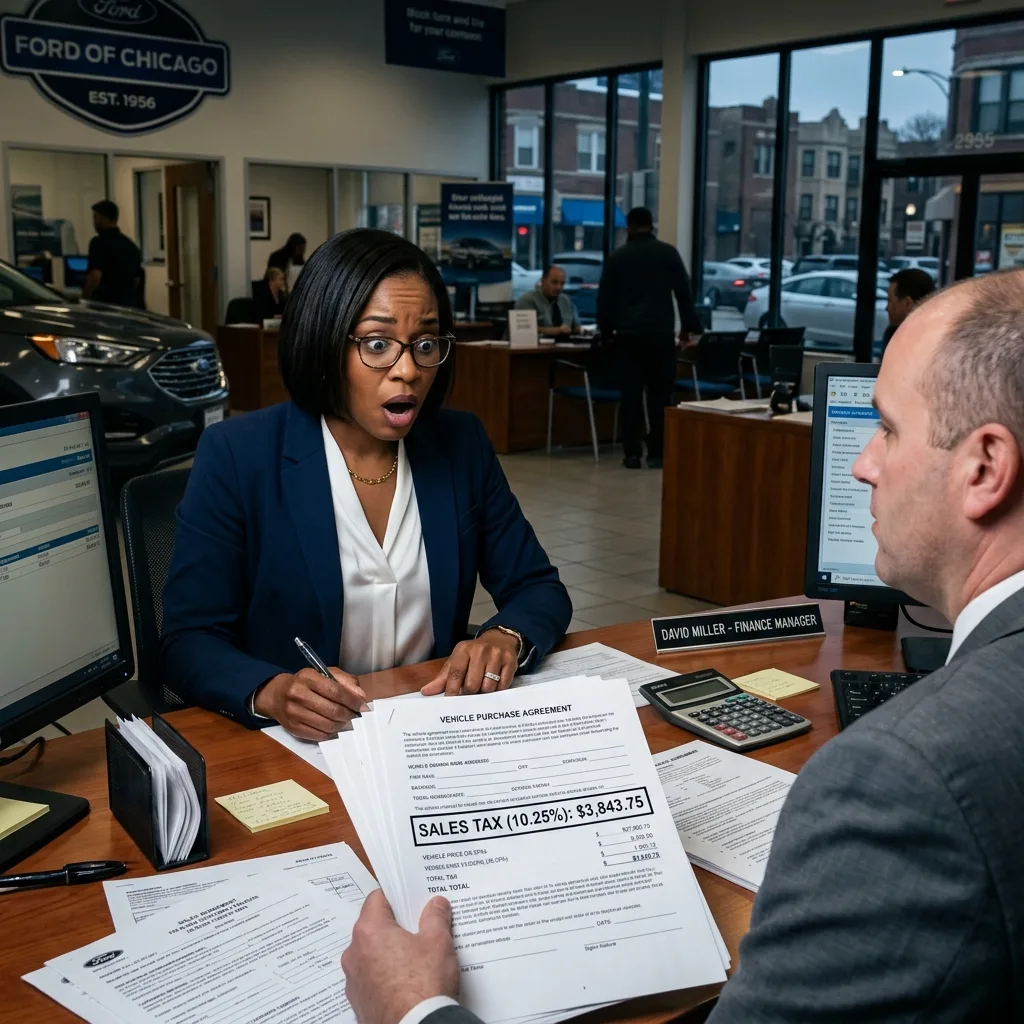
Illinois vehicle tax is the kind of bill that arrives in pieces. Marcus Chen, a 41-year-old commercial litigator at a LaSalle Street firm in Chicago, learned this the hard way on a Saturday in March. He had finally pulled the trigger on a 2025 BMW M5 sedan, sticker price $92,400, after months of test drives and spreadsheet justifications. The deal at the dealership in River North went smoothly. He had pre-approved financing through his credit union. He had run the math himself: 6.25 percent state sales tax on $92,400 came out to $5,775. He budgeted $6,000 to be safe.
Then the finance manager slid the paperwork across the desk and pointed at a line item that said $6,930 in tax. Marcus did the quick mental math. That was 7.5 percent, not 6.25 percent. He asked what happened. The finance manager explained, almost apologetically, that Chicago dealer sales carry the 6.25 percent state rate plus a 1.25 percent Chicago Home Rule Use Tax. It is a city tax that gets layered on top of the state tax. The 7.5 percent was correct. There was no mistake. He was paying $1,155 more in tax than he had budgeted, because of where the dealership happened to sit on the map. Marcus signed. He drove home.
Six weeks later a notice from the City of Chicago landed in his mailbox. Wheel tax. Ninety dollars. Annually. Every single year that this BMW is registered to his Chicago address. Marcus had never paid a wheel tax in his life. He had grown up in Naperville. He had no idea Chicago charged residents a flat annual fee on top of state registration just for the privilege of keeping a car within city limits. He paid it. He muttered something unprintable about Cook County, opened a beer, and moved on.
The third surprise came two months after that, when his law partner mentioned offhandedly that he had bought a used Porsche Cayenne for $48,000 and the Illinois Secretary of State had sent him a tax bill of $1,200. Marcus, who deals with tax law regularly enough to feel insulted, asked how that was calculated. His partner pulled out the form. RUT-50. Private party use tax. The amount had nothing to do with the 7.5 percent that Marcus had paid. It was a flat-rate bracket from a printed table issued by the Illinois Secretary of State. Plus $90 because Cook County tacked on a use tax of its own. That was when Marcus, quietly furious for three months, started Googling Montana LLC registration at 11:47 p.m. on a Tuesday.
That Google search is what brought a lot of Illinois drivers to this page. The illinois vehicle tax system is not a single tax. It is four taxes stacked on top of each other, and depending on where you live and how you bought the car, the order in which they hit you changes. This article is the explainer Marcus wishes he had read before he signed.
How Illinois vehicle tax actually works: the four-layer stack
Most states charge one vehicle tax. Maybe two. Illinois charges four, and the difference between the cheapest and the most expensive Illinois zip code is enough to fund a week-long vacation every year. To understand the illinois vehicle tax burden, you have to understand each layer separately and then watch them combine.
Layer one is the state sales tax. Illinois charges 6.25 percent on the purchase price of any vehicle bought from a licensed dealer. This rate is fixed statewide. It does not change based on where you live. If you buy a $50,000 truck from a dealer in Carbondale or a $50,000 truck from a dealer in Evanston, the state portion is $3,125 either way. Simple, predictable, and not the part that is going to ruin your day.
Layer two is the local home rule sales tax. This is where Illinois gets weird. Home rule municipalities, which include Chicago and many of its surrounding suburbs, can impose their own sales tax on vehicle purchases. Chicago specifically charges a 1.25 percent Home Rule Use Tax on vehicle sales at Chicago dealerships. That brings the total dealer-sale tax rate inside Chicago to 7.5 percent. Other home rule cities have their own rates, and the rate that applies depends on where the dealer is located, not where you live. So if you live in Wilmette but buy in Chicago, you pay Chicago’s rate.
Layer three is the Cook County use tax. Cook County tacks on additional use tax on private party vehicle transfers when the purchaser lives in Cook County. The current Cook County wheel tax adds approximately $90 in use tax on top of whatever the state RUT-50 bracket says you owe. This is separate from the state private party tax. It is separate from the city wheel tax. It exists because Cook County figured out that vehicle transfers were a revenue stream nobody was taxing twice.
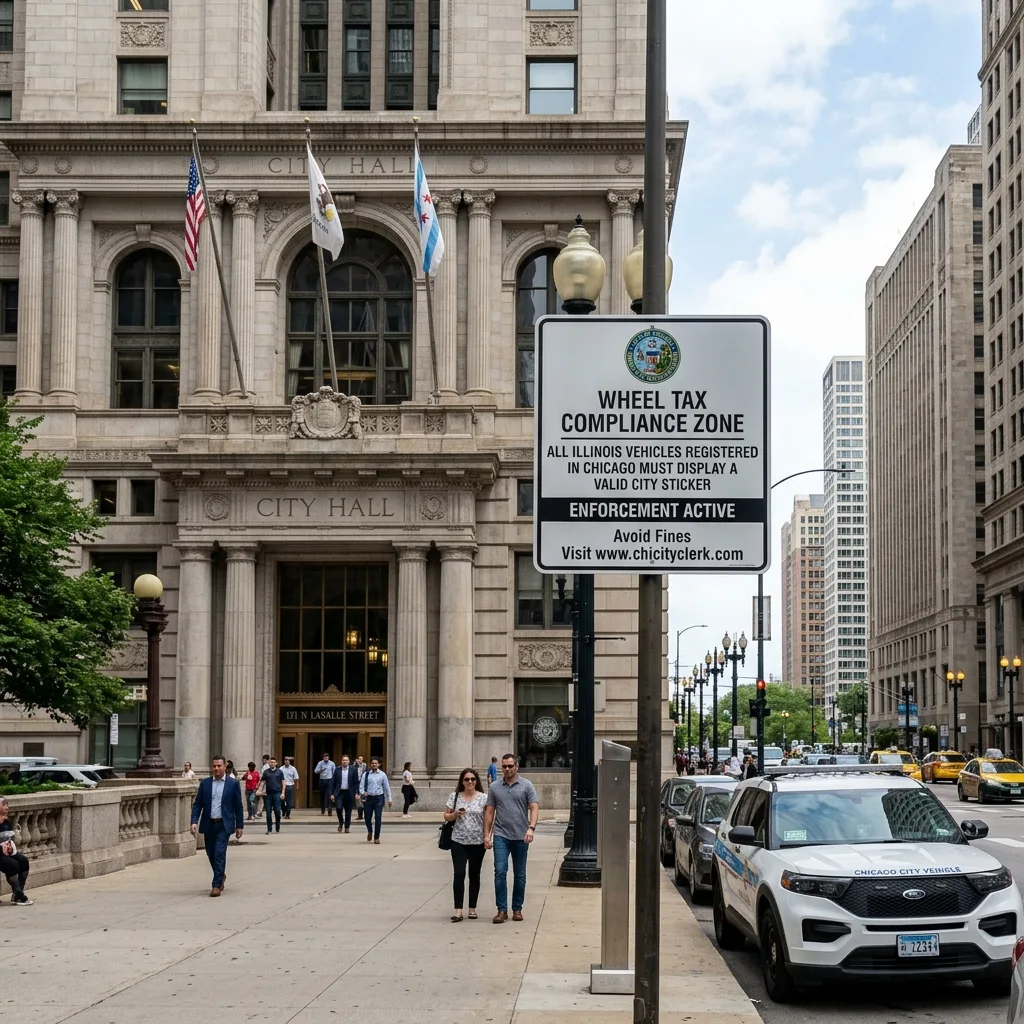
Layer four is the annual wheel tax. This is the one that catches people off guard the most. The City of Chicago charges every vehicle registered to a Chicago address an annual wheel tax of $90 per passenger vehicle. Some other home rule suburbs charge their own wheel taxes too. This is not a one-time fee at purchase. This is a recurring annual cost that shows up every year for as long as you own the car and live in the jurisdiction. Ten years of Chicago wheel tax is $900. Twenty years is $1,800. It compounds quietly.
And underneath all four layers sits the standard Illinois passenger vehicle registration fee, which currently runs between $90 and $151 per year depending on plate type, plus a $25 to $50 title fee at purchase. Layer five, if you want to count it. Most people don’t. They are too busy being shocked by layers one through four.
Chicago vs. collar counties vs. downstate: the same car at three prices

The geographic premium for the illinois vehicle tax is real and measurable. Two identical vehicles purchased on the same day from dealerships ten miles apart can have a four-figure difference in tax depending on which side of the Chicago city line each dealership sits on. The math is straightforward but the practical impact is brutal, especially on luxury and performance vehicles where the percentages translate to bigger absolute dollars.
Consider the same $60,000 SUV purchased at three different Illinois dealerships. At a Chicago dealer in River North or Lincoln Park, the buyer pays 7.5 percent in combined sales tax, which works out to $4,500. At a Naperville dealer in DuPage County, the buyer pays roughly 7.0 to 7.25 percent depending on the exact municipality, somewhere around $4,200 to $4,350. At a Springfield or Bloomington dealer downstate, the rate drops to closer to 6.25 to 6.75 percent, putting the tax bill at $3,750 to $4,050. The Chicago premium on a $60,000 vehicle is $450 to $750 just compared to nearby suburbs, and $750 compared to downstate. On a $120,000 vehicle, that premium doubles.
That table only shows the at-purchase tax. It does not include the annual wheel tax, which adds another $90 every year for Chicago residents on top of the state registration fee. Over a five-year ownership period, that wheel tax alone adds $450 to the cost of keeping any vehicle within Chicago city limits. For households with two or three cars, the math gets ugly fast.
And here is the part that makes the geographic premium even more frustrating. The state of Illinois has a special tax category for vehicles bought from dealers that have especially poor fuel economy. Vehicles in the 16.5 to 17.5 MPG range can attract additional luxury fuel-economy taxes that approach $3,000 on top of the regular sales tax. So a Chicago resident buying a fast SUV with a thirsty V8 at a Chicago dealership can stack a 7.5 percent rate on top of a $3,000 fuel-economy adder, push past 10 percent effective tax, and walk out of the showroom paying tax bills that would make most New Yorkers wince. The illinois vehicle tax on premium vehicles is not subtle.
The private party bracket trap: RUT-50 and the $15,000 cliff
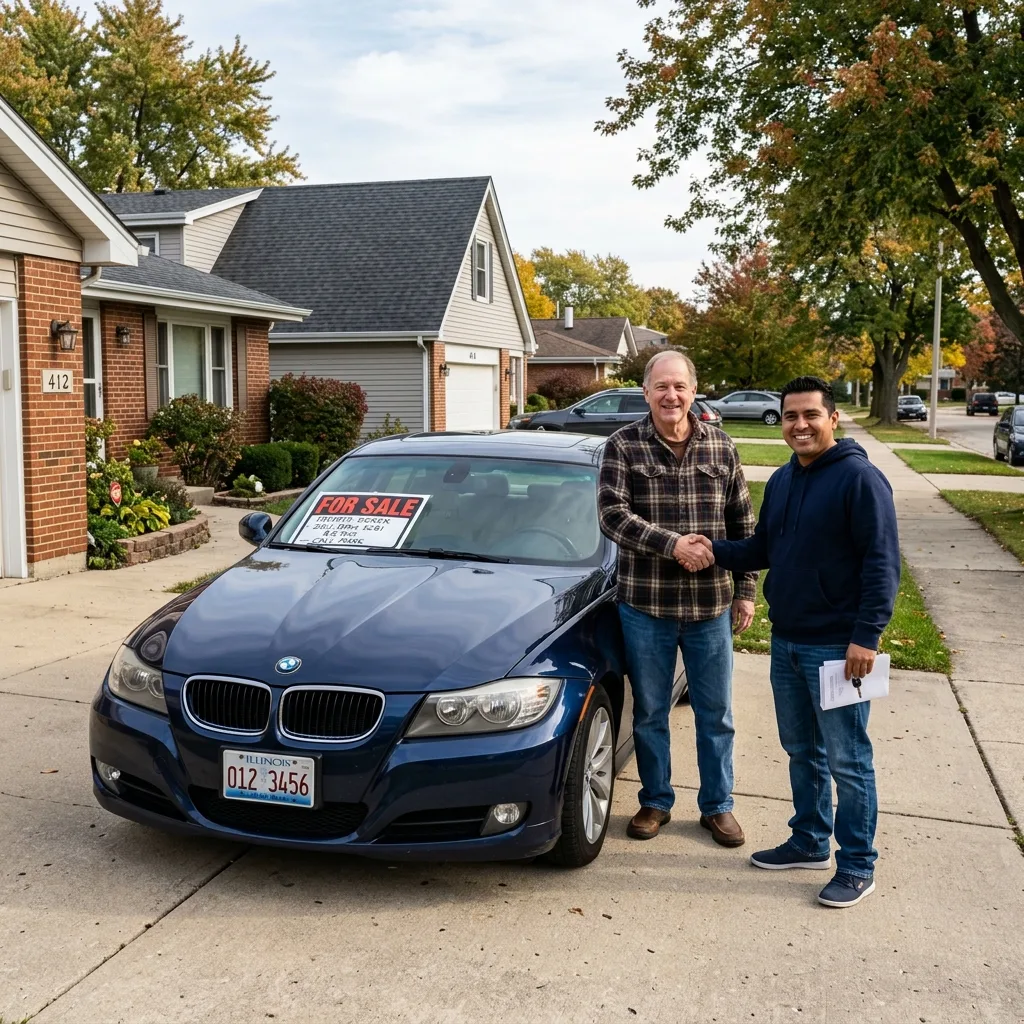
If buying from a dealer in Illinois feels expensive, buying from a private party introduces a whole different kind of pain. Illinois does not charge a percentage tax on private vehicle transfers the way most states do. Instead, the state uses a printed flat-rate table tied to either the vehicle’s purchase price (for vehicles $15,000 and up) or the vehicle’s age (for vehicles under $15,000). The form is called RUT-50, and it must be filed within 30 days of purchase at a Secretary of State office, along with the title transfer.
For vehicles priced under $15,000, the tax is set by age. A car under one year old gets the highest rate, around $390. A car 11 or more years old gets the lowest, around $25. The brackets in between step down progressively. This system was designed in an era when cars depreciated faster and used vehicles under $15,000 dominated the private market. It still works fine for that segment.
For vehicles $15,000 and up, the system gets weird. Illinois uses a flat-rate price bracket that pays no attention to the actual purchase price within each bracket. A vehicle purchased between $15,000 and $19,999.99 pays a flat $750. A vehicle between $20,000 and $24,999.99 pays $1,000. A vehicle between $25,000 and $29,999.99 pays $1,250. The brackets continue stepping up to $1,600 and beyond for higher-priced vehicles.
The bracket trap works like this. If you buy a used $25,500 Audi Q5 from a neighbor, you owe $1,250. If you instead negotiate the price down to $24,999, you owe $1,000. A $501 reduction in purchase price triggers a $250 reduction in tax, an effective marginal tax rate of nearly 50 percent on that last dollar. People who shop carefully on the bracket boundaries can save real money. People who don’t pay extra for nothing.
The trap is worse on the upper end. A $48,000 Porsche Cayenne and a $60,000 Porsche Cayenne can land in the same flat-rate bracket, meaning the more expensive vehicle effectively gets a tax discount as a percentage of price. This is the opposite of progressive. It rewards buying more expensive used cars. Marcus’s law partner, who paid $48,000 for his Cayenne, paid the same flat rate as someone who would have paid $58,000 for the same model with more options. He felt vaguely cheated. Most private party buyers do not even realize they are in a bracket system until the Secretary of State prints out the bill.
And then Cook County adds its own use tax of around $90 on top of the state RUT-50 amount, just because you happen to live in Cook County. The combined private party hit on a typical $25,000 to $50,000 used vehicle in Cook County runs $1,090 to $1,690 before you have even registered the car or paid the city wheel tax. The illinois vehicle tax on private party transactions is one of the least understood and most expensive private party tax structures in the country.
The 30-day filing deadline matters. If you miss it, Illinois assesses penalties and interest. The Secretary of State can also block your title transfer if RUT-50 is not filed and the tax not paid. There is no grace period for “I didn’t know.”
5-year cost tables: Illinois vs. Montana LLC
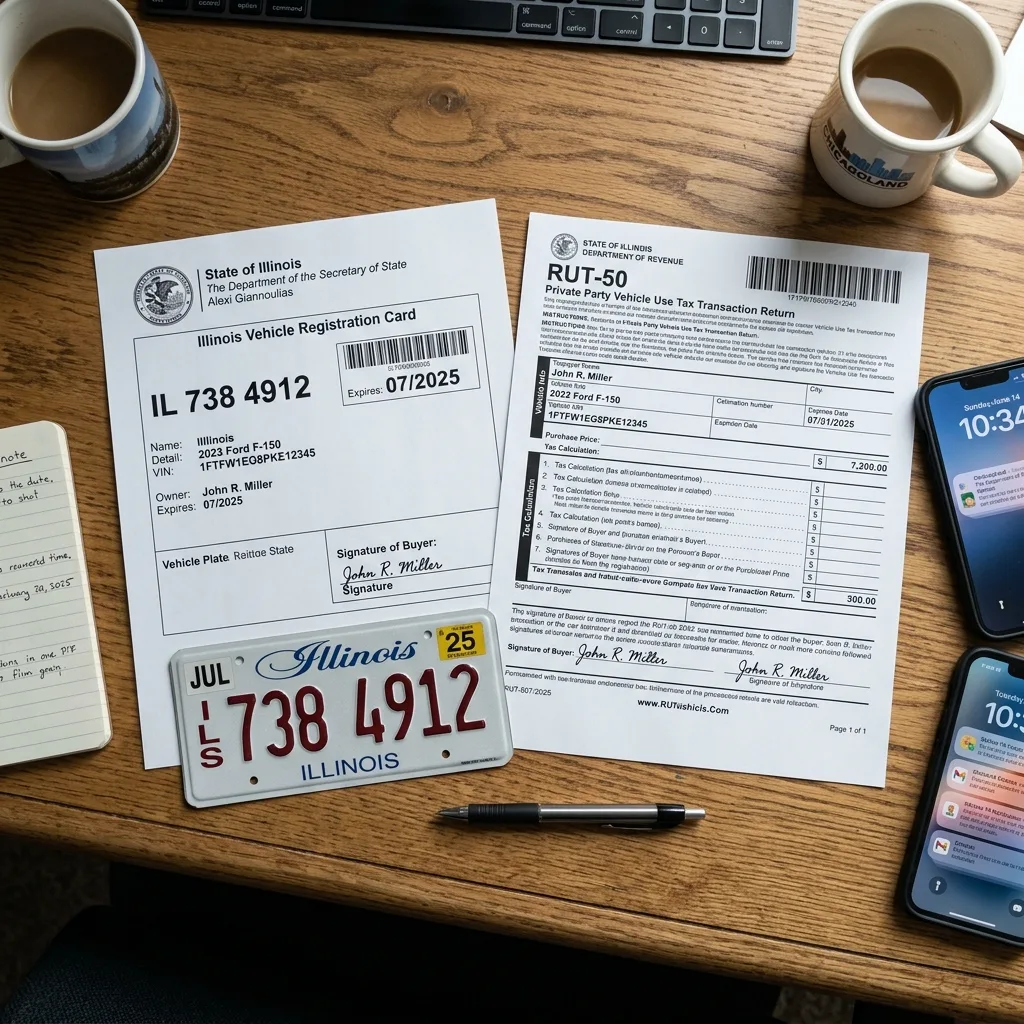
The case for Montana LLC registration is not theoretical. It is arithmetic. The cost difference over five years is the difference between two used cars or two years of private school tuition or three nice family vacations. Below is the actual five-year cost comparison for a Chicago resident at three different vehicle price points, using Chicago’s 7.5 percent dealer rate, the $90 annual Chicago wheel tax, and Illinois registration fees on the Illinois side, and the standard Montana LLC pricing of $899 in year one and $270 per year thereafter on the Montana side.
Note that the savings figure does not account for any fuel-economy luxury taxes (which can add another $1,500 to $3,000 on certain dealer purchases), Cook County use taxes on private party transactions (which add another $90), or the time and frustration of standing in line at the Secretary of State office to file RUT-50 paperwork. It also assumes you keep your vehicles for five years. Many luxury vehicle owners turn over their cars every two to three years, in which case they pay the full Chicago dealer tax repeatedly. The Montana LLC pays once and then maintains forward.
Who gets hit hardest: four Illinois profiles
Not everyone in Illinois feels the illinois vehicle tax system the same way. The pain is concentrated in four specific buyer profiles, and if you recognize yourself in any of them, you are probably overpaying by thousands of dollars per year compared to what your neighbors in Indiana or Wisconsin pay for the exact same vehicles.
Profile one is the Chicago luxury buyer. This is the resident of Lincoln Park, the Gold Coast, River North, the South Loop, Bucktown, Wicker Park, or any of the dozen other Chicago neighborhoods where high-income professionals concentrate. They buy German sedans, British SUVs, Italian sports cars. They are the buyers most likely to pay the full 7.5 percent rate, the most likely to trigger fuel-economy adders, and the most likely to be locked into the annual wheel tax forever. A Chicago dermatologist with a $130,000 Mercedes-Benz S-Class pays roughly $9,750 in sales tax at purchase and $90 every single year as long as the car is registered to her Chicago address.
Profile two is the private party used car buyer anywhere in the state, but especially in Cook County. This is the person who bought a low-mileage 2018 Porsche Macan from someone on Facebook Marketplace for $35,000 and is now staring at a RUT-50 form with a $1,250 tax bill plus a $90 Cook County add-on. The percentage they are effectively paying is more than 4 percent of purchase price, but because Illinois doesn’t call it a percentage tax, most buyers don’t realize how steep it is until they are at the Secretary of State counter writing the check. Private party buyers also have no opportunity to roll the tax into financing because most credit unions and banks do not finance private party purchases the way dealerships do.
Profile three is the fleet or multiple vehicle owner. This is the family or small business that has more than two registered vehicles. Maybe a primary commuter sedan, a family SUV, a teen driver’s used car, and a project car or weekend toy. Maybe a contractor with three work trucks. The Chicago wheel tax compounds across vehicles. Three vehicles in a Chicago household equals $270 per year in wheel tax alone, $1,350 over five years, before any registration fees or sales taxes. For business owners with five or more vehicles, the math gets seriously punishing.
Profile four is the suburban commuter who bought before they realized. This profile catches a lot of people moving into Chicago from the suburbs or out of state. They register their existing vehicles at their new Chicago address, file the use tax forms, and then discover they now owe annual wheel tax forever. Or they bought their car years ago in Naperville at the lower suburban rate and then moved to the city, where the annual wheel tax now applies even though they did not pay it on the original purchase. There is no grandfathering. The wheel tax is location-based, not purchase-based.
The Montana LLC solution: how it actually works
Montana is a state with no general sales tax, no county wheel taxes, and no annual personal property tax on vehicles. Montana also allows non-residents to form limited liability companies, and Montana LLCs can own, register, and title vehicles within the state. When a Montana LLC owns a vehicle, that vehicle is registered in Montana, gets Montana plates, and pays Montana fees. It does not pay Illinois sales tax, Chicago Home Rule tax, Cook County use tax, or annual Chicago wheel tax. None of them. Because the vehicle is not legally registered to an Illinois person, the Illinois taxation system has nothing to attach to.
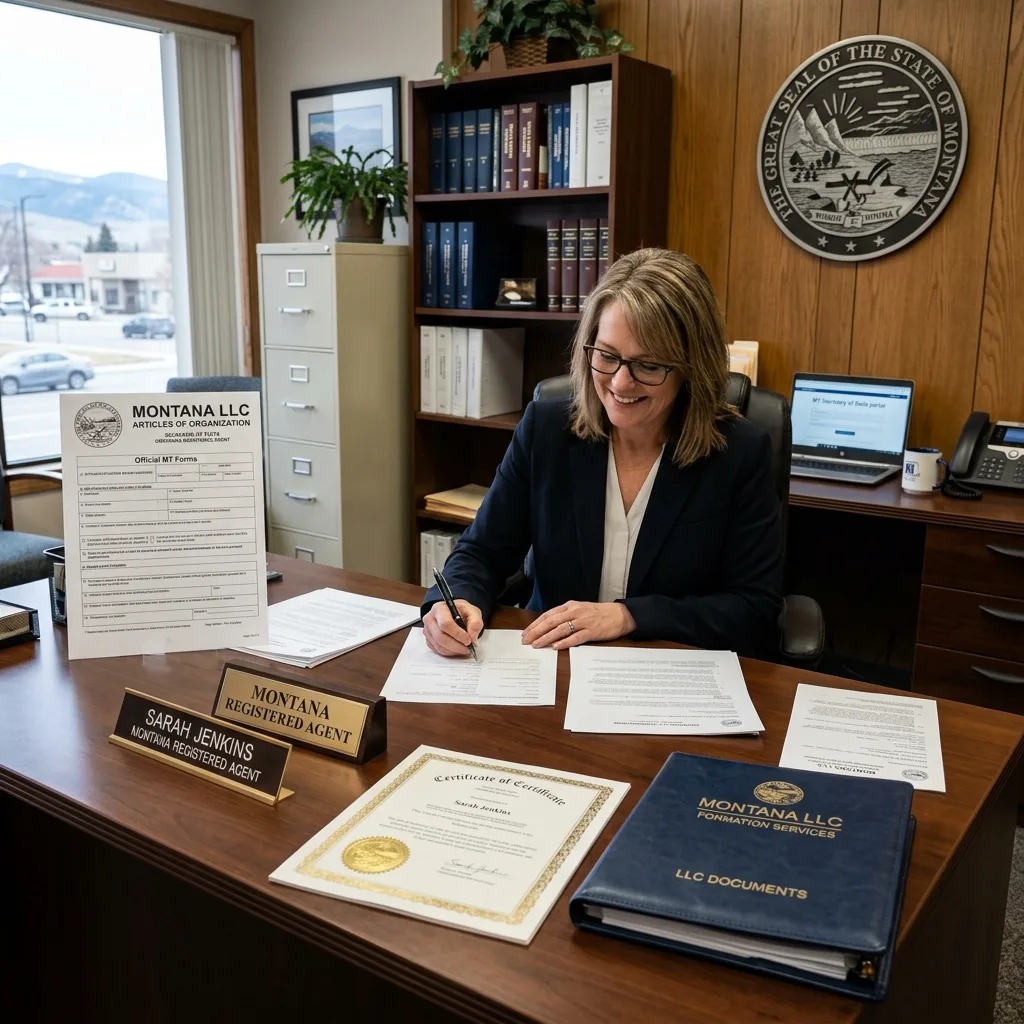
The mechanics are simple. We form a Montana LLC in your name. The LLC owns the vehicle on paper. The vehicle is registered to the LLC’s Montana address with the Montana Motor Vehicle Division. You receive Montana plates by mail. You drive the car wherever you actually drive it, including Chicago, the suburbs, downstate, anywhere. The registration is real, the LLC is real, the title is real. The savings are real because Montana simply does not have the layered tax system Illinois has built up.
Year one cost is $899 total. That breaks down as $699 for our service (LLC formation, registered agent setup, Montana DMV paperwork, plate delivery) and $200 in actual Montana state filing fees and registration costs. Year two and every year after is $270, which covers the registered agent service ($150) and the annual Montana LLC filing fee ($120). There is no surprise additional cost. There is no per-vehicle add-on like Chicago wheel tax. The same $270 covers the LLC for as many vehicles as you choose to register through it.
Compared to the cost of paying full Illinois tax on a single $90,000 luxury vehicle, the Montana LLC pays for itself before the tires hit the driveway. Compared to a household with three or four vehicles, the savings compound into territory that genuinely changes financial outcomes. We have clients who have saved $30,000 over a decade by routing every vehicle purchase through their Montana LLC instead of through the Illinois Secretary of State.
Is this actually legal? Direct answer.

Yes. A Montana LLC owning a vehicle is a legitimate, well-established legal structure that has been used openly for decades by RV owners, exotic car collectors, snowbirds, and increasingly by ordinary residents of high-tax states who simply do not want to subsidize Cook County and the City of Chicago to the tune of thousands of dollars per year.
The legal foundation is federal. Under the U.S. Constitution’s Commerce Clause and Full Faith and Credit Clause, states cannot block legitimate out-of-state entity vehicle registrations. The vehicle is owned by the Montana LLC — a Montana entity — not by the Illinois resident personally. Illinois sales and use tax applies to vehicles acquired by Illinois residents; the Montana LLC is not an Illinois resident. Montana has the authority to register vehicles owned by Montana entities, a right backed by decades of court precedent. This is structurally identical to how thousands of businesses operate vehicle fleets across state lines every day without any legal issue.
The LLC is real. The Montana address is real. The annual filings are real. Zero Tax Tags handles every compliance requirement — registered agent service, annual Secretary of State filings, Montana DMV renewals — so the structure remains solid for the life of your vehicle ownership.
The bottom line: A properly formed Montana LLC that actually owns the vehicle is a legitimate ownership structure recognized in all fifty states. The vehicle’s registration follows the LLC, not the LLC member.
Three Illinois case studies
Real numbers from real Illinois clients tell the story better than tables can. Here are three composite cases that mirror conversations we have weekly. Names and minor details are changed for privacy, but the math is exactly what these households actually saved.
Case Study 1: The Chicago attorney with the $92k BMW M5
Marcus, 41, partner-track litigator in River North. Bought a 2025 BMW M5 sedan for $92,400. At a Chicago dealer that 7.5 percent rate would have meant $6,930 in sales tax, plus $151 for two-year registration, plus $90 in annual Chicago wheel tax for as long as he owns the car. Through Montana LLC registration, his year-one cost was $899 total, his ongoing annual cost is $270, and over a five-year ownership horizon he saved roughly $5,876 even after factoring in the LLC service costs. He told us he would have happily paid double for the peace of mind alone.
Case Study 2: The Naperville dentist with the used $68k Porsche Cayenne
Priya, 38, oral surgeon in DuPage County. Found a private party 2022 Porsche Cayenne S in Schaumburg for $68,000. As a Cook County resident purchasing a used vehicle from a private party, she was looking at the highest RUT-50 bracket of approximately $1,600 plus the Cook County $90 use tax, for a combined $1,690. She also faced annual registration fees, with no wheel tax (DuPage is not Cook County). Through her Montana LLC, the year-one cost was $899 instead of $1,690, immediate savings of $791. Over five years her cumulative savings figured out to approximately $1,290 once registration fees were factored in. Smaller absolute savings than the Chicago BMW client, but a higher percentage savings on a private party transaction. The kind of buyer who routinely shops private party sees this benefit on every deal.
Case Study 3: The Schaumburg couple with the $110k motorhome
David and Linda, 62 and 60, semi-retired empty-nesters in Schaumburg. Bought a $110,000 Class A motorhome for cross-country trips. Local Schaumburg dealer rate was approximately 7.0 percent, putting Illinois sales tax at $7,700, plus annual registration fees on a vehicle of that size and weight class easily exceeding $300 per year. Five-year Illinois cost was approximately $9,200. Through Montana LLC registration their five-year total was $1,979. They saved $7,221, used a portion of the savings to buy a tow vehicle, and registered that under the same LLC at no incremental cost. They take the motorhome to Florida every winter and have never had a registration problem in any state they have driven through.
Our process: how fast and how simple
Most clients are skeptical that something this straightforward can save them this much money. The skepticism usually evaporates somewhere around day two of our process, when they realize there is genuinely nothing complicated happening. We have refined the workflow over thousands of client engagements and the typical timeline is the same regardless of whether you are registering one vehicle or six.
| Day 1: | Submit your MCO and supporting paperwork through our secure portal. We review for completeness and file your Montana LLC the same day. |
| Days 1–2: | Montana LLC formation complete — same business day in most cases, second business day at the latest. |
| Days 2–4: | Title transferred into the LLC name at the Montana county treasurer. |
| Days 4–7: | Permanent Montana plates shipped directly to your door within 3–5 business days of title completion. |
Frequently asked questions
Do I need to physically visit Montana?
No. The entire process is done remotely. We are your registered agent in Montana, which is the legal address requirement. You do not need to travel, take time off work, or set foot in the state. Plates and documents come to wherever you actually live. Most of our Illinois clients never set foot in Montana before, during, or after the process and never need to.
Will Illinois find out and come after me?
The vehicle is registered to a Montana LLC, not to you personally. Illinois has no record of you owning the car, because legally you do not own it, the LLC does. People who get into trouble are typically those who lie about their personal residency, register dozens of vehicles in obvious patterns, or commit unrelated tax fraud at the same time. A single luxury vehicle owned by a properly formed Montana LLC is, in our experience, indistinguishable to any state authority from any other Montana-registered vehicle on the road.
What about insurance?
Standard auto insurance works fine. You insure the vehicle the same way you would any other car. Some major insurers will issue policies directly to the LLC. Others will issue policies to you personally with the LLC listed as the lienholder or owner. We provide guidance on which carriers handle this most smoothly, and we have clients with Geico, Progressive, State Farm, Liberty Mutual, USAA, and several specialty insurers, all working without issue.
Can I sell the vehicle later?
Yes. The LLC is the owner of record, so the LLC sells the vehicle. The title transfer happens through Montana, which is faster and simpler than Illinois title transfers. There is no Illinois sales tax owed on the sale because the transaction does not happen in Illinois. The new buyer handles their own state’s registration however their state requires.
Does this work for multiple vehicles?
Yes. One Montana LLC can own as many vehicles as you want to register through it. The same $270 annual fee covers the LLC regardless of how many vehicles are titled to it. Clients with three to six vehicles see the most dramatic savings because the fixed LLC cost gets spread across more vehicles. The marginal cost of adding a sixth vehicle to an existing LLC is essentially just the Montana state registration fee for that vehicle.
What if I get pulled over in Illinois?
You produce your driver’s license (Illinois) and your registration (Montana, in the LLC name). You are the LLC’s authorized driver. There is nothing illegal or unusual about driving an out-of-state-plated vehicle in your home state. Tens of thousands of Illinois residents drive Florida-plated, Wisconsin-plated, and Indiana-plated vehicles around Illinois every day for various legitimate reasons. Police are not equipped or motivated to investigate the ownership structure of every out-of-state plate they see.
What about tolls and red light cameras?
Toll authorities and camera-ticketing systems will look up the registered owner, which is your Montana LLC. The LLC receives the toll bill or ticket at its Montana address, which is forwarded to you. You pay normally. There is no enforcement gap, and we provide guidance on setting up automatic I-PASS or E-ZPass under the LLC name so you avoid the manual processing.
Does this work for leased vehicles?
Generally no. Leased vehicles are owned by the leasing company, and the leasing company decides where the vehicle is registered. They typically register it to your home address. Montana LLC registration works for vehicles you own outright (cash purchase) or finance through standard auto loans (where you are the title-holder, not the leasing company). For most luxury buyers this is not a constraint because they are buying, not leasing.
What about EVs? Does Illinois have an EV registration penalty?
Illinois does not currently impose a dedicated annual EV surcharge the way some other states do, but the standard registration fees and Chicago wheel tax all apply to EVs the same as gas vehicles. Montana does charge a $130 annual fee for battery electric vehicles under 6,000 pounds and $70 for plug-in hybrids, which is built into the $270 annual cost. EVs registered to a Montana LLC still come out far ahead of Illinois registration for any vehicle priced over about $30,000.
How quickly can you get me started?
Same day if you are ready. We file LLC paperwork the same business day we receive your application and payment, and the full process from application to plates in your hand typically runs 14 to 21 days. If you are about to close on a vehicle purchase and need to coordinate timing, contact us first and we will work backward from your closing date to make sure the LLC is ready when the dealer cuts the title.
Other high-tax states where Montana LLC helps
See how Montana LLC registration helps owners in other high-tax states facing similar layered taxation:
- Arizona VLT Problem: How to Stop Paying $1,000 Every Single Year
- Virginia Car Tax: Stop Paying the Highest Vehicle Tax in America
- North Carolina Vehicle Tax: The Tag Tax Trap and Mandatory Inspection Dragnet
- Arkansas Vehicle Tax: The Natural State’s Hidden Wealth Extraction System
Ready to Stop Overpaying Illinois Vehicle Tax?
Illinois vehicle owners have saved thousands with Montana LLC registration. Year one is $899. Year two and beyond is $270.