24 min read
On this page
- + The real numbers: what a DMV visit actually costs you
- + The anatomy of a DMV nightmare
- + California’s DMV hall of shame
- + The VLF trap: when the DMV overcharges you and won’t fix it
- + The remote worker reality: why Montana is the only solution
- + The Montana Solution: Your Concierge Alternative
- + 3 case studies: the real ROI of firing the DMV
- + Permanent plates: the one-and-done
- + Why delegation beats grinding it out yourself
- + Is this legal?
- + Frequently asked questions
- + Who this is for (and who should skip it)
- + Reclaim your time
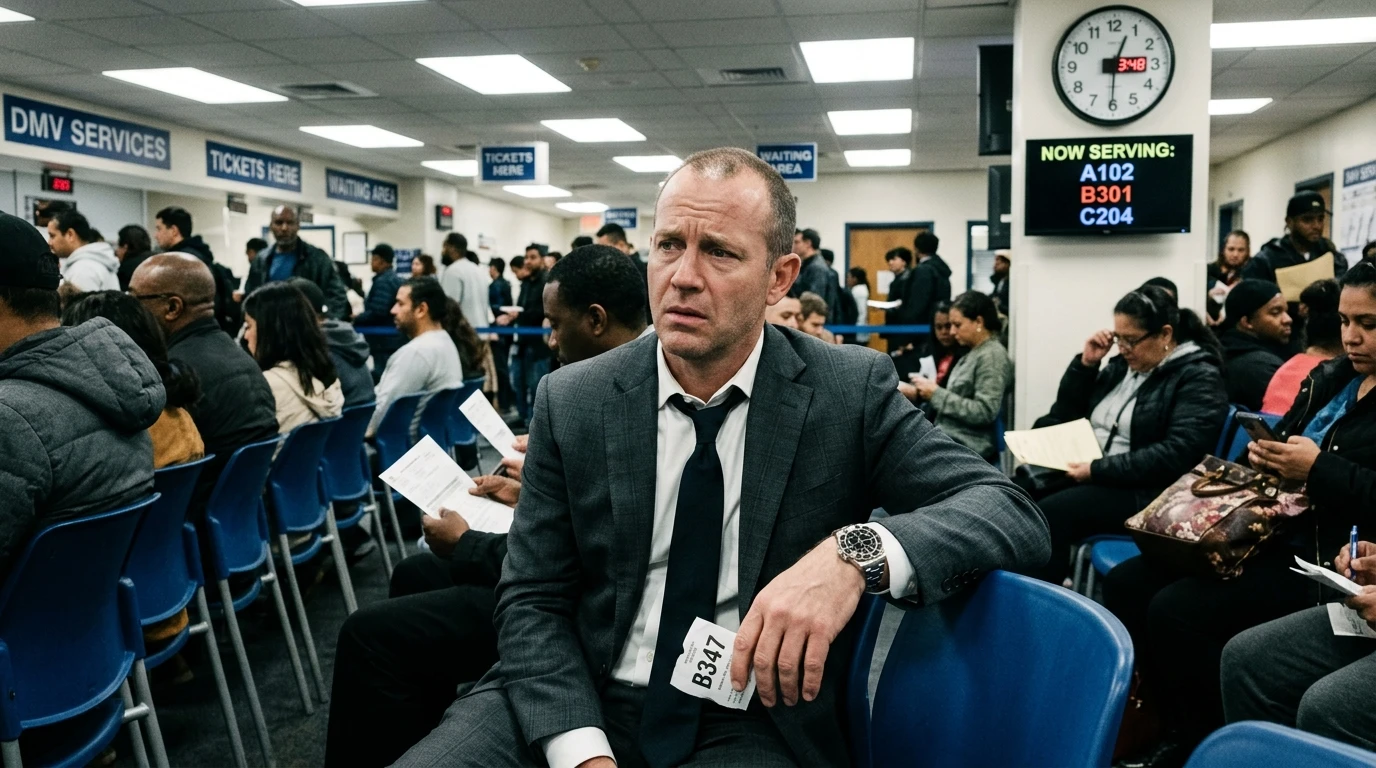
Marcus Chen, a San Jose software engineer who bills out at $275 an hour, spent four and a half hours at the Santa Clara DMV last March. He arrived at 7:45 a.m. to beat the crowd. He left at 12:14 p.m. holding a registration sticker and a deep, simmering rage. By the time he got back to his desk, he had missed two stand-ups, a code review, and a paid consulting call worth $1,100. The sticker on his windshield cost the State of California $86. His morning at the DMV cost him $1,237.50 in billable time. Somewhere around minute 187, between a screaming toddler and a clerk audibly chewing gum into a microphone, Marcus made a decision that would save him the next ten years of his professional life: he was firing the DMV.
If you have ever stood in line at a California, New York, Texas, or North Carolina DMV holding a manila folder while a clerk behind bulletproof glass slowly pecks at a beige keyboard from 1998, you already know what this article is about. The DMV is the single most expensive, time-destroying piece of consumer-facing bureaucracy that successful Americans still voluntarily submit to. And it is, finally, optional. Visit the California DMV website right now and the next available appointment is six weeks out. Or you can do what tens of thousands of attorneys, surgeons, founders, real estate agents, and remote-working digital nomads have already done. There is a better way, and it starts with a Montana LLC.
The real numbers: what a DMV visit actually costs you
Let’s talk about the math nobody puts on the DMV’s website. The California DMV reports an average walk-in wait of three to five hours at most metropolitan field offices. North Carolina’s NCDMV averages one hour fifteen minutes for a basic transaction, but fourteen percent of visits exceed two and a half hours, a figure up seventy-nine percent since 2019. NC alone is short 160 license examiner positions. Americans make roughly 80 million DMV visits every year. At three hours per visit, that is 240 million hours of national productivity vaporized into the linoleum. Independent analysts peg the total cost to the U.S. economy between seven and ten billion dollars per year. That is not a clerical error. That is a generational tax on competence.
Now consider what those hours cost you personally. Below is the table that no DMV will print and that every successful professional has felt in their bones at minute one hundred eighty of a wait:

That is the price of one visit. One. The DMV does not care that your time is valuable, and that is precisely the point. A government agency operating a captive monopoly has zero incentive to respect your hourly rate. The cashier at Whole Foods will check you out in ninety seconds because Trader Joe’s is across the street. The DMV will keep you for four hours because where exactly are you going to go? That economic reality is why firing the DMV is no longer eccentric. It is the obvious move. When the country loses close to ten billion dollars a year to plastic-chair purgatory, refusing to participate is not rebellion. It is arithmetic.
The anatomy of a DMV nightmare
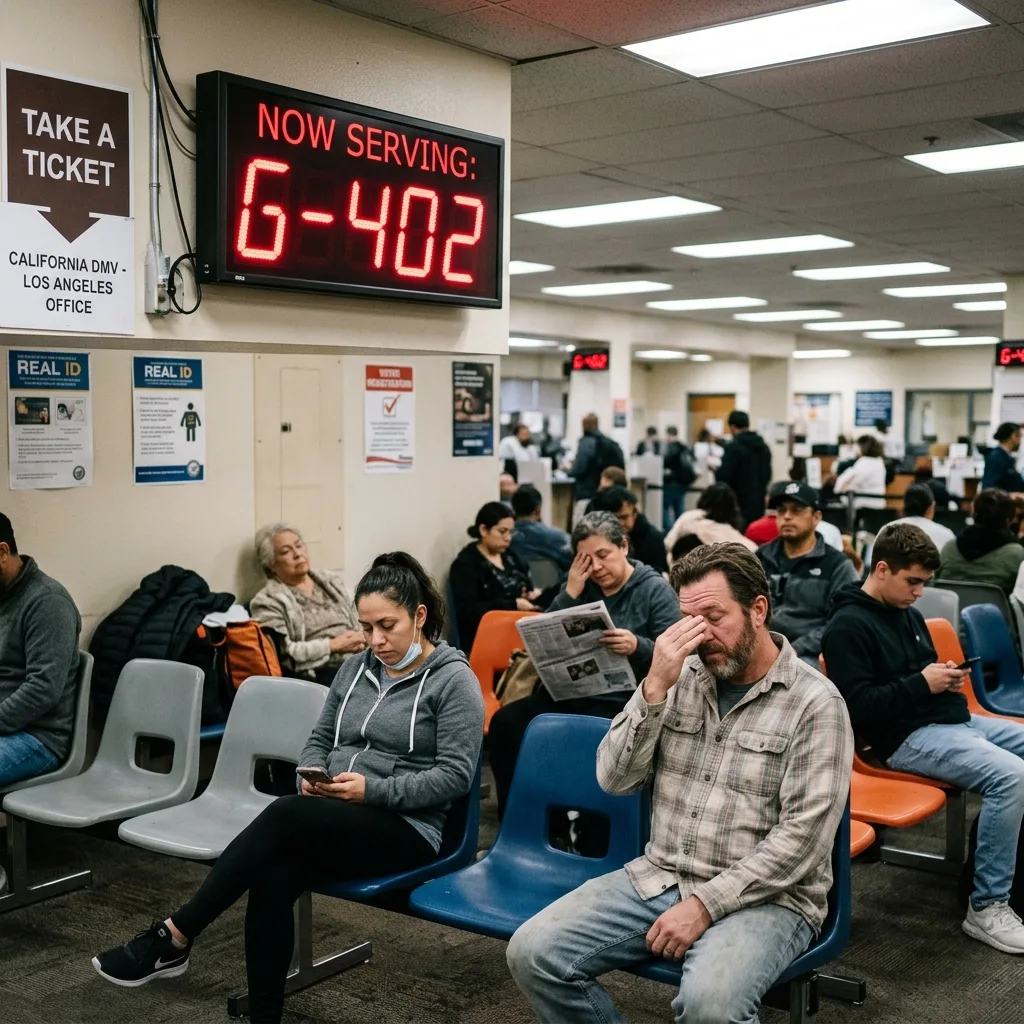
If the DMV experience were merely slow, that would be one thing. Slow you can read through. Slow you can bill against. The truly insidious part of the DMV is not the duration but the architecture. The system is engineered, almost beautifully, to maximize human suffering across four distinct phases. Let’s walk through them.
Phase 1: The appointment fallacy
You assume, reasonably, that a modern government agency in the year 2026 has solved the appointment problem. After all, your dentist can squeeze you in next Tuesday. Your dermatologist sends you SMS reminders. Even the IRS will let you book a phone call within ten business days. Surely the DMV, with its centralized scheduling system and tens of millions in annual technology budget, can find you a thirty-minute slot. It cannot. California DMV appointment availability is currently running four to eight weeks out at major field offices, with a national average wait of fourteen days just to secure the appointment slot. Illinois proved the demand can be managed: their Secretary of State runs an appointment system at forty-four facilities, Monday through Friday eight to five-thirty, with sixteen locations open Saturday. California has not bothered. So you book six weeks ahead, you rearrange your life around a Tuesday at 10:40 a.m., and you arrive to discover the appointment is a soft suggestion, not a contract.
Phase 2: The parking lot war
Then comes the parking. The Santa Monica DMV has approximately the same square footage of parking as a single Trader Joe’s, serving the entire west side of Los Angeles. The Oakland Claremont office has a lot that fills by 7:50 a.m. for an 8:00 a.m. opening. San Jose’s downtown DMV has zero dedicated parking. You are now circling for fifteen minutes, paying for a meter, watching a tow truck stalk the curb, and the clock has started long before you reach the front door.
Phase 3: Number purgatory
You receive your ticket. G-247. The display shows G-189. There are four agents working out of fifteen windows. You sit. You cannot leave to grab coffee because if you miss your number, you go to the back of the queue. You cannot eat. You cannot take a call without disturbing the stranger seven inches from your elbow. You watch G-189 progress to G-190 over the course of nineteen minutes. You do the math: at this pace, you will be called in roughly two hours and forty minutes. The Wi-Fi is hostile. The chair is plastic. The toddler three rows up has discovered they have a voice. This is the heart of the DMV experience, and it is not an accident. The agency has been optimized for one metric: through-the-door compliance. Your time is the input, not the output.
Phase 4: The technicality rejection
This is the worst one. You finally reach the window at hour four. You hand over your folder. The clerk reviews it for thirty-eight seconds and announces, without looking up: “Line 4b is not signed. You’ll need to come back.”
“You stand there, four hours of your life evaporated, and the clerk is already calling G-248. There is no negotiation. There is no ‘I can sign it right now.’ The form must be re-printed. The notary must re-stamp. You must drive home, fix the form, and queue again next week. The next available appointment is, of course, six weeks out.”
This is the moment most successful people decide they are done. Not the wait. Not the parking. The contempt. The implicit message that your time, your earnings, your obligations to clients and patients and family members, all of it is worth less than line 4b. This is when smart people quietly opt out for good.
California’s DMV hall of shame

Some California field offices are so notorious that they have entered local folklore. Reddit threads track them. Yelp reviews read like trauma diaries. If you live in California and own a vehicle worth more than a used Camry, you have probably visited at least one of these temples of regulatory pain.
Vermont Avenue, Los Angeles. The line forms outside the building at 6:30 a.m. for an 8:00 a.m. opening. By 8:15 it wraps around the corner. Inside, the air conditioning is decorative. The screens flicker. There is one functional water fountain. A 2024 staff complaint described the HVAC as “consistently failing on hot days,” which in Los Angeles is roughly 160 days per year. This office has produced three separate viral TikTok videos, all featuring people sleeping in plastic chairs.
Clairemont Mesa, San Diego. Famous for its parking. There is none. People park half a mile away at the Costco and walk in. A real estate broker we know once described arriving at 7:50 a.m. and being called to the window at 1:20 p.m. for a transaction that took eleven minutes.
The Bay Area Paradox. San Francisco and San Jose share the distinction of housing the most expensive technical talent on Earth and the slowest DMVs serving them. A staff engineer earning $300/hour in total comp will still sit in a folding chair on Fell Street next to a teenager with a learner’s permit, because there is no faster path. There is no concierge tier. There is no business-class line. There is just G-247 and the slow, patient cruelty of the queue.
Across all of these offices, the pattern is the same. The state has decided, structurally, that everyone’s time is worth zero. Walking away is the only proportional response.
The VLF trap: when the DMV overcharges you and won’t fix it
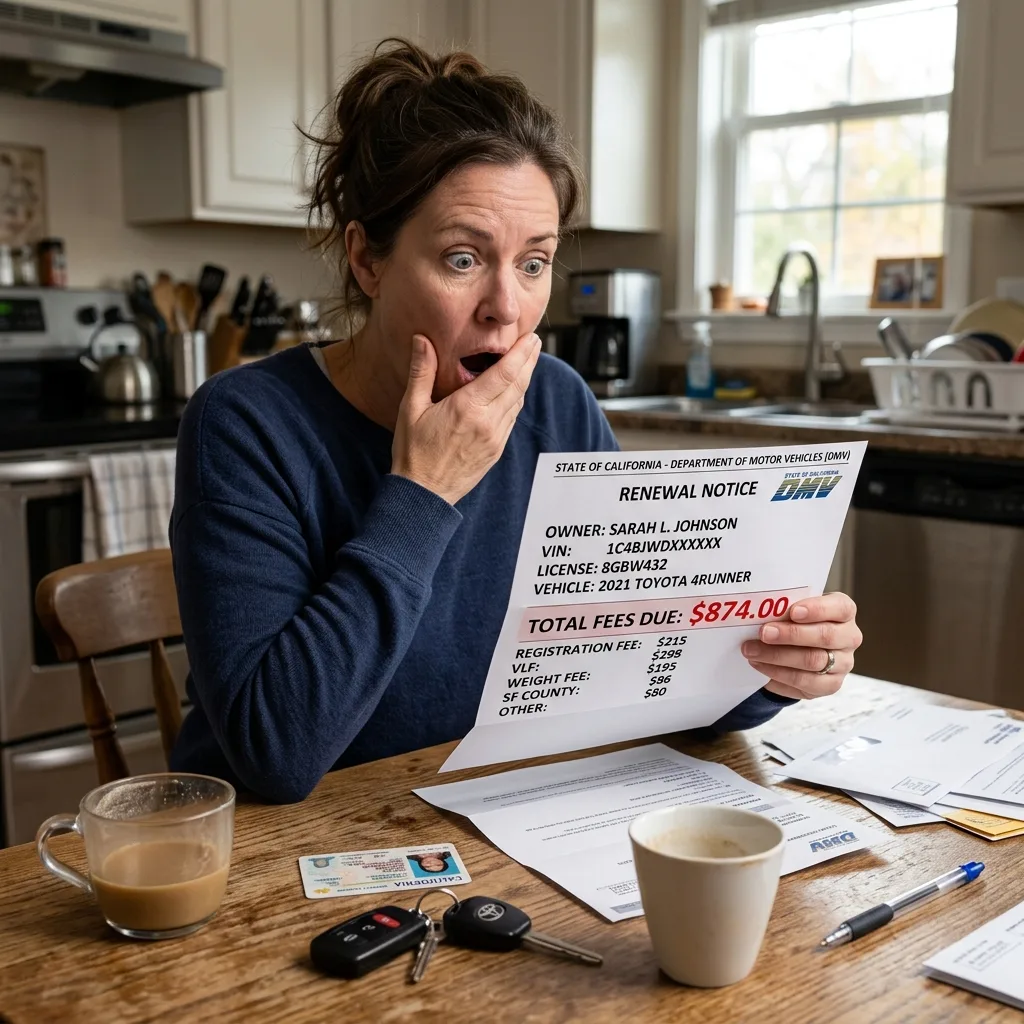
If wasted time were the only injury, this article would be about productivity hacks. But the DMV also miscalculates money, and then refuses to give it back without further wasted hours. Welcome to the California Vehicle License Fee, or VLF.
The VLF is California’s annual ad-valorem tax on vehicle value, roughly 0.65 percent of depreciated value, paid every year, in addition to base registration fees. On a new $120,000 Range Rover, that is $780 a year in pure VLF. On a $250,000 Bentley, $1,625. The catch: California’s value tables are frequently wrong, especially for luxury vehicles, used cars purchased below sticker, or any vehicle bought with significant trade-in equity. The DMV’s depreciation curves do not match the actual market.
A buyer who paid $84,000 for a one-year-old certified pre-owned BMW M5 receives a registration bill calculated against a “book value” of $112,000. The VLF overstatement is $182 too high. Multiply that across the seven-year depreciation schedule and you have paid more than $1,200 in mistaken tax.
To correct it, the DMV requires a Reg 256 statement of facts, a copy of your purchase agreement, supporting market documentation, and either a personal visit to a field office or a ninety-day mail review. Compute the math for a $400 overcharge: ten hours of cumulative effort at the conservative billing rate of an attorney is $4,500. Fighting a $400 overcharge costs you eleven times the recovery. The DMV knows this. The system is not bugged. It is working exactly as designed.
Now compare Montana. Montana has zero state sales tax on vehicles. There is no sliding-scale ad-valorem fee. Registration fees are flat, predictable, and calculated against the vehicle’s age, not its current market value. There is no Reg 256 to fight, no mail-in correction process, no nine-week mail backlog, because there is nothing to correct. The fee is the fee. You stop fighting overcharges because there is nothing left to overcharge.
The remote worker reality: why Montana is the only solution

If you are a remote worker, a digital nomad, a snowbird, or anyone who spends meaningful time in more than one state, the DMV problem becomes existential. You cannot just “pick a state and ignore the others.” Every state has rules about establishing residency, and most of them are aggressive about enforcement. California requires you to re-register your vehicle within twenty days of establishing residency, and the moment you sign a lease, accept in-state employment, or enroll a child in school, the clock has started. Most other states give you thirty to ninety days.
Now consider what happens when you move. You bought your G63 in California and paid $9,200 in sales tax. You move to Texas. Texas requires you to re-title the vehicle, pay a $90 title transfer fee, and potentially pay use tax of 6.25 percent (with partial credits for previously paid sales tax). You then move from Texas to Colorado eighteen months later. Now you re-title in Colorado, pay specific ownership tax, register again, and find another DMV to wait in. That is two more title transfers, two more multi-hour DMV visits, and between $400 and $4,000 in friction in less than two years.
With a Montana LLC, none of this happens. Your vehicle is owned by the LLC. The LLC is a Montana resident. The LLC’s residency does not change when you move. The registration follows the LLC, not the human driving it. You can move from Los Angeles to Austin to Denver to Miami over the course of three years and you will never re-register the vehicle. You will never visit a single DMV. You will never pay another title transfer fee or use tax. The car is, in a real legal sense, parked in Montana, regardless of which Airbnb you happen to be working out of this month.
For the genuine digital nomad, the consultant who lives in two-month rentals, the founder who splits time between three cities, the surgeon who locums in four states, this is the only structure that works. There is also a privacy bonus. Your name does not appear on a public state vehicle registration database. The LLC’s name appears. For high-net-worth individuals, executives, and anyone with stalker concerns or general privacy preferences, that distinction alone is worth the annual fee.
The Montana solution: your concierge alternative
Montana works for one structural reason: vehicle registration runs through county treasurers, not a centralized DMV. Each county handles its own registrations. The queues are smaller because the population is smaller. There is zero sales tax on vehicles, no smog inspections, no annual safety inspections, no ad-valorem value-based fees. The system was designed for ranchers with a hundred miles of dirt road between them and the county seat, and that ranch-country pragmatism scales beautifully to the modern professional.
Here is what firing the DMV actually looks like when you hire Zero Tax Tags as your concierge:
| Day 1: | You sign up online. You upload your purchase documents (bill of sale, title, MSO if new). Total time invested: under fifteen minutes. You go back to your real life. |
| Day 2: | We file your LLC formation with the Montana Secretary of State. The LLC is yours, your name is on the operating agreement, and you are the sole member. Formation typically completes within 24 to 48 hours. |
| Day 3-4: | We process the vehicle registration at the county treasurer. Title transfers into the LLC. Registration documents are generated. No appointment. No queue. No clerk chewing gum into a microphone. |
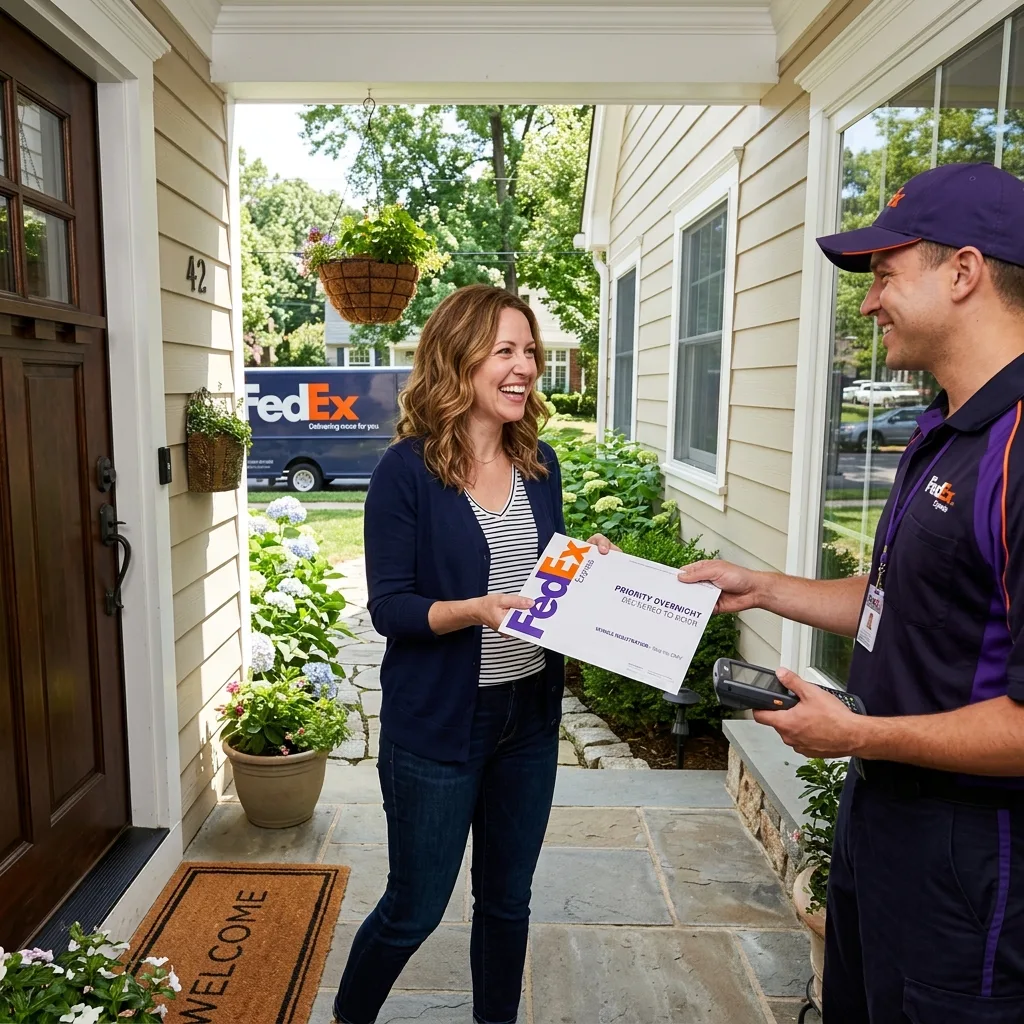
| Day 5-7: | Plates and registration card are FedEx’d directly to your home or office. They arrive within seven to ten business days from sign-up. |
| Year 2+: | Annual renewal handled remotely. No visits. No lines. New tags arrive in the mail. For vehicles aged 11 years or older, a permanent plate option means you register once and never again. Truly never. |
Pricing is straightforward. Year one is $899 total: $699 for our service plus $200 for the LLC formation. Year two and beyond is $270 per year, which covers the $150 Montana registration renewal and our $120 annual filing and maintenance work. Five-year total: $1,979. Compared to a single five-hour DMV visit at a senior professional rate, the entire program pays for itself before lunch on day one.
3 case studies: the real ROI of firing the DMV
Theory is fine. Numbers on a spreadsheet are fine. But what convinces most professionals is hearing from someone in their own peer group who has already made the switch. Here are three composite case studies drawn from real Zero Tax Tags clients.
Sarah K., Beverly Hills Real Estate Agent
Sarah closes roughly $40 million in residential transactions per year. Her commission-per-working-hour rate is approximately $325. She bought a new Mercedes G-Wagon in March 2024 and walked into the West Los Angeles DMV at 8:15 a.m. for a title transfer. She left at 4:50 p.m. During her time in the queue, she missed an in-person tour with a buyer relocating from Singapore who had a pre-approval letter for $4.2 million. The buyer hired another agent that afternoon. Sarah estimates the lost listing alone cost her $126,000 in foregone commission. When her client circle later mentioned Zero Tax Tags, she signed up that week. Her next vehicle, a Porsche Taycan, was registered through the Montana LLC. Total Sarah hours invested: nineteen minutes uploading documents. Plates arrived at her office by FedEx six days later. She has not been inside a DMV since.
Dr. James Okafor, Dallas Surgical Oncologist
Dr. Okafor performs roughly twelve major procedures per week at a production rate near $1,800 per operating-room hour. In 2023, a Texas registration issue on his Range Rover Autobiography required an in-person DMV visit. He rescheduled two morning cases. Both patients, with confirmed diagnoses, had their procedures pushed by three and four days respectively. The administrative cost to the practice exceeded $11,000. A colleague introduced him to Zero Tax Tags. He now runs all three of his vehicles, the Range Rover, his wife’s GLE, and a weekend-only McLaren GT, through a single Montana LLC. Total DMV visits in the last two years: zero.
Priya & Sam Nair, Remote Workers
The Nairs are a dual-income remote couple, a software architect and a fractional CMO, who moved from Los Angeles to Austin in 2023, then to Denver in 2025. In Los Angeles they owned a 2022 Tesla Model X and a Lexus GX. When they moved to Austin, the 20-day California departure clock and the Texas 30-day re-registration clock collided. They paid Texas title transfer fees of $180 across two vehicles and partial use tax of about $1,400 (after California sales tax credits) and lost two Saturdays at the Travis County tax office. Eighteen months later, when Sam’s contract relocated them to Denver, they faced the same gauntlet again, with Colorado specific ownership tax, new title transfers, and two more DMV-equivalent visits. Priya did the math one Sunday afternoon, found Zero Tax Tags, and switched both vehicles to a Montana LLC the following month.
The Nairs estimate they have avoided $4,300 in title transfer taxes and re-registration fees since forming their Montana LLC. Plus the eighteen hours of cumulative DMV time they will never get back. They are now in year three. Zero DMV interactions. The cars just stay registered, regardless of which state’s lease they happen to be on.
Permanent plates: the one-and-done
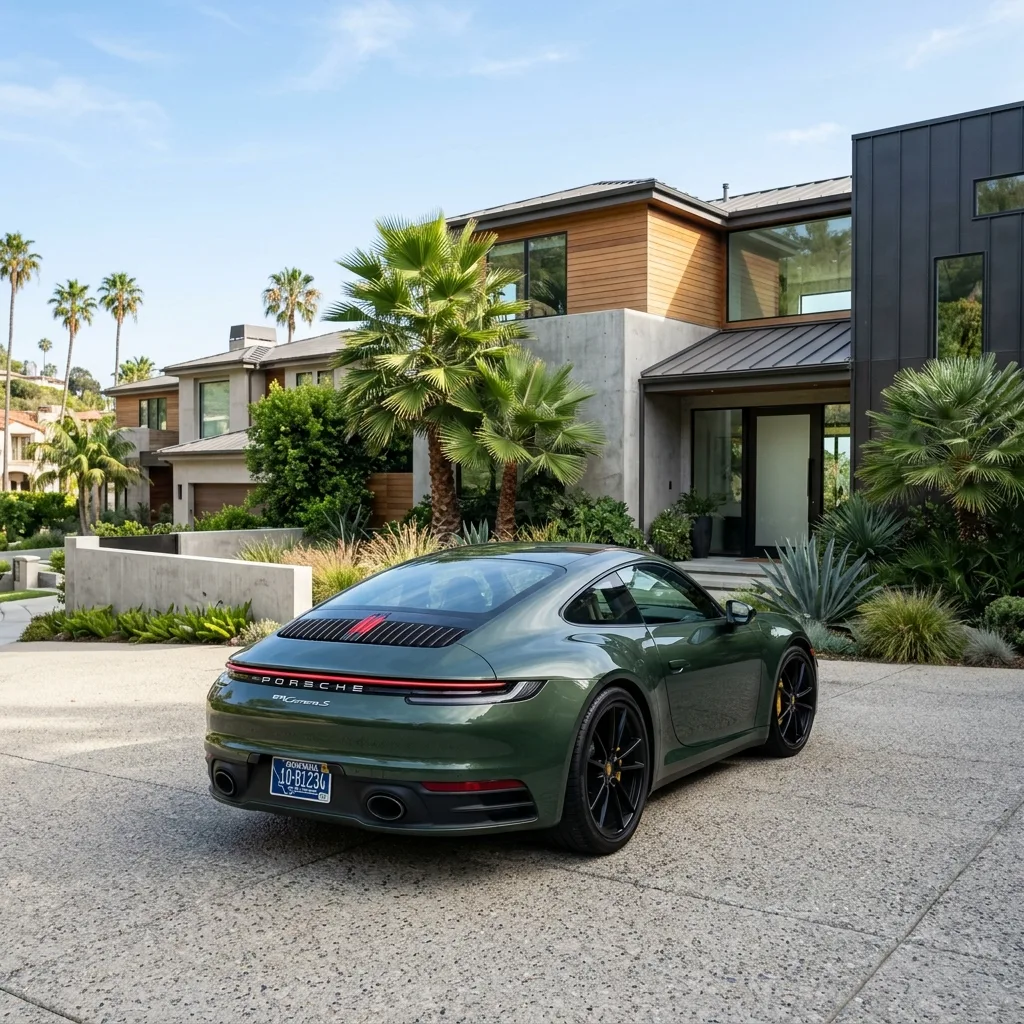
One of the quiet superpowers of the Montana system is the permanent plate option. If your vehicle is eleven model years old or older, Montana lets you register it once, attach a permanent plate, and never renew again. Not next year. Not in five years. Never. For collectors with vintage Porsches, classic Mercedes, low-mileage 911s, air-cooled cars, low-production Italian exotica, or just well-maintained older trucks and SUVs, this is a quietly enormous win. You go through registration once, the plate is yours for the life of the vehicle, and the entire renewal cycle disappears.
Here is the ten-year comparison:
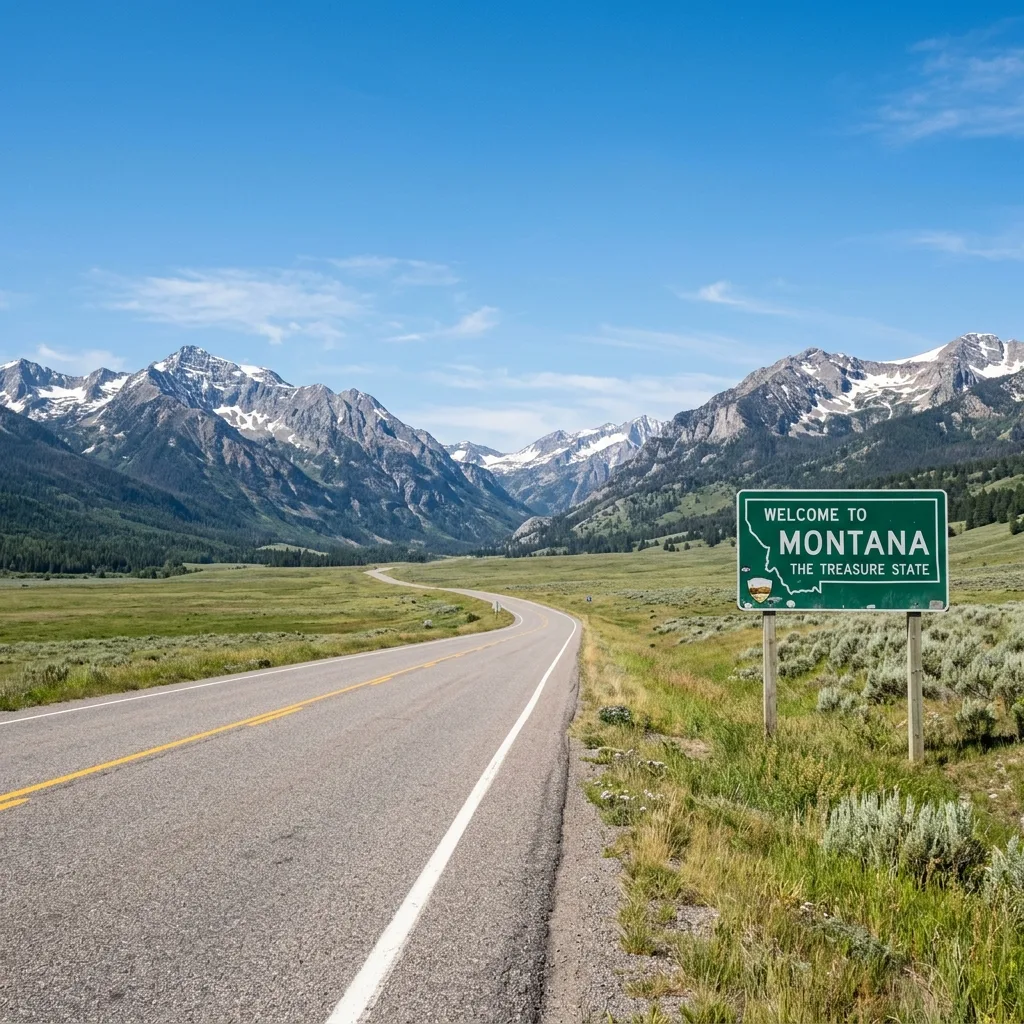
For collectors of older vehicles, the permanent plate alone justifies the entire program. You register the car. The plate arrives. You drive the car. You sell the car twenty years later. You did one registration, total.
Why delegation beats grinding it out yourself

Successful professionals share one pattern: they outsource everything they are not personally world-class at. They hire a CPA rather than wrestle with TurboTax. They use a financial advisor rather than rebalance their own portfolio. They hire cleaners, dog walkers, and travel agents for complex trips. The principle is simple: every hour you spend doing something a specialist could do faster is an hour stolen from your highest-leverage activity.
Vehicle registration is, perhaps, the single most absurd holdout in this delegation logic. People who happily pay a CPA $400 to file their taxes will personally burn five hours at the DMV because, somehow, they have not yet recognized the registration desk as a delegable function. Zero Tax Tags is your registration concierge. We are not a tax shelter. We are not a legal loophole. We are a specialist firm that handles a specialist task on your behalf, exactly like an accountant or a personal assistant. The hours you reclaim go back into your practice, your business, your family, your life. Structurally, this is identical to the day you finally hired a CPA.
Is this legal?
This is the question every smart professional asks within the first five minutes, and you should ask it. The short answer is yes. The long answer requires a quick walk through the structure.
A Montana LLC is a recognized corporate entity formed under Montana state law, the same way a Delaware C-Corp is formed under Delaware law and a Nevada series LLC is formed under Nevada law. Montana LLCs are commonly used for ranching, real estate holdings, family wealth structures, and yes, vehicle ownership. Once your LLC is formed, the LLC owns the vehicle. The LLC is a Montana resident. The LLC registers the vehicle in Montana, where the LLC lives. None of this requires you to physically reside in Montana. Millions of vehicles across the country are registered through this exact structure. It is an established, openly-documented practice.
The vehicle is owned 100% by the Montana LLC — a Montana entity. State registration laws apply to vehicles owned by state residents. The LLC is not a state resident; it is a Montana resident. The U.S. Constitution’s Commerce Clause and Full Faith and Credit Clause protect Montana’s authority to register vehicles owned by Montana entities, and prevent other states from interfering with that registration. Zero Tax Tags builds every LLC with a real Montana registered agent, actual annual filings, and proper documentation — the structure is legally solid from day one.
What this is not: it is not a fake address forwarding service, it is not a sham domicile, and it is not tax evasion. The LLC is real. It exists. It owns the car. Holding assets inside LLCs, including vehicles, boats, aircraft, and real estate, is standard wealth management practice for high-net-worth individuals across America. This is a legitimate corporate-structuring decision, not a hack.
Frequently asked questions
Q: How long does the Montana registration process take?
A: Once you upload your documents, we form the LLC within 24 to 48 hours. Registration at the county treasurer takes another two to three days. Plates ship FedEx and arrive within seven to ten business days total from sign-up.
Q: Can I do this for multiple vehicles?
A: Yes. Many clients run their entire fleet, daily driver, weekend car, RV, motorcycle, boat trailer, through one Montana LLC or several. There is no practical cap on the number of vehicles a single LLC can hold.
Q: What about insurance?
A: Your insurance follows the vehicle and the named driver, not just the registration. We help you navigate this conversation with your broker, but most major insurers, including Geico, State Farm, Progressive, USAA, and Chubb, have established processes for Montana-LLC-registered vehicles. The conversation is routine.
Q: Do I need to visit Montana?
A: Never. Zero physical presence is required. The entire process happens by mail, e-signature, and electronic upload.
Q: What happens when I sell the vehicle?
A: The LLC transfers title to the buyer just like any individual seller would, with a bill of sale and signed title. We handle the paperwork on your behalf. The sale process is, in practice, simpler than a personal sale because you don’t need a DMV visit to complete it.
Q: Is this only for California residents?
A: No. We serve clients from Texas, New York, New Jersey, Arizona, Virginia, Florida, Massachusetts, Connecticut, Illinois, and most other high-friction states. Any state with high registration fees, sales tax, personal property tax, or notoriously bad DMV experiences is a candidate.
Q: Is the Montana LLC structure legally protected?
A: Yes. The vehicle is owned by the Montana LLC — a Montana entity, not the individual. State registration requirements apply to vehicles owned by state residents. The LLC is a Montana resident under Montana law. Montana’s authority to register vehicles owned by Montana entities is protected by the U.S. Constitution’s Commerce Clause and Full Faith and Credit Clause. Zero Tax Tags structures every LLC with genuine formation, real registered agent service, actual annual filings, and proper documentation. The structure has held up across every state where our clients live and operate.
Q: How is this different from just using an address-forwarding service?
A: Critically different. Address forwarding creates a fake personal domicile, which is fraudulent in many states. A Montana LLC creates a real legal entity that genuinely owns the vehicle. The LLC is the registrant, not you personally. The distinction is the entire point. One is a fiction. The other is a corporate structure.
Q: Can I change my mind later?
A: Yes. The LLC can be dissolved and the vehicle title transferred back into your personal name at any time. We handle the unwinding paperwork as well. There is no lock-in.
Who this is for
The Montana LLC structure delivers the strongest value for a specific profile. Here is who benefits most:
This is for you if:
- You bill or earn at $200 per hour or more, and you treat your time as a real economic input.
- You own multiple vehicles, including weekend cars, collector vehicles, RVs, or boats.
- You are a remote worker, digital nomad, snowbird, or anyone who moves between states regularly.
- You own a luxury vehicle with high VLF, high registration tax, or high sales-tax exposure.
- You have repeatedly come home from the DMV thinking, “There has to be a better way.”
If you are still on the fence, the rough rule of thumb is this: if your hourly rate times the time you have already lost to the DMV in your lifetime is greater than $1,979, you have already overpaid. Stopping now is the only sane move.
Reclaim your time
You did not work this hard, build this career, raise this family, and earn this hourly rate to spend a Tuesday morning in a plastic chair next to a vending machine that only takes exact change. The DMV is a relic of a different era, optimized for a different demographic, with no interest in adapting to the modern professional. Firing the DMV is not a rebellion. It is a recognition. The recognition that your time, finally, is worth something. The recognition that the right answer to a four-hour wait at a government counter is, in 2026, “no thank you, I will be hiring someone.”
Tens of thousands of attorneys, surgeons, founders, executives, real estate brokers, software engineers, and digital nomads have already made this call. The Montana LLC structure is legal, established, well-documented, and genuinely effective. The savings in time alone, before you ever calculate sales tax, VLF, registration fees, or title transfer costs, would justify the entire program. The rest is a bonus.
Read the full state-by-state breakdown of why this matters in your home state:
- Arizona Vehicle Tax: The VLT Problem and How to Stop Paying $1,000 Every Year
- Virginia Vehicle Tax: Stop Paying the Highest Vehicle Tax in America
- Nevada Vehicle Tax: The 8.25% Hidden Cost Nobody Tells You About
Ready to Stop Wasting Your Best Hours at the DMV?
Thousands of high-earning professionals have already fired the DMV and reclaimed their time with a Montana LLC. You’re next.