23 min read
On this page
- + Part 1: the anatomy of the crackdown
- • The “transition era” trucks (2007-2009)
- • The smog check stranglehold
- + Part 2: the 2026 enforcement apparatus
- • PEAQS and the roadside sniff test
- • Weigh stations and the CHP funnel
- • Clean Truck Check Program and the $32.13 fee
- + Part 3: the “delete” dilemma and the $15,000 mistake
- + Part 4: the three options framework
- • Option 1: retrofit
- • Option 2: replace
- • Option 3: relocate operations
- + Part 5: the true cost of a compliant 2010+ truck
- + Part 6: the human cost
- + Part 7: three case studies from the field
- + Part 8: the Montana solution
- + Part 9: how the LLC works
- + Part 10: the economics of saving your truck
- + Part 11: the 2026 Advanced Clean Trucks mandate
- + Part 12: why choose Zero Tax Tags?
- + Conclusion: take back your freedom
The Pre-2010 Diesel Nightmare is here. If your livelihood depends on a diesel workhorse, California wants it off the road. Here is how you fight back, keep your truck, and get back to work.
There is a specific kind of silence that is haunting driveways across the Central Valley, the Inland Empire, and construction sites from Sacramento to San Diego. It isn’t the silence of a quiet neighborhood. It is the silence of a 6.7L Cummins or a 6.6L Duramax that won’t start, or rather, won’t be allowed to start.
It is the silence of a $50,000 asset turned into a 7,000-pound paperweight.
If you own a pre-2010 diesel truck in California, you aren’t just a truck owner. You are a target. You are currently living through the “Diesel Nightmare,” a bureaucratic squeeze designed to force your reliable work truck off the road in favor of six-figure trucks you didn’t ask for and can’t afford.
Whether you are a contractor hauling heavy equipment, a rancher in Modesto trying to feed the country, or an RV enthusiast with a holiday planned, the California Air Resources Board (CARB) has drawn a line in the sand. Your truck is on the wrong side of it.
The math is brutal. CARB estimates 36,900 California-registered trucks and up to 192,400 out-of-state trucks were affected by the January 1, 2023 hard ban on pre-2010 diesel engines over 14,000 lbs GVWR. The ban is still active in 2026, and CARB’s enforcement apparatus grows more sophisticated every quarter.
But there is a way out. While California closes the gates, Montana has left them wide open.
At Zero Tax Tags, we specialize in one thing. Freedom. This guide covers the California Diesel Crackdown, the enforcement systems waiting at every weigh station, and how a Montana LLC is the lifeline your truck and your business need. We cover exactly what Montana solves for California diesel owners — and it is a lot.
Part 1: the anatomy of the crackdown
Why your pre-2010 diesel is under attack
For decades, the diesel pickup was the backbone of the California economy. From the F-250s hauling lumber to job sites in Riverside to the Ram 3500s towing horse trailers in Bakersfield, diesel was king. It offered torque, longevity, and reliability.
Then came the regulations.
California has aggressively moved to phase out older diesel engines. The state’s logic is simple. Older trucks pollute more. Their solution? Make it impossible to register them.
The CARB Truck and Bus Regulation, fully phased in as of January 1, 2023, requires every diesel-powered vehicle with a Gross Vehicle Weight Rating above 14,000 lbs to carry a 2010 or newer engine if it operates on California roads. There is no grandfather clause. There is no soft enforcement window. The DMV will not renew registration on a non-compliant vehicle, period. The agency has hard-coded the rule into its registration database, which means a clerk at the counter cannot help you even if they want to.
The “transition era” trucks (2007-2009)
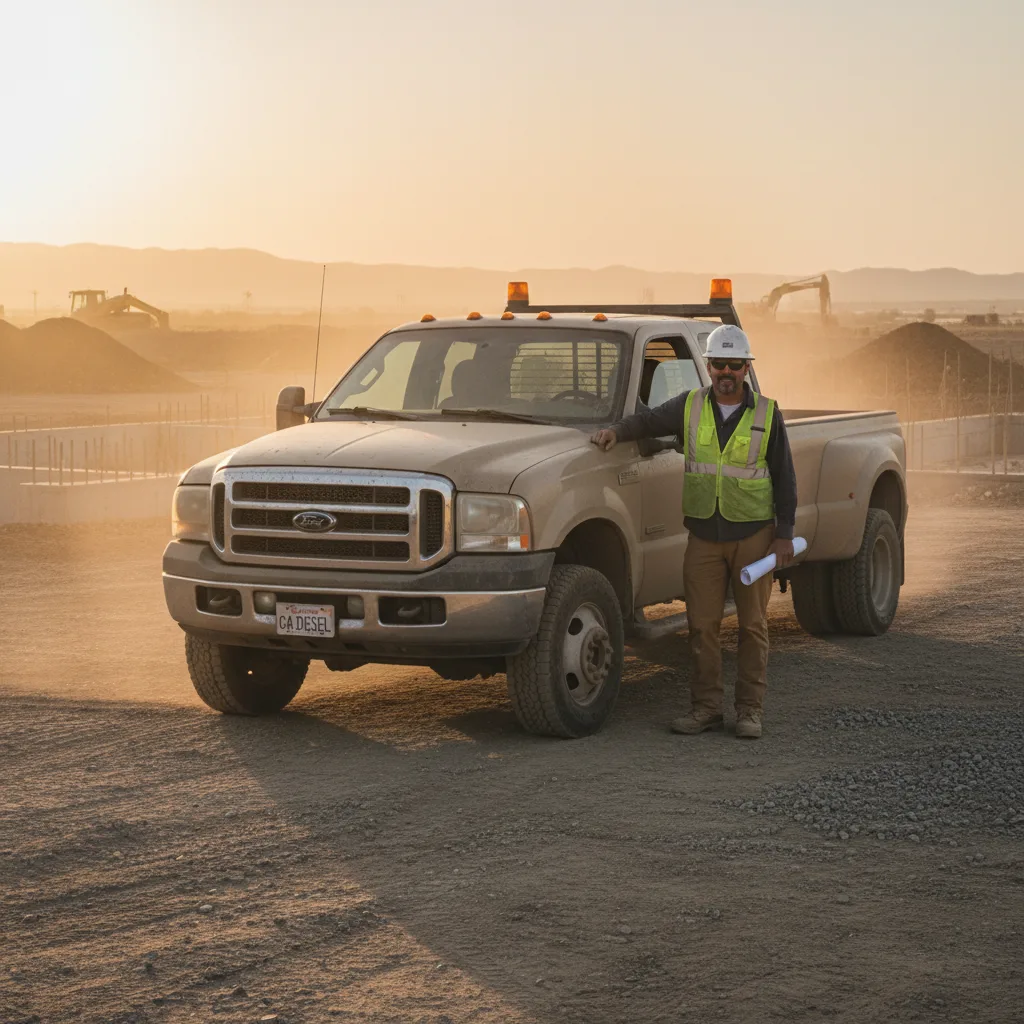
The biggest victims of this crackdown are owners of trucks from the 2007 to 2010 model years. This was the “Transition Era” for diesel emissions. Manufacturers like Ford, GM, and Dodge were scrambling to meet new EPA mandates. They slapped on first-generation Diesel Particulate Filters (DPF) and early Exhaust Gas Recirculation (EGR) systems.
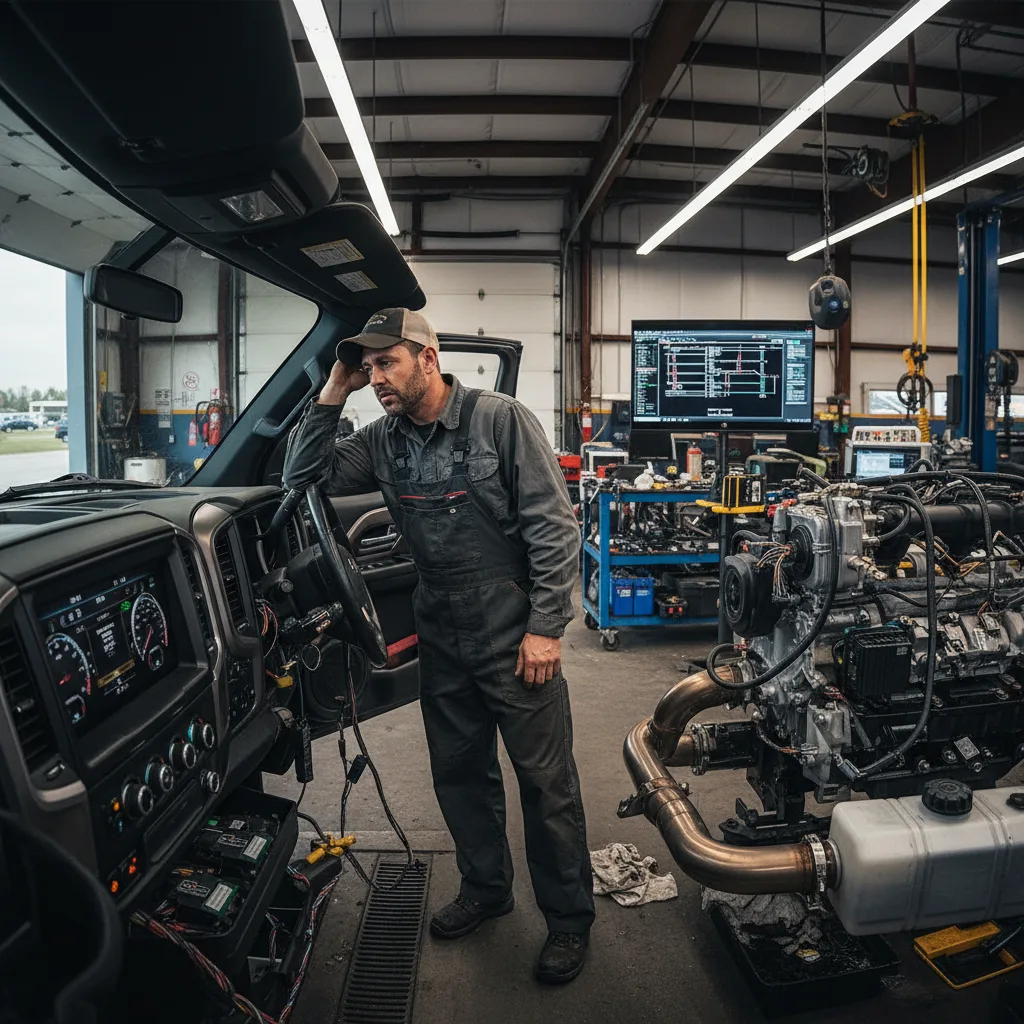
The result? The 6.4L Powerstroke. The LMM Duramax. The early 6.7L Cummins. These engines are notorious not because they are weak, but because the emissions equipment attached to them was flawed from the factory.
Now, California demands that these flawed systems function perfectly to pass a smog check. If your Check Engine Light is on, you fail. If your monitors haven’t reset, you fail. If there is soot in the tailpipe, you fail.
The smog check stranglehold
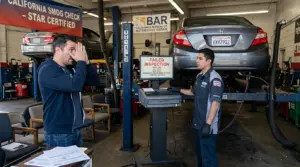
In many other states, a safety inspection is just that. Checking brakes and lights. In California, a diesel smog check is a forensic investigation.
- Visual inspection: the technician is looking for anything that isn’t stock. Aftermarket intake? Fail. Tuner? Fail. Missing catalytic converter? Automatic fail.
- OBDII scan: they plug into your truck’s computer. If you have “tuned” your truck to bypass a faulty EGR valve, the state computer knows.
- Opacity test: they measure the density of the smoke. Older trucks naturally smoke a little under load. California treats this as a crime.
If you fail, you cannot renew your registration. If you cannot renew, you cannot drive. If you cannot drive, you cannot work.
Part 2: the 2026 enforcement apparatus
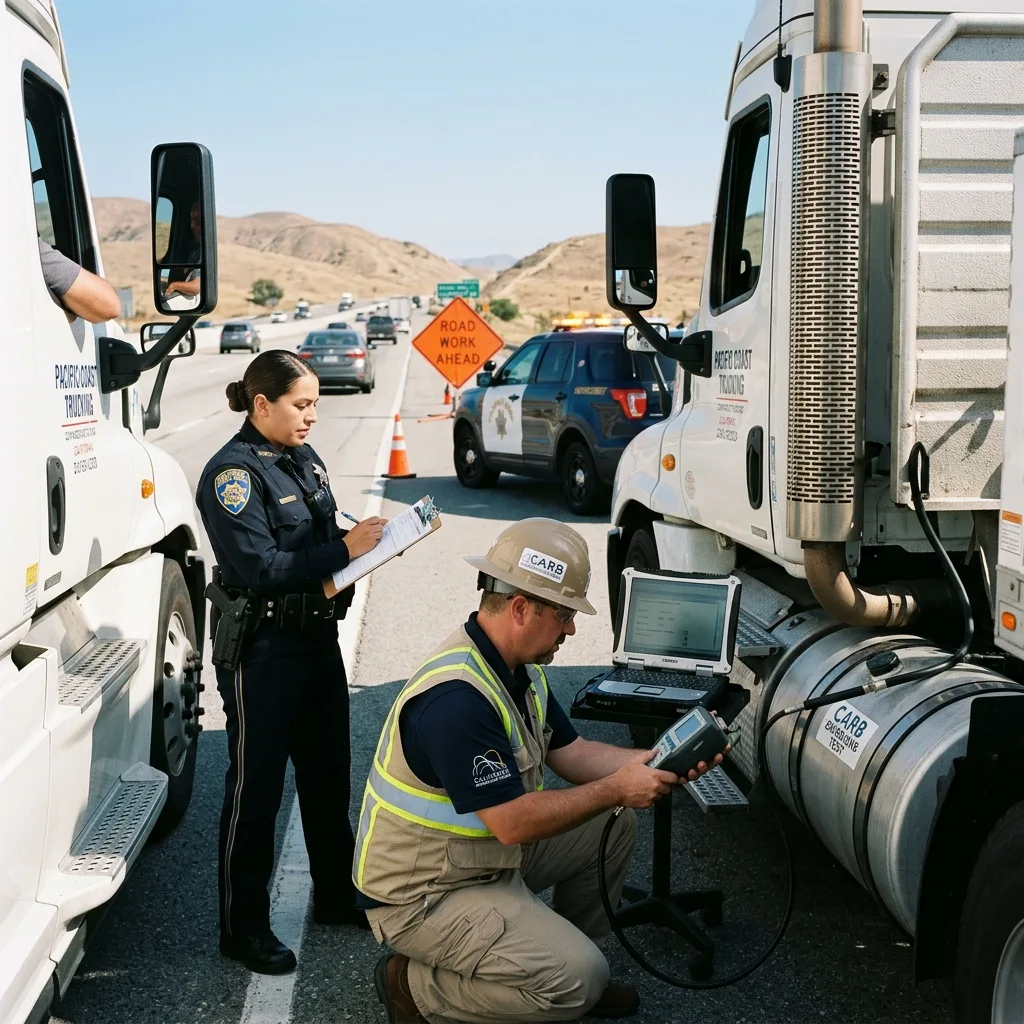
The smog station is only the front door. CARB and the California Highway Patrol have spent the last five years building a multi-layered enforcement net designed to catch non-compliant diesels at every point of the supply chain. If you think you can quietly run a deleted 2008 Duramax across the state line and back, the state has spent your tax dollars proving you wrong.
PEAQS and the roadside sniff test
PEAQS stands for Portable Emission Acquisition System. Bureaucratic acronyms aside, here is what it does. CARB has deployed roadside units at border entry points and along major freight corridors that capture exhaust plumes from trucks as they drive past at highway speed. The system identifies the vehicle by reading its license plate, cross-references the registration database, and measures the actual NOx and particulate output.
If your truck registers as a “high emitter,” CARB sends you a 30-day notice. You must submit your vehicle to a passing emissions test within that window or lose your operating authority in the state. There is no warning citation. There is no friendly heads-up. The first time you know you have been flagged is when the certified mail shows up at your business address.
For Montana-plated trucks operating in California, PEAQS is a particular concern. The license plate reader does not care about your registration state. It cares about the cloud of soot trailing from your tailpipe. If you operate a non-compliant diesel on California roads, PEAQS will find you regardless of where the title sits.
Weigh stations and the CHP funnel
Every commercial vehicle with a GVWR of 14,000 lbs or higher is legally required to stop at California Highway Patrol weigh stations when the lights are flashing. There are dozens of these scattered along I-5, I-10, I-15, I-40, US-101, and the major surface routes feeding the Ports of Long Beach and Los Angeles.
The weigh station is where your truck stops being anonymous. CHP commercial enforcement officers are trained to pull engine model year information from the door jamb sticker, scan your VIN against the CARB compliance database, and inspect for visible emissions equipment removal. A missing DPF is visible from ten feet away. A defeated EGR cooler shows up the moment they pop the hood.
Penalties are not nominal. A non-compliant heavy diesel caught at a weigh station can face fines that start in the four figures and escalate quickly with repeat encounters. The truck can be ordered out of service on the spot, which means you are arranging a tow back to your yard with a load still on the trailer.
Clean Truck Check Program and the $32.13 fee
The Clean Truck Check program is CARB’s continuous monitoring system for heavy-duty vehicles. Every non-exempt diesel over 14,000 lbs GVWR must pass a Heavy-Duty Inspection and Maintenance (HD I/M) emissions inspection at least twice per year. Trucks with 2013-and-newer engines that have been in the program for more than three years are required to test four times per year.
The fee structure is not optional. As of January 1, 2026, the Clean Truck Check compliance fee increased to $32.13 per vehicle, per year, adjusted annually for inflation. That number sounds small until you multiply it across a fleet of 30 trucks, then add the cost of the inspections themselves, which run anywhere from $100 to $250 each depending on the shop.
And remember, this is just the testing cost. It does not include the cost of fixing whatever the test uncovers, which on a 2010-2016 vintage diesel often includes failed sensors, worn injectors, plugged DPFs, and the dreaded CP4 fuel pump warning.
The narrow exemptions: CARB allows two slim carve-outs. Low-use vehicles operating fewer than 1,000 miles per year in California, and “three-day pass” arrangements for trucks merely transiting the state. If your business operates inside California, neither exemption helps you.
Part 3: the “delete” dilemma and the $15,000 mistake
Let’s talk about the elephant in the room. Deleted Trucks.
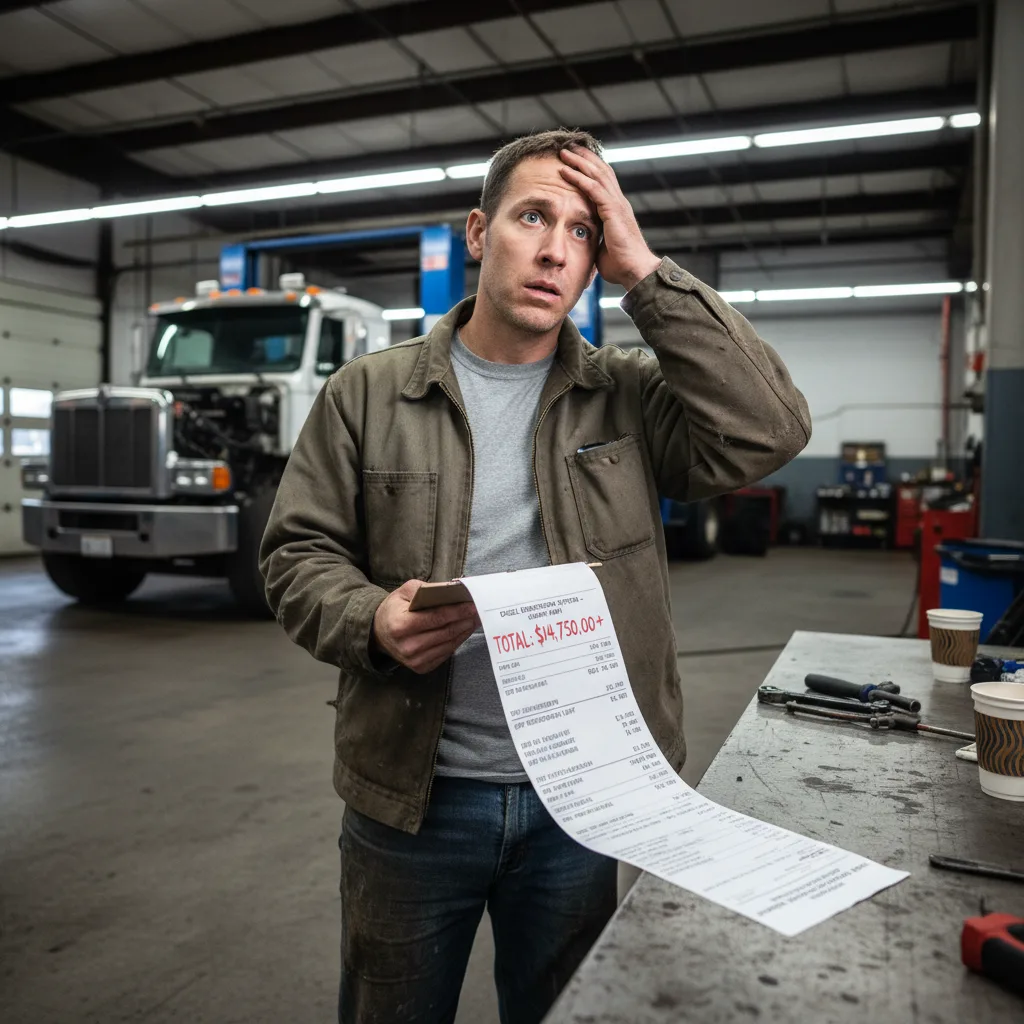
Thousands of diesel owners in California have “deleted” their trucks. They removed the DPF, blocked the EGR, and tuned the ECU. They didn’t do it to “roll coal” or annoy their neighbors. They did it because the emissions systems were destroying their engines.
- The DPF failure: the Diesel Particulate Filter traps soot. Eventually, it clogs. A replacement can cost $3,000 to $5,000.
- The EGR failure: the Exhaust Gas Recirculation system dumps dirty exhaust back into your clean intake. It cakes the engine in carbon, leading to catastrophic failure.
- The DEF headache: Diesel Exhaust Fluid heaters fail, pumps crystallize, and sensors glitch, putting the truck into “Limp Mode” where it can only drive 5 mph.
To save the truck and improve fuel economy, owners deleted these systems. For years, it was fine. The truck ran cooler, used less fuel, and lasted longer.
Then CARB updated the computers.
Now, a deleted truck is an instant fail. You cannot pass smog with a deleted truck. The nightmare scenario? To make that truck legal in California again, you have to reinstall all the emissions equipment.
You are looking at a $10,000 to $15,000 bill to fix a truck that is only worth $25,000. It makes zero financial sense. So the truck sits.
Part 4: the three options framework
If you own a non-compliant diesel and you want to keep working, you have exactly three options. There is no fourth path.
Option 1: Retrofit the existing truck
Retrofit means installing CARB-certified emissions equipment on a pre-2010 engine to bring it into compliance. This is the path CARB pretends exists for everyone. In reality, it is a niche solution.
- DPF retrofit kit: roughly $6,000 installed for trailer applications, more for prime movers
- Passive catalyst systems: $20,000 range, plus mandatory “soot studies” to verify performance
- Certified shops only: CARB requires you use one of a small list of approved installers, which means waiting in line
- No guarantee of pass: a retrofitted truck still has to pass the actual emissions test, and older engines often fail even with the new hardware
For most pre-2010 work trucks, retrofit cost approaches or exceeds the vehicle’s market value. A 2008 F-350 with 200,000 miles is worth $20,000 to $28,000 in good condition. Spending $15,000 on emissions equipment to keep it on California roads is a financial decision only a person who has never read a profit and loss statement would make.
Option 2: Replace with a compliant truck
Buy a 2010-or-newer diesel, or step up to a zero-emission Class 8. Here is what that costs in 2026.
Here is the secondary problem nobody talks about. The compliance deadlines have created scarcity in the used compliant market, which has driven prices up across the board. A clean 2012 Peterbilt 386 that would have sold for $55,000 in 2019 is now asking $95,000. The market knows you have to buy one. Sellers are pricing accordingly.
Option 3: Relocate your operations
The third option is to operate your truck somewhere CARB does not own the airspace. Nevada, Arizona, Texas, Idaho, Wyoming, and Montana itself all allow pre-2010 diesels to register and operate without emissions equipment compliance.
For owner-operators with flexibility, this is increasingly the answer. You register the truck in Montana through an LLC, base your operations in a friendlier state, and pick loads that route around California whenever possible. You still cannot run a non-compliant diesel on California roads without risking PEAQS detection and weigh station enforcement, but you can build a route map that simply avoids the state.
The Montana LLC is the foundation of this strategy. It eliminates California sales tax on the vehicle, removes California’s annual personal property burden from the asset, and gives you permanent plates on qualifying trucks so you stop paying renewal fees forever.
Part 5: the true cost of a compliant 2010+ truck
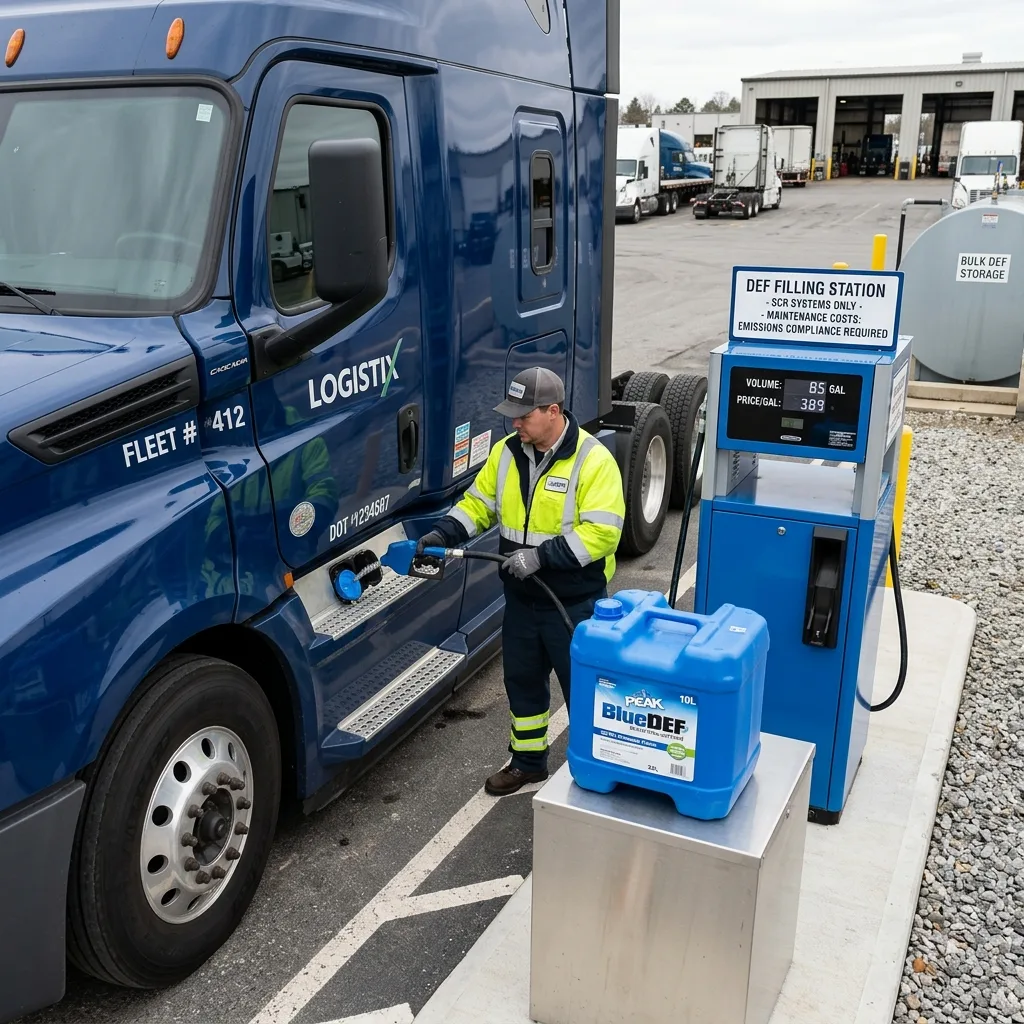
Here is the part the dealership doesn’t put on the brochure. A modern compliant diesel is not just expensive to buy. It is expensive to keep alive. The post-2010 emissions architecture introduced an entirely new category of failure modes that did not exist before.
Now layer on the failure modes specific to compliant diesels. Every late-model owner has a story about at least one of these.
The CP4 ticking time bomb: The Bosch CP4 high-pressure fuel pump used in many 2011-2016 Ford Powerstrokes and certain GM Duramax engines fails catastrophically when contaminated with poor-quality diesel. When it dies, it grenades metal shavings throughout the entire fuel system. The repair often requires replacing the pump, all eight injectors, both fuel rails, and flushing the tank. Bills of $11,000 are not unusual. This is the bill you inherit when you “upgrade” to a compliant truck.
You are also paying the DEF tax forever. When the tank runs dry, the engine derates and eventually refuses to start. No override, no workaround. You buy DEF or you buy a tow.
Part 6: the human cost
The regulations are written on paper, but the consequences are felt in bank accounts and dinner tables across the state.
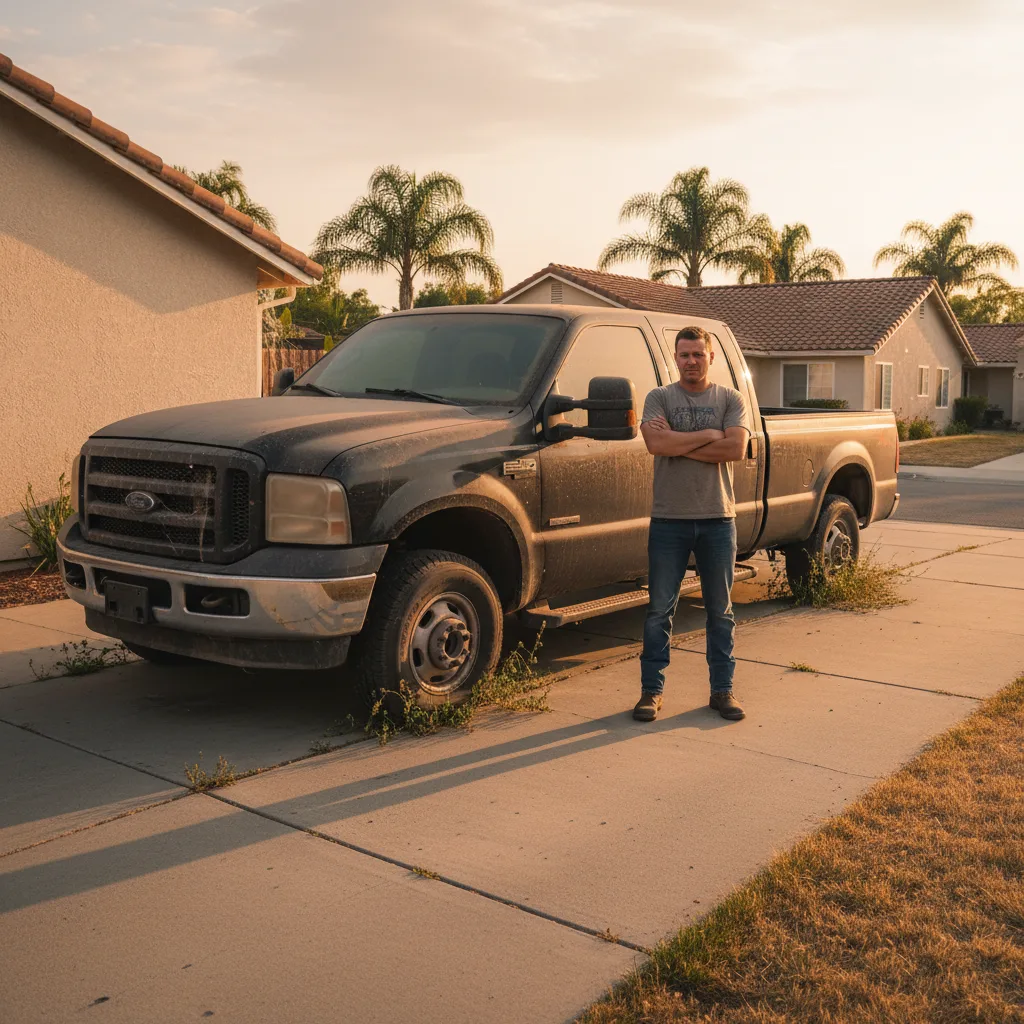
The independent contractor
Imagine you are a builder in San Bernardino. You drive a 2008 Ford F-350. It’s paid off. It has 200,000 miles, but the 6.4L engine (with the emissions delete) runs like a top. You use it to tow your skid steer to job sites.
Suddenly, your registration renewal arrives with a “Smog Certification Required” notice. You go to the shop. They laugh at you because your DPF is missing. You can’t register the truck. If you drive it with expired tags, CHP will impound it. You can’t bid on the new job in Irvine because you can’t get your equipment there.
You have to go buy a new truck. A new F-350 is $95,000. Interest rates are 8%. California just taxed you out of business.
The rancher
In the Central Valley, diesels are farm equipment. A 2006 Duramax is a tool, just like a tractor. But as cities expand and air quality districts tighten their grip, that farm truck is suddenly illegal to drive into town to pick up feed. The “Ag Exemption” loopholes are closing fast.
The RV owner
You spent years saving for a Class A Diesel Pusher motorhome. You bought a beautiful 2009 model for $150,000. It has a massive Cummins engine. You try to register it. It fails smog because of a sensor issue deep in the chassis that no mechanic wants to touch. Now you have a $150,000 retirement dream sitting in storage, accruing fees, unable to leave the state legally.
Part 7: three case studies from the field
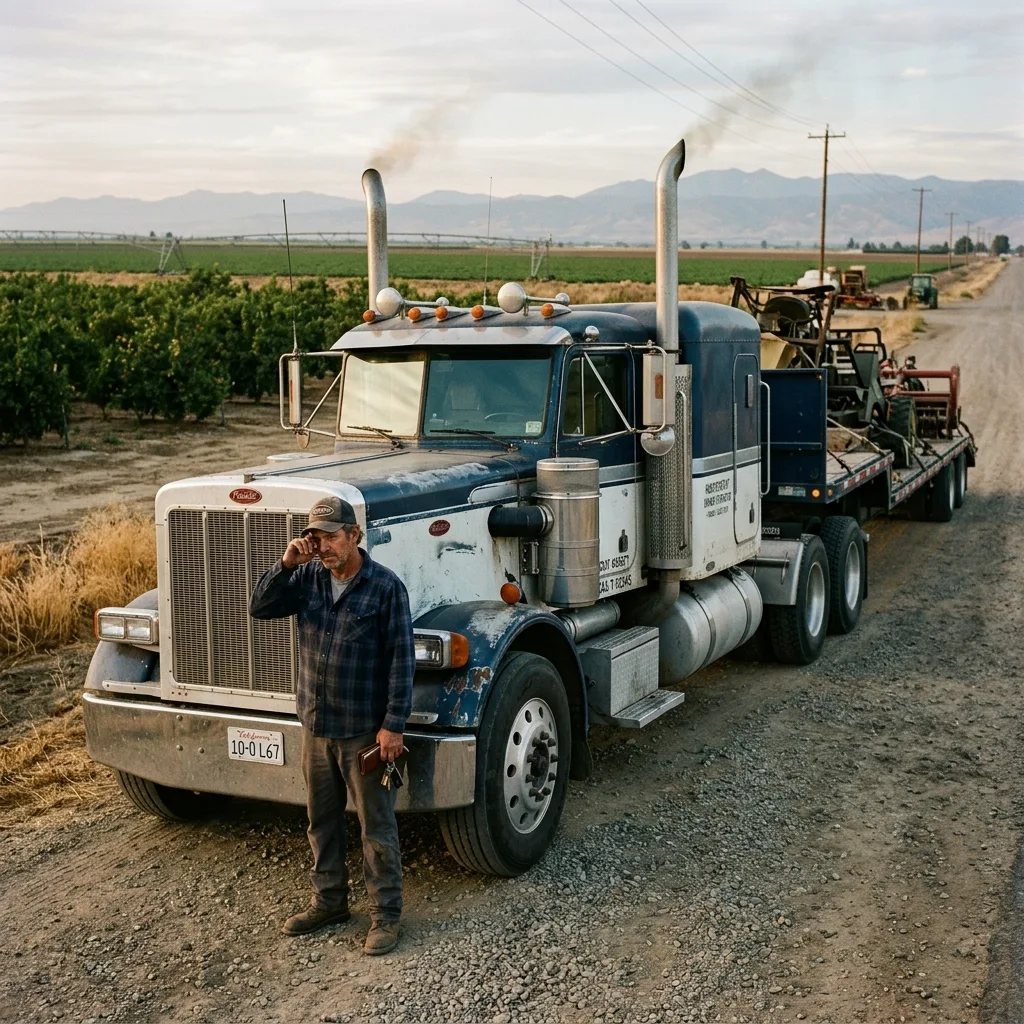
Case study 1: the independent trucker with a pre-2010 Peterbilt
Carlos runs a single-truck owner-operator business out of Stockton. His rig is a 2007 Peterbilt 379 EXHD with the 14-liter Cat C-15, paid off twelve years ago. He nets roughly $90,000 in a good year hauling reefer loads.
When the 2023 hard ban hit, the truck became unregisterable in California. His options on paper were as follows.
- Retrofit: $20,000 for a passive catalyst system. The C-15 is too old for any certified DPF retrofit. Even with the catalyst, no guarantee of passing the in-use test.
- Replace: a used 2018 Peterbilt 579 at his local dealer is asking $158,000. Financing at 9% for five years is a $3,400 monthly payment.
- Relocate via Montana LLC: form a Montana LLC, register the truck under permanent plates, base operations out of Reno, accept loads through Nevada, Utah, Idaho, Oregon, and Washington.
Carlos chose option three. His total first-year cost to switch registration to Montana was under $2,000. He gave up the California load lanes, but Pacific Northwest freight rates more than compensated. His Peterbilt is still running.
Case study 2: the fleet owner with mixed compliant and non-compliant trucks
Diana runs a regional dry van operation out of Fontana with eleven trucks. Six are 2014-2018 Freightliner Cascadias, fully CARB-compliant. Five are pre-2010 trucks that became dead weight on January 1, 2023.
She kept the six compliant trucks California-registered for her dedicated Long Beach port dray contracts. The five non-compliant trucks were retitled into a Montana LLC, given permanent plates, and dispatched to her partner operation in Phoenix that handles Arizona, New Mexico, and West Texas freight.
The Montana LLC saved her roughly $4,200 per truck per year, totaling $21,000 in pure overhead reduction redirected to maintenance and driver retention. Her Phoenix operation grew from a side gig to 35% of her revenue in two years.
Case study 3: the small business with an F-450 diesel
Mike owns a landscape contracting outfit in San Diego County. His work truck is a 2009 Ford F-450 with the 6.4L Powerstroke, pulling a 16,000-pound equipment trailer. He bought it used in 2014 for $42,000.
The F-450’s GVWR puts it just over the 14,000-lb threshold that triggers the Truck and Bus Regulation. His insurance company refused to renew commercial coverage on a vehicle without valid California registration.
Mike formed a Montana LLC through Zero Tax Tags, retitled the F-450, and received plates within six weeks. He keeps the truck garaged at his cousin’s property in Pahrump, Nevada and trailers his crews into Southern California for week-long jobs. Operationally clunky, yes. Still cheaper than the $90,000 replacement F-450 his Ford dealer wanted to sell him. He passed his break-even point eight months ago.
Part 8: the Montana solution
If California is the problem, Montana is the solution.
Montana has a fundamentally different view on vehicle ownership. In Montana, they believe that if you own a vehicle, you should be able to drive it. They don’t believe in penalizing you for the year your truck was built or the modifications you made to keep it running reliable.
1. NO SMOG CHECKS. EVER.
This is the big one. Montana has zero emissions testing.
- They do not hook up to your OBDII port.
- They do not look for a DPF or Catalytic Converter.
- They do not check for EGR valves.
- They do not measure smoke opacity.
If your truck is “deleted,” it is perfectly legal to register in Montana. You do not need to spend $15,000 reversing your modifications. You can keep your reliability, your fuel economy, and your truck.
2. No vehicle inspections
Montana does not require a safety inspection. No one is going to measure your ride height, check your tint, or hassle you about your exhaust tip. The transaction is purely paperwork.
3. Permanent plates for older trucks
This is the “Golden Ticket” for pre-2010 diesel owners. In Montana, any vehicle that is 11 years or older is eligible for Permanent Registration.
- If your truck is a 2013 model or older (which includes all the pre-2010 diesels we are discussing), you pay the registration fee once.
- You receive a Permanent sticker for your license plate.
- You never pay registration fees again.
- No annual renewals. No annual trips to the DMV. No annual anxiety.
4. Commercial freedom
For business owners, Montana offers freedom from the commercial weight fees and restrictions that plague California. If you use your truck for work, a Montana LLC allows you to operate your asset without the crushing commercial vehicle fees of the Golden State.
The Montana LLC structure is the foundation that makes it all work. The vehicle is owned 100% by the Montana LLC — a Montana entity formed under Montana law. Federal law’s Commerce Clause and Full Faith and Credit Clause prevent states from blocking legitimate out-of-state entity registrations. Montana has the right to register vehicles owned by Montana entities, and that right has decades of legal precedent behind it.
Montana LLC is your solution for:
- Avoiding California sales tax on the original vehicle purchase
- Eliminating California’s annual personal property tax on the vehicle’s value
- Permanent plates on older qualifying trucks, removing renewal fees forever
- Skipping California’s smog certification requirement — Montana has zero emissions testing, period
- Insulating the asset from California’s escalating registration bureaucracy
- Operating freely in any state that does not impose its own emissions restrictions
Part 9: how the LLC works
You might be asking, “I live in California. How can I have a Montana license plate?”
The answer lies in the Montana LLC.
You cannot personally register a car in Montana unless you are a resident. However, a business entity (an LLC) established in Montana is considered a resident of Montana.
| Step 1: | We Form Your LLC – We set up a Limited Liability Company in Montana. You are the owner of this company. |
| Step 2: | Asset Transfer – Your truck is sold (on paper) to your LLC. The LLC now owns the truck. |
| Step 3: | Registration – Since the LLC is a Montana resident, the truck is registered in Montana. |
| Step 4: | Plates and Title – The State of Montana issues the title and license plates to your LLC. We mail them directly to your door in California. |
This is a fully legal, established legal structure used by wealthy car collectors, RV owners, and savvy business owners for decades. It separates your personal residency from your asset’s registration.
Is it legal to drive in California? Yes. Your truck is owned by a Montana LLC — a Montana legal entity, not a California resident. California Vehicle Code registration requirements apply to vehicles owned by California residents, not to out-of-state business entities. The vehicle is owned 100% by the Montana LLC, a Montana entity formed under Montana law. Federal law’s Commerce Clause and Full Faith and Credit Clause prevent states from blocking legitimate out-of-state entity registrations. Montana has the right to register vehicles owned by Montana entities, and that right has decades of legal precedent behind it.
Part 10: the economics of saving your truck
This is about your bank account.
For a contractor or small business owner, that $11,000 is the difference between a profitable year and a loss. It’s the difference between buying new tools or laying someone off.
Part 11: the 2026 Advanced Clean Trucks mandate
If you think the Truck and Bus Regulation is the end of the story, you have not been paying attention. CARB’s Advanced Clean Trucks (ACT) regulation is the next regulatory wave, and it is already reshaping the new-truck market in 2026.
ACT requires manufacturers selling Class 6 through Class 8 vehicles in California to hit escalating zero-emission vehicle (ZEV) sales percentages every model year. Here is the staircase.
The economic effect is straightforward. Manufacturers must sell electric trucks at a loss to keep their license to sell profitable diesels. They recover those losses by raising diesel prices. Every conventional Class 8 sold in California carries a hidden ACT compliance surcharge.
The other effect is supply constriction. OEMs that cannot hit ZEV percentages stop allocating diesel inventory to California dealers. Several manufacturers have already pulled diesel configurations from the California market because they cannot offset them with enough electric sales. That is not bad luck. That is ACT.
Combined with the 2026 Clean Truck Check fee bump and ongoing Truck and Bus enforcement, operating a heavy diesel inside California has never been more punitive.
Part 12: why choose Zero Tax Tags?
There are other services out there, but Zero Tax Tags is built for the truck owner. We aren’t just a paperwork mill. We understand the diesel culture. We know what a “deleted” truck is. We know the difference between a GVWR of 10,000 and 14,000.
We offer:
- Speed: we get your LLC filed and your plates processing faster than anyone else.
- Expertise: we handle the DMV bureaucracy so you don’t have to.
- Anonymity: your name isn’t on the public registration; your LLC is.
- Support: we are here to answer questions about insurance, renewals (if applicable), and maintaining your LLC.
- Expertise: we have handled thousands of California diesel registrations and know exactly how to structure the LLC to serve your situation.
The clock is ticking
California is not slowing down. The restrictions are spreading. Cities are implementing Zero Emission Zones. Ports are banning trucks older than 2010 entirely. Every quarter, California’s regulatory apparatus gets tighter. The longer you wait, the more registration cycles you pay for — or miss out on entirely.
Get Montana plates on that truck now.
Conclusion: take back your freedom
Your diesel truck puts food on your table. You paid it off, kept it running, and poured money into it over the years. California has decided it is a problem.
California has decided that your investment is worthless because it doesn’t meet an arbitrary standard set by bureaucrats who have never hauled a load of concrete in their lives.
Don’t let them scrap your truck. Don’t let them force you into a $90,000 debt for a new pickup that uses DEF fluid and breaks down twice as often.
Go Montana.
With Zero Tax Tags, you can legally register your pre-2010 diesel, skip the smog check, and drive with the peace of mind you deserve. The structure is fully legal under federal law — the vehicle is owned by a Montana entity, registered in Montana, and protected by the Commerce Clause and Full Faith and Credit Clause of the U.S. Constitution.
Your truck is ready to work. Are you ready to let it?
Ready to Stop Letting California Kill Your Diesel?
California diesel owners have saved millions with Montana LLC registration. Your truck deserves to keep working. You’re next.
Don’t let California kill your diesel.
Visit ZeroTaxTags.com today and start your Montana LLC registration.