25 min read
On this page
- + The $156 envelope that ruined a Tuesday
- + Wisconsin vehicle tax: the two-layer system
- + Wisconsin vehicle tax by city
- + The real 5-year cost
- + Why Wisconsin vehicle tax keeps growing
- + Who Wisconsin vehicle tax hits hardest
- + The Montana solution
- + Is this legal?
- + Four Wisconsin owners who switched
- + Who this is built for
- + How Zero Tax Tags works
- + Frequently asked questions
The $156 Envelope That Ruined a Tuesday
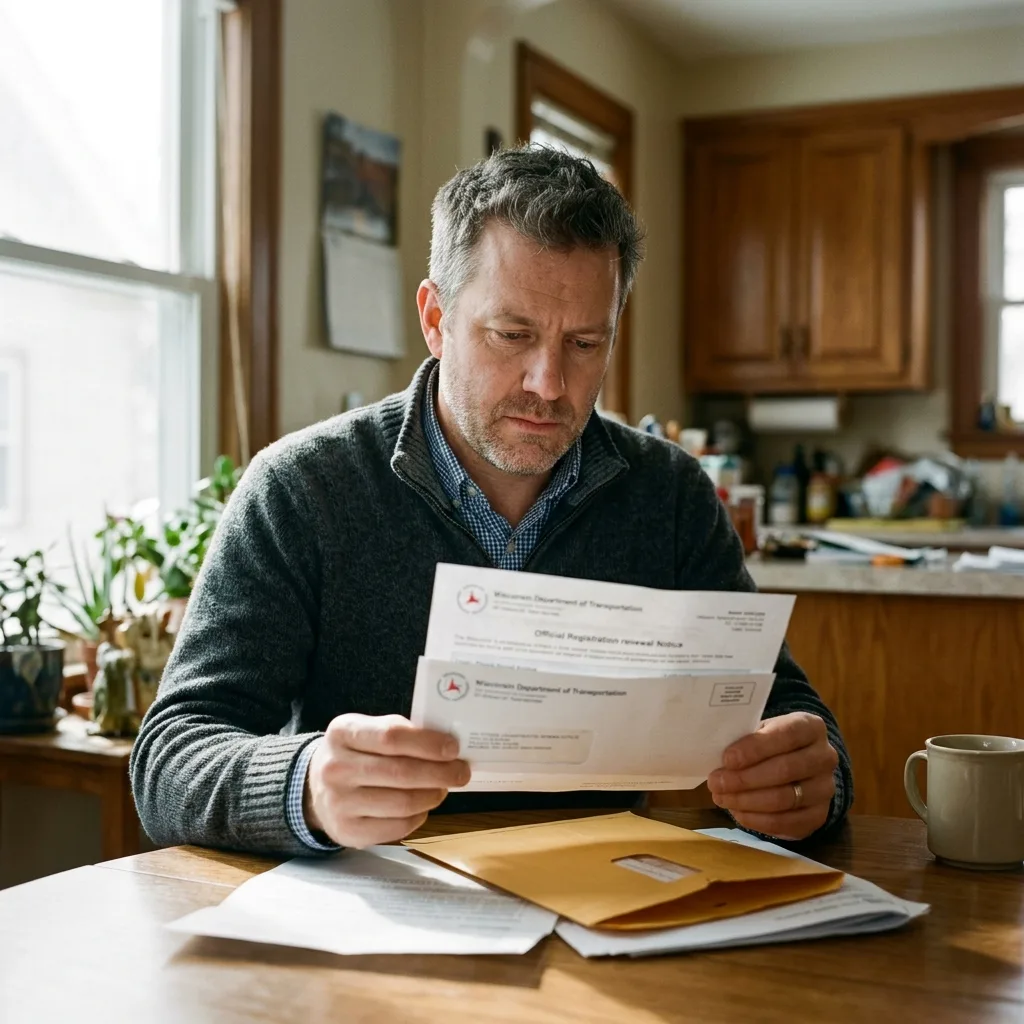
Wisconsin vehicle tax hit Daniel Kowalski twice in eight months and the second hit is the one he didn’t see coming.
Daniel is 46, a regional sales director for a medical device company, lives on Milwaukee’s east side. In September 2025 he walked into a Brookfield dealer and signed for a 2024 BMW X5 xDrive40i at $82,000 out the door. He traded in a 2019 Audi Q5 worth $24,000, which knocked his taxable amount down to $58,000. Then the dealer added Milwaukee’s combined sales tax. Not 5%. Not 5.5%. Seven point nine percent. Five percent state, plus 0.9% Milwaukee County, plus the 2% City of Milwaukee surcharge that hit in 2024. The sales tax line on his bill of sale read $4,582. He blinked, signed, and drove home telling himself the worst was over.
The worst was not over. In May 2026, eight months after he took delivery, an envelope from the Wisconsin Department of Transportation showed up in his mailbox. Annual registration renewal: $156. Eighty-five dollars for the standard auto registration he expected. Then $41 for the City of Milwaukee wheel tax. Then another $30 for the Milwaukee County wheel tax. Two separate municipal layers stacked on top of the state fee, every single year, for as long as he owned the vehicle.
He didn’t know Milwaukee had a wheel tax. He didn’t know Milwaukee County had stacked a second one on top of it in 2017. He didn’t know that 68 Wisconsin jurisdictions now collect this fee, up from 4 in 2010, generating more than $70 million a year for local governments who can’t or won’t pass it through their state budget. He just knew that on top of the $4,582 sales tax he’d already swallowed, he was now staring at $156 a year forever.
That’s $780 in registration costs over five years on a vehicle he already paid sales tax on at the dealer. Combined with the original $4,582, he’s looking at $5,362 in Wisconsin vehicle tax over five years. And that’s before we talk about title fees ($214.50 effective October 2025, up from $164.50). And that’s a calm, mid-tier example. Daniel got lucky. He didn’t buy a Tesla.
This article is about why this is happening, who’s getting hit hardest, and the legal Montana LLC structure that thousands of Wisconsin residents are now using to step out of this system entirely. The numbers below are not estimates. They’re current as of 2026, sourced directly from Wisconsin DOT and county clerk filings.
Wisconsin vehicle tax: the two-layer system
Wisconsin vehicle tax is two completely separate taxes operating on two different schedules, run by two different layers of government, and most buyers only learn about the second one when the first registration bill arrives.
Layer one: sales tax at purchase
Wisconsin’s state sales tax is 5%. That’s the floor. Every county can stack a 0.5% county tax on top, and most do. Then certain municipalities, most notably the City of Milwaukee, can stack their own surcharge on top of that. Milwaukee combined comes out to 7.9%: state 5%, Milwaukee County 0.9%, City of Milwaukee 2%. That’s the highest combined rate in the state.
Madison and Dane County sit at 5.5%. Green Bay and Brown County at 5.5%. Eau Claire at 5.5%. Racine County moved to 5.5% in April 2025 when the new county add-on took effect. Kenosha County is also at 5.5%. The exception that proves the rule is Waukesha County: still 5%, no county add-on, zero stacking. A buyer who shops twenty miles outside Milwaukee in a Waukesha dealership pays $2.90 less per $100 in sales tax than the same buyer in Milwaukee city limits.
Wisconsin offers a trade-in credit, but only at the dealer. Trade in your Q5 worth $24,000 against a new BMW worth $82,000 and you only pay sales tax on the $58,000 difference. Dollar for dollar. No cap. That’s the good news.
The bad news: there is zero trade-in credit on private-party sales. Buy that same BMW from a private seller on Facebook Marketplace and you pay tax on the full $82,000 regardless of what you sell your old car for separately. Worse, Wisconsin DOR audits private-party transactions using NADA book value. If you bought a car for $35,000 but NADA says it’s worth $42,000, expect a letter asking why you paid less than fair market value and a bill for the difference plus penalty. Plenty of buyers learn that the hard way.
Layer two: annual registration and the wheel tax
The base annual registration for a standard Wisconsin auto is $85. That’s it. Eighty-five dollars to the state, due every year on your renewal anniversary. Reasonable on its face. Compared to Virginia’s percentage-based personal property tax or Arizona’s VLT, $85 looks like a gift.
Then comes the wheel tax. Wisconsin allows cities, villages, and counties to impose a vehicle registration fee on top of the state’s $85, with the proceeds flowing to local government instead of Madison. In 2010, exactly four jurisdictions did this. By 2026, the number has hit 68. Milwaukee city stacks $41. Milwaukee County stacks another $30. That’s $71 in wheel taxes layered on top of $85 in state registration, for a $156 annual bill on every passenger vehicle registered to a Milwaukee address.
Eau Claire is the worst in the state at $80 in combined wheel taxes ($50 city, $30 county) for a total of $165. Madison is at $68 ($40 city, $28 Dane County) for $153, and Dane County has voted to raise its share to $40 in May 2026, pushing the Madison total to $165. Green Bay charges $25 city only, no county, for a $110 total. The state has effectively created a backdoor property tax administered through DMV registration.
EV owners get a third surcharge: $175 a year on top of base registration, on top of any local wheel tax. Hybrid owners pay $75. And on January 1, 2025, Wisconsin layered a 3 cents per kilowatt-hour excise tax on all public EV charging, making the state one of the few in the country to tax both the vehicle and the fuel.
Wisconsin vehicle tax by city: where you live determines your bill
The address on your driver’s license is worth real money in Wisconsin. Two identical $60,000 vehicles registered to two identical owners can produce a five-year tax difference of more than $2,000 based on nothing except which side of a county line they sleep on.
The Milwaukee versus Waukesha comparison is the one that breaks people. These two cities are 20 miles apart. Same metro area. Same labor market. Same lakes, same Brewers games, same I-94 commute. A buyer in downtown Waukesha pays 5.0% sales tax and $85 a year forever. A buyer in downtown Milwaukee pays 7.9% sales tax and $156 a year forever. On an $80,000 vehicle held for five years, the difference is $2,320 in sales tax plus $355 in extra registration. That’s $2,675 to live on the wrong side of a county line.
Plenty of Milwaukee residents have figured this out and now register vehicles to a relative’s address in Waukesha. That works until DMV catches the discrepancy and reclassifies the registration with back fees and penalties. The Montana LLC structure does the same thing legally, with no relative involvement, and saves significantly more money.
The real 5-year cost: Wisconsin vs. Montana LLC
Below are four real scenarios using verified 2026 numbers. Every Wisconsin figure assumes no trade-in (worst case at the dealer) and standard registration. Every Montana LLC figure uses Zero Tax Tags published pricing.
Scenario A: 2024 BMW X5 xDrive40i, $82,000 in Milwaukee
Scenario B: 2024 Ford F-250 Super Duty, $72,000 in Madison
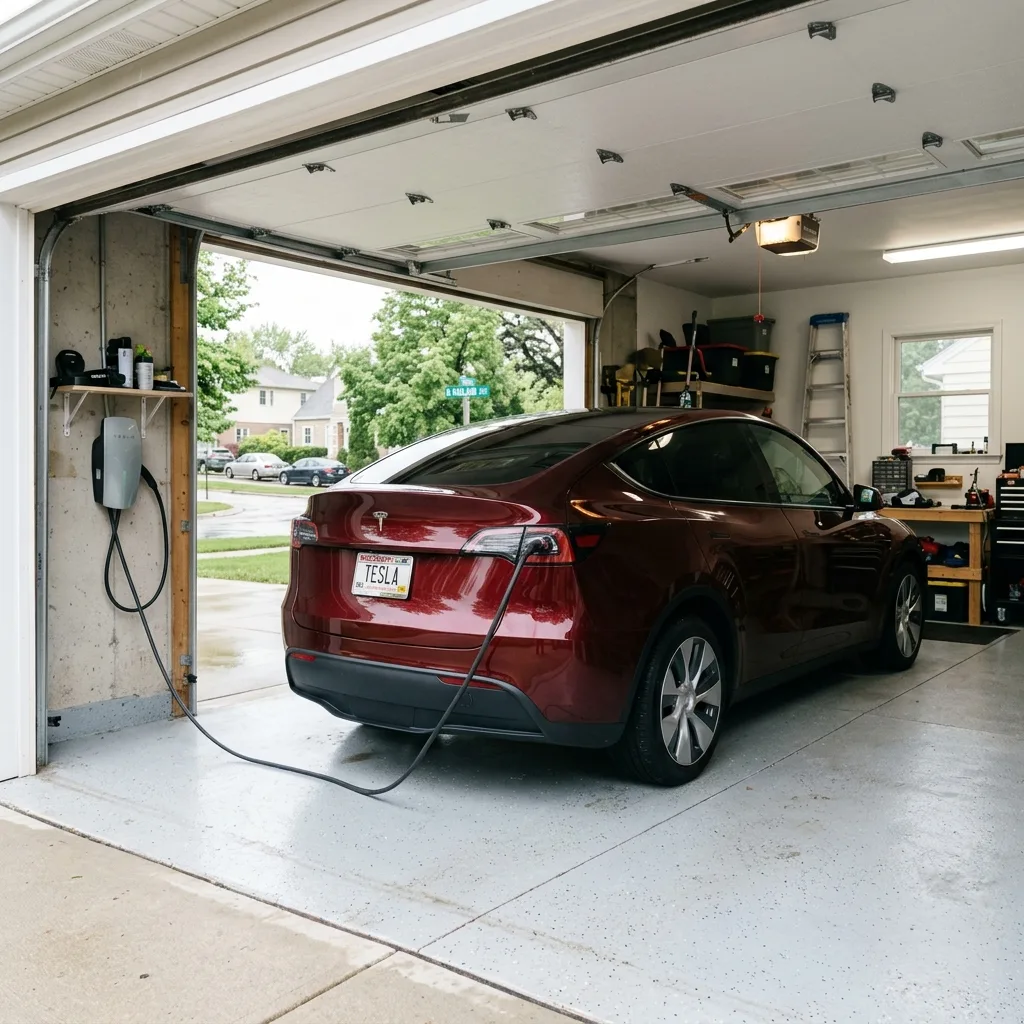
Scenario C: 2024 Tesla Model Y Long Range, $55,000 in Milwaukee (EV Triple Stack)
Scenario D: 2025 Class A Motorhome, $195,000 in Milwaukee
The motorhome scenario is where the structure starts to look not just smart but obvious. A $195,000 RV in Milwaukee burns more than $15,000 in sales tax on day one before the keys leave the dealership. The same vehicle through a Montana LLC pays zero. Five-year savings of nearly $13,000 is essentially a free year of fuel, insurance, and storage.
Why Wisconsin vehicle tax keeps growing
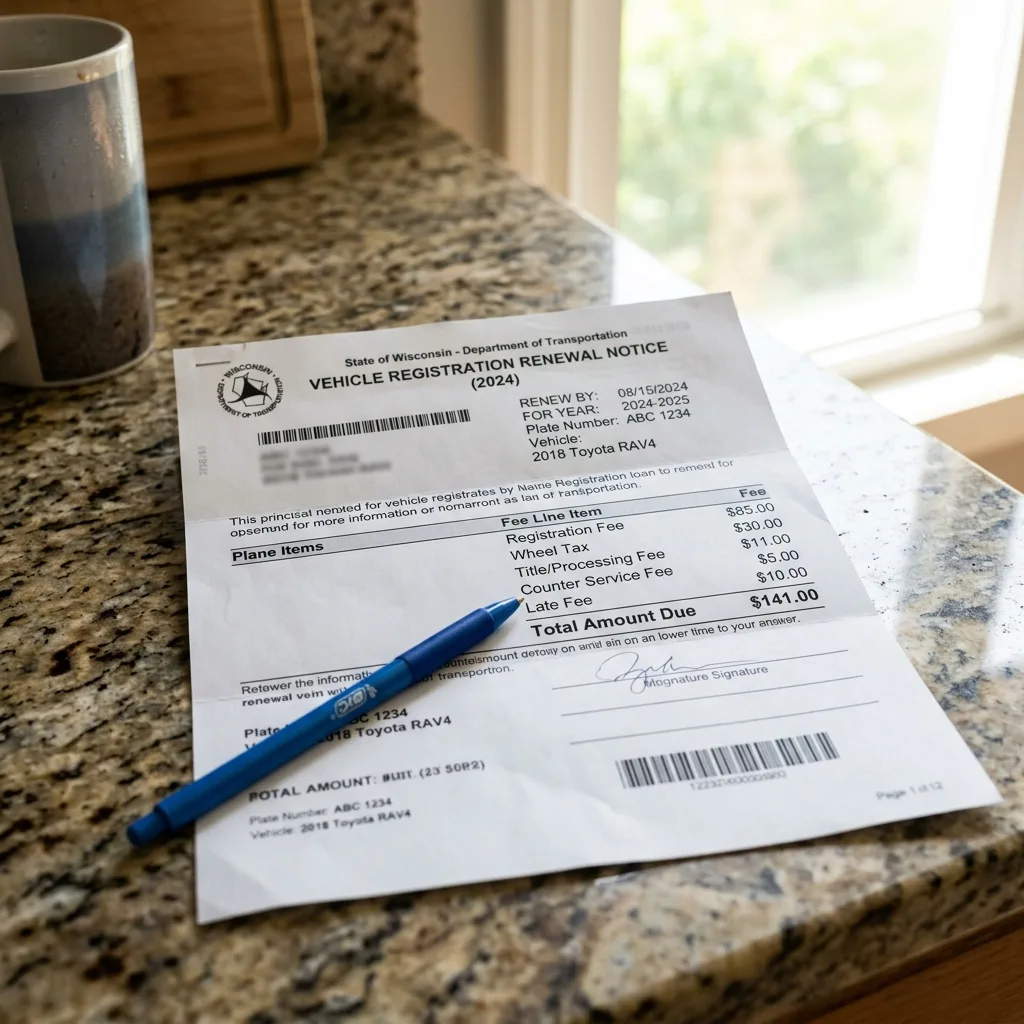
The wheel tax did not exist as a meaningful revenue source 20 years ago. It existed as an obscure local option that almost nobody used. In 2010, four jurisdictions in the entire state of Wisconsin levied a wheel tax. Four. The combined statewide haul was a rounding error.
By 2026, that number is 68. Sixty-eight cities, villages, and counties have layered their own annual vehicle fee on top of the state’s $85. Combined statewide collections now exceed $70 million per year, every dollar of which flows to local governments who use it for road repair, transit subsidies, and general fund obligations they couldn’t get past their voters as a property tax increase.
Why politicians love the wheel tax: It does not require voter approval in most jurisdictions. It does not show up on a property tax bill. It hits every household with a vehicle, but spreads the pain across a year so the annual hit feels small. Most residents don’t even notice the line item on their renewal until a new layer gets added. It is, mechanically, the most effective stealth tax in local government.
The Wisconsin Legislature noticed. In the 2023–2024 session a bill was introduced to require local referendum approval before any new wheel tax could be enacted. It did not pass. Local government lobbyists fought it hard, arguing that voter referendums on individual revenue items would gridlock municipal budgets. The bill is back on the table for 2026, but until it passes, every county and every city remains free to add or raise the wheel tax on a simple board vote.
Madison voted to raise the Dane County wheel tax to $40 effective May 2026, lifting the Madison total to $165 a year. Milwaukee County is expected to revisit its $30 county fee in late 2026 with proposed increases of $5 to $15. Eau Claire is already at $80 in stacked wheel taxes and shows no sign of pulling back. The trend is one direction only: up.
Meanwhile, Waukesha County continues to refuse a wheel tax entirely. Same metro area, same demographics, same road network connecting them. A 20-mile drive west of Milwaukee city limits and the annual registration cost drops by $71 per vehicle. That gap is why thousands of Milwaukee-area buyers now register their vehicles outside the city, either through Waukesha addresses or, increasingly, through legal Montana LLC structures that take the entire state of Wisconsin out of the equation.
Who Wisconsin vehicle tax hits hardest
Five categories of Wisconsin vehicle owners pay disproportionately into this system. If you fall into any of them, the math behind switching to a Montana LLC structure is no longer marginal. It’s significant.
1. Milwaukee and Dane County Professionals with Luxury Vehicles
The combined rate in Milwaukee is 7.9%. On a $90,000 luxury SUV that is $7,110 in sales tax up front. Add five years of $156 wheel tax for $780 more. Add $214.50 in title fees. The owner has spent roughly $8,100 on government fees before they have changed the oil. Madison is slightly better at 5.5% sales but $153 a year in wheel taxes. Either way, six-figure earners in the two largest metros pay the most absolute dollars into the wheel tax system, because their vehicles cost more.
2. EV Owners
The triple stack: full sales tax at purchase (5–7.9% depending on county), plus $175 a year EV surcharge, plus the new 3-cent-per-kilowatt-hour public charging excise. A Milwaukee Tesla owner who charges 25% of the time at public DC fast chargers pays roughly $36 a year in charging tax alone. Combined with the $175 surcharge and the $156 in wheel tax/registration, that’s $367 every year just to keep the vehicle plated and charged.
3. Private-Party Buyers
Zero trade-in credit on private sales. Buy a $40,000 used Tahoe from a private seller in Milwaukee and pay $3,160 in sales tax even if you sold your old car the same week for $20,000 to a different buyer. Then DOR may audit using NADA book value. If they decide your $40,000 purchase was actually a $46,000 vehicle, you owe the difference plus penalty. Private-party buyers in Wisconsin pay the highest effective rate of any group.
4. Heavy-Duty Truck Owners
F-250s, Ram 2500s, GMC Sierra HDs, Ford F-450s. These are working vehicles that carry premium price tags, often $70,000 to $110,000. They burn the same wheel tax as a Civic but the sales tax hit is two or three times larger. Wisconsin contractors, fifth-wheel haulers, and rural construction operators take some of the biggest absolute hits in the state.
5. Multi-Vehicle Households
A Milwaukee family with three vehicles in their driveway pays $468 a year in registration and wheel tax alone. Over five years, $2,340 just to keep three plates current, on vehicles they have already paid sales tax on. A single Montana LLC can hold all three, eliminating annual wheel tax exposure across the entire household.
The Montana solution: how Wisconsin owners step out of the wheel tax
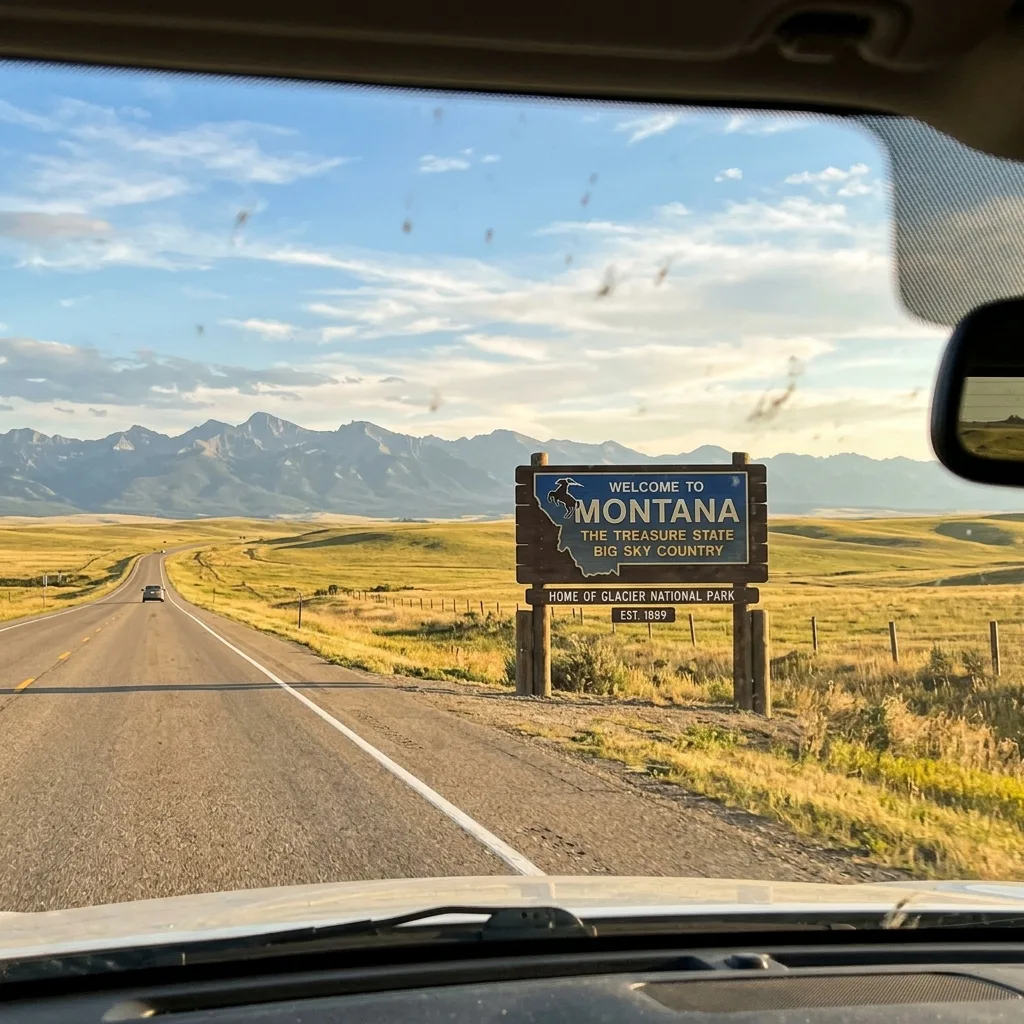
Montana is the only state in the union with no general sales tax of any kind. Not on cars, not on RVs, not on retail purchases. Zero. The state generates its revenue from income tax, property tax on real estate, and federal land-use payments. Vehicle purchases are simply not taxed at the point of sale. That has been true for more than a century and shows no sign of changing.
Montana also has no annual personal property tax on vehicles. Wisconsin’s wheel tax model — counties and cities skimming an annual fee off every plate — does not exist in Montana. Registration fees are flat, age-graded, and modest. A two-year-old vehicle costs more to register than a fifteen-year-old vehicle, but the structure tops out reasonably and at year 11 the vehicle qualifies for a permanent plate. One fee, paid once, never renewed.
This is where it becomes useful for non-residents: Montana state law since the 1980s has expressly permitted limited liability companies organized in Montana to register vehicles in the LLC’s name regardless of where the LLC’s members reside. The LLC is the legal owner of the vehicle. The LLC has a Montana address (typically a registered agent). The vehicle is therefore Montana-domiciled and Montana-plated, and pays Montana fees.
The Wisconsin owner becomes a member of the LLC, has full beneficial use of the vehicle, drives it in Wisconsin (and anywhere else), and is the named insured. But the title is in the LLC’s name and the registration is Montana. Wisconsin DOT has no claim on the vehicle because the vehicle is not titled or registered in Wisconsin. The wheel tax, the sales tax, the EV surcharge: none of them apply.
The Montana LLC structure has been used by fleet operators and family offices for more than four decades. It is the same legal mechanism used by major rental car companies, ranch operations, large RV dealerships, and high-net-worth families with multi-state vehicle holdings. It is not a loophole. It is the explicit, statutory result of Montana’s deliberate decision to attract LLC formations and the federal Commerce Clause’s protection of interstate commerce.
Zero Tax Tags handles the entire structure: forming the Montana LLC, transferring title at the Montana county treasurer, registering the vehicle, shipping the plates. The Wisconsin owner receives Montana plates at their door, hangs them on the vehicle, and is done with the wheel tax, the sales tax, and the EV surcharge for the life of the vehicle.
Is this legal?
The Montana LLC vehicle registration structure is fully legal under federal law and Montana statute. The short version: Montana has explicitly permitted non-resident LLC vehicle registration since the 1980s, the federal Commerce Clause protects the vehicle’s right to travel and operate in any state, and courts have consistently affirmed taxpayers’ right to structure their affairs to minimize legal tax exposure.
Montana enacted its Limited Liability Company Act in the early 1990s, with explicit provisions allowing non-resident members. Montana law does not require LLC members to be Montana residents. It does not require the LLC to do business in Montana. It requires only a registered agent with a Montana address and an annual filing. This was a deliberate legislative choice designed to attract LLC formation revenue, and it has succeeded — Montana ranks among the top states for LLC registrations per capita.
Vehicle registration follows ownership. If a Montana LLC owns a vehicle, that vehicle is registered to a Montana entity at a Montana address. Montana DMV processes the registration. The plate is issued. This is not creative interpretation. This is the same registration process used by every Montana-based fleet, rental company, and dealership.
The federal Commerce Clause protects interstate vehicle movement. A Montana-titled, Montana-plated vehicle has the constitutional right to travel and be operated in any state. Wisconsin cannot bar a Montana-plated vehicle from its roads any more than Montana can bar a Wisconsin-plated vehicle from theirs. The Supreme Court has repeatedly affirmed this principle going back more than a century.
On the tax minimization question, courts have been consistent. In Thomas v. Bridges and similar cases, courts have affirmed that taxpayers have a legal right to structure their affairs to minimize tax exposure, provided the underlying transactions are real and not shams. A Montana LLC is a real legal entity. It owns real property (the vehicle). It pays real Montana fees. It files real annual reports. There is nothing fictitious about the structure. It is exactly what it appears to be.
Wisconsin attorneys, Wisconsin insurance companies, and Wisconsin DMV personnel encounter Montana-plated vehicles owned by Wisconsin residents constantly. Insurance carriers write policies on them. Body shops repair them. Banks finance them. There is no shadow legal question hovering over the structure. It is routine.
Zero Tax Tags has filed thousands of these structures across all 50 states without a single client losing their Montana registration to a state-level challenge. The structure is legal, durable, and used at scale by fleets and families with assets far larger than any individual vehicle owner.
Four Wisconsin vehicle owners who made the switch
Daniel, Milwaukee: the BMW X5 and the $156 shock
Daniel from the opening — the medical device sales director in Milwaukee — ran the math after his $156 registration shock. His BMW X5 had cost him $4,582 in sales tax (after trade-in credit) and was set to cost him another $156 a year in registration plus wheel tax. Five-year Wisconsin total: $5,362.
He switched the vehicle to a Montana LLC in October 2025, three months after taking delivery. Montana LLC formation: same business day. Title transfer: completed Day 4. Plates arrived Day 6. Total Year 1 cost through Zero Tax Tags: $899. Years 2 through 5: $368 a year. Five-year Montana total: $2,371. Savings versus the Wisconsin path he was on: roughly $2,991 over five years on a vehicle he was already three months into owning.
Priya, Madison: the Range Rover and the Dane County increase
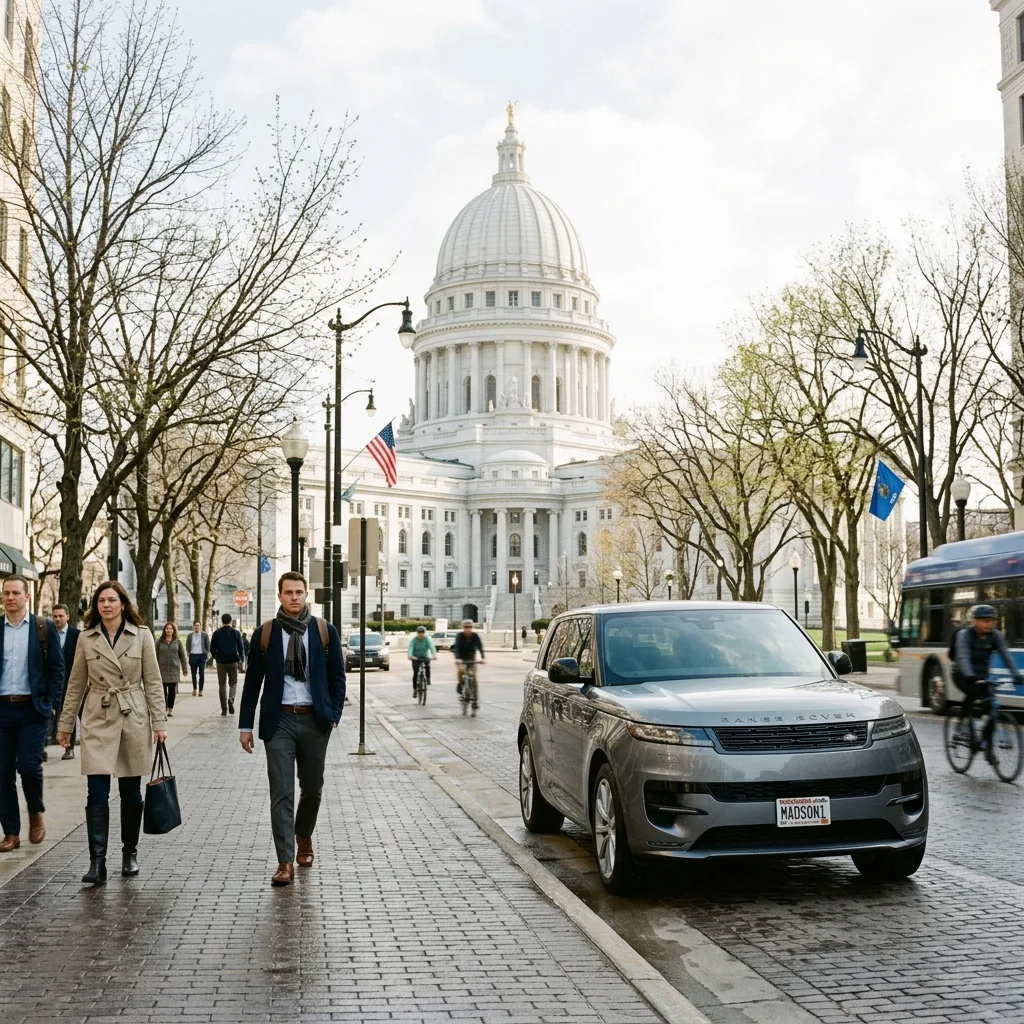
Priya is 41, a partner at a Madison law firm with a downtown office near the Capitol. She bought a 2024 Range Rover Sport at $98,000 from a Madison dealer in March 2025. Sales tax at Dane County’s 5.5% rate: $5,390. Registration plus Madison wheel tax: $153 a year, scheduled to rise to $165 in May 2026 when Dane County’s increase took effect.
Five-year Wisconsin projection: $6,200. She switched the vehicle into a Montana LLC the week the Dane County increase was announced. Year 1 cost through Zero Tax Tags: $899. Five-year total: $2,371. Savings: $3,829. As a tax attorney, she did her own due diligence on the legal structure before signing. Her words: “It’s clean. There’s nothing here that doesn’t add up.”
Marcus, Milwaukee: the Tesla and the triple stack
Marcus is 35, a senior software engineer at a Milwaukee fintech, bought a 2024 Tesla Model Y Long Range at $55,000 in February 2025. The triple stack hit him hard. Sales tax at 7.9%: $4,345. First annual registration: $331 ($85 base + $175 EV surcharge + $71 wheel tax). Public charging excise: roughly $36 a year on his usage pattern.
Five-year Wisconsin projection: $6,180. He switched to Montana in late 2025. Year 1 Zero Tax Tags: $899. Five-year total: $2,371. Savings: $3,809 plus the elimination of every public charging excise dollar going forward. Montana does charge an EV registration fee ($130 a year for BEVs under 6,000 lbs), which is built into his renewal pricing — but the 3-cent-per-kWh charging tax is a Wisconsin invention that simply does not follow him to Montana plates.
Jim and Linda, De Pere: the Class A and $9,252 in savings
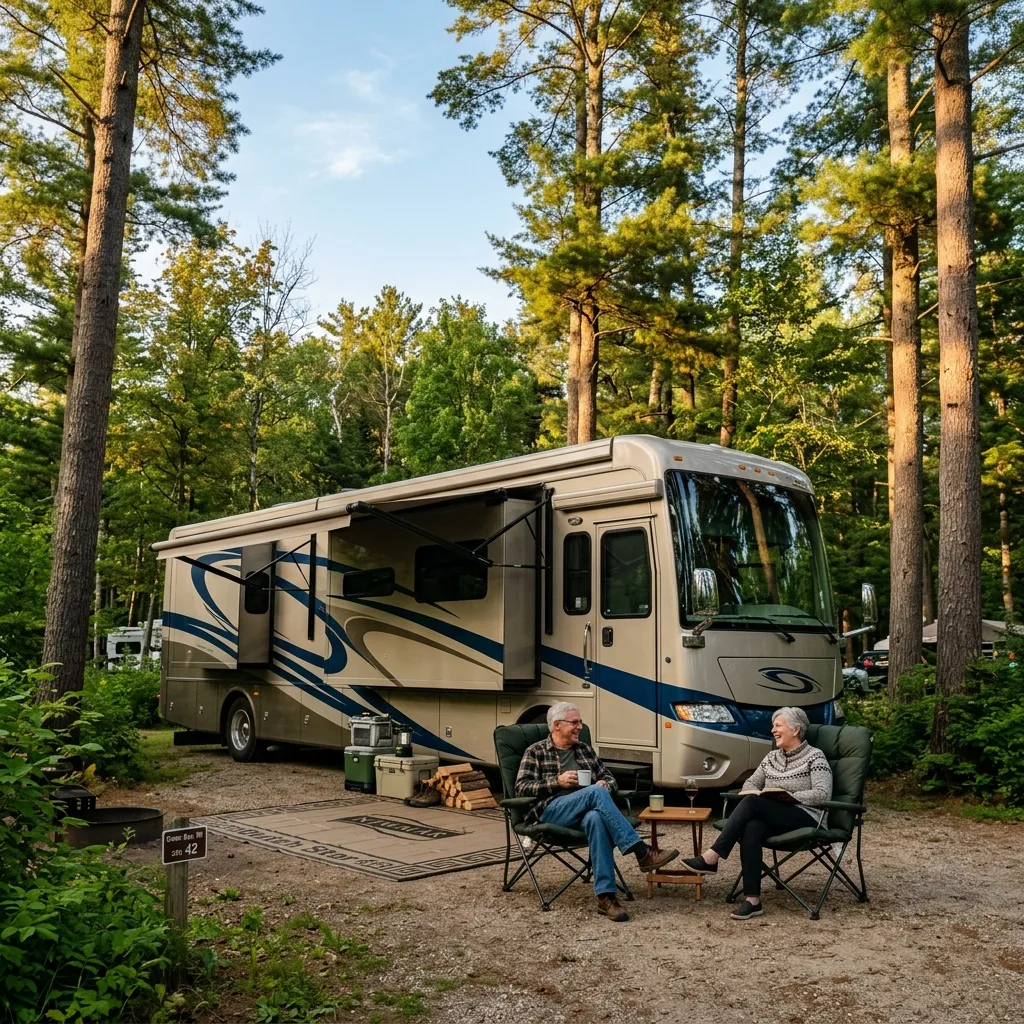
Jim is 62, retired from the paper industry, and Linda is 60, recently retired from teaching. They live in De Pere, just outside Green Bay, and bought a 2025 Newmar Dutch Star Class A motorhome at $215,000 in summer 2025. Wisconsin sales tax at Brown County’s 5.5%: $11,825. RVs are exempt from wheel tax in Wisconsin, so their annual registration is just the GVWR-based fee — but on a Class A pushing 28,000 pounds, that’s $119.50 a year.
Five-year Wisconsin total: $12,423. They moved the motorhome to a Montana LLC before the second registration came due. Year 1 Zero Tax Tags pricing for an RV over $150K: $1,699. Years 2 through 5: $368 a year. Five-year Montana total: $3,171. Savings: $9,252. They use the savings to fund their winter trip to Florida and back — twice — every year.
Who this is built for
The Montana LLC structure works for Wisconsin vehicle owners paying meaningful tax dollars who want a permanent, legal exit. Here is who the math most clearly favors:
- Luxury vehicle owners — BMW, Mercedes, Audi, Lexus, Porsche, Range Rover, Cadillac Escalade at $60K and up. In Milwaukee or Madison, the sales tax savings alone cover the entire Zero Tax Tags fee in Year 1. Everything after is upside.
- EV owners facing Wisconsin’s triple stack: full sales tax at purchase, the $175 annual EV surcharge, and the 3¢/kWh public charging excise. Montana removes all three. The structure pays for itself before the first battery software update.
- Heavy-duty truck owners — F-250, F-350, F-450, Ram 2500/3500, GMC Sierra HD, Silverado HD. These are working vehicles at premium prices. Five-figure sales tax bills are standard at current model-year pricing.
- RV and motorhome owners with Class A, B, or C rigs, fifth-wheels, and travel trailers. Wisconsin sales tax on a $200K rig runs north of $11,000. Montana LLC eliminates it. RVs over $150K MSRP: $1,699 in Year 1. Trailers and 5th wheels over $150K: $899 one-time, $0 a year after that.
- Multi-vehicle households with two, three, or four vehicles. One Montana LLC holds all of them. One service fee covers the entire fleet, not one per vehicle.
- Private-party buyers who get no trade-in credit, face NADA book audits, and pay full sales tax on the full purchase price. The Montana LLC is especially valuable here because there is no Wisconsin offset to lose.
For vehicles under $20,000 sticker price, the math gets tighter. The first-year service fee can take a meaningful bite out of the savings. Call us with the year, make, model, and your county and we will run the actual numbers in five minutes. For anything $30,000 and up, the math almost always works heavily in the owner’s favor.
How Zero Tax Tags works
Pricing
The 7-day timeline
| Day 1: | Submit paperwork through secure portal. We review and file Montana LLC same day. |
| Days 1–2: | Montana LLC formation complete — same business day in most cases, second business day at latest. |
| Days 2–4: | Title transferred into LLC name at Montana county treasurer. |
| Days 4–7: | Permanent Montana plates shipped to your door within 3–5 business days of title completion. |
One week from secure portal submission to Montana plates in your hand. No trips to Montana required. No state inspection. No emissions test in Wisconsin. The vehicle never leaves your driveway during the process.
Frequently asked questions
Do I still pay the Wisconsin wheel tax after I switch to Montana plates?
No. The wheel tax is collected through Wisconsin DOT registration. If your vehicle is registered in Montana, Wisconsin DOT has no registration to bill against. The wheel tax disappears the moment your Montana plates arrive and your Wisconsin registration is surrendered.
What if I bought my vehicle from a private party in Wisconsin?
The Montana LLC structure works exactly the same. The LLC purchases the vehicle (or takes title from you as a transfer) and registers it in Montana. Private-party Wisconsin sales tax exposure ends at that point. If you have not yet titled the vehicle in Wisconsin, the Montana path actually skips the entire Wisconsin sales tax event.
Does the Wisconsin EV surcharge follow me to Montana?
No. The $175 Wisconsin EV surcharge is collected through Wisconsin DOT annual registration. Montana plates means no Wisconsin registration, so no Wisconsin EV surcharge. Montana does have its own EV registration fee ($130 a year for BEVs under 6,000 lbs, $70 for PHEVs), which is built into your Zero Tax Tags renewal pricing. Net savings on the EV-specific fees alone is meaningful, and the 3¢/kWh public charging excise simply does not apply.
Can a single Montana LLC hold more than one vehicle?
Yes. One LLC can hold multiple vehicles — cars, trucks, RV, boat, trailers, all under the same entity. This is particularly efficient for multi-vehicle households where a single LLC formation fee is leveraged across the entire fleet.
What about insurance? Will my carrier write a policy on a Montana-plated vehicle?
Yes. All major carriers (Progressive, Geico, State Farm, Allstate, Liberty Mutual, USAA, Erie) write policies on Montana-LLC-titled vehicles operated by named insureds in Wisconsin. We provide guidance on how to structure the policy. The premium is based on your driving history and the vehicle, not on the LLC structure.
What if my vehicle is leased or financed?
Leased vehicles cannot be moved into a Montana LLC because the lessor (the bank or finance company) is the legal owner during the lease term. Financed vehicles can be moved in some cases — it depends on the lender and the loan documents. We review every loan situation individually before quoting. Most major lenders allow it; a few do not.
How long does the entire process take from start to plates in hand?
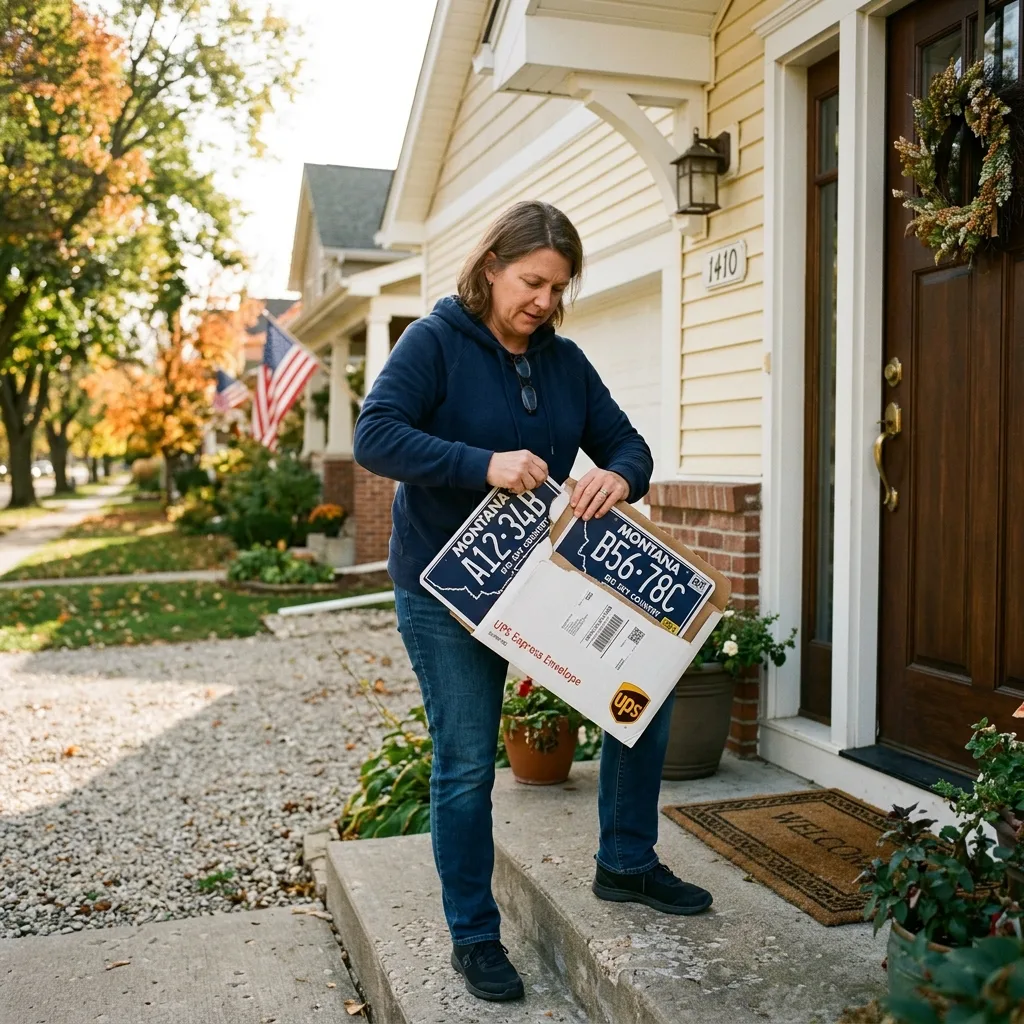
Seven days, end to end. Day 1 you submit paperwork through our secure portal and we file the Montana LLC the same day. Days 1–2 the LLC formation completes. Days 2–4 we transfer title at the Montana county treasurer. Days 4–7 your permanent Montana plates ship to your door via UPS. The vehicle never leaves your driveway during any of this.
Will Wisconsin DOT come after me?
No. The vehicle is legally owned by a Montana LLC, registered in Montana, plated in Montana. Wisconsin DOT has no jurisdiction over Montana-titled vehicles. The structure has been in continuous use across all 50 states for more than four decades, and Zero Tax Tags has filed thousands of these without a single client losing their Montana registration to a state challenge.
See how Montana LLC registration helps owners in other high-tax states
Wisconsin vehicle tax is part of a larger pattern across the Midwest and beyond. Read how owners in other high-tax states are using the same Montana LLC structure:
- Arizona VLT: How to Stop Paying $1,000 Every Single Year
- Virginia Car Tax: Stop Paying the Highest Vehicle Tax in America
- Indiana Vehicle Tax: The Excise Tax Trap
- Missouri Vehicle Tax: The Personal Property Tax Wealth Drain
Ready to Stop Paying Wisconsin Vehicle Tax?
Wisconsin vehicle owners have saved millions with Montana LLC registration. Wheel tax, EV surcharge, and 7.9% Milwaukee sales tax — all gone in seven days. You’re next.