26 min read
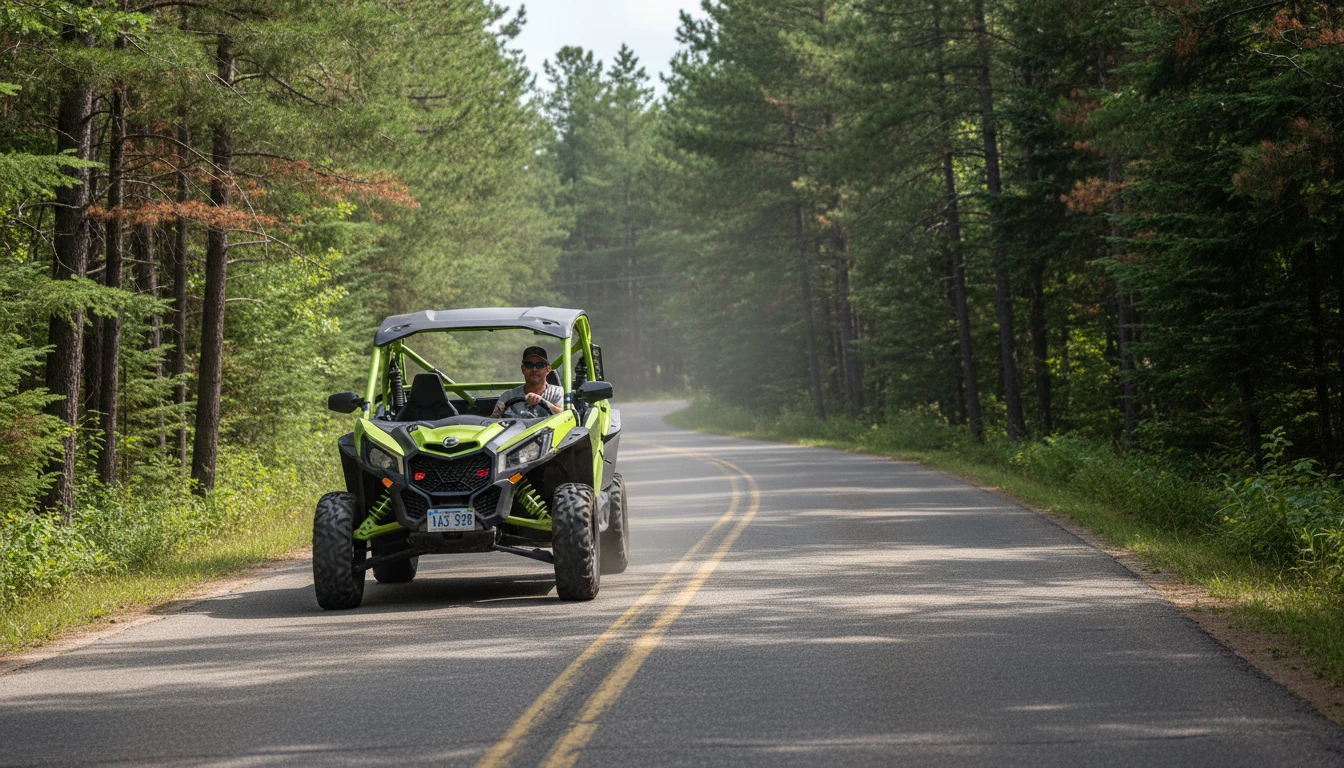
Wisconsin ATV and UTV registration is one of those systems that looks reasonable on paper and then quietly drains your wallet for the rest of your life. Unlike Missouri, where the registration office shrugs at side-by-sides and leaves owners stuck in a legal void, Wisconsin actually has a working system. The Wisconsin DNR ATV/UTV registration page will accept your paperwork, issue you decals, send you on your way to the trail. The catch is what happens before, during, and after that simple-sounding transaction.
Three things hit you. First, sales tax at point of purchase: 5% state base plus a county piece — 0.9% in Milwaukee County for a 5.9% combined rate, 0.5% in most other counties for a 5.5% combined rate. There is no cap. Buy a $45,000 Can-Am Maverick X3 Turbo RR in Milwaukee and you walk out of the dealership $2,655 lighter just from sales tax. Second, the DNR biennial registration: $30 every two years, every two years, forever. It is not a one-time fee. Third, the road-access patchwork under Wis. Stat. § 23.33 — a county-by-county quilt of ordinances that decides whether you can legally drive your machine to the trailhead or have to trailer everything everywhere you go.
Now run the same purchase through a Montana LLC. Sales tax: zero. Registration: one-time, permanent plate, $849 for a UTV or $749 for an ATV. No two-year renewal. No expiring sticker. The plate ships directly to your Wisconsin door. Under the Full Faith and Credit Clause, your Wisconsin neighbors, your Vilas County trail club, and the deputy sitting in a parked cruiser in Sawyer County all recognize that Montana plate the same way they recognize a Montana plate on a pickup truck. That is the entire framework, and it is what the rest of this article walks through in detail.
On this page
- + What Wisconsin actually charges
- + The DNR registration system: ATVs, UTVs, and the biennial cycle
- + Wisconsin road access: Wis. Stat. § 23.33 and the county patchwork
- + Wisconsin trail destinations: Vilas County, Chequamegon-Nicolet, and the Northwoods
- + Who gets hit hardest
- + How Montana registration works
- + Is it legal
- + Who this is built for
- + Timeline
- + FAQ
What Wisconsin actually charges
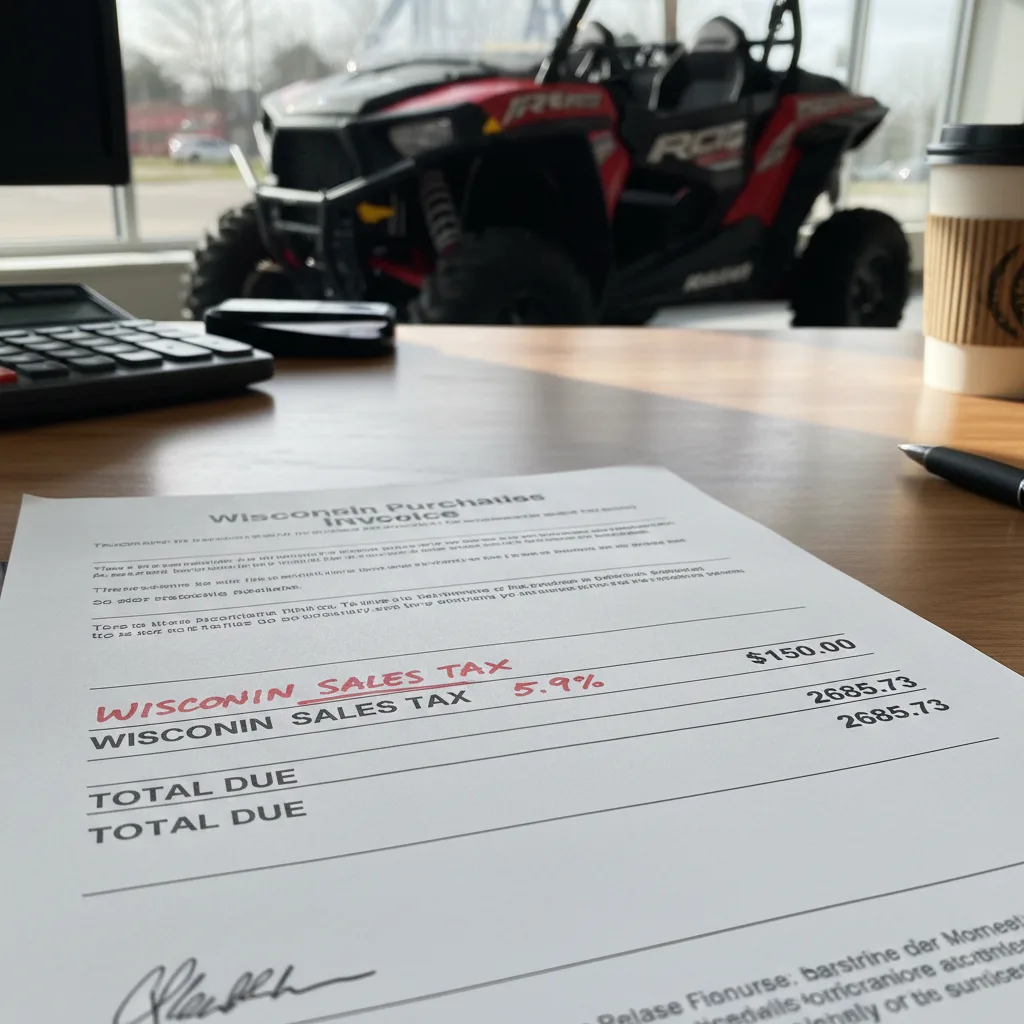
Wisconsin’s ATV/UTV cost structure runs in two layers, and the layers behave very differently. The first layer is sales tax at the point of purchase, and it is by far the larger number. The state collects 5% on the dealer’s bill of sale, and the county piles on a local rate of either 0.5% (most counties) or 0.9% (Milwaukee County). There is no cap on the local component. A bigger machine simply pays more. A $45,000 sport UTV in Milwaukee is taxed exactly 5.9% of $45,000 — no ceiling, no exemption, no recreational discount.
The second layer is the DNR biennial registration: $30 every two years, renewing on a fixed April 1 cycle. Most owners pay it without thinking about it, but compounded over the life of a machine it adds up — and the principle of it matters even more than the dollars. You never own your registration outright in Wisconsin. You rent it from the DNR in two-year leases, forever.
Here is how the sales tax breaks down by Wisconsin city:
Now stack the DNR registration on top and run a five-year total cost comparison using a 5.5% rate (which covers Madison, Green Bay, La Crosse, Wausau, and most of the rest of the state). Over five years a Wisconsin owner pays the initial $30, then two renewals ($30 at year 3 and $30 at year 5) for $90 in DNR fees. Montana is one-time and that is the whole story.
The DNR registration alone is not the shock. Ninety dollars over five years is a manageable number — most owners barely notice it. The real damage is the upfront sales tax, which is what Montana eliminates entirely. The break-even point is simple math: for any UTV over roughly $14,000 in purchase price, Montana’s one-time $849 already costs less than Wisconsin’s sales tax bill alone, before you even add the registration renewals. Above $20,000 the gap widens fast. Above $40,000 it becomes a four-figure differential per vehicle.
The DNR registration system: ATVs, UTVs, and the biennial cycle
Wisconsin operates a clean two-tier system that separates traditional quads from side-by-sides. Understanding which tier your machine falls into matters because the same biennial cycle applies to both, but the eligibility and equipment rules differ.
ATV tier
The ATV tier covers machines with a net weight of 900 pounds or less, a width of 50 inches or less, a straddled seat, three or more low-pressure tires, and head and tail lights. That definition pulls in essentially every traditional quad you can buy from a dealer: the Yamaha Grizzly 700, the Honda Foreman 520, the full Polaris Sportsman lineup, the Can-Am Outlander, the Kawasaki Brute Force. If you are riding a single-seat machine with handlebars in Wisconsin, you are in the ATV tier.
UTV tier
The UTV tier covers machines up to 3,500 pounds, up to 65 inches wide, with a steering wheel, seat belts, a roll bar, tail and brake lights, and two headlights. That covers the entire side-by-side market: the Polaris Ranger and Polaris RZR families, the Can-Am Defender and Can-Am Maverick lineups, the Kawasaki Teryx and KRX, the Honda Pioneer, the Yamaha Wolverine. If your machine has a steering wheel and seat belts, Wisconsin classifies it as a UTV.
Unlike Missouri, which has a registration void for UTVs that leaves owners stuck with no plate and no clear path to road access, Wisconsin will register both categories cleanly. That is the good news. The not-so-good news is what comes next: both tiers feed into the same biennial renewal cycle. Every two years, $30, forever.
Registration logistics
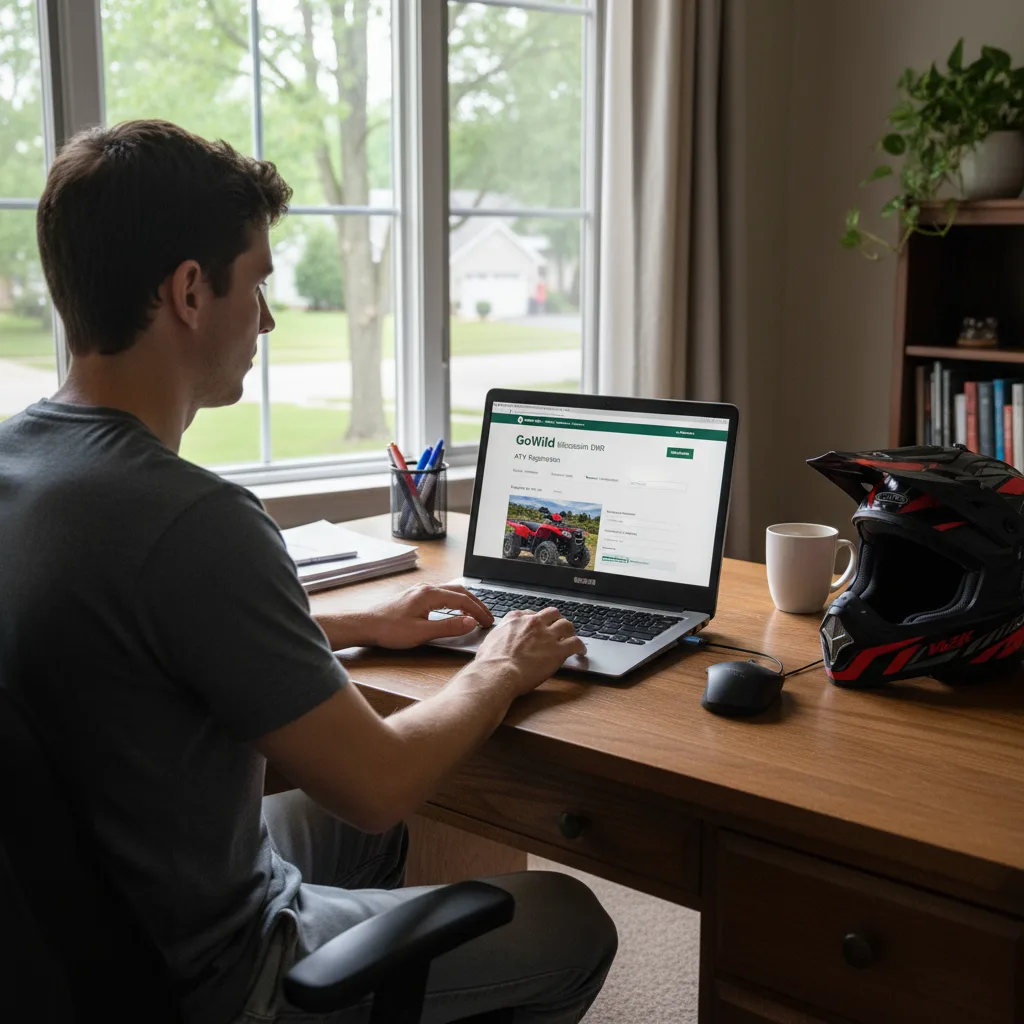
You register online through GoWild.wi.gov, which prints a 21-day temporary receipt while your decals are in the mail. Wisconsin issues two adhesive decals, which you display on both sides of the machine forward of the operator. If you intend to use your machine on public routes or trails, you also need a rear registration plate (minimum 4 inches by 7.5 inches, white background, black letters). Transfer between owners costs $5 if filed within 10 days of the ownership change.
Age and safety certification
The minimum age to operate an ATV in Wisconsin is 12. The minimum age to operate a UTV is 16. Anyone born after January 1, 1988 must complete the Wisconsin DNR ATV/UTV safety certification course. Riders under 18 must wear a DOT-compliant motorcycle or ATV helmet, and all UTV occupants (driver and passengers) must wear seat belts at all times.
Trail sticker vs registration
Here is one piece Wisconsin actually got right: residents who register their machine with the DNR do not need a separate trail sticker. The registration itself covers trail access on the state trail network. Non-residents are a different story: they have to purchase either a 5-day or annual non-resident trail pass to use the trail system.
What does not change with Wisconsin registration: the biennial renewal cycle never ends. Year 2, year 4, year 6, year 8 — you keep paying $30 every cycle. Across the typical 12 to 15 year life of a well-maintained UTV that is six to eight renewal cycles. Montana’s permanent plate means you pay once, and the registration follows the vehicle for as long as you own it.
Wisconsin road access: Wis. Stat. § 23.33 and the county patchwork
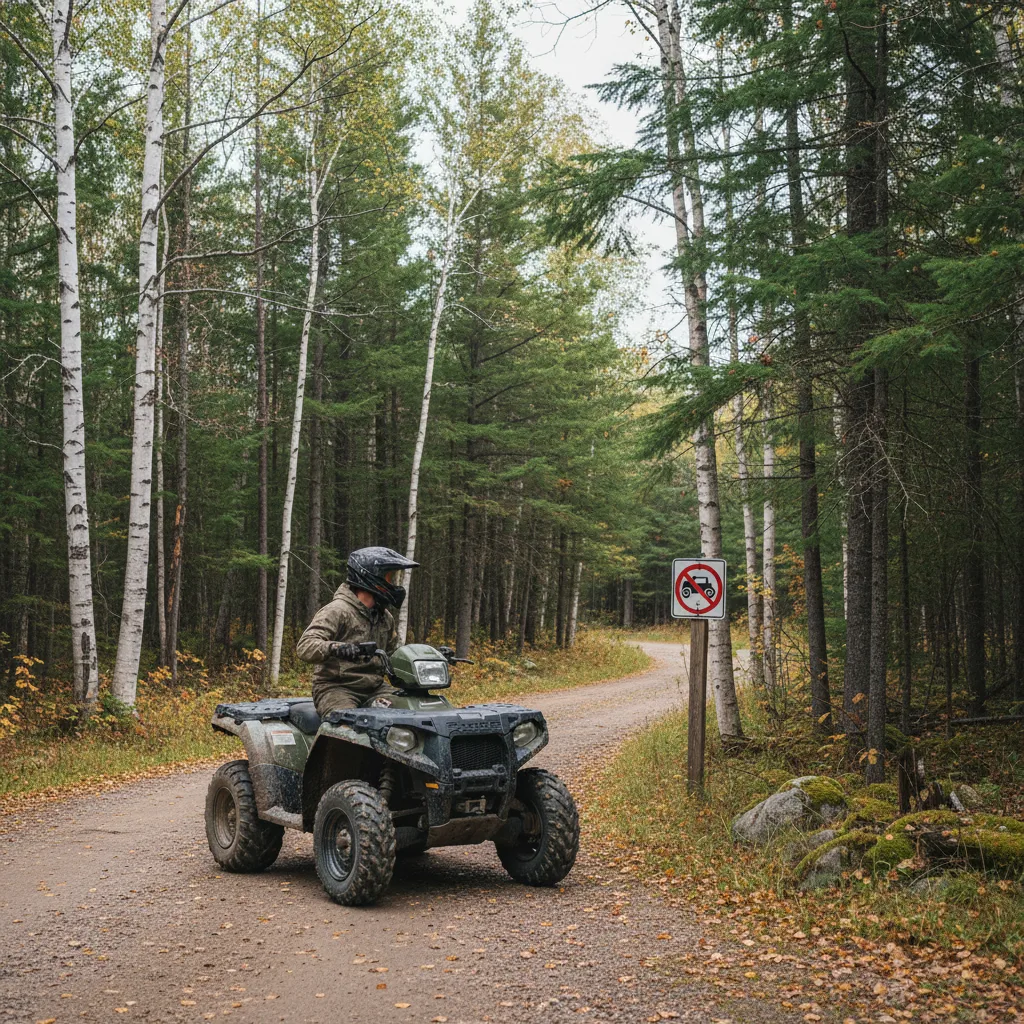
Wisconsin road access for ATVs and UTVs is governed by Wis. Stat. § 23.33, and the default rule is a ban: no public road operation unless a specific exception applies. The operative section reads:
Wis. Stat. § 23.33(4)(b) — No person may operate an all-terrain vehicle or utility terrain vehicle on a highway except as specifically authorized by this section or by department rules.
That is the wall. The statute then carves out specific exceptions, which is where things get interesting.
Authorized exceptions under § 23.33
The first exception is highway crossing under § 23.33(4)(d)(1). You can cross a highway, but only in the most direct manner, only where the crossing point is clear, and only after stopping and yielding to traffic. The second exception, under § 23.33(4)(d)(2), is operation on seasonally unmaintained roads during the seasons when the road is not maintained and is not officially closed — useful in northern counties where many forest roads fall into this category for half the year. The third and most important exception is § 23.33(4)(d)(4): counties and municipalities may designate specific roads as official ATV or UTV routes by ordinance, and on those routes operators must keep to the extreme right side.
The county patchwork in practice
Wisconsin’s road-access map is one of the most fragmented in the country. Every county sets its own ordinance, and the decisions are made one road at a time by county boards and town boards. A few examples illustrate the range.
Winnebago County passed a major expansion in June 2025. The county removed its previous 35 mph speed cap, replacing it with a rule that ATVs and UTVs simply follow the posted speed limit. The new ordinance allows nighttime riding, which had previously been restricted, and the county confirmed its requirements: a valid driver’s license, liability insurance, a helmet for operators and passengers under 18, and a functional muffler. That is one of the most permissive packages in the southern half of the state.
Sawyer County, up in the Northwoods near Hayward, passed a comparable expansion in June 2024 opening county roads to ATV/UTV operation. Many other Wisconsin counties — Vilas, Florence, Marinette, Forest, Oconto, Iron, Price, Rusk, Polk, and others — have designated specific routes or established local ATV route ordinances over the past 15 years. Most urban and suburban counties in the southeastern corner of the state have few or no designated routes. The map is a patchwork, and it changes every county board meeting.
Where Montana plates fit
Wis. Stat. § 23.33’s restrictions on highway operation apply to vehicles operating as ATVs or UTVs. A Montana-plated machine — titled and registered in Montana as a motor vehicle — is recognized in Wisconsin under the Full Faith and Credit Clause of the U.S. Constitution as a Montana-titled motor vehicle. The Wisconsin road statute does not reach a vehicle titled and plated in another state as a standard motor vehicle. A Montana plate is not an ATV decal stuck on a fender. It is a sovereign state vehicle registration, the same legal instrument that lets a Montana-plated pickup truck cross Wisconsin without a Wisconsin plate. The vehicle is registered. The state of registration is Montana. Wisconsin recognizes that registration the way it recognizes any other out-of-state registration.
Wisconsin trail destinations: Vilas County, Chequamegon-Nicolet, and the Northwoods
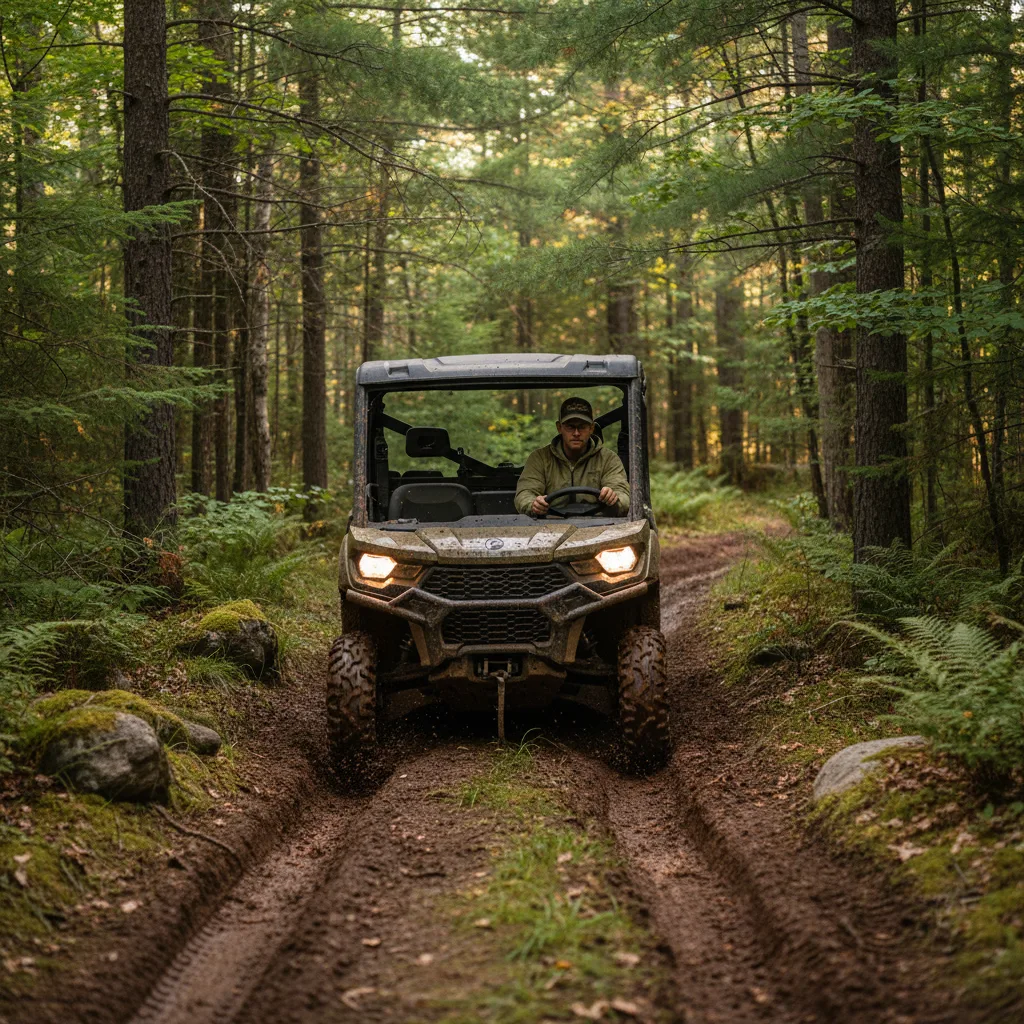
Wisconsin has one of the most developed trail networks in the upper Midwest. Five destinations stand out as the backbone of the state’s ATV and UTV culture, and each has its own character.
1. Vilas County network
Vilas County in the far north, around Eagle River, Land O’ Lakes, and Boulder Junction, that anchors Wisconsin’s most famous trail system. Ten communities are connected by a network of clubs and routes: Arbor Vitae, Boulder Junction, Eagle River, Conover, Phelps, Land O’ Lakes, Manitowish Waters, Sayner-Star Lake-Cloverland, St. Germain, and Winchester. Three primary ATV clubs maintain the major sections: the Landover ATV Club (about 30 miles in the Eagle River area), the Lakeland ATV Club, and the St. Germain ATV Club. Riders use the “Map It Vilas County trails” app for GPS navigation through the network.
Vilas County is also the spiritual home of the American snowmobile. Eagle River hosts the World Championship Snowmobile Derby every January, and the deep snowmobile culture of the region is intertwined with the ATV and UTV scene. Many trails are shared between summer and winter machines, or run parallel through the same corridors. Families that snowmobile in winter typically ride side-by-sides in summer through the same network.
2. Chequamegon-Nicolet National Forest
The Chequamegon-Nicolet National Forest covers more than 1.5 million acres across northern Wisconsin in two ranger district sides: the Chequamegon to the west and central (headquartered in Medford) and the Nicolet to the east and northeast (headquartered in Rhinelander). Motorized OHV trails open to ATVs and UTVs are designated within specific areas, and a federal permit is required for trail access on national forest lands; the local ranger districts have current information on which trails are open seasonally.
The Chequamegon-Nicolet connects to county trail systems in Forest, Florence, Langlade, Marinette, and Oconto counties. The vast scale of the forest means that on a single weekend ride you can traverse several county trail networks linked through federal corridors, covering a hundred miles or more without ever leaving the trail system.
3. Florence County and Marinette County Northwoods
Florence County is one of the most sparsely populated counties in Wisconsin and has an extensive county road and trail network open to ATV and UTV operation. The terrain is classic Northwoods: pine and mixed hardwood forest, lakes scattered through the trail system, long stretches without towns. Marinette County borders Michigan’s Upper Peninsula and connects to UP trail systems through the Iron Mountain corridor, making it a destination for cross-border Northwoods riding. Both counties have county-level trail ordinances and permit systems, and riders who plan a long weekend will typically cover both counties and dip into the UP for a third day.
4. Sawyer County
After the June 2024 expansion, county roads in Sawyer County are open to ATV and UTV operation. Hayward is the hub of the system, and from Hayward riders can connect east to the Chequamegon side of the national forest. Sawyer County is famous for musky fishing and a deep snowmobile culture, and the addition of structured road access has rapidly added ATV/UTV touring to its established recreation portfolio.
5. Polk County and Rusk County
Polk County sits in northwestern Wisconsin around St. Croix Falls, on the Minnesota border. Rusk County, a little further east, has extensive logging road and county trail networks running through mixed forest. Both counties are less well-known than Vilas or Florence but serve riders from the Twin Cities metro area looking for closer-to-home northern Wisconsin destinations without the four-hour haul to Eagle River.
Every one of these trail systems accepts Montana-plated ATVs and UTVs the same way it accepts any Wisconsin-registered machine. Trail access requires registration: Wisconsin, Michigan, Montana, or any other state. A Montana plate is a state vehicle registration, full stop. The interesting question is only road use between the parking area and the trailhead, and that is where the Full Faith and Credit Clause does the work.
Who gets hit hardest
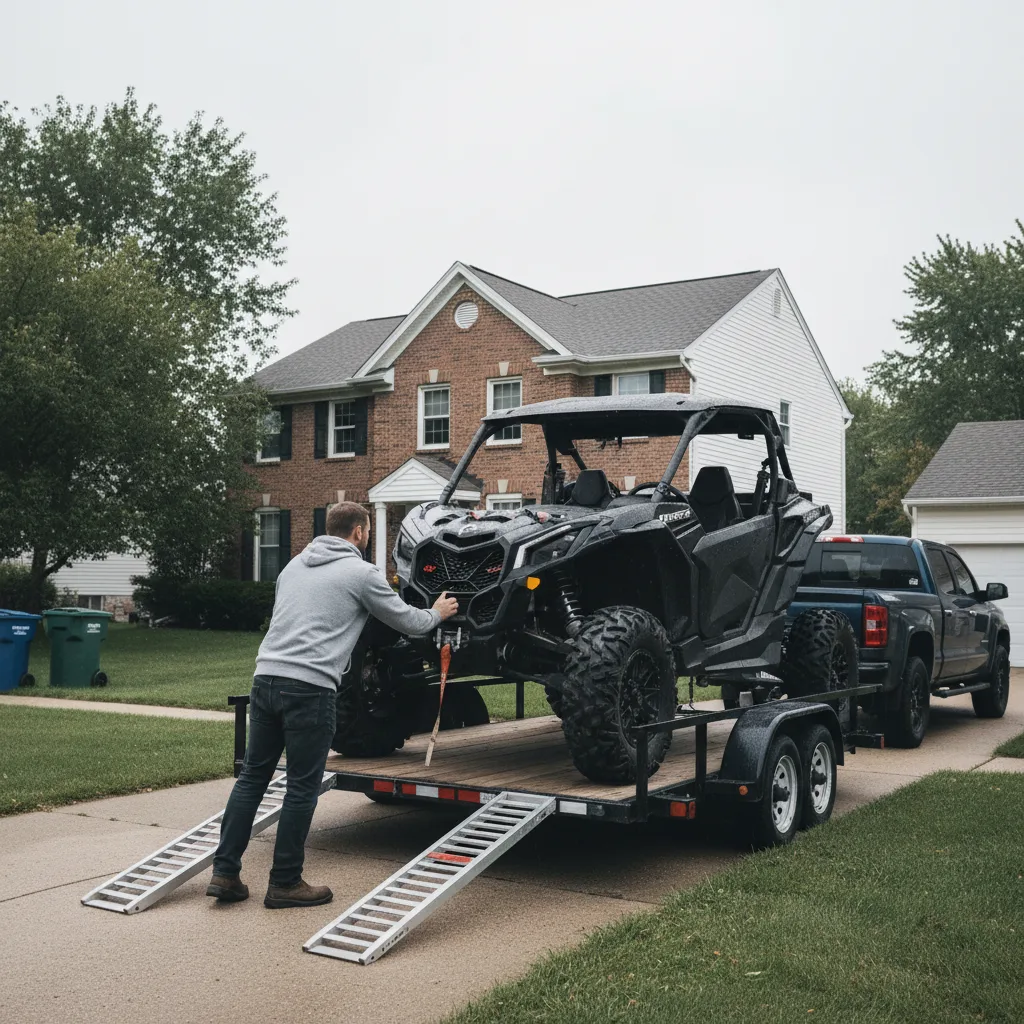
Three real-world buyer profiles show exactly how the math plays out in different Wisconsin cities and on different price points.
Case study 1: Milwaukee professional, Can-Am Maverick X3 Turbo RR, $45,000
A tech professional living in Milwaukee buys a $45,000 Can-Am Maverick X3 Turbo RR from a Milwaukee-area dealer. Milwaukee County sales tax is 5.9%, so the tax bill on the bill of sale is $2,655. DNR registration runs $30 every two years — over five years that is the initial registration plus two renewals, for $90. Wisconsin five-year total: $2,745. Montana: $849 one-time, permanent plate. Five-year savings: $1,896. The Milwaukee rider primarily uses the machine at Vilas County trails (four hours north) and wants to be able to drive it from the cabin parking area to the local trailhead on county roads. A Montana plate gives him interstate reciprocity recognition the whole way.
Case study 2: Green Bay family, Polaris Ranger Crew XP 1000, $25,000
A family of four in Green Bay buys a $25,000 Polaris Ranger Crew XP 1000 — the family utility UTV with seating for the kids, used for Northwoods camping trips and weekend recreation. Green Bay’s combined rate is 5.5%, so the sales tax bill is $1,375. DNR registration over five years: $90. Wisconsin five-year total: $1,465. Montana: $849. Five-year savings: $616. The family hauls the machine to Marinette County and crosses into the UP for long weekends — the Montana plate is recognized in both states without renegotiation.
Case study 3: Wausau ATV rider, Yamaha Grizzly 700 EPS, $15,000
A weekend trail rider in Wausau buys a $15,000 Yamaha Grizzly 700 EPS, a traditional ATV, strong Northwoods ATV culture, regular trips up into the Chequamegon-Nicolet. Wausau’s combined rate is 5.5%, so sales tax is $825. DNR registration over five years: $90. Wisconsin five-year total: $915. Montana: $749. Five-year savings: $166. This is the smallest savings number of the three case studies — but Montana still wins on dollars, and the ATV now carries a real permanent plate with no biennial renewal cycle ever again.
Three different machines, three different cities, three different price points — and Montana wins every time. The Milwaukee professional saves nearly $1,900 over five years on a sport UTV. The Green Bay family saves over $600 on a mid-tier utility. The Wausau rider saves $166 on an entry-level ATV and gets rid of the renewal cycle forever. The dollar amounts scale with the purchase price, but the principle does not change: Wisconsin charges a percentage of the sticker plus a recurring fee; Montana charges a flat, one-time number that beats Wisconsin almost across the entire price range.
How Montana registration works
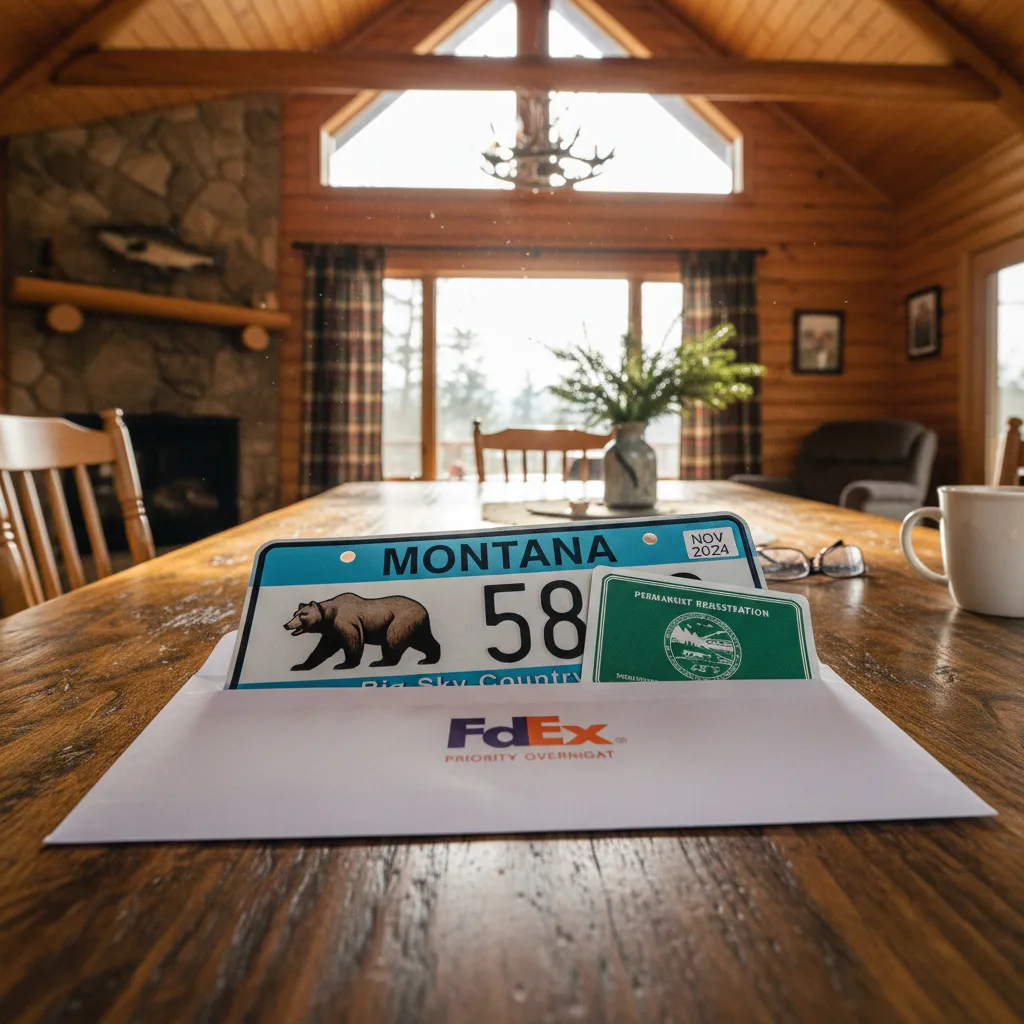
The Montana LLC structure is a long-established framework that puts ownership of the vehicle in a Montana legal entity, registers the vehicle in Montana, and uses interstate reciprocity to operate the vehicle in any other state. The mechanics are well-trodden.
The framework
A Montana LLC is formed with the Montana Secretary of State as a real legal entity with Articles of Organization and a Montana registered agent. The IRS issues an EIN. The LLC has an Operating Agreement. The vehicle is titled in the LLC’s name at the Montana county treasurer’s office. Montana has no general state sales tax, so no sales tax is owed at titling. For off-highway and recreational vehicles, Montana issues a permanent plate, no annual renewal and no sticker that expires next April. The plate ships directly to your Wisconsin address.
What Zero Tax Tags handles
Zero Tax Tags manages the entire process end-to-end: Montana LLC formation, EIN application, Operating Agreement preparation, title transfer at the Montana county treasurer, plate issuance, and the ongoing annual LLC compliance filings that keep the entity in good standing year after year. You sign forms and mount the plate when it arrives. We do the rest.
Pricing
The pricing is flat and identical regardless of the value of the machine. A $15,000 Grizzly and a $45,000 Maverick X3 pay the same Montana service fee. The LLC does not care about vehicle value the way Wisconsin sales tax does. ATV registration is $749 total ($549 service fee plus $200 LLC formation fee). UTV registration is $849 total ($649 service fee plus $200 LLC formation fee). Both prices are one-time and cover everything — no annual registration, no rate that scales with vehicle value.
Is it legal
Yes. The legal foundation runs through two clauses of the U.S. Constitution and one controlling state supreme court decision.
The Commerce Clause
Article I, Section 8 of the U.S. Constitution gives the federal government authority over interstate commerce, including the registration and operation of vehicles owned by entities organized in one state and operated across state lines. This is the framework under which a Delaware-incorporated trucking company can operate trucks plated in Indiana, and a California-incorporated rental car company can register its fleet in any state.
The Full Faith and Credit Clause
Article IV, Section 1 of the U.S. Constitution requires every state to recognize the public records and registrations of every other state. A Montana title and a Montana plate are public records of the State of Montana. Wisconsin is constitutionally required to recognize them as valid Montana state registrations of a motor vehicle.
Thomas v. Bridges, 144 So.3d 1001 (La. 2013)
The Louisiana Supreme Court addressed Montana LLC vehicle registration directly in Thomas v. Bridges and upheld it. A Louisiana resident formed a Montana LLC that owned a recreational vehicle titled and registered in Montana. The Louisiana Department of Revenue tried to assess Louisiana use tax. The Louisiana Supreme Court ruled in favor of the LLC owner: the LLC was a real Montana legal entity that owned the vehicle, and the Louisiana resident did not personally owe Louisiana use tax on a vehicle owned by a separate Montana legal person. That precedent is the controlling case on the framework.
What makes it work
Three practical requirements: first, the Montana LLC must be a real legal entity — properly formed, with a Montana registered agent, with Articles of Organization on file with the Montana Secretary of State. Second, the vehicle must be titled in the LLC’s name, not in the personal name of the owner. Third, the LLC must be maintained in good standing year over year, with the small annual report filed on time. Get those three things right and you have the same framework the Louisiana Supreme Court upheld in 2013 and the RV community has used since the 1980s.
This article is general information, not legal advice. Zero Tax Tags is not a law firm and does not provide legal counsel. For specific questions about your circumstances, consult a licensed attorney.
Who this is built for
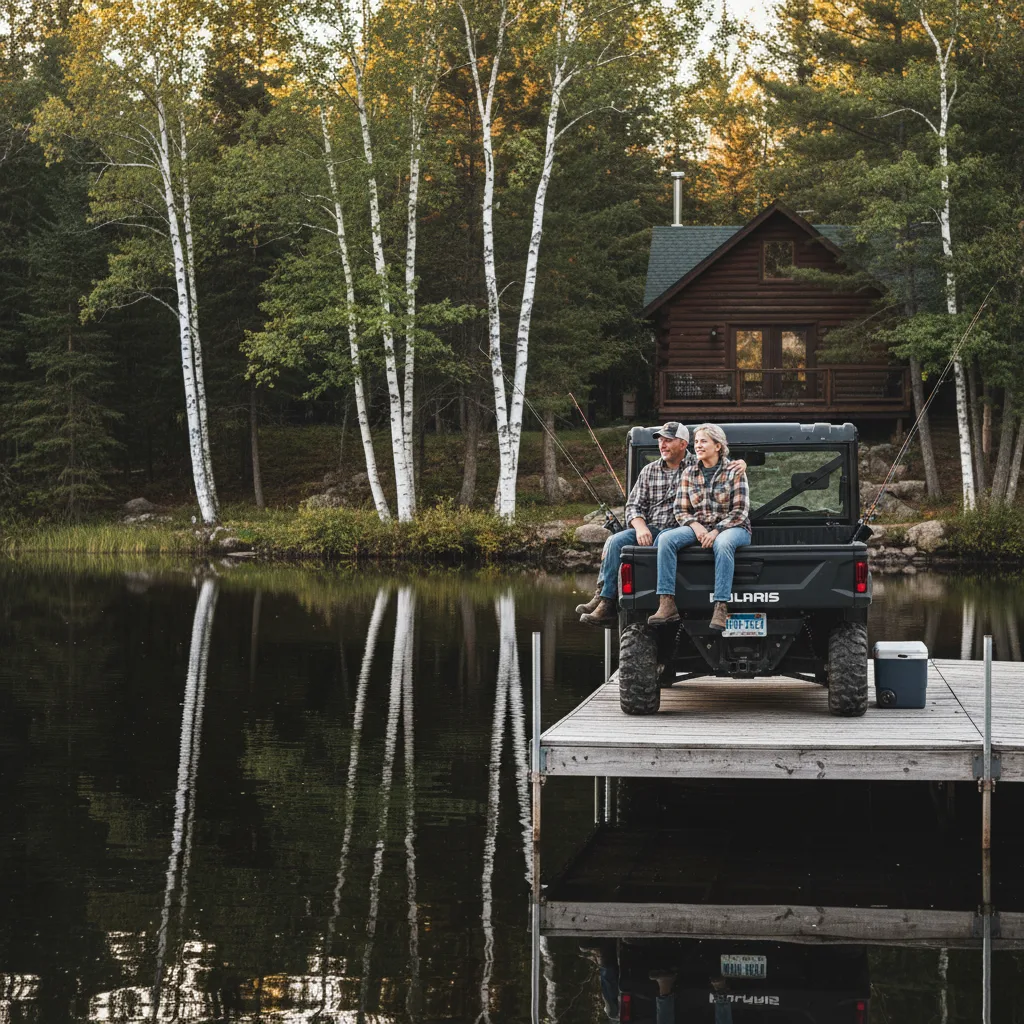
Eight Wisconsin buyer profiles where Montana makes the most sense:
The Milwaukee metro sport UTV buyer. Anyone buying a $30,000+ sport side-by-side in Milwaukee County gets the worst of Wisconsin’s tax structure: the highest combined rate in the state at 5.9%, no cap on the local component, and the same biennial renewal cycle that hits everyone else. The math works hardest in the Milwaukee market — over a thousand dollars in savings is common on a single mid-range Maverick or RZR.
The northern Wisconsin cabin owner. A UTV used for trails, campsite-to-trailhead road runs, and short county-road hops between properties benefits from the recognized Montana plate. Permissive counties in the north already allow ATV/UTV road use; a Montana plate stacks interstate reciprocity recognition on top of that.
The Wisconsin family with multiple machines. A household with three ATVs and a UTV pays four times the sales tax at purchase and four sets of biennial renewals. One Montana LLC can hold the whole fleet — the LLC pays a single annual report filing, and each vehicle gets its own permanent plate. The math compounds across the fleet.
The Vilas County snowmobile family adding a UTV. Households that have been part of northern Wisconsin’s snowmobile culture for years and are adding a side-by-side for the summer season fit the framework cleanly — same Northwoods riding, same legal structure, same permanent Montana plate logic.
The multi-state traveler. Owners who haul from Wisconsin to Colorado, Montana, Michigan’s Upper Peninsula, or Minnesota’s Iron Range need a plate that is recognized at every trailhead and on every county road. A Montana plate solves the cross-state question once instead of negotiating it state by state.
The Wisconsin farmer or rancher. Polaris Ranger and Can-Am Defender utility machines used for actual agricultural work — fence checks, livestock, hauling — benefit from a real title and plate without the biennial renewal cycle. The Montana plate is permanent, and the LLC structure also creates a clean asset-ownership line for the machine.
The cash buyer of a $50,000+ premium UTV. Above the $50,000 mark the sales tax bill alone — between $2,500 and $2,950 depending on county — already exceeds the entire Montana setup three times over. The case writes itself on the dealer invoice.
The collector or fleet owner. One Montana LLC can hold multiple vehicles. A four-vehicle stable in a single LLC pays one annual filing instead of four sets of Wisconsin renewals, and every machine in the stable rides on a permanent Montana plate.
Timeline
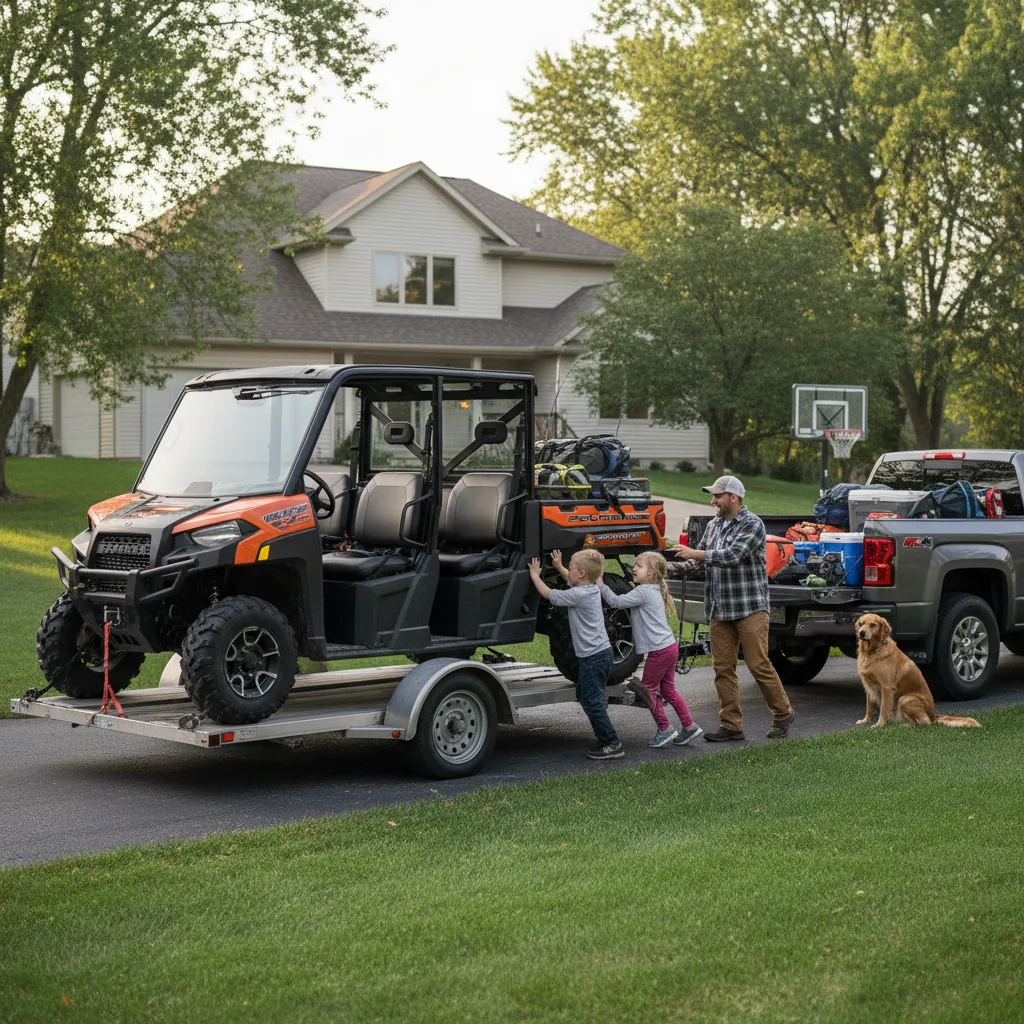
Start to finish, the process takes about a week. Most clients are riding under a Montana plate within 7 days of submitting the initial paperwork.
| Day 1: | Submit your paperwork through our secure online portal. We review the documents the same day and file your Montana LLC with the Montana Secretary of State on day one. |
| Days 1–2: | Montana LLC formation is complete, same business day in most cases, second business day at the latest. You now have a valid Montana legal entity with Articles of Organization and an EIN. |
| Days 2–4: | We transfer the title into the LLC’s name at the Montana county treasurer’s office. The new title is issued in the LLC’s name. |
| Days 4–7: | Permanent Montana plates are issued and shipped directly to your Wisconsin address. Shipping is typically 3–5 business days after title completion. You mount the plate and you’re done. |
FAQ
My Wisconsin DNR registration is already paid for this year. Is it too late to switch?
No. The Montana framework works for any vehicle regardless of current registration status. You cannot recover the Wisconsin sales tax you already paid on the original purchase, but you get a permanent Montana plate and you stop the biennial renewal cycle going forward. Most clients switch mid-cycle without complications — the Montana title is issued in the LLC’s name and the prior Wisconsin registration is simply allowed to lapse at its next renewal date.
Does a Montana plate work at Vilas County trails?
Yes. Trail access at Vilas County trails requires registration — Wisconsin DNR registration for Wisconsin-registered machines, or a non-resident trail pass for non-Wisconsin machines. A Montana-plated machine is a registered motor vehicle in Montana, which satisfies the registration requirement the same way any other out-of-state registered machine does. Vilas County trail clubs see plates from Illinois, Minnesota, Michigan, and other states routinely; Montana is no different.
Can I drive my Montana-plated UTV on county roads in Sawyer County or Winnebago County?
Yes. Those counties have designated ATV and UTV routes by ordinance under Wis. Stat. § 23.33(4)(d)(4). A Montana plate is a valid state vehicle registration recognized under interstate reciprocity — the county ordinance does not restrict road use to Wisconsin-plated machines. The route is the route, and a properly registered vehicle from any state may use it.
Can I register my ATV through Montana even though Wisconsin would title it?
Yes. Montana registration makes sense for any ATV above about $13,000 to $14,000 in purchase price, where the sales tax savings exceed the Montana setup cost. You also get a permanent plate with no biennial renewal cycle, which has long-term value beyond just the first-year savings number.
What about Wisconsin auto insurance for a Montana-plated UTV?
Most major carriers will write coverage on a UTV regardless of plate state, but let your insurance agent know the vehicle is titled to a Montana LLC so the policy is named correctly. We can refer you to insurance partners who regularly write coverage for Montana LLC-owned vehicles, which streamlines the underwriting conversation.
Does the Montana LLC need anything annually?
The Montana plate itself is permanent — no annual registration renewal, no expiring sticker. The Montana LLC requires a small annual report filing with the Montana Secretary of State to keep the entity in good standing. We handle that filing as part of our ongoing maintenance service. The title itself never needs renewal.
What if I move out of Wisconsin?
The Montana LLC and the Montana title follow the vehicle, not your home state. The plate remains valid in any state under interstate reciprocity. Many Montana LLC clients have used the same Montana title through two or three state moves without ever touching the registration. The structure travels with you.
Is this the same thing RV owners have been doing for decades?
Yes. Montana LLC vehicle registration originated with the RV community in the 1980s and 1990s, when full-time RV travelers needed a registration framework that did not tie them to a single home state. The Thomas v. Bridges (2013) Louisiana Supreme Court case involving a Louisiana RV owner established the controlling precedent on the structure. The same framework applies identically to ATVs, UTVs, trailers, boats, and other recreational vehicles.
See how Montana LLC registration helps owners in other high-tax states:
- Michigan ATV UTV Registration: The ORV Fee Stack and the TR-54 Wall
- Missouri ATV UTV Registration: The Registration Void and the Tax They Keep
Wisconsin’s ATV and UTV registration system is functional, well-organized, and quietly expensive. The DNR will register your machine, the trail clubs will welcome you, the county boards keep adding road access one ordinance at a time. None of that is a problem. The problem is the price of admission: 5% to 5.9% sales tax on every dollar of the purchase, with no cap, plus $30 every two years for as long as you own the machine. On a $45,000 sport UTV bought in Milwaukee, that is $2,655 walking out the door and another $30 every other year, every other year, every other year.
Montana is the other path. One LLC, one title, one permanent plate, no sales tax at purchase, no biennial renewal forever. The math works for any UTV over about $14,000 and grows more decisive at every price point above that. The legal foundation — Commerce Clause, Full Faith and Credit Clause, Thomas v. Bridges — is constitutional and forty years old. The same Vilas County trails, the same Chequamegon-Nicolet routes, the same Sawyer County roads, all open to a Montana-plated machine. Wisconsin charges every two years. Montana charges once.
Ready to Stop Paying Wisconsin’s Biennial ATV Tax Forever?
Wisconsin charges sales tax at purchase and registration fees every two years. Montana LLC: no sales tax, permanent plate, $849 for a UTV. One payment, forever done.