
29 min read

The dealer hands you the paperwork at the Polaris store in Grand Rapids, the Can-Am dealership in Lansing, or the Yamaha showroom outside Traverse City, and the line item near the bottom is what stops the conversation cold. Michigan ATV UTV registration starts with a 6% sales tax bite calculated on the full purchase price of the machine, before you have even loaded it on the trailer. On a $45,000 Maverick X3 Turbo RR built for Silver Lake Sand Dunes, that single line is $2,700. On a $25,000 Polaris Ranger Crew XP 1000 destined for a hay farm outside Kingsley, it is $1,500. On a $15,000 Yamaha Grizzly 700 bound for Drummond Island, it is $900. There is no county add-on and no local supplement, which is the small mercy in the equation. There is also no negotiation, no exemption, and no refund.
Then the annual fee stack begins. The Michigan Department of Natural Resources will want $26.25 every year for your ORV license, and if you plan to ride anything in the state-designated trail system or the scramble area at Silver Lake, you will need to add another $10 for the annual ORV trail permit. That is $36.25 per year, every year, for the right to use the land you already own a piece of through your taxes. Silver Lake riders bolt on the Recreation Passport on top of that, pushing the annual total to about $49.25. None of these fees are one-time. None of them are negotiable. Miss April 1, and you are riding on last season’s sticker.
And then there is the street-legal patchwork, which is its own special kind of administrative pain. Michigan technically has a legal path to converting a UTV into a fully road-licensed vehicle. It is called the TR-54 Assembled Vehicle process, and it requires two stages of state police inspection, a list of equipment that runs from DOT tires and dual-beam headlights to a 14-22 inch bumper, safety glass with wipers and washer fluid delivery, and a parking brake. The process takes three to four months at minimum. Independent guides call the equipment package cost-prohibitive. After all that, you still face a patchwork of county ordinances that may cap your speed at 25 mph on local shoulders. There is a cleaner way, and we will get to it.
This guide walks through exactly what Michigan charges, exactly what the trails cost, why the TR-54 path is a wall most owners hit and bounce off of, and how a Montana LLC registration turns the entire stack into a single one-time payment with a permanent plate, full reciprocity on Michigan roads, and zero annual fees for the life of the machine. The Michigan DNR ORV page has the official breakdown of license and permit requirements, but the numbers in this guide are what the stack actually costs.
On this page
- + What michigan actually charges
- + The street-legal patchwork and tr-54 wall
- + Michigan trail destinations and what each costs
- • Silver lake sand dunes
- • Drummond island
- • Traverse city orv route
- • Little manistee river trail
- • Pigeon river country (closed)
- • Copper country and the upper peninsula
- + Who gets hit hardest
- + How montana registration works
- + Is it legal
- + Who this is built for
- + Timeline
- + FAQ
What michigan actually charges
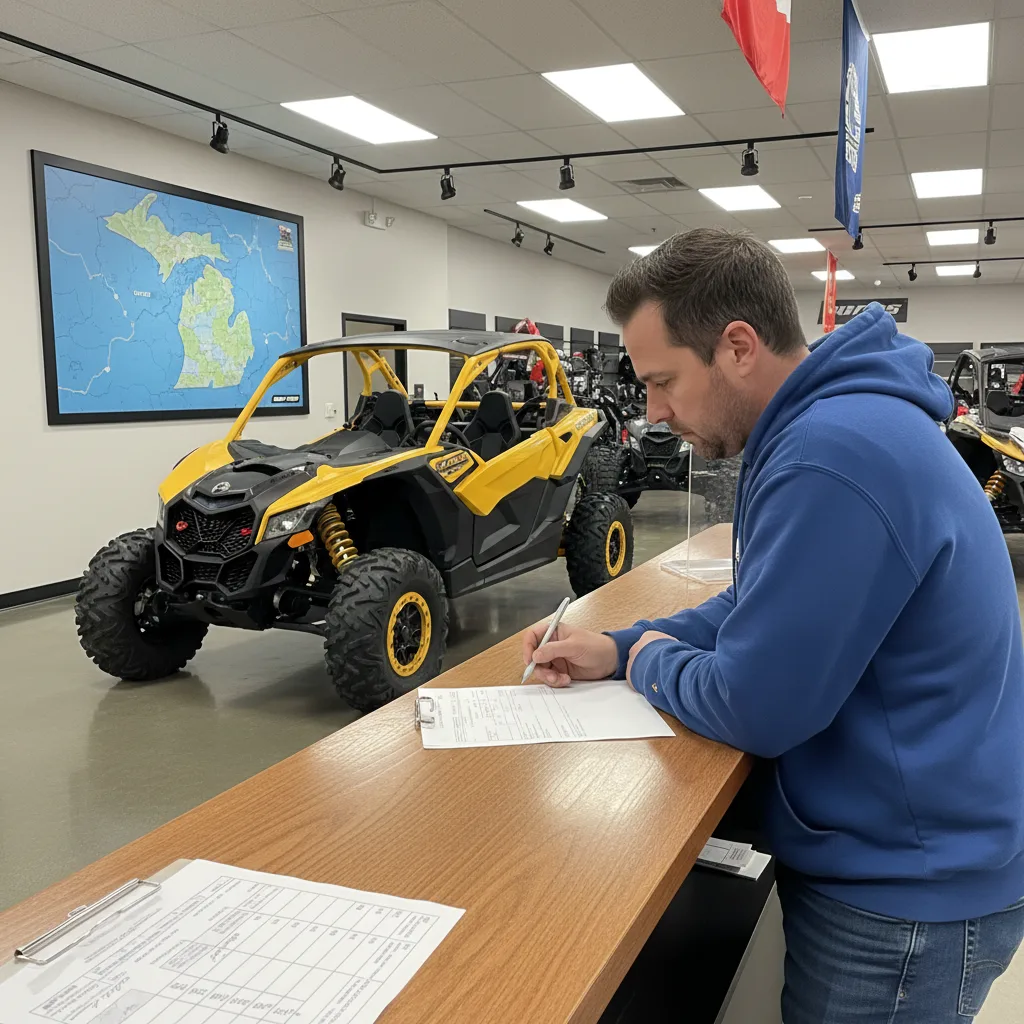
Michigan’s vehicle tax framework for off-road equipment is unusually clean compared with many states, and that clarity is exactly what makes the bite so visible. There is a flat 6% sales tax on the full purchase price of an ATV or UTV. No local option, no county piggyback, no school district adder. The single rate applies whether you are buying at a dealer in Macomb County, an Ironwood shop near the Wisconsin border, or a Polaris floor in Petoskey. That uniformity simplifies the math, but it also means there is no geographic strategy available inside Michigan. You cannot drive to a friendlier county. The rate is the rate.
What the 6% does on $25,000 and $45,000 machines is what changes the conversation. A flat percentage feels reasonable on a $4,000 utility quad. It feels different on a $45,000 turbocharged sport UTV that the customer planned to buy in cash with money already taxed once at the federal level, once at the Michigan state income tax level of 4.25%, and once through whatever local property taxes the buyer pays on the garage that the machine will sit in. The 6% sales tax is a fourth pass through the same dollars. Michigan ATV UTV registration compounds that first hit with recurring fees that never go away.
The annual fee structure is straightforward but additive. The ORV license is required for every off-road machine operated on public land in Michigan. The trail permit is a separate, additional fee that unlocks the state-designated trail network and the scramble area at Silver Lake Sand Dunes. The Recreation Passport is a third fee, optional unless your destination requires it, and Silver Lake does. None of these are bundled. Each one is its own line item, renewed every April 1, on a fiscal cycle that runs through March 31 of the following year.
The single-article fee structure matters because it means there is no scaling discount for owning more machines, no family-rate reduction, and no multi-year prepay option that locks in current rates against future increases. Each machine pays its own license. Each year resets the clock. The fees feel small in isolation, but on a household with three registered machines run continuously for ten years, the cumulative DNR fee total alone clears $1,000 before the sales tax line on any of the purchases is counted.
The table below shows the annual fee breakdown in plain numbers. The second table shows what 6% does on the three example purchase prices we will return to throughout this guide.
Now the 6% sales tax on the three benchmark machines we will be following through the rest of this article. These are not exaggerated examples. A Yamaha Grizzly 700 EPS sits at the $15,000 mark fully accessorized. A Polaris Ranger Crew XP 1000 with a cab and plow lands at $25,000 farm-ready. A Can-Am Maverick X3 Turbo RR with a dunes package crosses $45,000 routinely.
The most aggressive comparison is the premium UTV. A Silver Lake rider with a $45,000 Maverick X3 pays $2,946.25 to Michigan over five years between sales tax and annual fees, against $849 one-time through Montana. The delta is $2,097.25 in pure savings on a single machine over five years, and the Montana plate is permanent, so years six through ten widen the gap by another $246.25 every five-year cycle in fees alone. The Grizzly buyer saves $332.25 over five years on the ATV side. The Ranger farmer saves $832.25. None of these numbers include the time cost of renewing stickers every April or the storage cost of mailed paperwork that has to be re-sorted, re-filed, and re-stuck on the cowl each spring.
The street-legal patchwork and tr-54 wall

Michigan’s ORV license sounds like it might unlock something more than trail access. It does not. The license is a permission slip for off-road use on public lands and designated trail systems. It is not a road plate, it is not a registration, and it will not get you legally across a paved county road that is not specifically posted as ORV-eligible. To make a UTV legal on Michigan roads in the broader sense, Michigan offers exactly one in-state path: the TR-54 Assembled Vehicle process administered through the Michigan State Police and the Secretary of State.
The TR-54 process is real and it is thorough, but it is also the kind of paperwork that turns weekend buyers into resigned defeatists. The equipment list reads like a small-volume manufacturer’s compliance checklist. The vehicle needs DOT-approved tires sized to the wheels, a safety glass windshield with functioning wipers and washer fluid delivery, dual headlights with high and low beam, taillights, brake lights, a license plate light, turn signals, side and rearview mirrors, a parking brake, seat belts that meet federal standards, and bumpers that fall within a 14 to 22 inch height window front and rear. Then come the two stages of inspection. The first is a state police inspection of the components. The second is a final state police certification after the registration is processed.
From the day a Michigan owner decides to attempt the TR-54 path, the timeline runs three to four months before plates are in hand. Independent off-road forums and conversion guides describe the equipment package as cost-prohibitive, with many builds running $3,000 to $6,000 in parts and labor beyond the price of the machine itself. And the result is a UTV that is legal on Michigan roads, on Michigan terms, with whatever county-level speed caps apply in the jurisdictions you drive through. Some counties post 25 mph limits on the shoulders that ORVs are permitted to use. Some counties do not allow shoulder ORV travel at all. The patchwork is real.
Here is the part the patchwork never mentions in the inspection manuals. Michigan honors out-of-state vehicle registrations under standard reciprocity principles. A UTV titled and plated in Montana with a permanent off-highway plate is recognized as a registered vehicle. It does not need to pass a Michigan TR-54 inspection to be road-eligible the same way a Montana-plated Subaru does not need to pass one. The Montana plate already does the work that TR-54 was trying to do, with no equipment buildout, no inspection queue, and no three-to-four-month delay. The Montana path bypasses the wall entirely.
The practical implication for Michigan riders is that the conversation about street legality stops being a TR-54 conversation and starts being a plate-choice conversation. The choice is between a multi-month, multi-thousand-dollar in-state buildout that ends with restrictions, or a one-time Montana titling that ends with a permanent plate and full reciprocity on Michigan roads. The destinations are the same. The trails are the same. Only the paperwork path changes.
Michigan trail destinations and what each costs
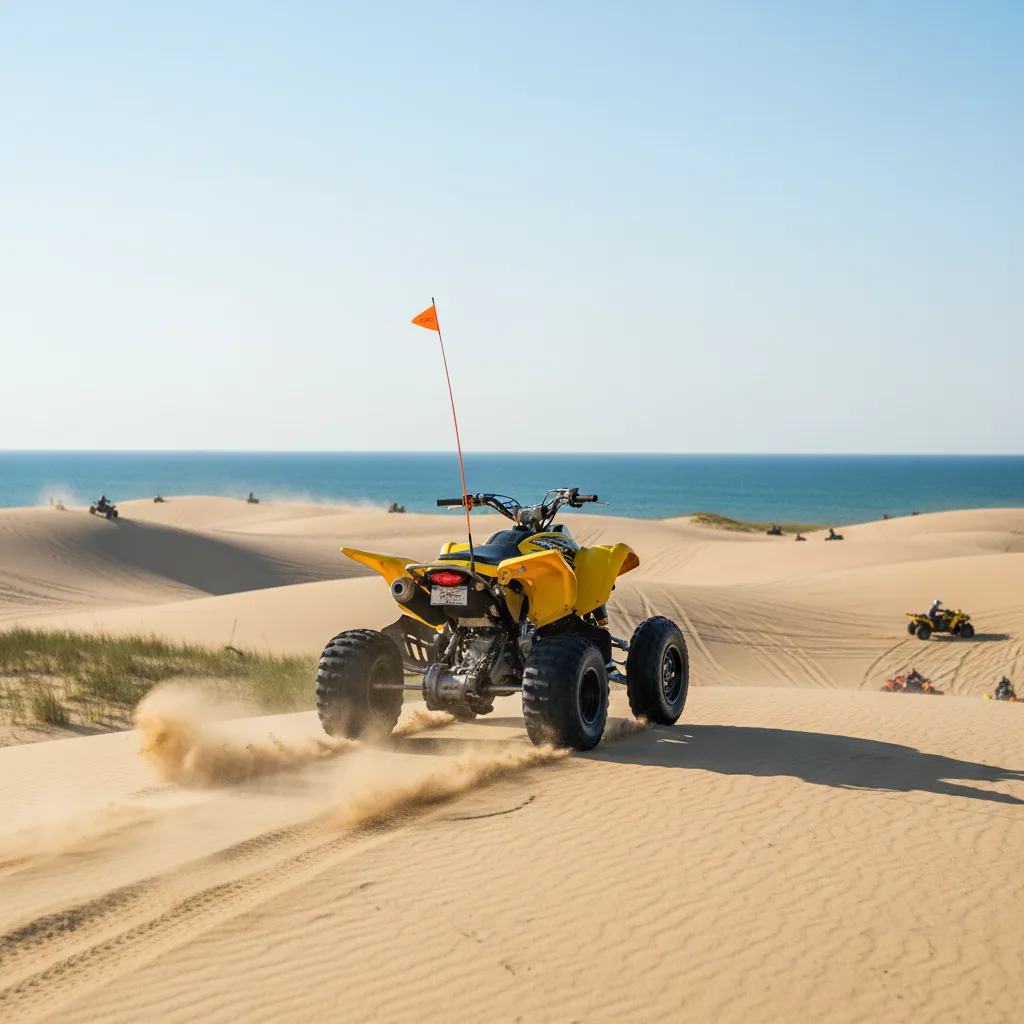
Michigan is the reason most of the eastern half of the country dreams about ORV ownership in the first place. The state maintains more than 4,000 miles of designated ORV trails, which is the largest dedicated system east of the Mississippi River. Layered on top of that, 89% of Michigan’s 13,494 miles of state forest roads are open to ORV traffic year-round. In the Upper Peninsula the figure climbs to 97.8%. The terrain runs from sand dunes on Lake Michigan to limestone bedrock on Drummond Island to dense second-growth pine in the Pigeon River Country. Each destination has its own personality and its own fee profile.
Silver lake sand dunes
Silver Lake Sand Dunes in Oceana County is the headline destination. It is the only ORV scramble area east of the Mississippi, 450 acres of open dune that allow ATVs, UTVs, full-size trucks, Jeeps, and dune buggies to share the same sand from April 1 through October 31 each year. Peak season hours run 9 a.m. to 10 p.m. from May 1 through September 15. The dunes climb to vantage points where you can see Lake Michigan in one direction and the Silver Lake basin in the other. Weekend afternoons in July fill the staging area with paddle tires, raised intakes, and the smell of warm two-stroke exhaust.
The Silver Lake fee stack is the heaviest in the Michigan system because three permits stack: the ORV license at $26.25, the trail permit at $10, and the Recreation Passport at roughly $13. The total is $49.25 per year for one rider. A family running two registered machines doubles the ORV-related portion. Camping at Silver Lake State Park requires its own reservation system, and weekend slots disappear months in advance. The dunes themselves are managed by the Michigan DNR with parking and staging at the Silver Lake Sand Dunes State Park entrance.
For a $45,000 Maverick X3 Turbo RR with paddles, lightbars, and a desert-spec roll cage, Silver Lake is the use case that justifies the purchase. It is also the use case where the Michigan tax-and-fee stack is hardest to swallow, because the cumulative five-year cost is $2,946.25 against $849 for the same machine plated through Montana, with no difference in trail access. The Montana plate does not change what gate you drive through. It changes what you paid to get there.
Drummond island
Drummond Island sits at the eastern edge of the Upper Peninsula, accessible by car ferry from DeTour Village. It hosts Michigan’s largest closed-loop ORV trail system, with more than 60 miles of dedicated ATV trail plus a network of secondary ORV-eligible routes spread across the island’s limestone bedrock terrain. The riding is unlike anywhere else in the Midwest. You ride across exposed bedrock shelves, through cedar swamps, past abandoned dolomite quarries, and out to Lake Huron shoreline overlooks. The trail system is fully signed and color-coded, with difficulty ratings that run from family-friendly gravel two-track to technical bedrock crawls that demand low-range and high clearance.
Drummond Island riders who stay on the closed-loop ATV system can sometimes ride on the ORV license alone without the trail permit, since the closed-loop is operated under a different designation than the state-designated trail network. Total fees for a Drummond-only rider can run as low as $26.25 per year for the ORV license. That makes Drummond one of the more cost-efficient riding destinations in Michigan, and one of the most punishing the moment you add the 6% Michigan sales tax on the purchase price of the machine itself.
Traverse city orv route
The Traverse City ORV Route is a 42-mile connector that threads through Grand Traverse and Kalkaska Counties, linking forest road segments and trail spurs into a continuous ride. It is heavily used by riders staying in the Traverse City area who want a long-form trail experience without the haul north. The route connects to other state forest road segments, which extends the practical riding distance well past the marked 42 miles for those willing to follow the gravel grids. Riders staying at lake rentals in Old Mission Peninsula or Leelanau County can trailer to a Kalkaska staging area in under an hour, ride a half-day, and be back for dinner on the water.
Little manistee river trail
The Little Manistee River Trail is the dedicated 50-inch-width ORV system that runs through a portion of the Huron-Manistee National Forest. The 50-inch limit means it is designed for ATVs and narrow UTVs, and it explicitly excludes full-size UTVs like the Polaris RZR XP, Can-Am Maverick X3, and Kawasaki Teryx KRX 1000, which all exceed the width threshold. For ATV riders the surrounding national forest area opens up another 100-plus miles of legally rideable trail and forest road, with stream crossings, sandy two-track, and pine plantation grids that wind through some of the prettiest country in the lower peninsula.
Pigeon river country (closed)
Common misconception flagged: Pigeon River Country State Forest is one of Michigan’s largest and most famous state forests, and many riders assume that means it is open to ORV traffic. It is not. Pigeon River Country is completely closed to ORV use. There are no motorized trails inside the Pigeon River Country boundary. Plan accordingly — if Pigeon River was on your route, it needs to come off.
Copper country and the upper peninsula
The Upper Peninsula is its own ORV economy. Copper Country State Forest in the western UP hosts a significant trail network, and the broader UP system runs to more than 550 miles of designated trails connecting Lake Superior shoreline access, historic mining trestle crossings, and remote inland lakes. UP riders pay the same $36.25 annual fee structure as Lower Peninsula riders, with the standard ORV license and trail permit covering the state-designated network. The combination of low population density, generous forest road access at 97.8% open to ORVs, and a deep history of mining-era infrastructure makes the UP the destination most serious Michigan ORV owners build their season around.
Who gets hit hardest
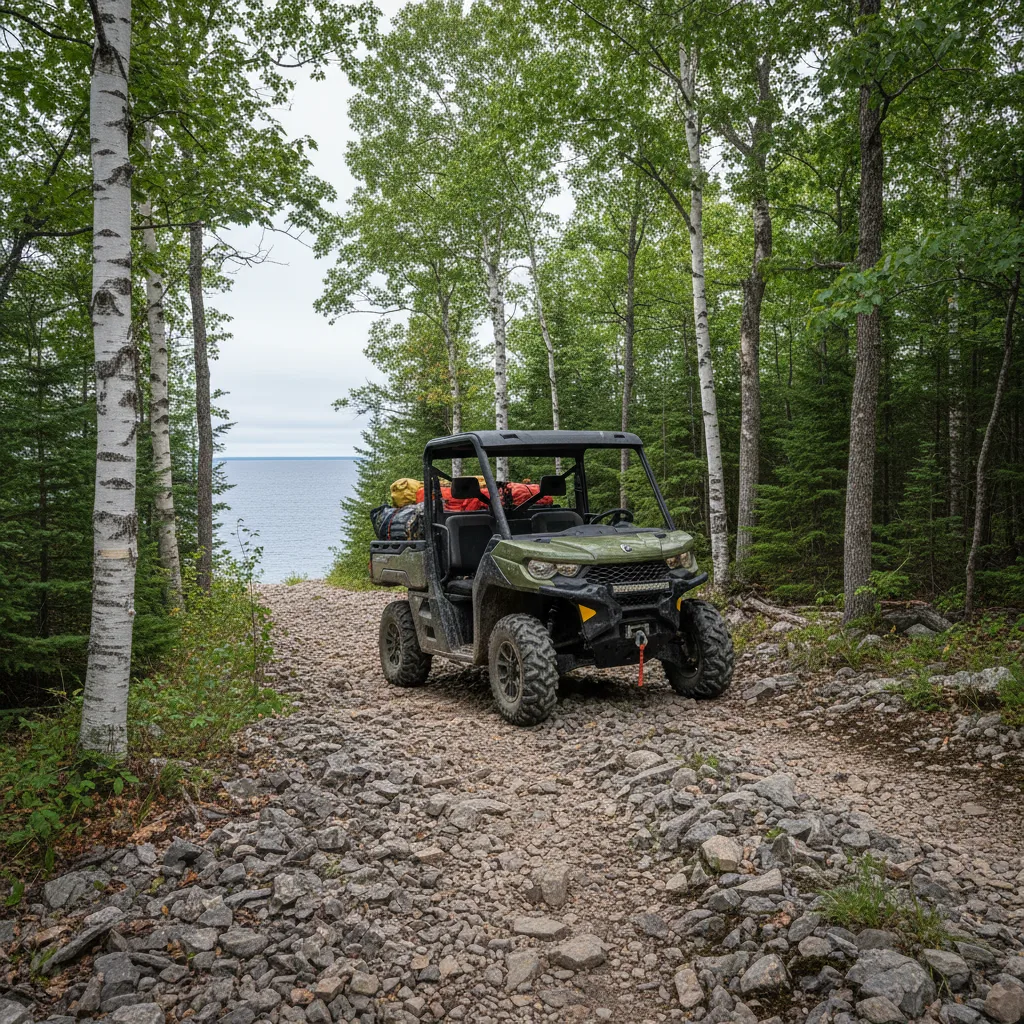
Three Michigan ORV buyer profiles surface in the math more often than any other. They sit at three different price points, three different use patterns, and three different parts of the state. The 6% sales tax hits each of them in proportion to the machine they wanted. The annual fees are essentially flat across them. The Montana savings track the price of the machine and the urgency of the use case.
The grand rapids software developer at silver lake
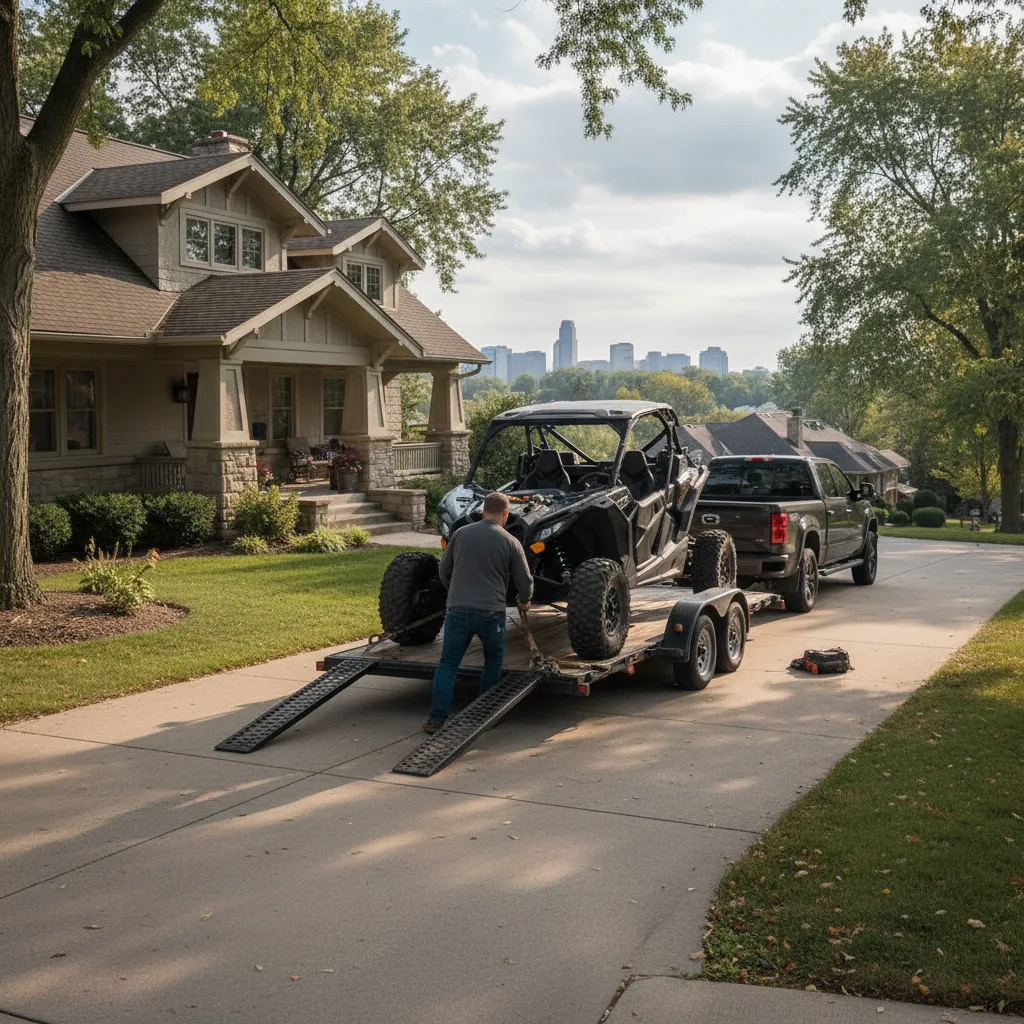
A software developer in Grand Rapids puts a deposit down on a Can-Am Maverick X3 Turbo RR at the Lansing dealer. The build sheet includes paddle tires for the dunes, an upgraded cage, a desert-spec lightbar, and a four-point harness package. Out the door the machine prices to $45,000. The Michigan sales tax line at signing reads $2,700. The plan is weekend trips to Silver Lake Sand Dunes from May through September, with maybe a fall trip to the UP for color season. Annual fees come to $49.25 because Silver Lake requires the Recreation Passport.
Five-year math on the Michigan side: $2,700 sales tax plus $246.25 in fees equals $2,946.25. Five-year math on the Montana side: $849, one time, permanent plate, no annual renewal. The delta is $2,097.25 over the first five years, and it widens by $246.25 every five-year cycle afterward.
The developer is the buyer profile where the Montana case is easiest to make in pure dollar terms. He is also the buyer profile where reciprocity matters most, because the same machine that pulls dune duty at Silver Lake is the machine he wants to drive to the launch ramp on his lake property without juggling TR-54 paperwork. The Montana plate handles both. The savings clear $2,000 in five years, the plate is permanent, and the Maverick stays road-eligible for as long as he owns it.
The traverse city cattle and hay farmer

A cattle and hay farm operation north of Traverse City runs a $25,000 Polaris Ranger Crew XP 1000 as daily farm transportation. The Ranger pulls a small flatbed for hay rolls, runs fence line in the morning, and ferries help from the barn to the back forty during cutting season. The sales tax at purchase came to $1,500. Annual ORV fees are $36.25 because the operation occasionally takes the Ranger on the Traverse City ORV Route on weekends.
Five-year Michigan total: $1,681.25. Five-year Montana total: $849. The savings is $832.25, and the operational benefit is that the Montana plate gives the Ranger road-legal status when crossing between farm parcels on a paved county road, which the Michigan ORV license alone does not.
For a working farm, the time savings on the annual renewal cycle is its own value. The Montana plate is permanent. There is no April 1 deadline, no sticker that fades and peels off the cowl, and no DNR website to log into every spring when calving season is the priority. The farmer puts the plate on the Ranger once and never thinks about ORV registration again.
The detroit machinist on drummond island
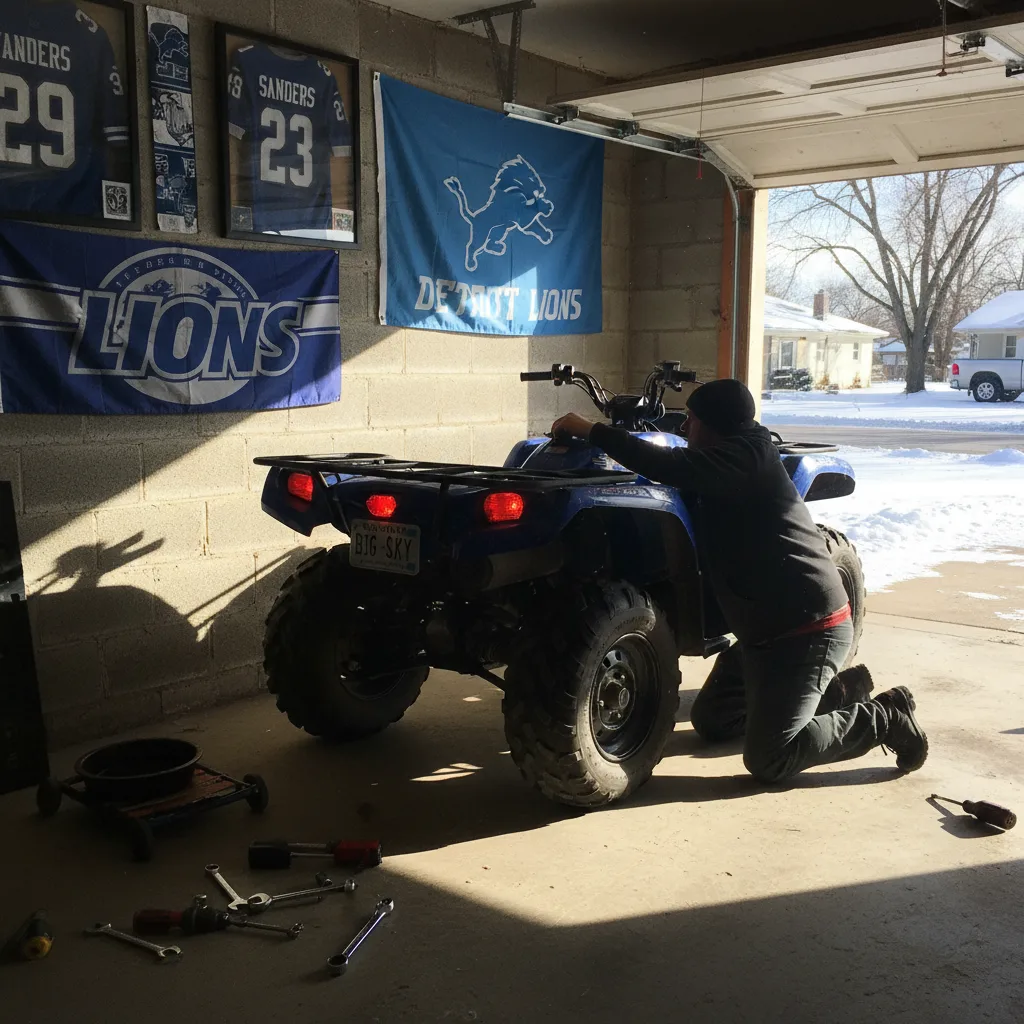
A machinist from the Detroit suburbs buys a $15,000 Yamaha Grizzly 700 EPS specifically for an annual Drummond Island trip with a group of riders who have been making the run for fifteen years. The Grizzly is loaded into a four-place trailer on Friday morning, ferried across from DeTour Village on Saturday, and ridden hard across Drummond’s limestone bedrock for three days. Michigan sales tax at purchase: $900. Annual fee: $26.25 for the ORV license only, since the Drummond closed-loop network does not require the additional trail permit for the rides this group runs.
Five-year Michigan total: $1,031.25. Five-year Montana total: $749, the ATV-specific Montana service price. Savings is $282.25, which is the smallest delta of the three case studies. But the Detroit machinist also picks up something the dollar figure does not capture: the Montana plate stays with the Grizzly for the life of the machine. When the group runs Drummond again at year seven, year ten, year fifteen, there is no renewal cycle. The plate is permanent.
How montana registration works

The Montana path is structurally different from the Michigan path. Michigan registers an ORV to a person on an annual cycle. Montana titles a vehicle to a Montana entity, in this case a single-member LLC, and issues a permanent plate that does not expire. The LLC is the legal owner of the machine. The owner of the LLC is the buyer. The plate stays with the machine through resale, through state moves, through anything short of the machine being destroyed.
Step one is the formation of the Montana LLC. We file the articles of organization with the Montana Secretary of State the same business day we receive your paperwork through our secure intake portal. The LLC is formed under Montana law as a domestic entity, with a Montana registered agent address that satisfies the state’s requirement for an in-state point of contact. The LLC name is yours to choose, or we can generate a clean, neutral name appropriate for a vehicle-holding entity.
Step two is the title transfer. The machine is titled into the LLC’s name at a Montana county treasurer’s office. The county treasurer issues the title and processes the registration in the same visit. There is no Montana sales tax on the transaction because Montana does not levy a general sales tax. There is no annual registration renewal because Montana issues permanent plates for off-highway vehicles owned by entities.
Step three is the plate itself. The Montana plate is shipped directly to your address, anywhere in the country, within three to five business days of title completion at the county treasurer. The plate arrives with the title in the LLC’s name and the registration documentation that goes in the machine’s storage compartment. The plate is metal, permanent, and bears a number that does not change.
Step four is everything you do not do every April. No renewal. No sticker. No DNR fee. No trail permit cycle to the extent that you can ride on the Montana plate on public access points. The recurring administrative cost of the machine drops to zero on the registration side. For ATVs and UTVs registered under the permanent off-highway plate, the year-two-and-beyond cost is $0 because the plate itself does not renew. One payment, one process, one plate, permanent.
Is it legal

The legal foundation for an out-of-state LLC owning a vehicle and operating it across state lines rests on three pillars of American law that are not novel, not gray-area, and not contested at the level that matters for ordinary registrations. The first is the Commerce Clause of the United States Constitution, which establishes that interstate commerce, including the ownership and movement of property across state lines, falls under federal protection and prohibits states from imposing discriminatory burdens on out-of-state entities. An LLC formed in Montana is a legal person under federal and state law, and that legal person owns the vehicle.
The second pillar is the Full Faith and Credit Clause, which requires each state to recognize the public acts, records, and judicial proceedings of every other state. A title issued by the Montana county treasurer is a public record. A registration issued by the Montana motor vehicle division is a public record. Other states recognize these records under Full Faith and Credit as the legitimate ownership and registration documentation for the vehicle in question.
The third pillar is the body of case law that has tested out-of-state vehicle registration through LLCs, including the well-cited decision in Thomas v. Bridges, 144 So.3d 1001 (La. 2013), where the Louisiana Supreme Court held that an LLC’s out-of-state registration of a vehicle was legally proper and that the state could not impose its own sales tax on a vehicle owned and registered by an out-of-state entity. The decision is one of the cleanest articulations of the principle: the LLC owns the vehicle, the state of formation governs the LLC, and the vehicle’s registration follows the LLC.
For Michigan riders, the reciprocity angle is the practical reinforcement of the legal foundation. A Montana-plated UTV is already legal on Michigan roads under the same reciprocity framework that allows a Montana-plated pickup truck to drive from Bozeman to Traverse City for a vacation. The plate is recognized. The registration is recognized. The TR-54 path becomes unnecessary because the road-eligibility problem is already solved at the title level. The Montana path is the documented, established, court-tested path, and it is exactly the structure we have built our service around.
Who this is built for
This service is purpose-built for the Michigan rider who wants to stop layering fees and start enjoying the trails. If any of the profiles below describe you, the Montana path will save you real money and real time.
The Silver Lake regular. You make the drive to Oceana County four to eight weekends a year, you run a sport UTV in the $30,000 to $60,000 range, and your annual Recreation Passport, trail permit, and ORV license stack already feels like a tax on enthusiasm. Montana clears that stack permanently.
The Upper Peninsula destination rider. You haul north for week-long trips to Drummond Island, Copper Country, or the broader UP trail network. Your machine spends more days on the trailer than in the garage. A permanent Montana plate means no April scramble for stickers before your first trip of the season.
The northern Michigan farmer or ranch operator. You run a UTV as a working vehicle on a cattle, dairy, orchard, or hay operation. The Montana plate gives the machine clean road-legal status for the paved county crossings between parcels, and the one-time cost replaces an annual renewal cycle you do not need cluttering up your spring.
The cash buyer of a premium UTV. You wrote a check for a $40,000-plus machine and the 6% Michigan sales tax line at signing was the largest single line in the transaction outside the machine itself. Montana eliminates that line entirely on the next purchase.
The multi-machine household. You own a sport UTV for the dunes, a utility UTV for the farm, and an ATV for the trails. The fee stack multiplies across machines. Montana plates each one permanently for less than two years of Michigan compounding fees on a single machine.
The seasonal Michigan resident. You spend summers at a Michigan lake home and winters elsewhere. Your machine sees Michigan trails May through October. The Montana plate is recognized wherever you ride, and it does not lapse when you leave the state for the off-season.
The Drummond Island annual. You make one or two trips a year to a specific destination, your machine sits the rest of the year, and the idea of paying annual fees on a machine you ride three weeks total feels backwards. The Montana plate flips that economics permanently.
The road-curious sport UTV owner. You looked at the TR-54 conversion path, priced out the bumpers and the safety glass and the DOT tires, and decided three months was too long and the equipment package was not worth it. The Montana plate is the road-eligibility shortcut you were looking for.
Timeline
| Day 1: | Submit paperwork through secure portal. We review and file your Montana LLC the same day. |
| Days 1-2: | Montana LLC formation complete — same business day in most cases, second business day at the latest. |
| Days 2-4: | Title transferred into the LLC name at the Montana county treasurer. |
| Days 4-7: | Permanent Montana plates shipped directly to your door within 3-5 business days of title completion. |
FAQ
Does Montana registration work for ATVs, or just UTVs?
Both. Montana issues permanent off-highway plates for ATVs and UTVs alike. Our service is priced at $749 total for ATV registration, which is $549 service plus $200 LLC formation, and $849 total for UTV or side-by-side registration, which is $649 service plus $200 LLC formation. The plate is permanent in both cases, and there is no annual renewal cost on the vehicle side. Many of our Michigan clients run a mixed garage with one ATV and one full-size UTV, and we register both under the same LLC to consolidate paperwork.
Will my Montana-plated UTV be legal on Michigan roads?
Yes, under standard interstate reciprocity. A vehicle legally titled and registered in Montana is recognized by Michigan the same way a Montana-plated pickup truck or motor home is recognized. You do not need to complete the TR-54 Assembled Vehicle process to drive a Montana-plated UTV on Michigan roads. The Montana plate already satisfies the registration requirement, which is the underlying problem TR-54 was designed to solve.
Do I still need a Michigan ORV license?
For state-designated trail access on Michigan public land, Michigan’s trail permit and ORV license requirements apply to the rider and the land, not to the registration. Some riders choose to layer a Michigan trail permit on a Montana-plated machine for specific Michigan public-land riding. Many ride exclusively on private land, club land, or out-of-state and have no ongoing Michigan-side fees. We help every client think through the right mix for their specific use pattern.
How long does the whole process take?
Seven days from your paperwork submission to permanent plates at your door. Day 1 is LLC filing. Days 2-4 cover the title transfer at the Montana county treasurer. Days 4-7 cover plate shipping. The plates arrive at your address by FedEx or USPS Priority. The full timeline rarely runs longer than seven business days from clean intake.
Do I need to travel to Montana?
No. The entire process is handled remotely through our secure portal. We act as your registered agent in Montana, we handle the title work at the county treasurer, and we ship the plate to your address. You never need to set foot in the state. Every step from intake to plate delivery is conducted by mail, email, and direct shipping.
What happens if I sell the machine?
The title transfers like any other vehicle title. The Montana LLC is the seller of record, and the title is signed over to the buyer. The LLC remains in good standing as long as the annual filing is maintained, and it can be used to register the next machine you buy without paying the $200 LLC formation fee a second time.
Is there an annual Montana cost I need to budget for?
For ATVs and UTVs on permanent off-highway plates, the Montana plate itself does not renew. The Montana LLC requires a minimal annual filing that we handle on your behalf to keep the entity in good standing. There is no recurring registration fee on the machine itself. The savings against Michigan’s compounding annual fees grow every year you own the machine.
Can I register multiple machines under the same LLC?
Yes. A single Montana LLC can hold the title to multiple vehicles. Many of our clients add a second or third machine to the same LLC over time, which means the $200 LLC formation cost is paid once and amortized across every vehicle you ever register through the entity. This is particularly cost-effective for households running a mixed garage of UTV, ATV, snowmobile, or boat trailers.
See how Montana LLC registration helps owners in other high-tax states:
- Arizona VLT: How to Stop Paying $1,000 Every Single Year
- Virginia Car Tax: Stop Paying the Highest Vehicle Tax in America
The Michigan tax-and-fee stack on an ATV or UTV is not the largest in the country. It is, however, one of the most layered, with a flat sales tax that drops at purchase, a license renewal that drops every April, a trail permit that drops on top of that, and a Recreation Passport for the headline destinations. The TR-54 path that promises road legality demands three to four months of paperwork and several thousand dollars of equipment before it delivers a plate, and the plate it delivers still operates under county-by-county speed restrictions.
The Montana path is the cleaner alternative for the Michigan rider who wants to stop renewing and start riding. One payment, one permanent plate, and the reciprocity to run it anywhere in Michigan. Silver Lake, Drummond Island, the Traverse City ORV Route — the same plate works at all of them. The legal foundation is the Commerce Clause, Full Faith and Credit, and Thomas v. Bridges. The timeline is seven days.
If you are ready to compare your Michigan five-year cost against your Montana one-time cost, the next step takes about ten minutes. Submit the intake form and our team will return a quote against your specific machine, your specific use case, and your specific timeline.
Ready to Stop Overpaying Michigan Taxes?
Michigan ATV and UTV owners have saved thousands with Montana LLC registration. Permanent plate. Zero annual fees. Full Michigan road reciprocity. You’re next.
