26 min read
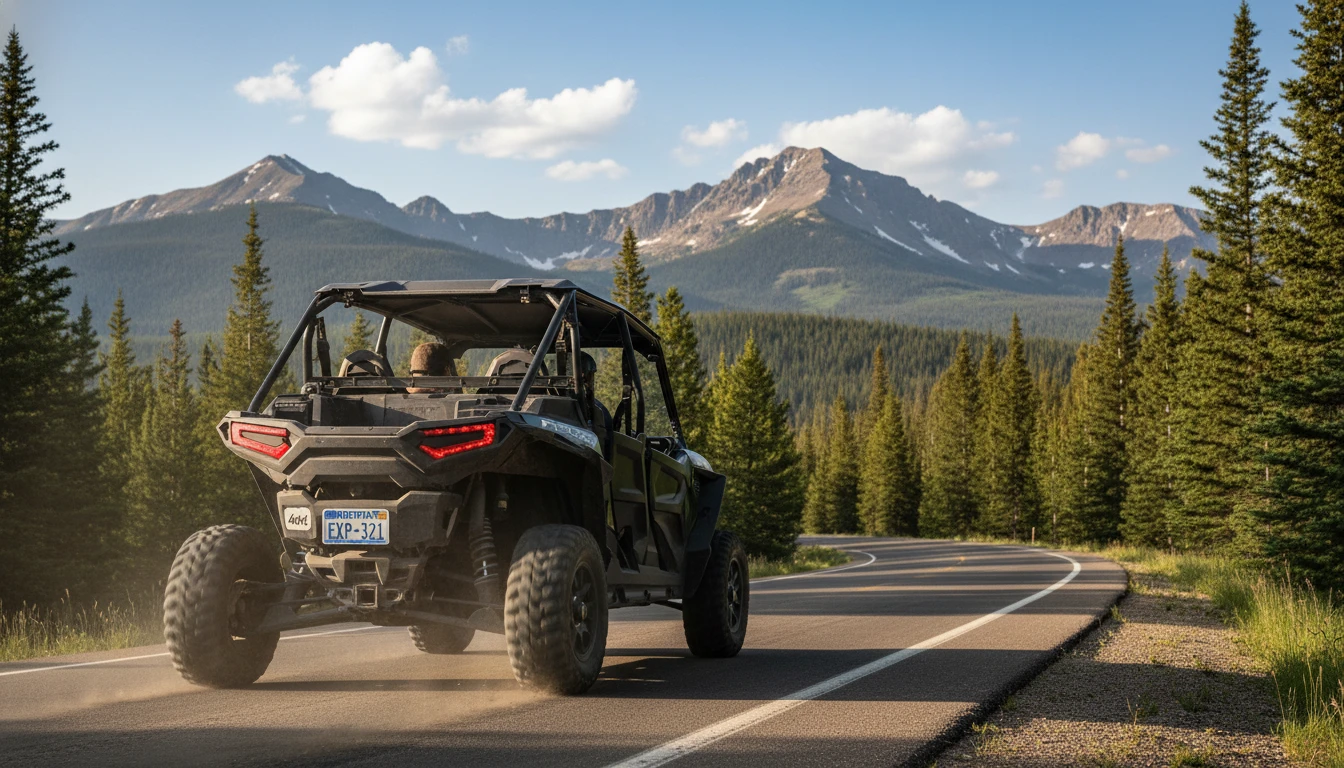
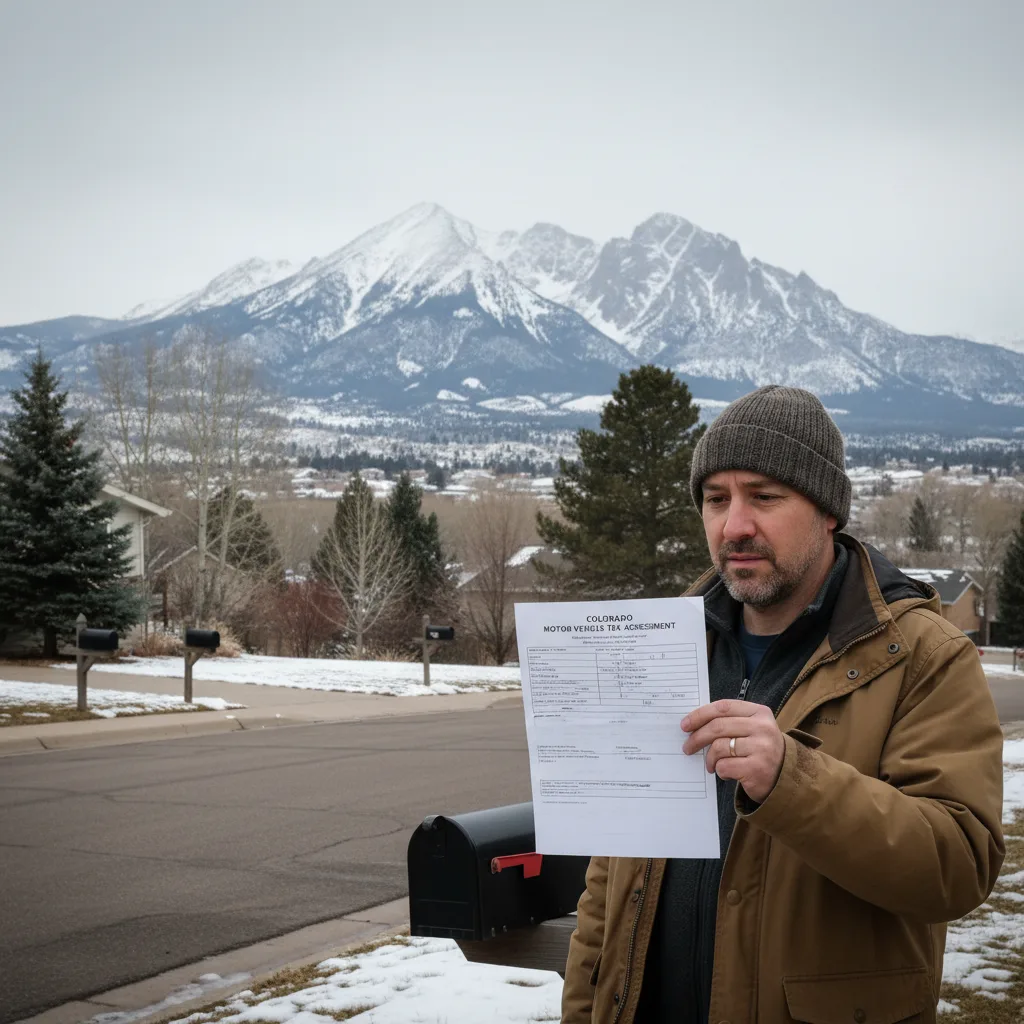
You walk into a Denver Polaris dealer and sign for a Can-Am X3 MAX Turbo RR. Sticker price: $45,000. Before you’ve turned the key, the finance manager slides a tax disclosure across the desk. Denver metro combined sales tax: 9.15%. That’s $4,118 due at the register. Then he tells you about the annual OHV permit: $25.25 every April. Then he mentions, almost in passing, that Colorado statute makes it illegal to drive your new machine on public streets in most of the state. Some towns allow it. Most don’t. There is no statewide street-legal path for a UTV in Colorado, and the patchwork of local ordinances changes county by county.
You paid $4,118 in sales tax for a machine you can’t legally drive on the road to the trailhead. That’s Colorado off-highway vehicle ownership. There’s a better way, and it costs $749 one time. A Montana LLC eliminates the sales tax problem permanently, gives you a plate that Colorado reciprocity statutes recognize statewide, and never asks for a renewal check. Below is the full breakdown: what Colorado actually charges, where you can legally ride, and how the Montana fix works.
On this page
Colorado’s OHV Registration System
Colorado treats off-highway vehicles as a category permanently quarantined from the public road network. The governing statute is C.R.S. § 33-14.5-108, and it does not mince words. ATVs, UTVs, and most motorized off-road machines are restricted from public streets, roads, and highways across the entire state. There is no DMV window where you walk in, hand over your bill of sale, and walk out with a license plate that lets you drive your Polaris Ranger to the gas station. That door does not exist in Colorado.
What does exist is a confusing constellation of local ordinances. Roughly 36 Colorado jurisdictions, mostly mountain towns and rural counties, have carved out local exceptions that allow limited UTV road use on specific streets within their boundaries. Lake City lets you drive in town. Ouray has a route to the trailhead. Some sections of Gunnison County are open. Most of Denver, Boulder, Colorado Springs, and Fort Collins are not. The result is a patchwork map where your machine is legal for two miles and illegal for the next twenty. There is no statewide route to road use, and the rules change every time you cross a county line.
Beneath the street-legal problem sits the registration problem. To ride any designated OHV trail in Colorado, you need a Colorado OHV permit. It runs $25.25 per year for residents and $30 per year for non-residents. The permit cycle runs April 1 through March 31 and renews annually with no permanent option. Lose the sticker, replace the sticker. Forget to renew, you’re cited at the trailhead. That permit is separate from sales tax, which Colorado collects in full at the point of sale based on your home address.
Sales tax is where the Colorado bill turns serious. The state base is 2.9%. Counties and cities stack their own taxes on top. Denver metro hits 9.15% combined. Durango runs 9.45%. Grand Junction sits at 8.66%. Fort Collins is 8.3%. Colorado Springs is 8.2%. A $45,000 Can-Am bought in Denver triggers $4,118 in sales tax. A $45,000 Can-Am bought in Durango triggers $4,252. There is no OHV-specific lower tax rate, no installment plan, no homestead exemption for recreational vehicles. You write the check before the dealer hands you the keys.
C.R.S. § 33-14.5-108: “It is unlawful to operate an off-highway vehicle on the public streets, roads, or highways of this state” with narrow exceptions for crossing roads, limited agricultural use, local ordinances, and emergency conditions. Translation: you can buy it, you can pay tax on it, and you cannot drive it on most Colorado roads. The patchwork of 36+ local ordinances does not stitch together into a consistent statewide network. You ride the local map or you ride a trailer.
People ask about the agricultural exemption. Colorado does offer a sales tax break for qualifying farm equipment under C.R.S. § 39-3-122. Tractors qualify. Irrigation pivots qualify. Registered ATVs and UTVs, including the ranch-grade Polaris Ranger and Can-Am Defender machines that working operators actually use, are specifically excluded from the agricultural sales tax exemption. The state classifies them as recreational vehicles regardless of whether you’re moving hay bales or hunting elk.
Agricultural exemption gap: If you run cattle in Routt County and use a Polaris Ranger every day for fence work, water troughs, and pasture rotation, Colorado still classifies your machine as a recreational OHV for tax purposes. The exemption that covers your tractor does not cover your UTV. Working ranchers pay full sales tax on the same machines their grandfathers’ tractors are exempted from.
Where Coloradans Ride: Best OHV Areas by Region
Colorado’s OHV network runs from Front Range pine country to alpine passes above 12,000 feet. Sand dunes, open sage desert, and high-country mining roads all fall within a day’s haul of each other. Access fees and terrain vary significantly by region, and what your machine can handle matters as much as where you’re going.
Front Range
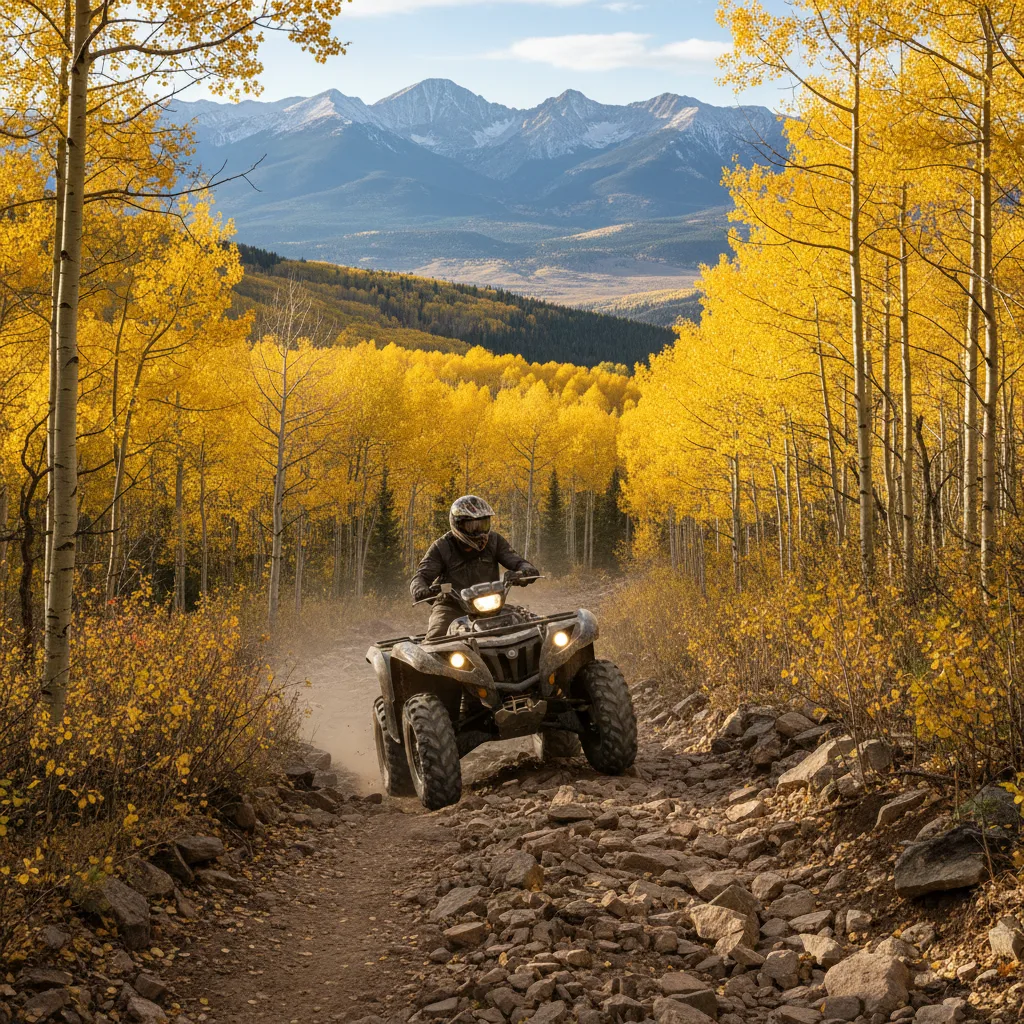
Rampart Range Motorized Trail sits in Pike National Forest just west of Colorado Springs and is the busiest motorized trail system on the Front Range. It runs single-track and two-track forest roads through ponderosa pine country and connects to a broader network that spills toward Woodland Park. Access requires the $25.25 Colorado OHV permit. The trails get heavy weekend traffic from May through October, and the lower-elevation sections often stay rideable into November. Riders out of Castle Rock, Monument, and Colorado Springs hit Rampart most.
Mini Moab and Flake Road, also in Pike National Forest near the Pikes Peak area, deliver Colorado’s most accessible technical rock crawling. The nickname is earned. Granite slabs, ledge climbs, and tight corridor work make this an area for full-size UTVs with proper clearance and skilled drivers. Side-by-sides like the Polaris RZR Pro XP, Can-Am Maverick X3, and Polaris XP 1000 routinely run these lines. The $25.25 OHV permit applies. This is not a beginner area, and most operators here are running upgraded suspension, larger tires, and rock sliders.
Mountain Region
The Alpine Loop in the San Juan Mountains is the destination ride of Colorado. The loop connects Ouray, Silverton, and Lake City through high-altitude mountain passes that include Engineer Pass, Cinnamon Pass, Imogene Pass, and Black Bear Pass. Elevations reach above 12,800 feet. The terrain is brutal: shelf roads cut into mountainsides, switchbacks tight enough that long-wheelbase machines struggle, weather that turns hostile in minutes. Operators run the loop from late June through September. Snow closes it the rest of the year. The $25.25 OHV permit applies. La Plata Canyon and Imogene Pass alone justify the trip, and Black Bear Pass is the route that ends up in every Colorado UTV magazine spread.
Taylor Park OHV Area, in the Gunnison National Forest near Crested Butte and Gunnison, is the favorite of the central mountain crowd. The area is a tangle of forest service roads connecting alpine basins, fishing reservoirs, and old mining sites. Summer-only access. Hosts UTV rally events every year that pull operators from Texas, Utah, and California. The riding is forgiving compared to the Alpine Loop and works for less aggressive machines. The $25.25 OHV permit is required.
Gunnison National Forest backcountry, including Hancock Pass, Gunsight Pass, Italian Pass, Lime Ridge, and Union Canyon, opens a deeper layer of high-altitude routes for operators who want fewer crowds and more route-finding. These are summer-only passes with views across the San Juan and Sawatch ranges. The $25.25 permit covers everything in the system.
Western Slope
Sand Wash Basin sits in northwest Colorado, in Moffat County near Craig, and operates on a different set of rules than the forest trail systems. This is BLM land, the access is free, and the terrain is open desert: dispersed two-tracks crossing 158,000 acres of high sage country. The basin holds more than 600 wild horses, and dispersed camping is permitted anywhere off the main routes. The catch is the soil. When Sand Wash gets wet, the playa turns into something that swallows wheels. Dry weather riding is exceptional. Wet weather riding is a recovery story you’ll tell later.
North Sand Hills OHV Area, also BLM land, in North Park near the Medicine Bow Mountains, holds Colorado’s only dedicated open sand-dune OHV area. ATVs, UTVs, and 4x4s all operate here. Free access. The dunes are smaller than the ones at Great Sand Dunes but completely open to motorized recreation, which the National Park is not.
Browns Park National Wildlife Refuge, in the far northwest corner of Moffat County near the Wyoming and Utah borders, offers free but limited motorized access. Most visitors come for wildlife viewing rather than aggressive trail riding, and motorized routes are heavily restricted. Worth knowing about for operators planning multi-day Wyoming-Utah-Colorado loops.
San Luis Valley
Great Sand Dunes National Park, near Mosca in the San Luis Valley, is the only place in Colorado where you can legally ride sand dunes inside a National Park. The catch: only specifically designated areas of the 39,000-acre park are open to motorized use, and the access fee is $25 per vehicle per day. The dunes are immense, the riding is unlike anywhere else in the state, and the Sangre de Cristo Mountains rising behind them are hard to forget. Primitive camping is available adjacent to the park.
Southwest / San Juan
Ouray and Telluride Basin Trails in the GMUG National Forest deliver alpine forest riding with the Alpine Loop next door. Sims Mesa and several other routes connect Ouray, Telluride, and the surrounding high-country basins. Summer-only access, $25.25 OHV permit required. Operators based in Durango, Cortez, and the Four Corners region treat this as home territory.
Across all ten of these areas, the pattern is the same: every trail demands the $25.25 annual permit, none connect to the public road network legally under C.R.S. § 33-14.5-108, and the only way to reach them is to trailer or rely on a local jurisdiction’s narrow road-use ordinance. The Montana plate addresses the road problem through Colorado’s reciprocity statute, which the next section covers.
The Real 5-Year Cost of Colorado ATV Registration
Sales tax in Colorado is not a once-and-done cost. It’s the opening move in a longer commitment that stacks the OHV permit fee on top, year after year, for as long as you own the machine. Most operators don’t run the full math before signing at the dealer. They see the sticker price, add roughly 9%, and move on. The actual 5-year cost below uses Denver’s 9.15% combined rate and the $25.25 annual OHV permit, against the Montana LLC at $749 one time.
Those numbers reflect Denver. If you live in a higher-rate jurisdiction, the gap grows. Durango at 9.45% combined pushes the sales tax on a $45,000 machine to $4,252, putting Montana savings over five years at $3,503. Grand Junction at 8.66% generates $3,897 in sales tax on the same $45,000 purchase, yielding $3,148 in savings against the Montana option.
What happens at year ten matters too. Montana’s plate is permanent. No renewal, no inspection, no annual filing on the registration itself. Colorado’s OHV permit renews every April. By year ten, the Colorado operator has paid $252.50 in permit fees on top of the original sales tax, while the Montana operator has paid zero in either category. The savings on the $45,000 machine widen from $3,495 at year five to over $3,600 at year ten and continue widening every April that the operator doesn’t have to write a check to Colorado Parks and Wildlife.
The compounding gap: Most operators upgrade machines every five to seven years. If you trade your $35,000 Defender for a $50,000 Defender at year six, Colorado collects sales tax on the new purchase all over again. The Montana LLC, once formed, can title additional vehicles into the same entity for a fraction of the original setup cost. One LLC, multiple machines, lifetime use.
The Montana LLC Solution

Montana charges 0% sales tax on vehicle purchases. It issues permanent plates on vehicles titled through Montana LLCs, meaning one registration covers the life of the machine with no annual renewal. And its registration is recognized under reciprocity statutes in every state, including Colorado, where C.R.S. § 42-3-103 and related provisions explicitly honor valid out-of-state vehicle registration. A Montana-plated UTV crossing into Colorado is, as a matter of law, a properly registered out-of-state vehicle.
The mechanism is straightforward. You form a Montana limited liability company, which is a real legal entity, separately filed with the Montana Secretary of State. The LLC obtains an Employer Identification Number from the IRS, executes a written operating agreement, and maintains a Montana registered agent at a Montana address. The LLC then purchases or takes title to your UTV. The vehicle is registered at the Montana county treasurer’s office under the LLC’s name and address. The Montana DMV issues a permanent license plate.
Because the LLC, not you personally, owns the vehicle, the tax treatment follows Montana, not Colorado. Montana charges $0 in sales tax on vehicle purchases. Montana’s title and registration fees, combined with our service charge and LLC filing, total $749. That is a one-time payment. After year one, the LLC and its plate continue to exist without further registration cost. You renew nothing, because Montana plates do not require renewal.
The Colorado reciprocity question is the one most operators ask, and the answer is clean. Colorado statute recognizes valid out-of-state registration. A Montana plate is valid out-of-state registration. Wherever Colorado’s patchwork of local ordinances permits UTV road use, a Montana plate qualifies the same way any other out-of-state plate qualifies. The 36 jurisdictions that allow road use treat your machine like any visiting out-of-state UTV. The street-legal patchwork problem stays the same problem every Colorado UTV owner faces, except you also skipped the $4,000 sales tax bill.
One filing. One plate. Done. $549 service fee plus $200 Montana LLC formation. Total: $749. No annual renewals. No further state tax. The plate is permanent, the LLC continues year over year, and the same entity can hold additional vehicles you acquire later for a small incremental fee.
Case Studies
Denver IT Director, $45,000 Can-Am X3 MAX Turbo RR
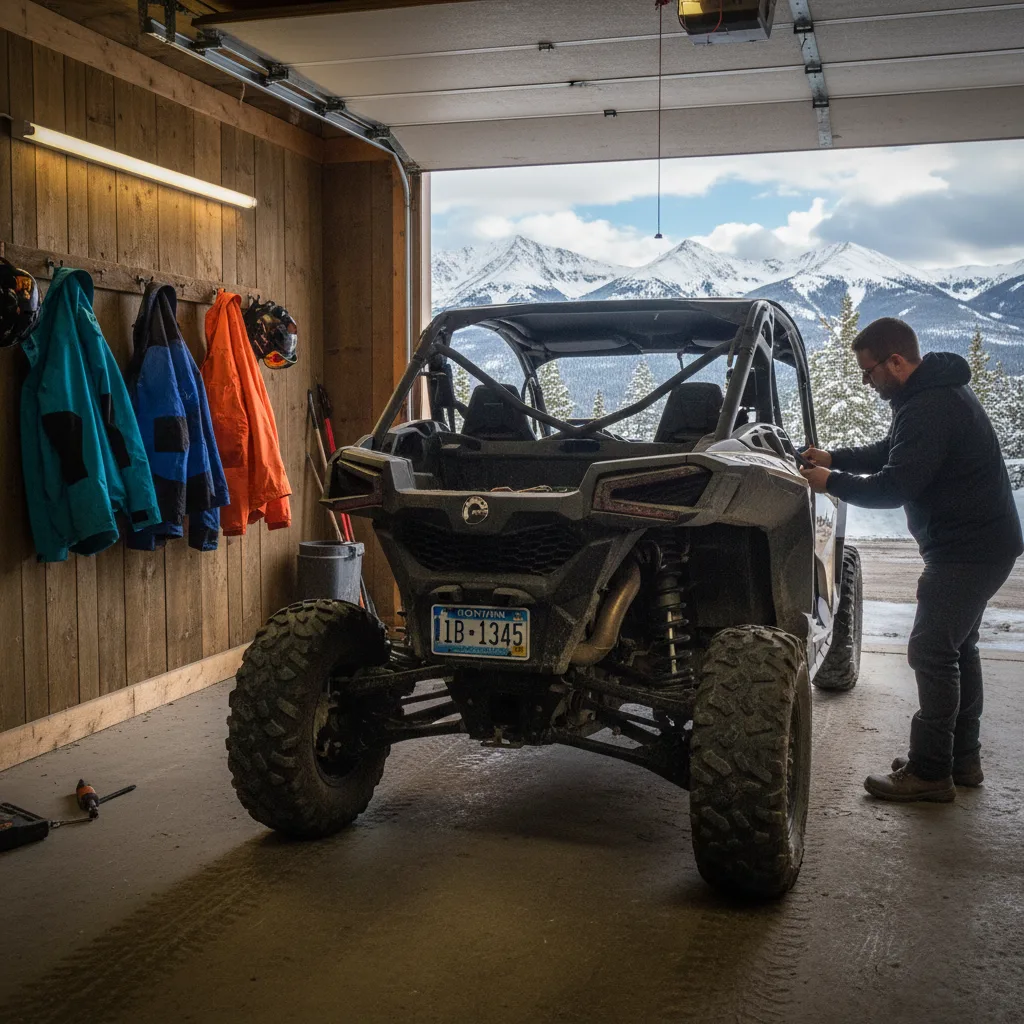
Marcus runs infrastructure for a Denver fintech firm. He pulls down good income, lives in Cherry Creek, and spends his summer weekends chasing the Alpine Loop with three buddies who all run high-performance UTVs. After two seasons riding his older Polaris RZR, he decided to step up to the X3 MAX Turbo RR. List price at the Denver dealer: $45,000. Denver’s combined sales tax sits at 9.15%, which would have generated a $4,118 sales tax bill at signing. On top of that, the annual $25.25 OHV permit would have added $126 over five years, putting his Colorado total at $4,244 before he factored in trail fees, parts, or upgrades.
Marcus called us before he signed. We formed the Montana LLC the same day, secured the EIN, set up the operating agreement, and coordinated with the Denver dealer to ship the machine to Montana with title going directly to the LLC. Total cost: $749. The X3 arrived two weeks later on a transport, Montana plate already attached. Marcus has now run two full Alpine Loop seasons on the machine. His savings over five years come to $3,495, and his plate doesn’t renew. At the ten-year mark, if he keeps the X3 or trades it under the same LLC, the gap will exceed $3,600.
Colorado Springs Outdoors Family, $35,000 Can-Am Defender MAX
The Hendersons are an Air Force family stationed at Peterson SFB outside Colorado Springs. They wanted a six-seat Defender MAX to load up the kids, gear, and a cooler for weekend trips to Rampart Range and Sand Wash Basin. The Defender MAX HD10 they wanted listed at $35,000. El Paso County’s combined tax rate is 8.2%, putting their sales tax at $2,870 plus $126 in five-year permit fees for a total Colorado out-of-pocket of $2,996.
The Hendersons run a careful household budget. Three thousand dollars in tax for a recreational machine they couldn’t even drive on the road to the trailhead was a hard line for them. They contacted us, formed the Montana LLC for $749, and titled the Defender into the entity. Their five-year savings: $2,247. They’ve since loaded the LLC with a second machine, a Polaris Ranger 1000 the wife uses for shorter rides closer to home, and the marginal cost to add that second vehicle was far below what Colorado would have charged in sales tax on either purchase. They are now running two UTVs under one LLC for less than what Colorado would have charged on the Defender alone.
Durango Mountain Town Buyer, $25,000 Polaris Ranger XP 1000
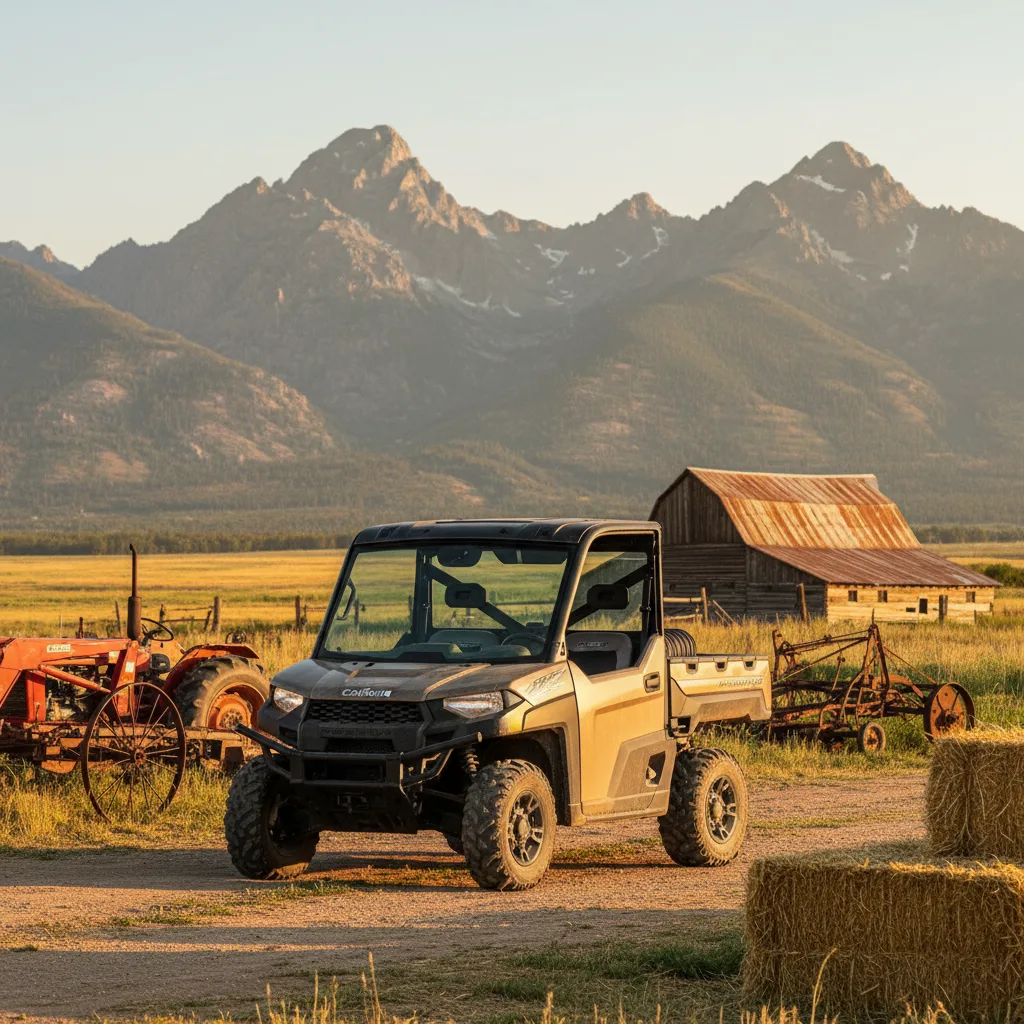
Bill runs a 1,200-acre operation on the outskirts of Durango. Cattle, hay, hunting leases. His daily driver is a 2008 F-250, his work machine is the Polaris Ranger XP 1000 he uses for everything from fence work to predator control. When his old Ranger finally surrendered after eleven years and 18,000 miles, he priced a new XP 1000 at the Durango dealer: $25,000. La Plata County’s combined tax rate is 9.45%, generating $2,363 in sales tax plus $126 in permits for a five-year total of $2,489.
Bill assumed the agricultural exemption would cover the Ranger. It does not. Colorado specifically excludes registered ATVs and UTVs from the C.R.S. § 39-3-122 farm equipment exemption, even when the machine is used exclusively for ranch work. He paid full retail sales tax on his last Ranger and was facing it again on the replacement. He routed the new Ranger through a Montana LLC instead. Five-year savings: $1,740. He has since moved his side-by-side hunting machine into the same LLC and is planning to title a small trailer through the entity next year. The Montana LLC has become his standing solution for any titled equipment, not just one-time savings on one machine.
Fort Collins Entry Buyer, $15,000 Polaris Trail 450
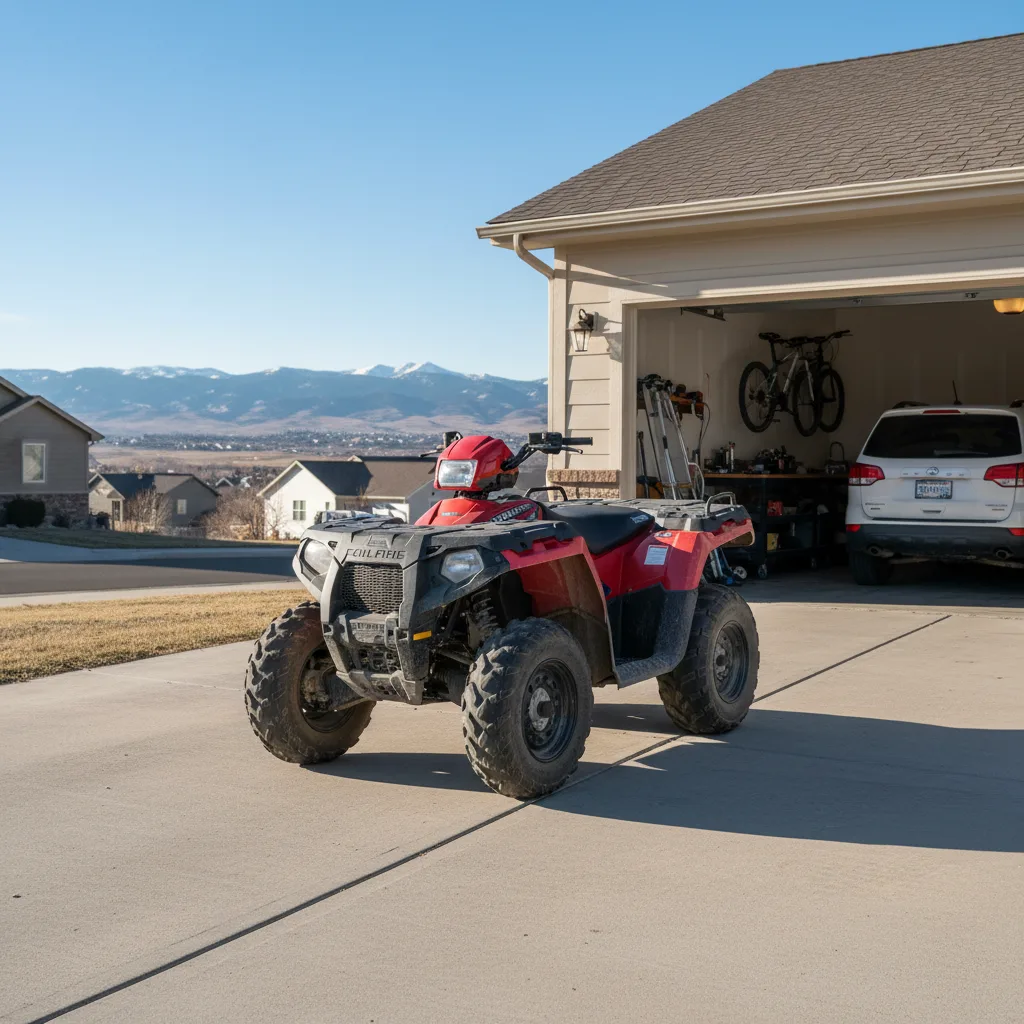
Jessica works at a Fort Collins biotech firm and bought her first ATV last spring: a Polaris Sportsman Trail 450 at $15,000. Larimer County’s combined sales tax sits at 8.3%, which would have generated $1,245 in sales tax plus $126 in five-year permits. Her Colorado five-year total: $1,371. She nearly signed at the dealer before a friend who runs the Alpine Loop every summer pointed her at the Montana LLC route.
For Jessica, the math was tighter than the buyers running $35,000 and $45,000 machines. Her Montana savings: $622 over five years. That’s a smaller absolute number, but on a $15,000 machine it’s a meaningful percentage. More importantly, Jessica is twenty-eight, planning to upgrade to a Ranger or RZR within five years, and the LLC she formed for the Trail 450 will absorb the next machine at marginal cost. Her real long-term savings come from the LLC being reusable. The structure she set up for her first ATV will save her thousands when she trades up to a $30,000 side-by-side later in the decade.
Is This Legal?

Yes. The Montana LLC ownership structure for vehicles is a long-established, fully legal arrangement grounded in two pillars: Montana’s vehicle titling statutes and Colorado’s reciprocity statute. Both are written into law. Both have been in force for decades. The Louisiana Supreme Court addressed the underlying principle in Thomas v. Bridges, recognizing that LLCs are real legal entities entitled to own property and engage in commerce under the same terms as any other taxpayer. The decision affirms that the entity is what owns the asset and that the entity’s domicile governs the registration.
The structure rests on substance. The Montana LLC we form for you is a real entity. It has its own EIN issued by the IRS. It has a written operating agreement that governs ownership and management. It maintains a Montana registered agent at a Montana street address. It files annual reports with the Montana Secretary of State. The vehicle title is issued to the LLC, not to you personally. The license plate is issued to the LLC’s Montana registration. Everything is documented, recorded, and on the public registry.
Colorado’s role in the equation is its reciprocity statute, which recognizes valid out-of-state registration. A Montana-titled, Montana-registered vehicle owned by a Montana LLC is, under Colorado law, an out-of-state vehicle. It gets the same treatment as any other visiting vehicle from any other state. There is no special category for Montana plates, no enhanced scrutiny, no separate rule. The reciprocity statute is universal and applies the same way it applies to a UTV trailered down from Wyoming or up from New Mexico.
The transaction is clean. The structure is real. The filings are public. Tens of thousands of vehicles operate across the United States under Montana LLC ownership, and the framework has been operating in its current form since well before the modern UTV market existed.
Who This Is Built For
The Montana LLC fits a specific set of Colorado buyers. If you fall into any of these categories, the economics are straightforward.
Front Range buyers spending $25,000 or more. If you live in Denver, Aurora, Lakewood, Boulder, Castle Rock, Colorado Springs, or anywhere else along the 9%+ combined-tax corridor, the savings on a $25,000 machine already cover the LLC two times over. At $35,000 and up, the math is one-sided. Front Range riders also have the longest hauls to good trails, which means trailering and overlanding logistics matter to them, and a permanent plate eliminates one moving piece in those plans.
Mountain town buyers in the highest-rate jurisdictions. Durango at 9.45%, Telluride and the surrounding San Miguel County areas, Steamboat Springs, and other high-rate mountain communities push the sales tax bill on premium UTVs past $4,000. These buyers are also closest to the best trails in the state, which means they use their machines more and depreciate them faster. The longer you’ll own the machine, the more the permanent plate pays off.
Ranch operators in western Colorado. The agricultural exemption gap punishes working ranchers who use UTVs for daily operations. If you run cattle, manage a hunting outfit, or operate a hay operation, your Polaris Ranger or Can-Am Defender is a working asset, and Colorado is going to tax it at the recreational rate regardless. The Montana LLC restores the tax treatment that the legislature didn’t write into the farm equipment statute.
Families planning to upgrade every five to seven years. A single Montana LLC can hold one vehicle today and a different vehicle in 2031 without the entire setup cost being re-incurred. The LLC continues. The annual filing fees continue. The plate is permanent for whatever you put in the entity. Buyers who cycle through machines benefit most over time.
Anyone buying before the dealer collects tax. The cleanest scenario is one where you have not yet signed final paperwork and the dealer has not yet remitted the sales tax to Colorado. Call us before you sign. We coordinate with the dealer, the LLC takes title from day one, and Colorado never enters the transaction. Buyers who have already taken delivery and registered can still convert, but the pre-purchase setup is the smoothest path.
Multi-machine owners. One LLC can hold a UTV, a second UTV, an ATV, a trailer, and any number of other titled assets. The marginal cost per additional vehicle is far below the original setup. Operators with multiple machines or who plan to expand the garage realize compounding savings the longer they use the structure. If your vehicle is worth under $20,000 and you’re not planning to add more machines, call us for a free break-even calculation. For anyone above that threshold, the math almost always works.
Our Process
We handle the full setup. You provide the basic information through our secure portal: your name, the vehicle details, the bill of sale or purchase order, and a few signatures. We do everything else.
Step one is the Montana LLC formation. We file the articles of organization with the Montana Secretary of State, secure your business name, and confirm registration on the public registry. Filing is usually completed within the same business day.
Step two is the operating agreement. Every LLC needs a written operating agreement governing membership, management, and basic governance. We provide a standard agreement tailored for vehicle holding LLCs, drafted to meet Montana’s statutory requirements.
Step three is the EIN. We obtain the Employer Identification Number directly from the IRS on the LLC’s behalf, which is the federal tax ID the entity uses for any filings, banking, or reporting.
Step four is the registered agent. Every Montana LLC needs a registered agent maintaining a physical street address in Montana to receive legal process and state correspondence. We provide registered agent service as part of the package.
Step five is the title transfer. We coordinate with the Montana county treasurer to title the vehicle in the LLC’s name. If you’ve already purchased the machine, we handle the title work to move it into the LLC. If you’re buying new, we work directly with your dealer to title from the LLC at delivery.
Step six is the permanent plate. Once the title is recorded, Montana issues a permanent license plate to the LLC. The plate is shipped directly to your door.
Total cost: $749. That includes the $549 service fee and the $200 LLC formation cost. Nothing else is owed in year one, and nothing is owed in subsequent years. Annual filing fees for the LLC continue, but they are minimal and they keep the entity in good standing rather than acting as a renewal tax on the vehicle.
Timeline: Day 1 to Permanent Plates
| Day 1: | Submit paperwork through our secure portal. We file the LLC with the Montana Secretary of State the same business day. |
| Days 1–2: | LLC formation completes. EIN obtained from the IRS. Operating agreement executed. Registered agent activated. |
| Days 2–4: | Title transferred at the Montana county treasurer’s office under the LLC’s name and address. |
| Days 4–7: | Permanent Montana plate issued and shipped directly to your door. Setup complete. No annual renewal. |
About a week from submission to a permanent plate in your hand. We coordinate every step with the Montana agencies and shipping carriers. You receive status updates as each milestone clears, and the final plate arrives ready to mount.
FAQs
1. Do I still need the Colorado OHV permit if I have a Montana plate?
Yes. The Colorado OHV permit at $25.25 per year (or $30 for non-residents) is a trail-use permit, not a registration. It applies to any motorized vehicle operating on designated Colorado OHV trails regardless of where the vehicle is titled. The Montana plate handles your registration and sales tax. The OHV permit handles your trail access. They’re separate fees with separate purposes.
2. Can I drive my Montana-plated UTV on Colorado roads?
Wherever Colorado’s local ordinances permit UTV road use, your Montana plate is valid the same way any out-of-state plate is valid. C.R.S. § 33-14.5-108 restricts UTV road use generally, but the 36+ jurisdictions that have carved out local exceptions treat Montana plates under Colorado’s reciprocity statute. The Montana plate doesn’t expand where you can ride; it travels with the same rules that apply to in-state and out-of-state registrations alike.
3. Does Montana registration count for Colorado OHV trail access?
Colorado OHV trails require the Colorado OHV permit regardless of your registration state. Your Montana plate gets you to the trailhead. The Colorado OHV permit sticker on your machine gets you onto the trail. As an out-of-state operator, you’ll typically purchase the $30 non-resident permit.
4. How long does the process take?
About one week from start to plate in hand. Day 1 we file the LLC. Days 1–2 the EIN and registered agent are in place. Days 2–4 the title transfers in Montana. Days 4–7 the permanent plate ships to your door.
5. What happens at renewal?
The plate itself is permanent and does not renew. The LLC files a minimal annual report with the Montana Secretary of State to keep the entity in good standing. There is no recurring vehicle registration fee, no inspection, and no Colorado sales tax that ever comes due on the machine.
6. Can I retitle a UTV I already bought in Colorado?
Yes. If you’ve already purchased and registered your machine in Colorado, we can move the title into a Montana LLC. The process is similar to a pre-purchase setup with the addition of releasing the Colorado registration. We coordinate the title work on both ends.
7. Is the LLC reusable for future vehicles?
Yes. One Montana LLC can hold multiple vehicles. Once the entity is formed, the marginal cost of titling additional UTVs, ATVs, trailers, or other machines into the LLC is well below the original setup cost. Buyers who plan to add machines or trade up benefit most from the LLC’s continued use.
8. What about insurance?
Standard recreational vehicle insurance is available for Montana-titled UTVs through major carriers, including Progressive, GEICO, State Farm, and the specialty recreational vehicle insurers. The LLC ownership is fully disclosed on the policy, and rates are typically the same as personally-owned recreational vehicles. Your insurance broker can write the policy listing the LLC as the named insured.
See how Montana LLC registration helps off-road and vehicle owners in other states:
- Utah ATV & UTV Registration 2026: Sales Tax, Street-Legal Rules, and the Montana Fix
- Texas ATV & UTV Registration 2026: The Sales Tax Trap and the Street-Legal Loophole
- Arizona Vehicle Tax: How to Stop Paying $1,000 Every Year
Colorado Has the Trails. Montana Has the Plate.
You don’t need to pay 9.15% in sales tax and $25.25/year in OHV permits to ride Colorado’s trails. Montana LLC registration is $749 once. Permanent plate. About a week to your door.