40 min read

On this page
- + The MCO Trap
- + Part 1: The Notarization Nightmare
- • Why the Confusion Exists
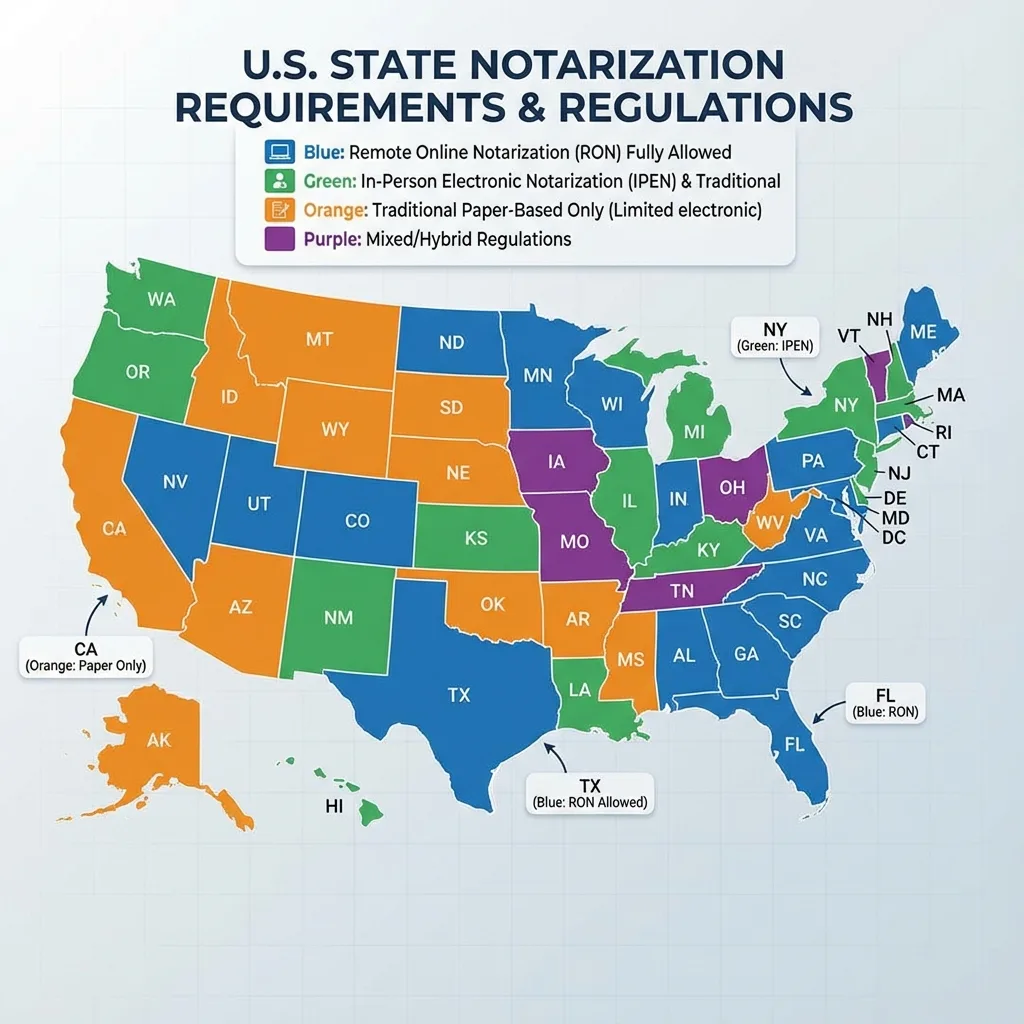
- • State-by-State Variations (Quick Reference)
- • Expanded 15-State Notarization Table
- • How to Verify Safely
- + Part 2: Buying with Only an MCO
- • Normal vs. Red Flag Scenarios
- • The Title Jumping Trap
- • Title Jumping: The $5,000 Mistake
- • Fraud Risks & Counterfeits
- • MCO Fraud Detection Guide
- • Red Flags to Spot
- • Verification Checklist
- + The Dealer Reassignment Chain
- + 3 Detailed Case Studies
- + Montana LLC Specific Issues
- + Conclusion
The MCO Trap: Is Your “New” Car Legit?
You’ve found the perfect vehicle. Maybe it’s a brand-new side-by-side, a trailer, or a low mileage luxury SUV. But instead of a standard state title, the seller hands you a piece of paper that looks like a stock certificate. It says Manufacturer’s Certificate of Origin (MCO) or Manufacturer’s Statement of Origin (MSO).

They tell you, “It’s basically the same as a title. You just take this to the DMV, and you’re good to go.”
Stop right there.
While an MCO notarization is indeed the “birth certificate” of a vehicle, handling one incorrectly — or buying a vehicle from a private party who has one — can lead to a DMV nightmare, tax evasion charges, or the realization that you just bought a stolen car.
At Zero Tax Tags, we handle thousands of vehicle registrations for our Montana LLC clients. We see everything from pristine, dealer-direct MCOs to forged documents that would land you in handcuffs. Last year alone our titling team flagged dozens of suspicious MCOs before they ever reached the Montana Motor Vehicle Division — saving clients tens of thousands of dollars in losses, prevented vehicle seizures, and shielded several buyers from inadvertent participation in interstate fraud rings. The patterns we catch repeat themselves across every state, and almost every burned buyer says the same thing afterward: “I knew something felt off, but the price was too good to walk away from.”
We are going to walk you through the two biggest hurdles regarding MCOs — notarization requirements and fraud detection — and then we go deeper into the lesser-discussed traps: title jumping, dealer reassignment chains, counterfeit security features, and three case studies that show exactly how buyers get caught.
If you are holding an MCO, or about to buy a vehicle with one, this is the most important article you will read today. Bookmark it. Send it to anyone you know who is buying a “new” vehicle from a private seller. The five minutes it takes to read this might save you from a five-figure mistake.
Part 1: The Notarization Nightmare
One of the most common questions we get at Zero Tax Tags is: “My MCO has a spot for a notary public to sign. Do I actually need to get this notarized?”
The answer is the most frustrating answer in the automotive world: It depends.
Manufacturers print MCOs on standardized security paper. Because some states require MCO notarization, the manufacturers include a “Notary Public” section on the back of every MCO just to be safe. However, just because the blank space exists doesn’t mean your specific situation requires a stamp. The MCO is essentially a one-size-fits-all document trying to satisfy 50 different sets of state titling laws at once.
If you mess this up, the DMV (or the Montana Motor Vehicle Division) will reject your paperwork, sending you back to square one. Worse, in many states the rejection clock starts ticking against your temporary registration window. You can lose the right to drive the vehicle on public roads while you sort it out, and in states like Florida, Texas, and Ohio, late titling can pile on penalty fees that quickly exceed several hundred dollars.
The fundamental issue is that there is no single federal law governing how an MCO is signed, witnessed, or notarized. Each state writes its own rules through its motor vehicle division, and those rules can change year over year through legislative updates or administrative bulletins. A notarization that was acceptable in 2022 might be rejected in 2026 because the state changed its acceptable signature standard. This is one of the reasons professional title services exist — the rules move faster than the average buyer can track.
Why the Confusion Exists
The confusion stems from the conflict between manufacturer templates and state laws.
- The Form: The MCO is a generic document used in all 50 states. It has spaces for odometer readings, lienholder info, and notarization.
- The Dealer: A dealer in a state that doesn’t require notarization might leave that section blank.
- The Destination: If you take that non-notarized MCO to a state that does require it, you are stuck in limbo.
- The Reassignment: If the vehicle was reassigned to another dealer before reaching you, each reassignment may have its own notarization requirement that must travel with the document.
- The Lender: If a lienholder is involved, they may impose their own notarization requirement on top of the state’s, especially for high value vehicles or commercial fleet purchases.
To make the situation even more complicated, dealerships are not always trained on out-of-state requirements. A finance manager in Texas might process 100 MCOs a month for Texas-titled vehicles without ever encountering an out-of-state buyer. When a customer from Pennsylvania, Louisiana, or West Virginia walks in, that dealer simply does not know what their state requires — and they often guess. The result: blank notary sections, missing dealer signatures, illegible odometer entries, and incomplete reassignments. All of these mistakes are paid for by the buyer at the destination DMV.
Complicating things further is that the rules for new vehicles, used vehicles, and dealer-to-dealer transfers can be different inside the same state. For example, a state might not require an MCO to be notarized for a new vehicle bought directly from a franchise dealer, but it may require notarization for a salvage rebuild that comes with a reconstructed-title MCO. Same paper, different rules. The DMV clerk often does not explain the rule — they simply hand the paperwork back and tell you to fix it.
State-by-State Variations (Quick Reference)
Here is the quick-reference breakdown of how a few key states handle the MCO notarization requirement. This is critical if you are an out-of-state buyer or setting up a Montana LLC.

The Golden Rule: When registering a vehicle through a Montana LLC, more proof is always better. A notarized signature, a notarized Bill of Sale, and clear dealer paperwork together cost you less than $30 to obtain — but skipping any of them can cost you weeks of back-and-forth with the DMV.
Expanded 15-State Notarization Table
Below is the deeper, more useful comparison table our titling team uses internally. We have expanded coverage to 15 high volume states to capture how the rules shift between private party vs. licensed dealer transactions and between new vs. used vehicle situations. Read it carefully — the differences are subtle but expensive when you get them wrong.
Important: State rules can change. Always confirm with the destination state’s DMV before paying for or transporting a vehicle. The table above reflects general practice as of 2026 and is not a substitute for direct verification with the titling authority. Our team at Zero Tax Tags maintains a continuously updated internal database of state-specific MCO rules — if you are a Montana LLC client, we run that check for you automatically before submission.
How to Verify Safely
If you are holding an MCO and aren’t sure if you need a notary:
- Check the Destination State: It doesn’t matter what the state selling the car requires; it matters what the state titling the car requires. If you live in Pennsylvania but bought the vehicle in Delaware, follow Pennsylvania’s rules — not Delaware’s.
- When in Doubt, Notarize: If you have access to the seller/dealer, ask them to notarize it. It costs a few dollars and prevents weeks of rejection delays. Many credit unions and banks offer free notary services for members.
- Get a Notarized Bill of Sale: Even if the MCO isn’t notarized, having a separate Bill of Sale that is notarized often solves the problem. It proves to the DMV clerk that the signature isn’t a forgery.
- Document Everything: Take photos of the MCO front and back, the VIN plates on the vehicle, the seller’s driver’s license, and the notarized signatures. If anything is later disputed, this evidence package protects you.
- Use a Mobile Notary: If the seller is reluctant to drive to a notary, a mobile notary will come to your location. Cost is typically $25 to $75 and well worth it on any high value vehicle.
Montana LLC Specific Consideration: If you are using Zero Tax Tags to register your vehicle, we review your paperwork before it goes to the state. We know exactly what the Montana DMV looks for. If your MCO is missing a critical stamp, we catch it before it results in a rejection letter. Our standard service for Year 1 is $899 (which includes the $200 LLC formation fee), and Year 2 onward renewals are $270 per year. That single fee covers multiple vehicles per LLC and includes the document review service that has saved hundreds of clients from costly DMV rejections.
Part 2: Buying a Vehicle with Only an MCO (The Danger Zone)
Now let’s talk about the much scarier side of MCOs: buying a vehicle from a private seller who hands you an MCO instead of a title.
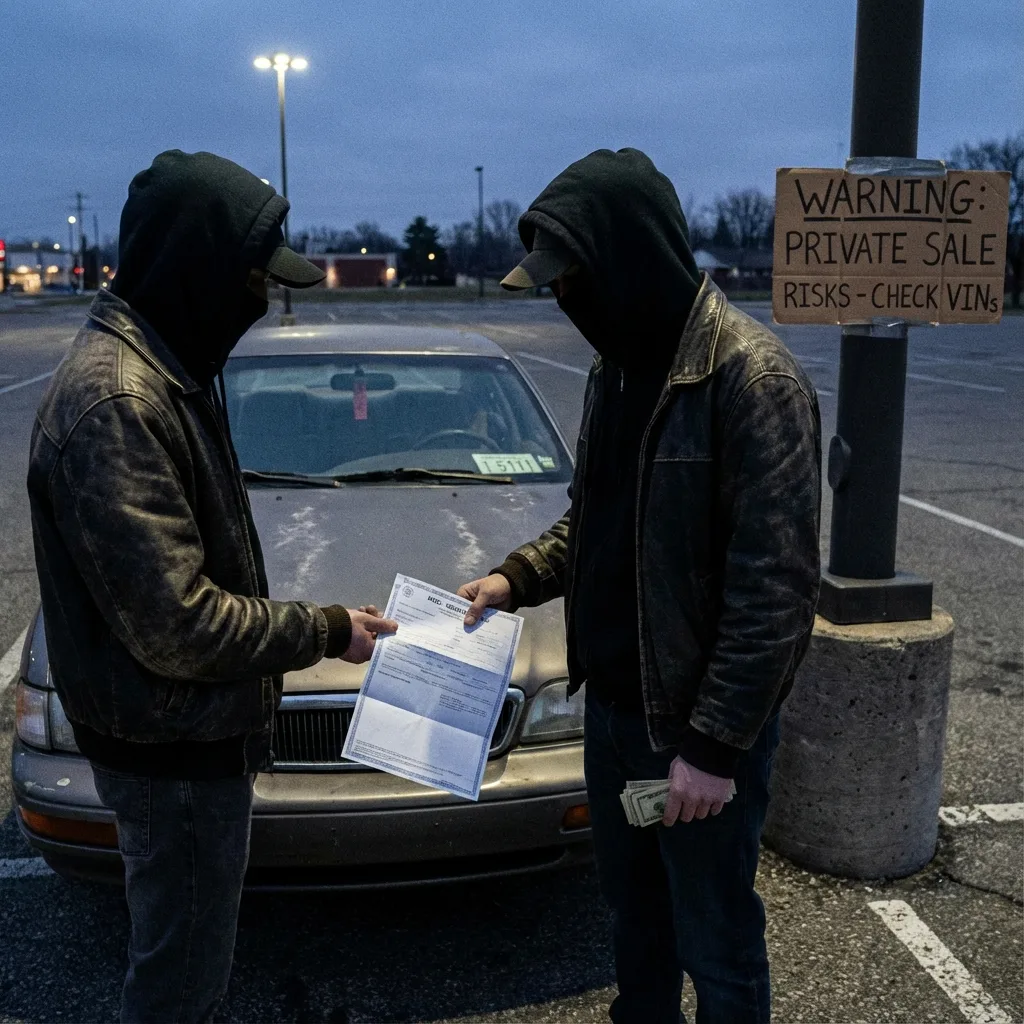
In the world of vehicle titling, an MCO is usually only seen by the dealer and the first owner. Once that first owner goes to the DMV, the MCO is surrendered, and a title is issued. The MCO ceases to exist as a useable document for transferring ownership going forward — it gets stamped, voided, or held in the state’s records archive.
If you are meeting a guy in a parking lot to buy a “barely used” Hellcat or a “brand new” trailer, and he hands you an MCO, you need to be on high alert. There are only a handful of legitimate reasons a non-dealer would still possess an MCO. Outside of those scenarios, the document in your hand is either evidence of fraud or a setup that will leave you holding the bag.
When It’s Normal vs. Red Flag
Normal Scenario:
- You are buying a brand-new vehicle from a licensed franchise dealership.
- You are buying a custom-built trailer or kit car directly from the manufacturer.
- You are buying a grey-market import that has never been titled in the US (requires specific import docs and EPA/DOT compliance paperwork).
- You are buying a brand-new RV, side-by-side, jet ski, or boat directly from the dealer where the unit hasn’t been registered yet.
- You are buying a manufactured chassis or cab destined for upfit (work truck, ambulance, food truck, or fire apparatus).
Red Flag Scenario:
- Private Party Sale: “I bought it, but I never got around to titling it.”
- “New” Used Car: The vehicle has 2,000 miles on it, but the seller claims it’s “still on the MCO.”
- Temp Tag Abuse: The vehicle is 6+ months old but still has expired temporary tags.
- Out-of-State Cash Sale: Seller insists on cash, no paper trail, and refuses to meet at a bank or escrow office.
- Pressure to Close Same Day: “I have other buyers coming this afternoon, you need to decide now.”
- No In-Person VIN Inspection Allowed: Seller refuses to let you photograph the VIN plate, dashboard, door jamb, or engine block stamp.
The Private Party Trap: “Title Jumping”
Why would a private seller have an MCO? Usually, it’s because they are title jumping.
This happens when Person A buys a vehicle from a dealer but wants to avoid paying sales tax and registration fees. They take the MCO home and stick it in a drawer. They drive the car for six months (often illegally or on fake temp tags), and then decide to sell it to you (Person B).
They hand you the MCO and say, “Just sign your name as the first owner. You’ll be the first owner on the title!”
The Risks:
- It is Illegal: This is tax evasion. The seller is skipping their tax liability and passing the paperwork headache to you.
- Broken Chain of Custody: The MCO might already be signed over to Person A on the back. If you try to scratch that out or write over it, you have voided the document. The DMV will reject it.
- No Verify: You have no way of knowing if Person A actually paid off the dealer. The dealer could still hold a lien on that MCO.
- Odometer Liability: Federal law requires odometer disclosure on every transfer. By skipping the title, the seller has skipped that disclosure — making you legally exposed if the mileage is later challenged.
Warning: Title jumping is illegal and can result in you losing both the vehicle and your money. Never participate in a transaction where you’re asked to “sign as the first owner” when the vehicle has clearly been used.
Title Jumping: The $5,000 Mistake
Title jumping is the most common — and most dangerous — MCO scam in the country. It happens thousands of times every year, and most of the buyers who fall for it never see the inside of a courtroom because the loss feels too small to fight. But “small” is relative when you’ve handed over $40,000 cash for a truck that the state will never let you title in your name.
Here is exactly what title jumping looks like in practice. A licensed dealer sells a 2023 Ford F-350 to “Mike,” a flipper. Mike pays cash, takes the MCO with him, and never goes to the DMV. He puts the truck on Facebook Marketplace at a slightly inflated price, lets it sit for two weeks until a motivated buyer (“you”) shows up, and then offers a “deal” if you take it home that day. He signs the back of the MCO over to you, hands you a hand-written bill of sale, and disappears. You drive the truck home thinking you got an incredible deal — until you walk into the DMV.
The clerk pulls the MCO chain. They see the dealer assigned the MCO to Mike. They see Mike’s signature on the second assignment block over to you. There is no record of Mike ever paying sales tax. There is no record of Mike ever registering the truck. The clerk hands the MCO back and tells you that you cannot title the vehicle until Mike titles it first — and Mike has vanished. You now own a $40,000 paperweight you cannot legally drive on public roads.
Why It’s Illegal in All 50 States
Title jumping violates two distinct bodies of law. The first is state-level: every state requires a vehicle to be titled in the buyer’s name within a defined window (typically 10 to 45 days) before resale. Skipping that step is a misdemeanor or felony depending on the state and the value of the vehicle. The second is federal: the Federal Truth in Mileage Act of 1986, codified at 49 U.S.C. § 32705, requires every transferor to disclose the odometer reading on the title document at the moment of transfer. By keeping the MCO and skipping the title, the jumper bypasses that disclosure obligation. Federal odometer fraud penalties can reach $10,000 per violation under 49 U.S.C. § 32709, and intentional violations can become felonies with up to three years of imprisonment.
Specific Penalties by State
How Montana LLC Registration Exposes Jumped Titles
Here is something that surprises most clients: a Montana LLC registration is one of the strongest defenses against unknowingly buying a jumped-title vehicle. Why? Because Montana requires a clean, complete MCO chain or a lawful title to issue any registration. Our titling team at Zero Tax Tags reviews the MCO before submission, runs the VIN through the National Motor Vehicle Title Information System (NMVTIS), and confirms that the chain of assignment is unbroken from the manufacturer to the assignee whose name will appear on the new Montana title.
If the chain is broken — say, there are two consecutive private signatures on the back of an MCO that should have only one dealer assignment — we flag it immediately and stop the registration. That single check has saved several clients from completing transactions on jumped titles. In one case, the seller had already deposited the buyer’s $52,000 wire when our team stopped the title submission and uncovered that the seller was a flipper who never owned the vehicle in the eyes of the state. The buyer was able to claw back the funds through their bank’s fraud department because we had documented the chain break in writing.
How to Detect Title Jumping Before You Buy
- Count the signatures on the back of the MCO. A new vehicle MCO from a franchise dealer should have exactly one dealer assignment to the buyer. If you see two or three signatures, the document has been jumped.
- Check the printing date on the MCO. If the MCO was printed three years ago and the seller is presenting it as “still on the MCO,” ask why it was never titled.
- Ask to see the seller’s bill of sale from the original dealer. A legitimate first buyer will have the dealer’s invoice. A flipper will not.
- Run the VIN through NMVTIS. A jumped vehicle often has no record of any state ever titling it — that absence is a giant red flag.
- Verify the seller’s name matches the most recent assignment block on the MCO. If those two names do not match, walk away.
Fraud Risks: The Counterfeit Market
The bigger risk is that the MCO is fake.
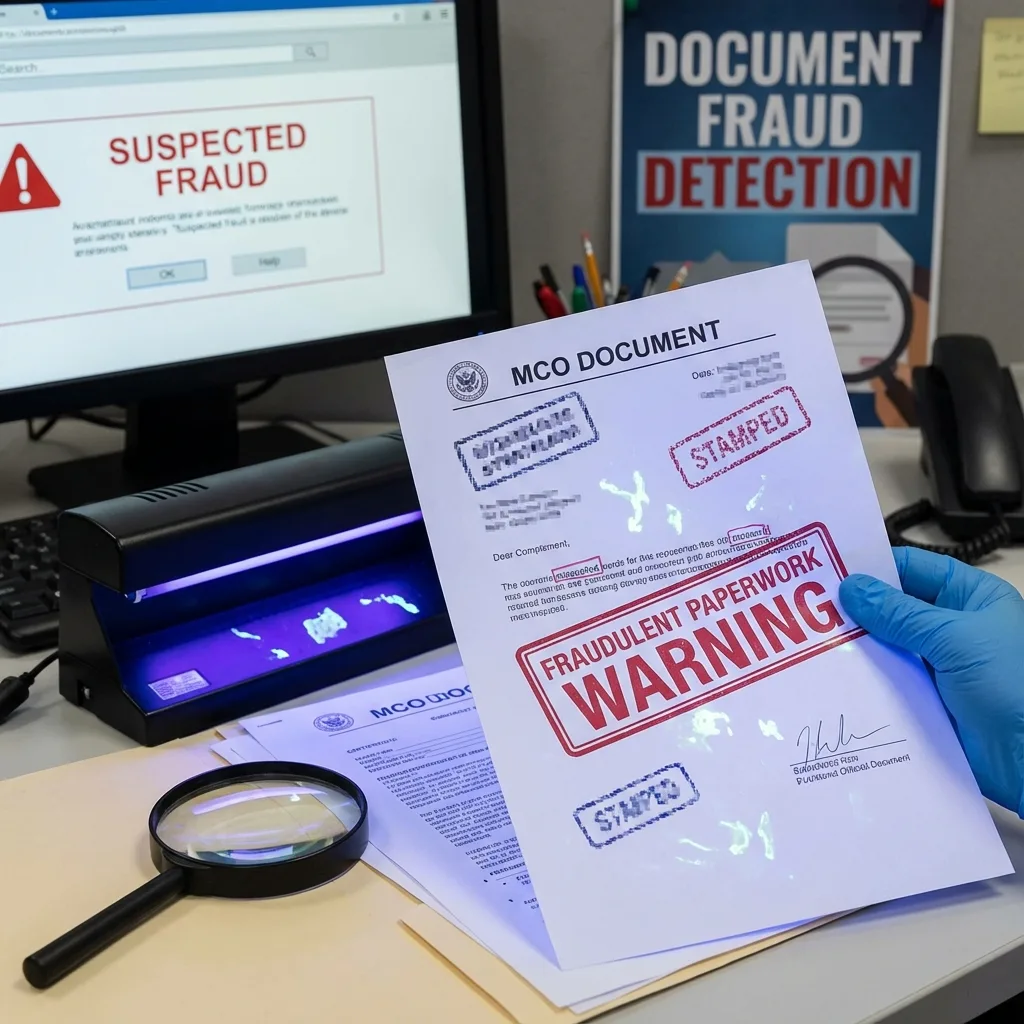
Florida DMV Fraud Alert: Florida has seen a massive spike in counterfeit MCOs associated with high-end luxury vehicles (Bentleys, Mercedes G-Wagons) and muscle cars (Hellcats, Corvettes). Scammers steal these vehicles, create a high-quality fake MCO using a template found online, and sell the car to an unsuspecting buyer for cash. Florida law enforcement has begun running joint task forces with NICB (National Insurance Crime Bureau) specifically targeting MCO counterfeit rings operating in Miami-Dade, Broward, and Hillsborough counties.
Oregon DMV Warning: Oregon reported rings of thieves attaching fake VIN plates to stolen vehicles and fabricating MCOs to match. The paperwork looks real, the VIN on the dash matches the paperwork, but the car is stolen property. The Portland Police Bureau Auto Theft Task Force recovered 18 vehicles in a single sweep last year, all paired with high-quality counterfeit MCOs that initially fooled DMV clerks.
The “Internet Template” Scam: You can find blank MCO templates online. Scammers print these on heavy bond paper, fill in the vehicle details, and pass them off as legitimate. If you buy a vehicle with a fake MCO, you do not own the vehicle. The police will seize it, and you will lose your money.
MCO Fraud Detection Guide: Spotting Counterfeits
Real MCOs are not printed on copy paper. They are produced by approved security printers under contract with the manufacturer, and they include layered security features designed to make them difficult to counterfeit. Knowing what those features look like is the difference between losing $80,000 and walking away from a scam. Below is the guide our titling team uses when inspecting an MCO.
Security Features Real MCOs Have
- Watermarks: Hold the MCO up to a light source. Genuine MCOs from major manufacturers (Ford, GM, Stellantis, Toyota, Honda) include embedded watermarks visible only when backlit. The watermark may be the manufacturer’s logo, the word “ORIGINAL,” or a repeating pattern.
- Heat-Sensitive Ink: Many MCOs use thermochromic ink that changes color when warmed by your finger or a hairdryer for a few seconds. The ink may shift from blue to clear or from red to yellow.
- Unique Paper Stock: MCO paper has a distinctive weight and texture — usually 24-pound bond with a slightly rough cotton blend. It does not feel like printer paper. Standard 20-pound copy paper is an immediate giveaway.
- Microprinting: Look closely with a magnifying glass at borders and signature lines. Genuine MCOs include microprinted text (often the manufacturer’s name) along these lines that appears as a solid line to the naked eye.
- Embedded Security Threads: Higher-end MCOs (especially for luxury manufacturers) include thin metallic or fluorescent threads woven into the paper, similar to currency.
- UV Reactive Ink: Shine a UV/blacklight flashlight on the MCO. Hidden patterns or the manufacturer’s logo should fluoresce. Counterfeits printed on inkjet paper will not.
- Sequential Document Numbers: Genuine MCOs have unique sequential document numbers tracked by the manufacturer. Two MCOs with the same number is an obvious counterfeit.
- Embossed Manufacturer Seal: Some manufacturers (Polaris, BRP, Yamaha for powersports) use a physically embossed corporate seal that creates a raised impression on the paper.
Common Fraud Patterns We See
- VIN Number Alteration: Scammers take a real MCO from a low-value vehicle and chemically wash off the VIN, then reprint a higher-value VIN. Look for any sign of erasure, smudging, or texture change in the VIN field.
- Stolen Blank MCO from Dealer: Disgruntled dealership employees occasionally walk out with blank MCO forms. These have all the security features but get filled in with fake vehicle information. Detection requires calling the dealer to confirm the document number was assigned to the vehicle in question.
- Manufacturer Rebadging Scam: Common with cloned exotics. The scammer takes a base-model vehicle, badges it as a higher trim or rare variant, and produces an MCO matching the upgraded “specification.” A VIN decode through the manufacturer’s database catches this immediately.
- Reused MCO After Title Issuance: The original buyer titled the vehicle, but the dealer never destroyed the MCO. Years later, the dealer (or a thief) presents the same MCO for resale. NMVTIS will show the vehicle was already titled and the MCO is voided.
- Photocopied MCO with Real Notary Stamp: A real notary stamp is photocopied onto a counterfeit MCO. Real notary stamps have raised embossing — if the stamp on your MCO is flat ink only, it is a copy.
How to Verify an MCO is Authentic
- NMVTIS Lookup: The National Motor Vehicle Title Information System is a federal database that tracks every titled vehicle in the country. Use an approved provider (VinAudit, ClearVin, or AutoCheck) to pull a NMVTIS report on the VIN. If the system shows the vehicle was previously titled, the MCO is voided and useless.
- VinCheck Free Search: The National Insurance Crime Bureau offers a free VinCheck service that confirms whether a vehicle has been reported stolen or declared a total loss. Always run this before any cash transaction.
- Manufacturer VIN Database: Most manufacturers publish a free VIN decoder on their website (Ford’s vehicle history, GM Owner Center, Stellantis WiTECH, Toyota Owners). Decode the VIN and verify the make, model, trim, engine, and production date match what is printed on the MCO.
- Direct Dealer Phone Verification: Call the issuing dealer listed on the MCO. Ask their finance department to confirm the document number was assigned to the specific VIN. Most franchise dealers will confirm this in under five minutes.
- State DMV Pre-Submission Check: Many state DMVs will run a quick MCO authenticity check at the counter if you bring the document in before purchase. Bring a printed VIN report and the MCO together.
Critical Warning: If you buy a vehicle with a counterfeit MCO, you do not legally own the vehicle, even if you paid full market value in cash. The vehicle will be seized as evidence, you will not be reimbursed, and you may face questioning about your role in the fraud. The federal Stolen Property Act (18 U.S.C. § 2312) makes it a federal offense to transport stolen vehicles across state lines, and ignorance is not a defense if reasonable due diligence would have revealed the fraud.
Red Flags to Spot
If you are looking at an MCO, look for these immediate warning signs:
- Purchase Date Discrepancy: The MCO date (when the manufacturer printed it) is 2022, but the seller claims it’s “brand new” in 2025.
- Price is Too Good: A $90,000 TRX truck listed for $60,000? It’s a scam.
- No Lien on High-End Metal: It is very rare for a private individual to own a brand-new $100k+ vehicle outright with zero financing. If there’s no lienholder listed on the MCO, be suspicious.
- The “Out-of-State Dealer”: The MCO is stamped by a dealer in a different state than the seller.
- Typos: Manufacturers rarely make typos. If “Chrysler” is spelled “Chryslar,” walk away.
- Mismatched Fonts: If the VIN block uses a different font than the rest of the document, the document has been altered.
- Color Inconsistency: The text on the front is one shade of blue, the assignment block on the back is another. Both should match exactly on a single-print document.
- Smudged or Blurred Stamps: Real dealer stamps are crisp. A smudged or blurry stamp is a sign the document was photocopied.
Verification Checklist BEFORE Buying
Do not hand over cash until you have done this homework.
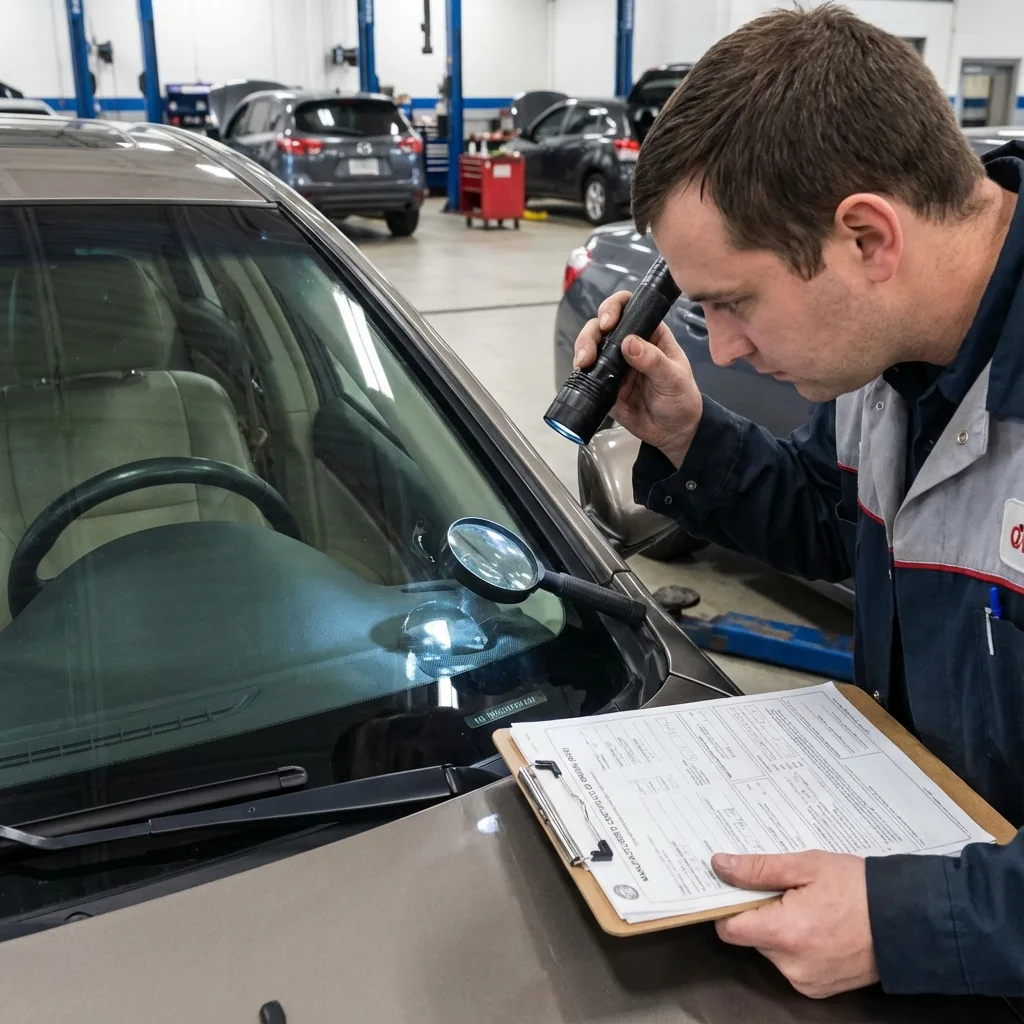
- 1. Verify the VIN: Check the VIN on the MCO against the VIN plate on the dashboard AND the sticker in the door jamb. They must match exactly.
- 2. Google the Dealer: Look at the back of the MCO. Who is the dealer listed as the first assignee? Google them. Do they exist? Call them.
- 3. Call the Dealer: This is the most effective step. Call the dealership listed on the MCO. Ask for the finance or titling department. Say: “I am looking at a vehicle that originated from your store. VIN ending in 1234. Can you verify if this vehicle was sold and if there are any holds on the MCO?”
- 4. NHTSA VIN Lookup: Run the VIN through the NHTSA database to ensure it hasn’t been reported stolen or salvaged.
- 5. Check Security Features: Real MCOs have watermarks, embedded fibers, and UV ink. If the paper feels like standard printer paper, it’s fake.
- 6. Get a Bill of Sale: Require a notarized Bill of Sale from the seller. If they refuse to go to a notary with you, walk away.
- 7. Pay Through Escrow or Bank Wire: Cash transactions are favored by scammers because they are unrecoverable. A bank wire to a verified business account or an escrow service creates a paper trail.
- 8. Photograph Everything: Front and back of the MCO, dashboard VIN, door jamb VIN, engine block stamp, and the seller’s driver’s license. Email the photos to yourself for a time-stamped backup.

Pro Tip: If the seller gets defensive or refuses to allow you to verify the MCO with the dealer, that’s your sign to walk away. Legitimate sellers have nothing to hide.
The “Dealer Reassignment” Chain Explained
Not every multi-signature MCO is fraudulent. There is a legitimate process called dealer reassignment that explains why some MCOs legally pass through more than one dealer before reaching a retail buyer. Understanding this process helps you distinguish between an honest paper trail and a title jumping scheme.
Dealer reassignment occurs when a vehicle changes hands between two licensed dealerships before being sold to a final retail buyer. This is most common with high-demand trucks (F-250, Ram 2500, Silverado HD), specialty vehicles (Mustang Mach-E, Lightning, GR Corolla), and powersports (Polaris RZR Pro R, Yamaha YXZ1000R). When a customer at Dealer A wants a specific configuration that Dealer B has on its lot, Dealer A may purchase the vehicle from Dealer B and then sell it to the customer. The MCO travels with the vehicle and gets reassigned at each step.
How Many Times Can an MCO Be Reassigned?
The number of legal reassignments depends on the state. Most state MCOs include two or three reassignment blocks on the back of the document. Once those blocks are filled, the receiving dealer must title the vehicle and issue a state title for any further transfers. Common limits we see in practice:
- One reassignment in California, Hawaii, and Massachusetts — the manufacturer assigns to the franchise dealer, and the franchise dealer assigns to the retail buyer. No additional dealer reassignments allowed.
- Two reassignments in most states — manufacturer to franchise dealer, franchise dealer to second dealer, second dealer to retail buyer.
- Three reassignments in Texas, Georgia, and Florida — common for fleet vehicles, auction wholesalers, and specialty conversion shops where multiple dealer-to-dealer movements occur before retail sale.
- Unlimited reassignments via separate forms in some states — once the printed reassignment blocks are full, additional dealers can document transfers using a state-issued reassignment supplement form rather than getting a new MCO.
When You Need a New MCO vs. Using the Original Chain
You need a fresh MCO (not a reassigned one) when any of the following has occurred:
- The original MCO has been damaged, destroyed, or made illegible.
- The reassignment blocks are exhausted and no state supplemental form is permitted.
- The original MCO contains an error that cannot be corrected by strikeover and dealer initials.
- The vehicle has been substantially modified (engine swap, frame replacement, body conversion) requiring a new VIN assignment.
- The original MCO was lost in transit between dealers, and the manufacturer’s titling department issues a duplicate.
Manufacturer-issued duplicate MCOs are stamped or watermarked with the word DUPLICATE in addition to a new sequential document number. They take 30 to 90 days to obtain in most cases and require the requesting dealer to file an affidavit explaining what happened to the original. If a private seller hands you an MCO marked DUPLICATE, ask why — the answer should be a credible logistics issue (lost in transit, damaged in shipping). Anything vague is a red flag.
Quick Sanity Check: If you are buying retail and the MCO has more than two reassignment signatures (manufacturer to dealer, dealer to dealer, dealer to you), pause. Verify each reassignment is from a licensed dealer with a real address and a real phone number that answers. If any of those reassignments is to an individual rather than a licensed entity, you are very likely looking at a jumped title.
3 Detailed Case Studies: How Buyers Get Burned
The following case studies are composites drawn from real situations our titling team has seen at Zero Tax Tags. Names and minor details have been changed, but the patterns are accurate. Each one illustrates a different category of MCO trap and shows exactly how the warning signs were missed.
Case 1: The Texas Facebook Marketplace F-350 (Title Jumping)
Buyer: James, 44, oil services manager in Midland, Texas.
Vehicle: 2023 Ford F-350 Platinum 6.7L Power Stroke, listed at $72,000 (market value approximately $89,000).
Seller: “Kevin,” found on Facebook Marketplace, claimed to be selling because his “wife wanted a different truck.”
James drove three hours to a McDonald’s parking lot in Odessa to meet Kevin. The truck looked perfect. Kevin had the MCO in a manila envelope, presented as proof the truck was “still on the original paper.” James inspected the truck briefly, ran the VIN through a free online lookup that returned “no issues,” and handed Kevin a cashier’s check for $72,000. Kevin signed the back of the MCO and disappeared.
Two days later, James walked into the Midland County tax assessor’s office to title the truck. The clerk pulled the MCO chain. The MCO had been issued by a franchise dealer in Houston to “Kevin Hartwell” eight months earlier. There was a second signature on the assignment block over to James. But there was no record of Kevin Hartwell ever titling the vehicle in Texas, paying sales tax, or registering it. The clerk informed James that this was a classic title jump. Texas law required Kevin to title the vehicle in his name first, pay the 6.25% sales tax (which would have been roughly $4,500 on his original purchase price), and only then could he legally sell it to James.
The Result: James could not title the truck. He filed a police report. The Texas Department of Motor Vehicles fraud division opened an investigation. Six months later, “Kevin Hartwell” was identified as a flipper who had jumped 11 titles in 18 months across three states. The truck was eventually impounded as evidence. James lost the full $72,000 because the cashier’s check had been deposited and withdrawn within 24 hours, and the seller had used a fake driver’s license. His only remaining option was a civil suit against an effectively judgment-proof defendant.
What Should Have Happened: James should have counted the signatures on the back of the MCO — two private signatures with no dealer in between is the textbook fingerprint of a title jump. He should have called the issuing Houston dealer to verify the original sale. He should have insisted on meeting at the Midland County tax assessor’s office to title the vehicle simultaneously with the cash transfer.
Case 2: The Polaris RZR Notary From the Wrong State (Notarization Failure)
Buyer: Linda, 58, snowbird with primary residence in Sarasota, Florida and seasonal home in Jackson Hole, Wyoming.
Vehicle: 2025 Polaris RZR Pro R Ultimate, brand new, $42,000 from a Wyoming dealer near her seasonal home.
Goal: Register the unit through her Montana LLC for tax-free off-road use across multiple states.
Linda is a longtime Zero Tax Tags client. She purchased the RZR from a Wyoming Polaris dealer who handled MCOs every day — for Wyoming buyers. The dealer’s finance manager filled out the MCO, signed it, and sent it directly to Linda for forwarding to our processing center for her Montana LLC registration. The dealer also had a Wyoming notary on staff who notarized the assignment because “we always notarize, just to be safe.”
When the MCO arrived at our titling team for processing, the issue jumped out immediately. The notary stamp was Wyoming-registered. The destination state was Montana. The seller was a Wyoming licensed dealer. The buyer (the LLC) was Montana-registered. None of the three states involved had a problem with this combination — except the Polaris MCO itself had been pre-printed for Florida titling because the dealer’s parts and accessory manager assumed Linda was titling it in Florida (where she had bought powersports before).
The result: a Wyoming notary had certified an assignment on a document that listed Florida as the destination state, even though the actual destination was Montana. Florida HSMV would have rejected the MCO outright because the assignment language did not match Florida’s required wording. Wyoming would have rejected it because the destination state field did not match Wyoming. Montana would have accepted it — but only after the discrepancy was explained in writing.
The Result: Our team caught the error before submission. We coordinated directly with the Wyoming dealer to issue a corrected MCO with the destination state field properly listing Montana, then had the dealer’s Wyoming notary re-certify the assignment. Total delay: nine days. Total cost to Linda: $0, because we caught the issue before any rejection notice was issued by the state. Without our review, Linda would have faced a 60-to-90-day rejection cycle and potential late penalties on her Florida property tax assessment if Florida had decided the RZR was tax-due in Sarasota.
What This Teaches: Even legitimate dealers in low-friction transactions make MCO errors. Notarization in the wrong state, destination state mismatches, and assignment language errors are all common — and almost always invisible to the buyer until the destination DMV rejects the paperwork.
Case 3: The California Counterfeit MCO from the Fly-By-Night Dealer
Buyer: Marcus, 31, software engineer in San Jose, California.
Vehicle: Advertised as a 2024 Mercedes-Benz G63 AMG, $158,000, sold by a “wholesale dealer” operating out of a strip mall office in Hayward.
Marcus had been searching for a G63 for months. New-vehicle waitlists were 18 months long, and used inventory was priced above MSRP. He found “EuroMotors Wholesale” through an online classified site advertising a 2024 G63 AMG with 1,200 miles for $158,000 — well below market. The “dealer” had a real-looking website, a Google Maps pin to a strip mall address, and a Yelp page with three five-star reviews (all posted within the same week, all generic).
Marcus visited the office. It was a single-room storefront with a desk, a couch, and a flat-screen TV. The salesperson was friendly, professional, and explained the vehicle had been a “factory demo unit” sold through their dealer network. They handed Marcus the MCO. It looked official. It had a watermark when held up to the light. It had a notary stamp. It had the dealer’s signature in the assignment block.
Marcus paid by bank wire, $158,000, to the “dealer’s” business account. He drove the G63 home to San Jose, scheduled a DMV appointment for the following Tuesday, and bragged to friends about the deal of the century.
At the DMV, the clerk ran the VIN. The vehicle had been reported stolen from a dealership in Beverly Hills three weeks earlier. The MCO was a high-quality counterfeit, printed on a real security paper stock that had been stolen from a Mercedes-Benz parts shipment. The “notary stamp” was a real notary stamp from a notary who had been bribed to certify documents without verifying signatures. The “dealer” had vacated the strip mall office two days after Marcus’s purchase. The bank account had been emptied within 48 hours and closed.
The Result: The G63 was seized as stolen property. Marcus lost the full $158,000. The investigation determined the operation had defrauded at least 14 buyers in a six-month period, all California or out-of-state buyers attracted by below-market pricing on luxury German vehicles. Marcus’s bank fraud claim was denied because he had authorized the wire personally and there was no unauthorized access to his account. He filed a civil suit, but the defendants were never identified beyond aliases.
The Red Flags Marcus Missed:
- A “wholesale dealer” operating from a strip mall single-room office, not a typical dealership.
- Yelp reviews all posted within the same week with generic language.
- Pricing 25 to 30 percent below comparable used market value on a vehicle in extreme demand.
- No license plate display authority — California licensed dealers must conspicuously display their dealer plate.
- No request to inspect Marcus’s California driver’s license against his name on the MCO — legitimate dealers always verify ID.
- Bank wire to a personal-style account name rather than the registered business entity name.
- No DMV salesperson registration display behind the desk — required for any California dealer salesperson.
Marcus did not run a NMVTIS check before purchasing. A $4 NMVTIS report would have shown the vehicle was reported stolen. A free VinCheck NICB lookup would have shown the same. Five minutes of due diligence would have saved $158,000.
The Common Thread: In all three cases, the buyer ignored a structural warning sign because the deal felt good. Title jumping, notary errors, and counterfeit MCOs all share the same defense: slow down, verify independently, and never let urgency override paperwork. There is no vehicle worth losing $40,000, $72,000, or $158,000 over.
Montana LLC Specific Issues
At Zero Tax Tags, we specialize in helping clients register vehicles tax-free in Montana. Because of this, we deal with MCOs daily.
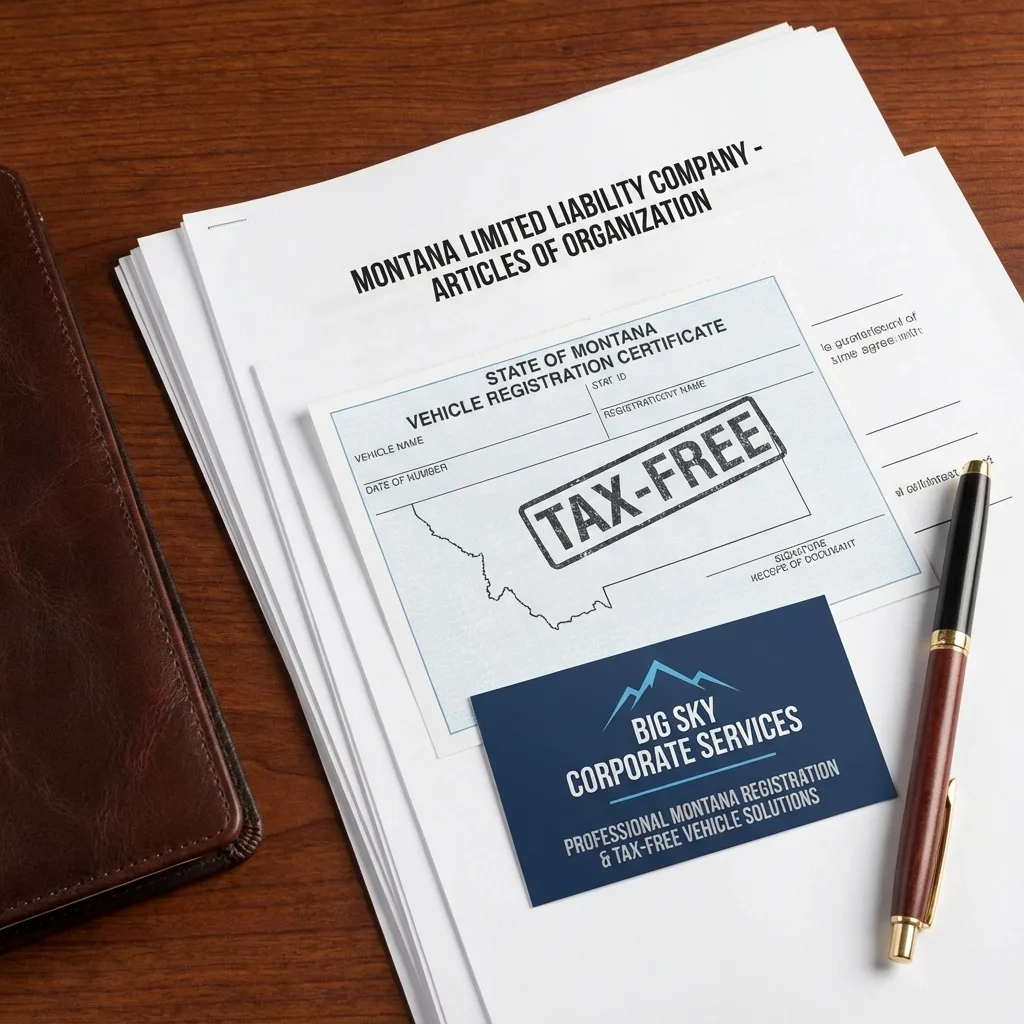
The Dealer Panic: Many dealers are terrified of exporting vehicles or dealing with Montana LLCs because they fear manufacturers will penalize them. They often refuse to hand the MCO to the buyer, insisting on sending it directly to the DMV. This is a remnant of older manufacturer policies that have been largely loosened in recent years, but the institutional fear remains. Some dealers will outright refuse to sell to a Montana LLC, while others will quietly comply but charge an “out-of-state title fee” of several hundred dollars.
The Custody Issue: If a dealer sends an MCO to your local DMV, but you are trying to register it in Montana, you have a problem. The document is in the wrong place. Recovering it requires written authorization from the dealer, sometimes a notarized release from the buyer, and direct coordination with the local DMV’s record retention office. We have unwound this scenario dozens of times for clients — usually after they tried to handle it themselves and discovered the local DMV would not release the MCO without a Montana title application already on file.
How Zero Tax Tags Protects You:
- We Verify Authenticity: When you use our service, we inspect the MCO. We know what a real Ferrari, Ford, or Polaris MCO looks like. We catch fakes before they get to the state, saving you from potential legal jeopardy.
- Dealer Coordination: We provide instructions to dealers on exactly where to send the MCO so it arrives safely at our processing center, so your Montana registration goes smoothly. We have established relationships with hundreds of dealerships nationwide who recognize our process.
- Notarization Checks: We know which states require what. If your paperwork is missing a signature, we flag it immediately.
- Chain of Title Review: Every MCO we process is run through NMVTIS and the manufacturer’s VIN database before submission. If any signal returns “previously titled” or “reported stolen,” we stop the process and notify you immediately.
- Lien Verification: We confirm there is no outstanding lien on the vehicle that would prevent a clean Montana title from being issued.
- Year-Over-Year Renewal: Once the LLC is set up and the vehicle is titled, our renewal service is just $270 per year ($150 registration + $120 LLC filing). You do not have to think about it again.
Our Year 1 service is $899 total: $699 for the registration service plus $200 for the LLC formation. That fee covers your LLC setup, registered agent service, the entire MCO and document review process, the Montana DMV submission, your physical license plates, and shipping to your door. After Year 1, renewals are $270 annually. Over five years, the total cost is $1,979 — less than what most clients save on a single vehicle’s first-year sales tax in California, Florida, or New York.
See how we help vehicle owners with MCO documents and other registration challenges:
- Certificate of Origin vs Title: The Definitive Legal Guide
- Unsigned MCO: What to Do & What NOT to Do
- Who Holds the Certificate of Origin & How to Get It Back
Conclusion: Don’t Let Paperwork Ruin Your Ride

An MCO is a powerful document — it is the key to the first title of a vehicle. But in the wrong hands, it is a tool for fraud.
If you are a private buyer, be extremely wary of MCOs. If you are buying from a dealer, ensure the MCO notarization matches the destination state’s requirements. Count the signatures on the back of the document. Verify the security features. Run a NMVTIS check. Call the issuing dealer. Do not let urgency override common sense.
Don’t navigate this minefield alone. Whether you have a legitimate MCO that needs a Montana plate, or you’re trying to verify if a transaction is safe, Zero Tax Tags is your protective barrier against DMV bureaucracy and title fraud. We handle the paperwork so you can handle the driving. Our $899 Year 1 / $270 annual renewal pricing is transparent, predictable, and a fraction of what one rejected DMV submission can cost in time and money.
If you are about to buy a vehicle with an MCO — or you already did and something does not feel right — reach out before you sign anything else. A 15-minute consultation with our titling team has saved clients tens of thousands of dollars in losses and untold hours of DMV frustration.
Ready to Register Your Vehicle Safely?
Thousands of vehicle owners trust Zero Tax Tags with their MCO documents and Montana LLC registrations. Let us handle the complexity.