23 min read
On this page
- + Why making an off-road UTV street legal is harder than it should be
- + The difference between an off-road CO and a street CO
- + State-by-state street legal UTV rules
- + California’s sticker nightmare: red, green, and tan explained
- + What modifications are actually required
- + EPA and DOT compliance: what you actually need
- + How much does street legal conversion cost?
- + OHV registration vs street registration
- + Three real-world case studies
- + Montana LLC: the off-road CO solution
- + California residents: what Montana delivers
- + Is this legal?
- + Who benefits most from Montana UTV registration
- + Our process
- + FAQs
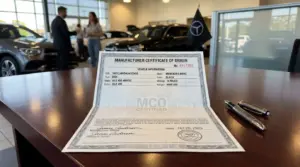
You walked out of the dealership with a new Polaris RZR XP 1000 on the trailer and a manila folder of paperwork on the passenger seat. A week later you walk into your DMV, slide the folder across the counter, and ask to title the machine for street use. The clerk points at three words stamped on your Manufacturer’s Certificate of Origin and slides the folder back: “FOR OFF-ROAD USE ONLY.”
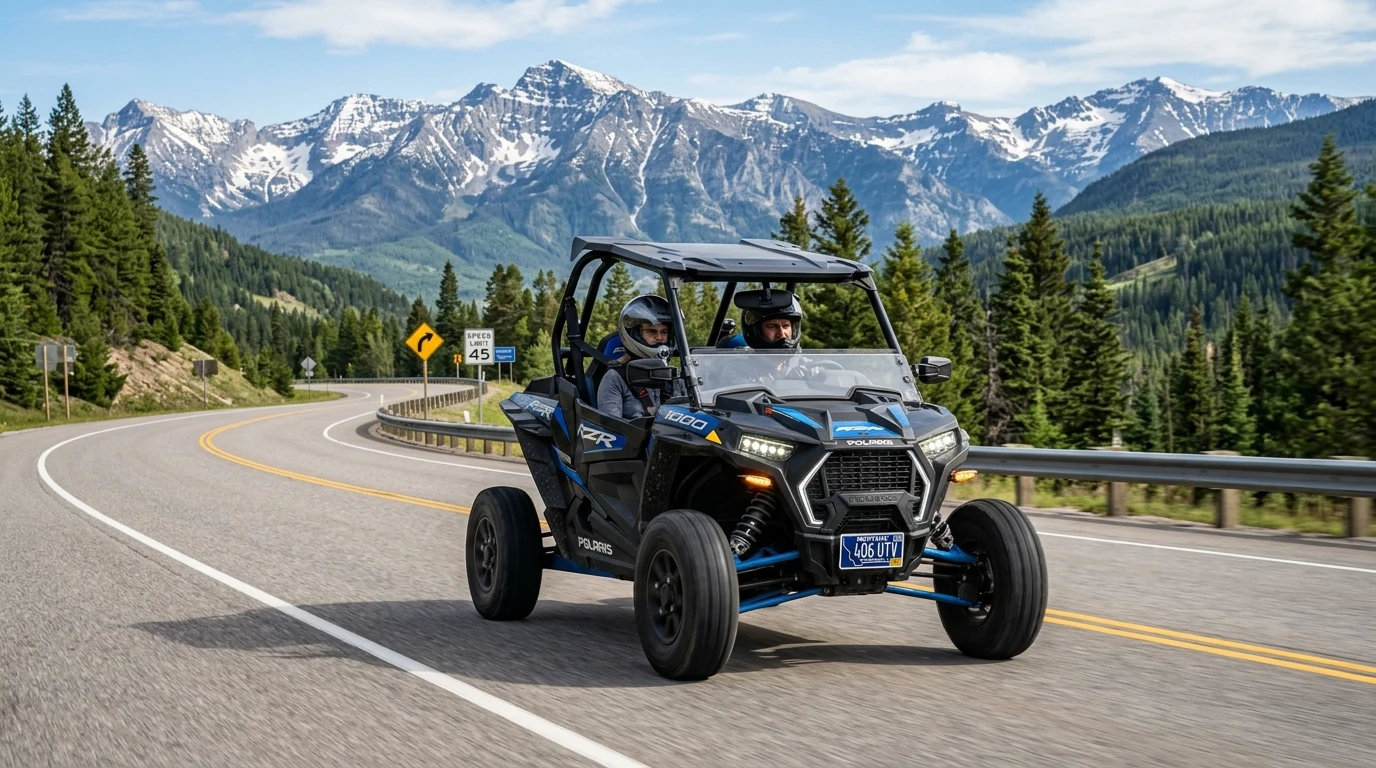
Off-road UTV street legal conversion is one of the most misunderstood paperwork problems in powersports. Your machine is mechanically capable of running on the road. It has headlights, a horn, seat belts, and can hit 80 mph. But the stamp on your MCO has just turned a $30,000 vehicle into a trail-only toy as far as your home state is concerned. America’s UTV street-legal map runs from nine permissive states that wave you through with a lights kit to more than a dozen that refuse a plate at any price. The modifications are real but modest; the EPA compliance pitch you’ll hear at shops is largely theater; and the California sticker system is a mess worth understanding before you trailer anything there.
Why making an off-road UTV street legal is harder than it should be
The frustrating truth about UTV street legal conversion is that it has nothing to do with whether the vehicle can safely operate on the road. Modern side-by-sides from Polaris, Can-Am, Kawasaki, Honda, and Yamaha have hydraulic disc brakes, electric power steering, crash-tested roll cages, three-point seat belts, liquid-cooled fuel-injected engines, and headlights bright enough to land aircraft. The problem is not engineering. The problem is paperwork.
When a manufacturer builds a UTV intended for the off-road market, they file paperwork with the EPA under a different emissions category than passenger cars and ship every unit with a CO that includes the phrase “For Off-Road Use Only.” That phrase is the single legal anchor that prevents most state DMVs from titling the vehicle as a road vehicle. For the manufacturer, this is a feature: it lets them avoid full Federal Motor Vehicle Safety Standard certification and ship the same machine into all 50 states. For the customer, it is an invisible velvet rope at the DMV counter.
The state-by-state patchwork is what really hurts. In Arizona, your dealer can sell you a street legal package and you walk out with a plate the same week. In California, no amount of money or modification will get you a legal plate for the same machine. The vehicle is the same. The owner is the same. The zip code is the only thing that changes the answer.
The difference between an off-road CO and a street CO
The Manufacturer’s Certificate of Origin is the birth certificate of every motor vehicle in the United States. Every car, truck, motorcycle, UTV, and ATV ships with a CO. The form is similar across categories. What changes is one paragraph buried in the middle.
A “street” or “highway-use” CO certifies that the vehicle was built to Federal Motor Vehicle Safety Standards and is suitable for registration as a road vehicle in any state. When the DMV clerk reads that, the request is routine: title, plate, check, drive home.
An “off-road” CO does the opposite. It explicitly states that the vehicle was NOT built to FMVSS and is intended for use only on private property, OHV recreational areas, or trails. In permissive states, clerks have a workaround: a self-inspection form, a modification checklist, and a UTV street-legal endorsement on the title. In states without those workarounds, the CO is a closed door.
The biggest mistake first-time owners make is assuming the off-road CO can be “upgraded” to a street CO by adding mirrors and turn signals. It cannot. The CO is a permanent factory document. What you CAN do, in the right state, is title the vehicle on the off-road CO and register it as a “modified” street vehicle through a separate state endorsement. That two-step is exactly what the nine permissive states allow and the prohibitive states refuse.
State-by-state street legal UTV rules
America’s UTV street-legal map is a chaotic patchwork. Cross a state line and the answer to the same legal question can flip from “yes, here is your plate” to “absolutely never.” Below is the current snapshot of how the most relevant states treat off-road UTV street legal conversion in 2026.
The pattern is unmistakable. Western states with ranching, mining, and recreational riding cultures wrote the most permissive statutes. Coastal states with dense urban centers and aggressive emissions enforcement wrote the most restrictive. New England and the Pacific Coast lean prohibitive. The Mountain West, the Plains, and the Southwest lean permissive. The South is mixed.
California’s sticker nightmare: red, green, and tan explained
California operates the most byzantine off-road regulatory scheme in the country: the color-coded sticker system. It started as a simple CARB emissions enforcement tool and mutated over two decades into a labyrinth that now governs every UTV, ATV, and competition motorcycle in the state.
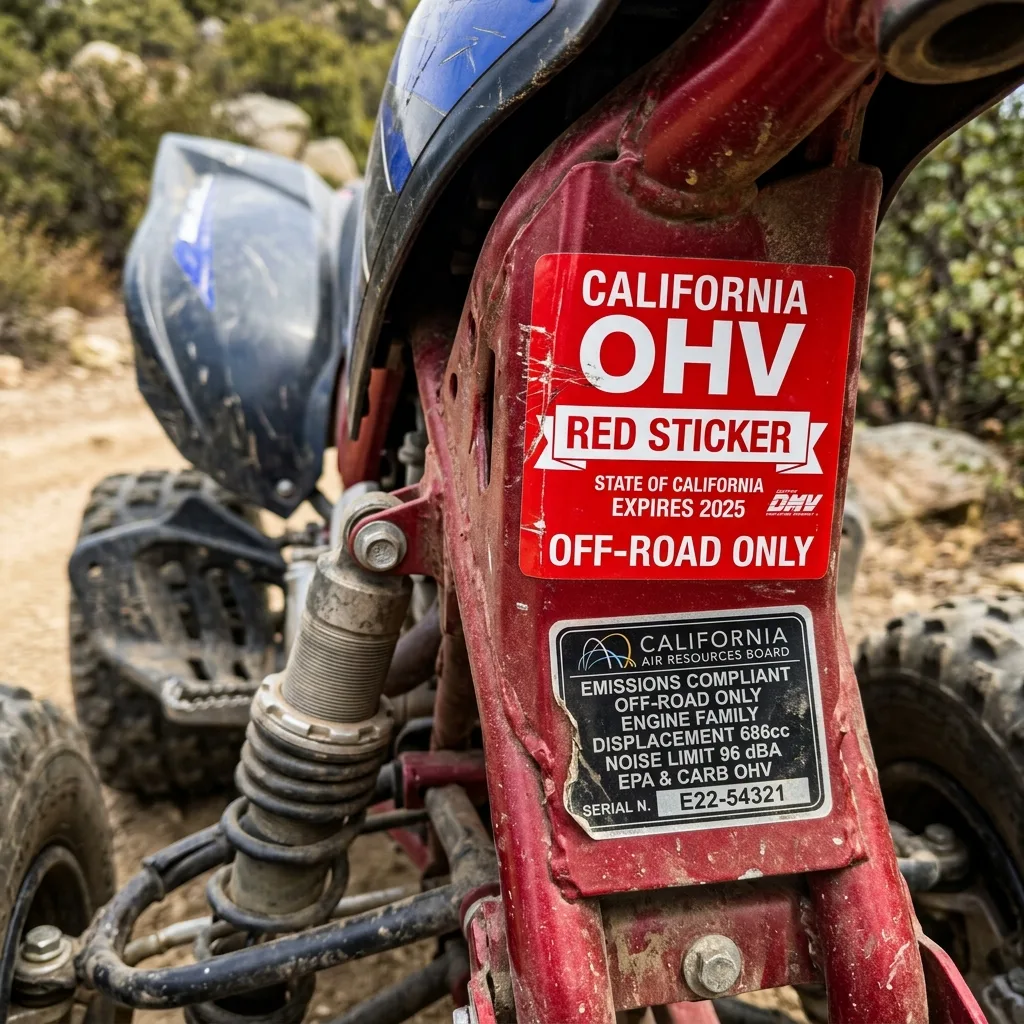
The green sticker is the gold standard. A green-sticker vehicle is CARB-certified and can be legally ridden on California public OHV areas year-round, no seasonal restrictions. Most modern factory UTVs sold new at California dealers ship with green-sticker eligibility.
The red sticker applied to model year 2003-2021 vehicles that did NOT meet CARB. Red-sticker machines were restricted to seasonal use, often shut down for half the year. The program began phasing out in 2025.
The tan sticker is the new designation for non-CARB-compliant off-highway vehicles in model year 2025 and later. Tan-sticker vehicles are limited to closed-course competition only: private tracks, sanctioned races, and closed circuits. NOT public OHV trails. NOT BLM land. NOT state OHV areas. If your UTV does not meet CARB, a track is essentially the only place you can legally use it in California.
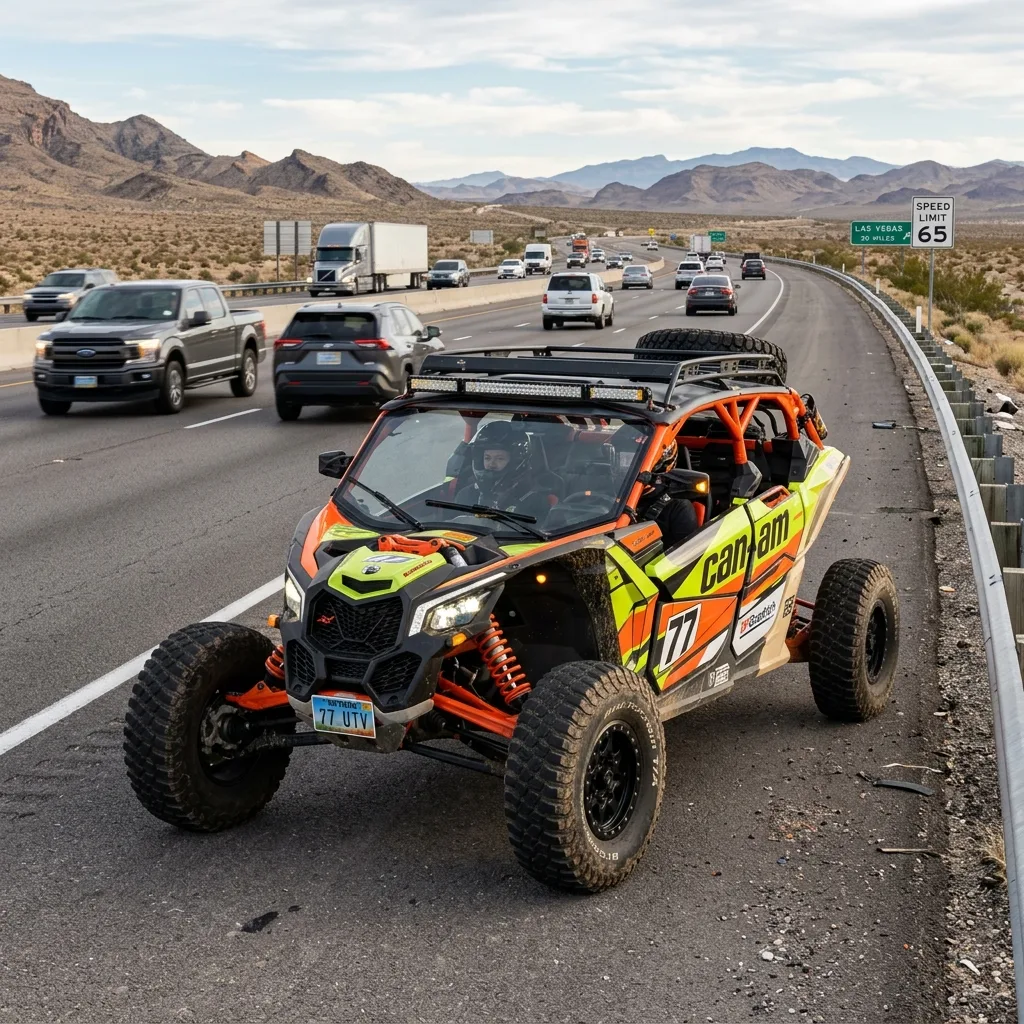
Important reality check: No California sticker, regardless of color, is a street-legal plate. Green, red, and tan are all OHV-only stickers. None of them give you the right to drive on a California public road. The state simply does not issue street-legal plates for UTVs, period. If you want to drive an off-road CO machine on a California public road, the answer from Sacramento is “no” and there is no paperwork pathway around it.
This is where the Montana LLC strategy enters and where it has clear limits. A Montana-registered UTV is street-legal in Montana and other permissive states. It is NOT street legal on California public roads. We unpack this later because it is the single most misunderstood point about this strategy.
What modifications are actually required
If you live in a permissive state, the modification list is shorter than most online forums make it sound. Here is the realistic equipment baseline for street-legal UTV operation in the nine fully permissive states. Note that exact specs vary by state, so always check your state DOT website before you buy parts.
- Turn signals: Front amber/yellow, rear red. Visible from at least 300 feet in normal daylight. Most kits use LED pods that mount to the roll cage uprights.
- DOT-compliant headlights: Must project a beam visible from at least 500 feet ahead. Factory UTV headlights generally meet this spec; some states require a high/low beam selector.
- Taillights and brake lights: Visible from 500 feet to the rear. Most factory UTVs have taillights but lack a brake-light tap, which a wiring kit adds.
- Rearview and side mirrors: Most permissive states require at least one rearview mirror. Some require side mirrors at minimum 5 by 7 inches.
- Seat belts: Three-point restraints for each occupant. Factory UTV harnesses meet this spec. Aftermarket five-point harnesses may NOT count, depending on state.
- Horn: Audible from at least 200 feet. A standard 12V automotive horn works fine.
- Muffler: Most states cap noise at 96 decibels measured at 50 feet. Factory exhausts pass; loud aftermarket cans may not.
- License plate light and bracket: The plate must be illuminated and visible from 50 feet at night.
- Windshield and wipers: Required in Michigan and a handful of other states. Optional in Montana, Arizona, Utah, Wyoming, and most of the West.
- Handbrake or parking brake: A separate mechanical brake in addition to the foot brake.
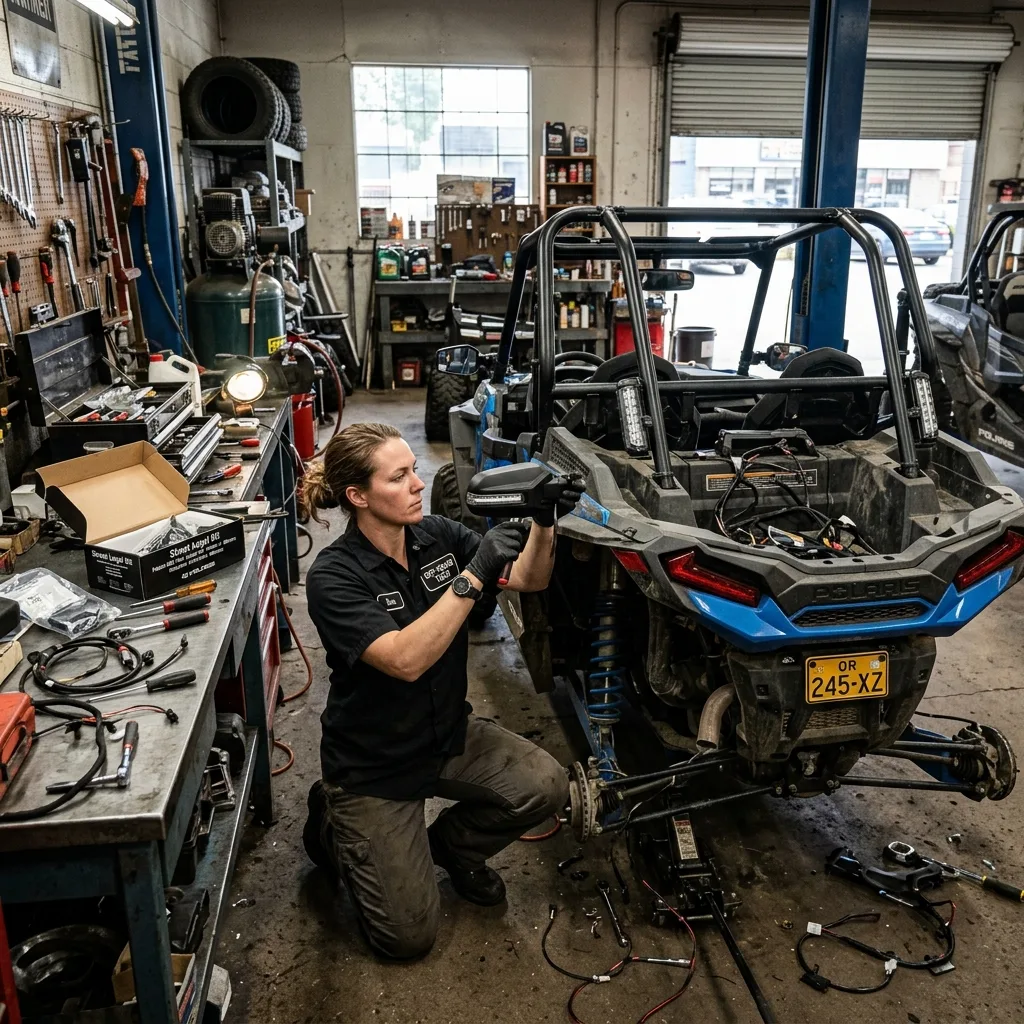
Good news for modern Polaris RZR, Can-Am Maverick, and Kawasaki Teryx KRX 1000 owners: most of this is already on your machine. You typically add turn signals, a horn, a license bracket, and a wiring harness. SuperATV, Ryco Street Legal, Tusk, and XTC all offer plug-and-play kits that mount in two to four hours with hand tools.
EPA and DOT compliance: what you actually need versus what shops tell you
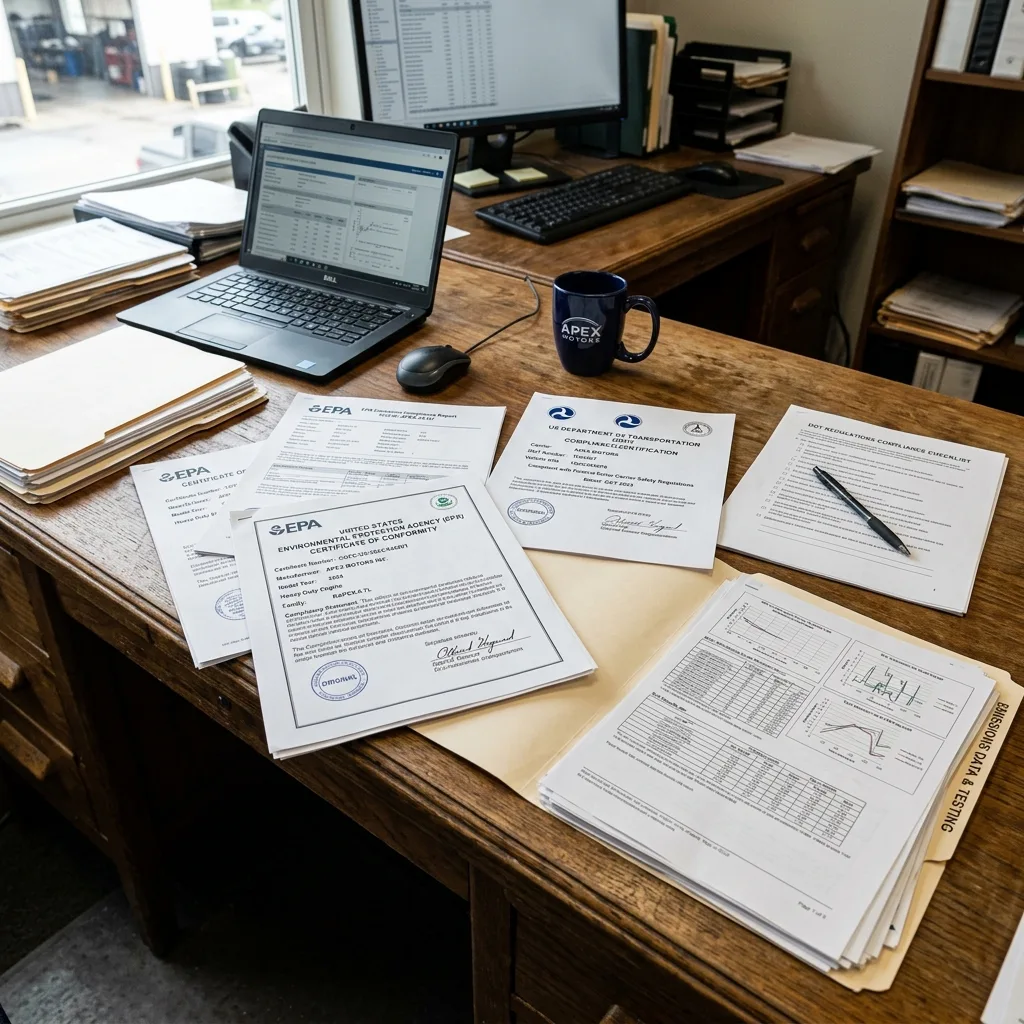
Walk into any aftermarket UTV shop and ask about a “full DOT/EPA compliance package” and you will hear quotes in the $2,000 to $8,000 range. The pitch includes “DOT-approved tires,” “emissions retrofit,” and “professional certification.” Most of what shops sell as “DOT/EPA compliance” is theater. Here is the real story.
First, factory UTVs already have EPA off-road certification. Polaris, Can-Am, Kawasaki, Honda, and Yamaha all certify their machines at manufacture. When you add lights to convert it for road use, you are NOT triggering a new EPA certification. You are an individual owner modifying your private property. EPA does not regulate that.
Second, there is no such thing as a “DOT-approved UTV tire.” Every UTV tire is marked “NHS” (Not For Highway Service). That label is a tort liability decision, not a federal regulation. Most permissive states allow NHS tires on street-registered UTVs. A handful (some Texas counties, California for low-speed conversions) require DOT-marked tires, but for nine out of ten permissive-state owners the factory tires are fine.
Watch out for: Shops in restrictive states (CA, NY, NJ, MA) sometimes pitch “full DOT/EPA conversion” packages with the implied promise that this paperwork will get you a street plate. It will not. No amount of aftermarket conversion paperwork rewrites your state DMV’s UTV statute. If your state prohibits UTV street legal, no shop in the world can fix that locally.
Third, CARB compliance is a separate beast. A CARB-compliant UTV received an Executive Order from CARB at manufacture. You cannot retrofit a non-CARB UTV to become CARB-compliant after the fact. The regulatory framework is designed so aftermarket modification cannot change the vehicle’s certification status.
How much does street legal conversion cost?
Cost varies wildly depending on what you actually need versus what shops upsell you on. Here are realistic price brackets for the four main tiers of street-legal conversion in 2026.
The honest middle path for most owners is a $350 to $420 complete kit, a Saturday in the garage, and a trip to the DMV with your CO. That gets you a plate in nine states. For owners in restrictive states, conversion cost is irrelevant because the plate is unavailable at any price.
OHV registration versus street registration: you may need both
Here is the wrinkle most first-time owners miss: street registration and OHV registration are two different things, and many serious riders need both.
OHV registration covers off-highway use on public lands. It is administered by your state’s parks agency, DMV OHV division, or BLM. It produces a sticker, runs $20 to $80 annually, and grants access to OHV trails, parks, and BLM lands. Some states require an online OHV safety course first. OHV registration does NOT give you any right to drive on a public road.
Street registration covers public road use. It is administered by your DMV, produces a license plate, and requires road insurance, the lighting equipment above, and full registration fees. Street registration does NOT automatically grant access to BLM lands or OHV trails. Some states honor a street plate as equivalent to OHV registration; others require both.
If you ride trails AND drive to those trails on public roads, you typically want both. Combined cost in a permissive state runs $100 to $250 per year. Montana offers a unique advantage: a Montana street-registered UTV is treated as a quadricycle and can use Montana OHV trails on its street plate alone.
Three real-world case studies
Case study 1: Arizona couple with a Polaris RZR XP 1000
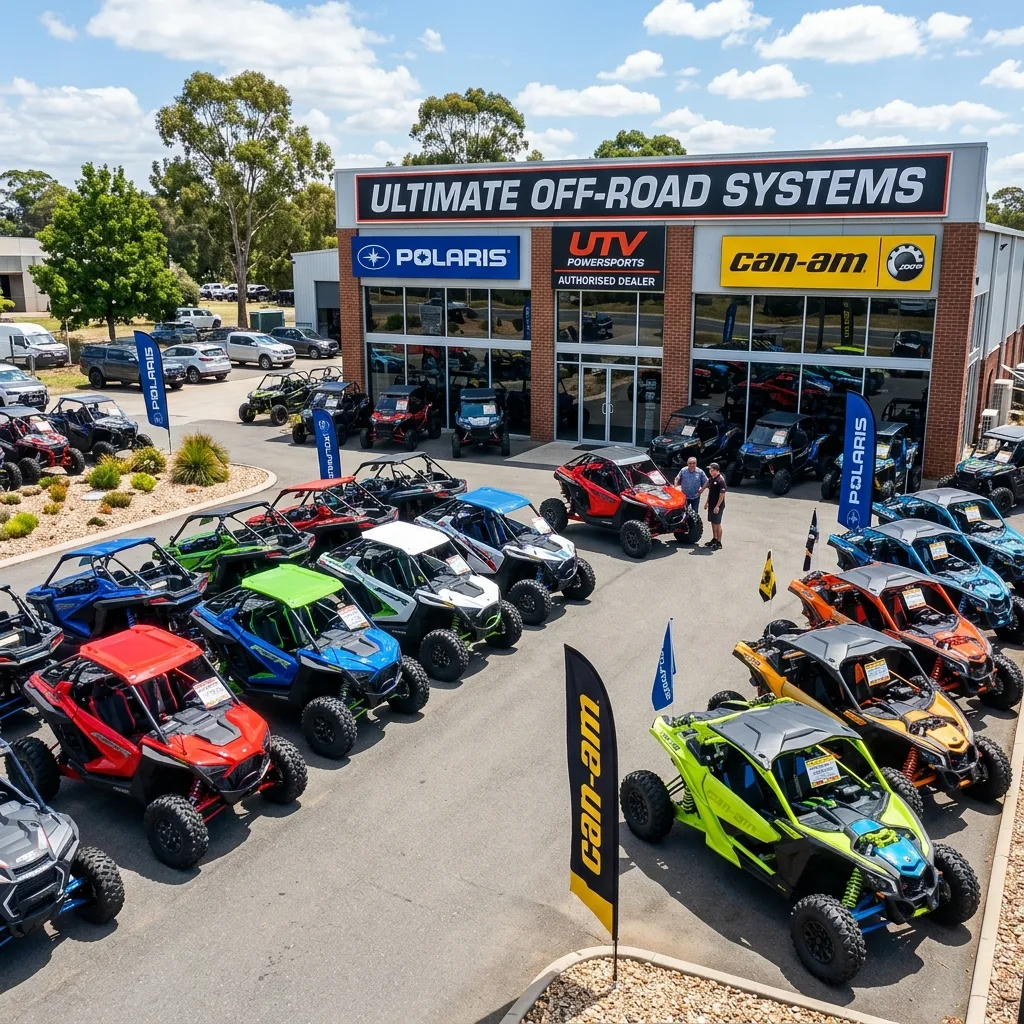
Ron and Diane live in Mesa, Arizona, and bought a 2024 Polaris RZR XP 1000 to ride Bulldog Canyon and the Apache Trail. Arizona is fully permissive and Maricopa County allows UTV street use. The couple thought titling would be a single afternoon at MVD. It was not.
Their dealer pitched a $1,150 street legal package that included a windshield they did not need. They declined and ordered a $420 SuperATV kit online. Ron installed it over a weekend in about five hours.
At MVD the clerk pulled out a Maricopa County checklist with a self-inspection affidavit, separate emissions paperwork, UTV-specific insurance endorsement, and an $89 fee. They got their plate and now drive their RZR to trailheads legally.
Two years later they bought a Can-Am Maverick X3 MAX and registered it through Montana to skip the MVD song-and-dance. The Montana process took three weeks, cost $899 the first year, and required no Arizona inspection. Ron: “Arizona was workable, but Montana was easier. And we own property in Wyoming and Utah where the Montana plate just works at the trailhead.”
Case study 2: California Can-Am Maverick owner caught in the red-to-tan sticker shift
Marcus owns a 2019 Can-Am Maverick X3 Turbo R bought new in San Diego. It carried a red sticker for six years, limiting him to seasonal riding at Ocotillo Wells and Glamis. When the 2025 sticker reform took effect, the new tan sticker rules effectively turned his machine into a closed-course-only vehicle.
Marcus does not own a private track. His options: (1) sell the machine at a loss, (2) accept it as a track-only toy, or (3) register through Montana and trailer to Nevada, Utah, and Arizona for trail use. He chose option three.
Through Zero Tax Tags he formed a Montana LLC, transferred title, and got a Montana plate for $899 in year one. He trailers to Mesquite, Moab, and Page for riding trips. He explicitly does NOT drive the Montana-plated UTV on California public roads. As a California resident, he understands the “primarily operated in California” rule and only uses the machine out of state.
Case study 3: Texas landowner with a Kawasaki Teryx KRX 1000
Trent owns 320 acres outside Brenham, Texas, and runs a cattle operation across his land and a neighbor’s adjoining property. He bought a Kawasaki Teryx KRX 1000 for fence work, hay deliveries, and short trips between properties. The neighboring property is across a state highway. Washington County allows UTV use on county roads but prohibits state highway use.
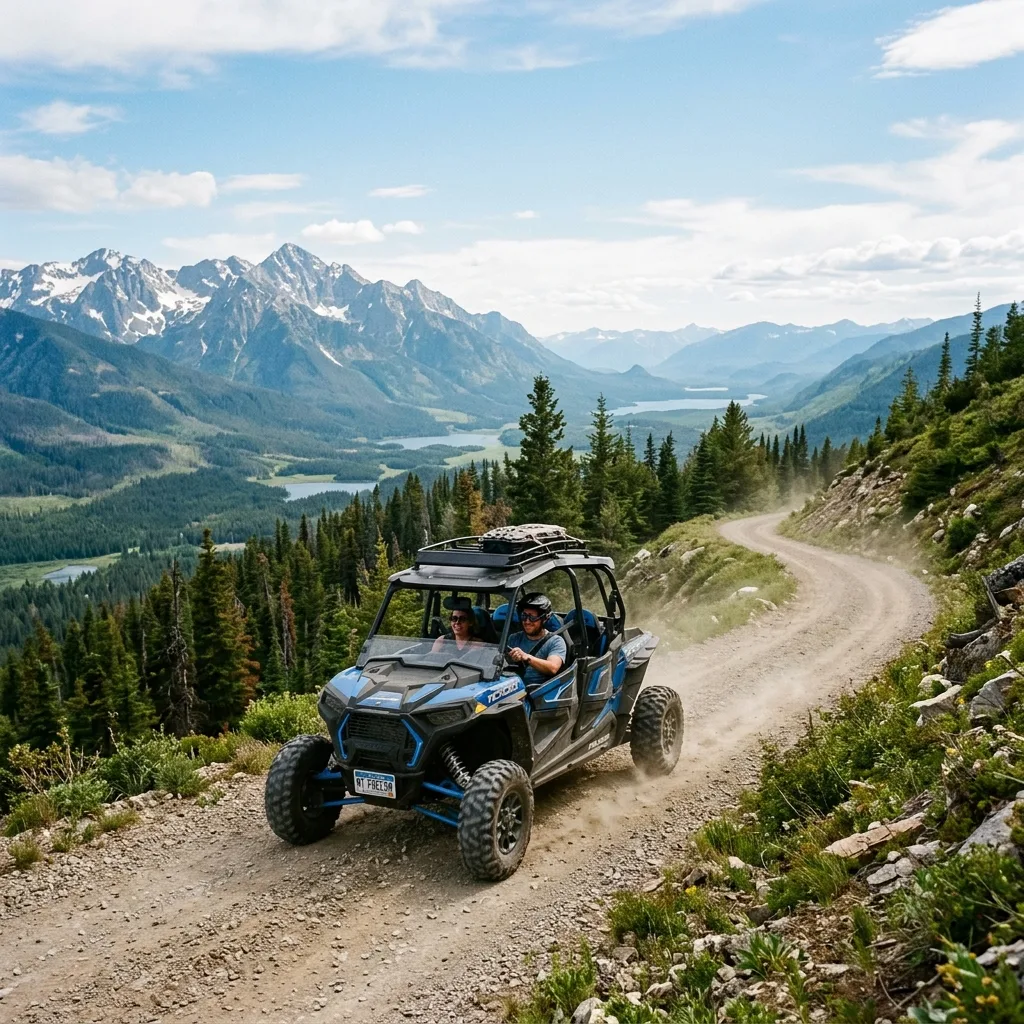
Trent’s options: (1) trailer every time he crossed the highway, (2) cross illegally, or (3) register somewhere that allowed crossing legally. He chose Montana. Texas recognizes the Montana plate for non-resident-titled vehicles, and Trent’s LLC is the registered owner. He now crosses the highway legally between properties.
Bonus: Trent has a hunting cabin in northern Nevada and a relative running a guide service in southern Montana. The Montana plate covers both for the road trips he was already making. First-year cost: $899. Annual renewal: $270.
Montana LLC: the off-road CO solution for restrictive states
Montana solved the off-road CO problem elegantly: it classifies qualifying UTVs as quadricycles under the Montana vehicle code. When you title a UTV as a Montana quadricycle, you bypass the off-road CO problem entirely. The DMV does not need a street CO. The quadricycle classification has its own paperwork pathway.
Required documents are short: an MV-1 title application, an MV-70 self-inspection form (signed under penalty of law that the vehicle has the required equipment), and your original CO. Montana issues a title and street-legal plate. No state inspection. No DOT tire requirement. No CARB equivalency. No annual safety inspections.
For UTVs 11+ years old, Montana offers permanent registration: a one-time fee, a permanent plate, no annual renewal forever. For an older UTV you intend to keep, it is the cheapest lifetime street-legal status in the country.
Montana charges no sales tax on the LLC’s purchase. If you buy a new $35,000 UTV and register through Montana, you avoid 7-9 percent home-state sales tax, which often pays for the LLC and three years of registration combined.
Montana plates are nationally recognized. Permissive states (Arizona, Idaho, Utah, Wyoming, North Dakota, South Dakota, Oklahoma) let you ride a Montana-plated UTV on their roads as if it were locally plated. Restrictive states honor the plate but may not permit UTV on-road use regardless of registration.
California residents: what Montana delivers
California owners get the most questions about this strategy. Here is exactly what Montana provides.
Montana delivers a fully legal title and street-legal plate valid for road use in Montana, Wyoming, Idaho, Utah, Arizona, Nevada (permissive zones), North Dakota, South Dakota, Oklahoma, and most of the Mountain West. Trailer your UTV to these states and ride legally under Montana plates. Montana registration eliminates California sales tax on the purchase and removes the vehicle from California’s annual OHV renewal cycle entirely.
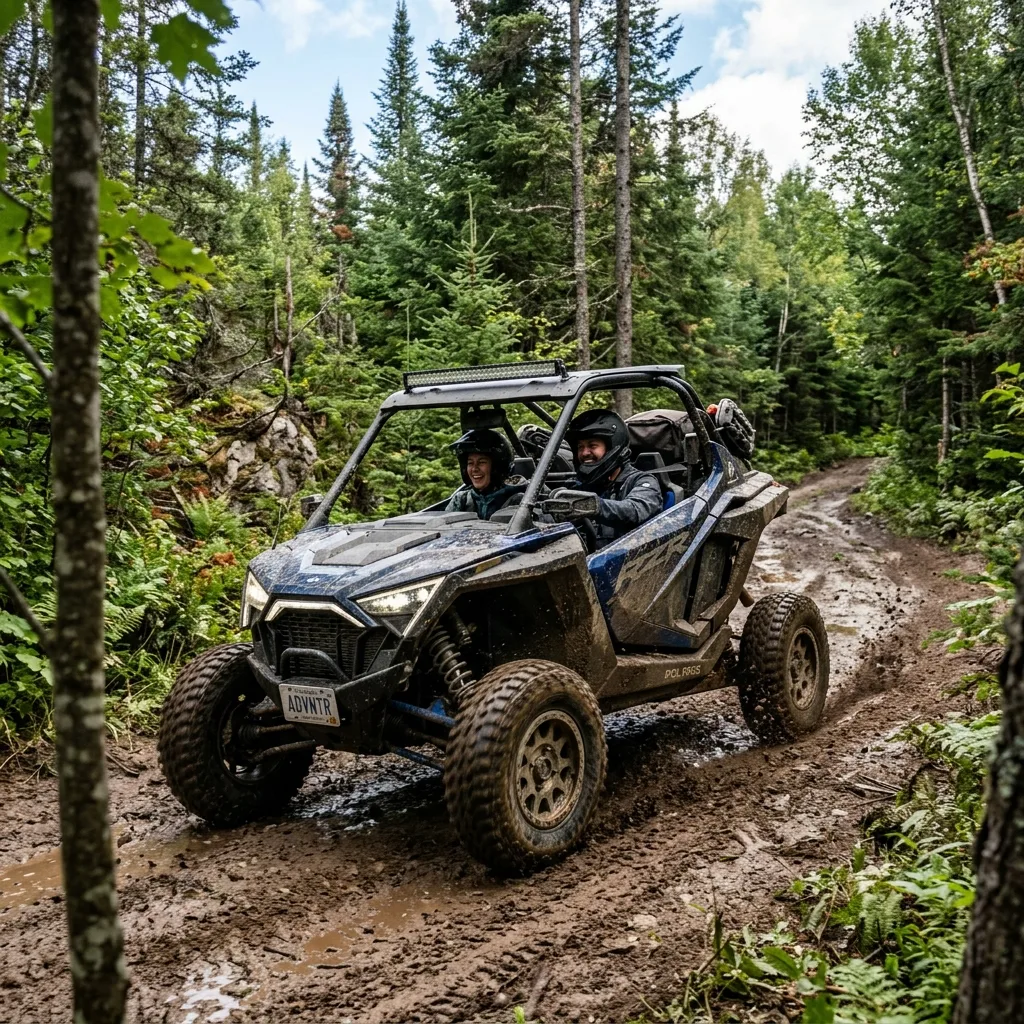
California Vehicle Code § 38025 restricts UTV street operation on California public roads regardless of which state the vehicle is registered in — that is a California road-use law, not a registration question. For California roads specifically, the Montana plate applies identically to any other state plate. The Montana plate delivers its full value the moment you leave California: ride from your hotel parking lot to the trailhead in Arizona, drive from the staging area to the dunes in Nevada, tour the roads outside Moab without a trailer in sight.
The Montana strategy delivers exceptional value for California residents who ride out of state — snowbirds with second homes in Arizona or Nevada, riders who tow to Utah or Moab, owners who summer in Montana, or anyone with property in a permissive neighboring state. The sales tax savings alone on a $30,000 UTV often exceed $2,500 on day one.
Is this legal?
Yes. Montana LLC registration has been used for high-value vehicles, RVs, motorcycles, and increasingly UTVs since the 1990s.
Montana law permits LLCs to own and register vehicles with no residency requirement on members. A non-resident can form an LLC, the LLC can take title, and Montana DMV will register it. None of this is controversial under Montana law.
Full faith and credit and interstate vehicle reciprocity case law require every state to recognize valid registration issued by another state for normal travel. A Montana UTV plate is just as valid in Arizona as a Montana plate on a Ford F-250.
The limits are real. State residency rules trump LLC residency for primary-use purposes. The strategy works best when the LLC has a real Montana mailing address (we provide one), the vehicle has legitimate out-of-state use, and the owner is not exclusively operating it in a state that would require local registration.
Who benefits most from Montana UTV registration
For the right rider, Montana is the cleanest answer to a frustrating paperwork problem.
- Snowbirds: A retiree who spends summers in Idaho or Wyoming and winters in Arizona or Nevada wants a single registration that works in all four states. Montana solves it.
- Multi-state property owners: Anyone with a ranch, cabin, or rec property in two or more western states benefits from a single plate that works everywhere they ride.
- Rebuilders and customizers: A hobbyist who keeps a UTV for 10+ years and wants permanent registration on an aging machine without annual paperwork. Montana’s permanent registration for vehicles 11 years and older is unbeatable.
- Restrictive-state residents who travel: California, Oregon, New York, and New Jersey residents who trailer their machines to Moab, Glamis, or Big Sky country for organized trips.
- RV owners with toy haulers: Anyone already running a Montana-LLC-registered motorhome can add their UTV to the same LLC for a fraction of the cost.
- Off-road CO frustration cases: Owners in any state where the local DMV refuses the off-road CO and there is no permissive workaround.
- High-value collection owners: Owners of Can-Am Maverick X3 RR, Polaris RZR Pro R, and Kawasaki KRX 1000 limited editions who want to protect resale value with clean street-legal title work.
Our process
Zero Tax Tags has handled Montana LLC vehicle registration for owners across the country since the early 2010s. Day-by-day, here is what happens after you sign up.
| Day 1: | Submit your MCO and supporting paperwork through our secure portal. We review for completeness and file your Montana LLC the same day. |
| Days 1–2: | Montana LLC formation complete — same business day in most cases, second business day at the latest. |
| Days 2–4: | Title transferred into the LLC name at the Montana county treasurer. |
| Days 4–7: | Permanent Montana plates shipped directly to your door within 3–5 business days of title completion. |
Pricing is straightforward. Year 1: $899 ($699 service + $200 LLC formation) for vehicles under $150,000. Year 2 and beyond: $270 per year ($150 Montana registration + $120 annual filing). Five-year total: $1,979. For vehicles over $150,000, year 1 is $1,724 with the same $270 annual renewal.
For anyone with a real cross-state riding plan, an off-road-CO machine sitting in a restrictive state’s garage, or a high-value UTV worth proper title work, the Montana path delivers. Zero Tax Tags handles the entire setup — LLC formation, registered agent, vehicle registration, plates — so you spend your time riding, not dealing with paperwork.
FAQs
Can I really get a street legal plate for a UTV that has “FOR OFF-ROAD USE ONLY” on the CO?
Yes, in Montana and several other permissive states. Montana’s quadricycle classification is the cleanest path because it specifically accommodates the off-road CO without requiring you to amend or replace the original document. Other permissive states issue a state-specific UTV street-legal endorsement that operates on top of the off-road CO.
Do I need DOT-approved tires for my UTV to be street legal?
In most permissive states, no. Factory UTV tires are marked “NHS” (Not For Highway Service) but the marking is a tort liability label from the manufacturer, not a federal regulation. Montana, Arizona, Wyoming, Utah, Idaho, North Dakota, and South Dakota all allow factory NHS tires on street-registered UTVs. A few jurisdictions require DOT-marked tires; check your specific state.
If I register my UTV in Montana, can I drive it on the road in California?
California Vehicle Code § 38025 restricts UTV street operation on California public roads — that restriction applies to UTVs regardless of which state they are registered in. The Montana plate delivers full value in Montana, Arizona, Nevada, Utah, Idaho, Wyoming, and every other permissive state. California residents who use their UTV out of state — snowbirds, riders who tow to Moab, owners who summer in a neighboring state — get the full benefit of Montana registration from day one.
What is the difference between OHV registration and street registration?
OHV registration is a sticker that allows trail and public-land off-road use. Street registration is a license plate that allows public road use. They are administered by different agencies, cost different amounts, and serve different purposes. Many serious riders need both. Montana street registration grants quadricycle in-state OHV trail privileges as well, which is unusual among states.
Is the Montana LLC strategy legal?
Yes, with caveats. Montana law allows non-residents to form LLCs that own and register vehicles. The full faith and credit clause requires other states to recognize Montana plates for interstate travel. The strategy has limits when a vehicle is “primarily operated” in a state with strong residency-based registration rules (notably California). When used as designed for legitimate cross-state ownership and use, the strategy is established and legal.
How much can I save with a Montana UTV registration versus my home state?
Savings depend on your home state’s tax structure. The biggest savings come from avoiding home-state sales tax on the purchase: at 7-9 percent that is $2,450 to $3,150 saved on a $35,000 UTV in year one alone. Add to that the avoidance of annual property taxes on UTVs in some states, lower annual registration fees, and Montana’s permanent registration option for older vehicles. Most owners save more in year one than the entire 5-year service costs.
Ready to make your off-road UTV street legal the easy way?
Stop fighting your DMV over the off-road CO stamp. Stop paying for compliance theater you do not need. Join thousands of owners who took the Montana path and got plated, titled, and on the road in three weeks.