
24 min read

On this page
- + Oregon Vehicle Tax: The “No Sales Tax” Myth
- + Oregon’s Growing Vehicle Fee Stack
- + Oregon’s EV Fee Trap
- + The 2% Threat: Proposed Vehicle Transfer Tax
- + The Montana Solution for Oregon Residents
- + Is Montana LLC Registration Legal?
- + Four Oregon Owners Who Made the Switch
- + Who Benefits Most
- + How Zero Tax Tags Works
- + Who This Is Built For
- + Frequently Asked Questions
It’s a Tuesday afternoon in the Mercedes-Benz showroom on SW Macadam in Portland. You’re signing the final stack of paperwork on a 2025 GLS 580, MSRP $124,000 after the options you talked yourself into. The finance manager slides one more page across the desk. Halfway down the itemization, you spot a line you weren’t expecting: “Vehicle Privilege Tax: $620.00.”
You pause. You ask what that is. The finance manager waves it off the way Oregonians wave off questions about rain. “Oregon’s a no-sales-tax state,” he says. “This is just how vehicle purchases work here. Tiny percentage. Everybody pays it.” You nod, sign, and drive home in a new SUV.
What you didn’t notice: that $620 was already the second-highest vehicle purchase tax of any state without a general sales tax. What you really didn’t notice: at this exact moment, in a committee room in Salem, the Oregon Legislative Assembly was debating a transportation funding package that would multiply that exact line item by four. The same $124,000 SUV, purchased two years from now, could carry a $2,480 privilege tax instead of $620. Same vehicle. Same dealer. Same “no-sales-tax state.”
And if you happen to drive an EV, the trajectory is even steeper. Registration fees just jumped 19% in a single rate cycle. A proposed Road Usage Charge of $340 a year is sitting in front of the legislature right now. The fee stack is growing faster than most owners realize. So here’s the question worth asking before you sign anything: at what point does the “no-sales-tax” story stop being true?
Oregon Vehicle Tax: The “No Sales Tax” Myth
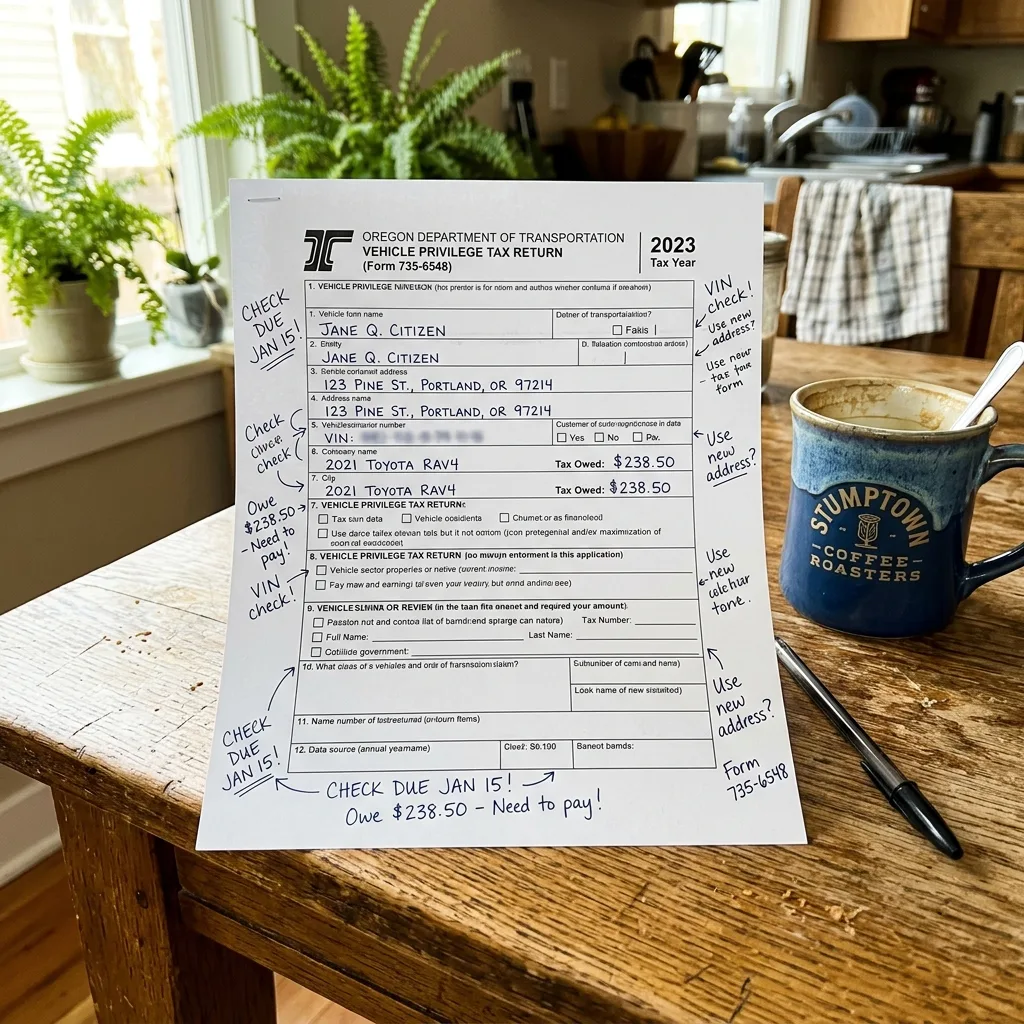
Oregon has no general sales tax. That part is true. You can buy a refrigerator, a laptop, a $400 pair of running shoes, and walk out of the store paying exactly what’s on the price tag. No state has marketed itself harder on this point than Oregon, and no state’s residents are more attached to it.
What Oregon does have is a Vehicle Privilege Tax. The rate is 0.5% of the retail sale price, applied to new vehicles with 7,500 miles or fewer and a gross vehicle weight rating of 26,000 pounds or less, first titled in Oregon. The dealer collects it, itemizes it on your sales contract, and remits it to the state. It functions as a sales tax. It is not called a sales tax. The distinction is rhetorical.
For out-of-state purchases titled in Oregon, the parallel mechanism is the Vehicle Use Tax, also at 0.5%. Same rate, same idea, just structured to capture buyers who try to dodge the privilege tax by purchasing across the Columbia in Washington. The Oregon Department of Revenue publishes the rules, the forms, and the penalty schedule: 5% for late payment, 20% if you fail to file within 30 days. Exemptions exist for sales to non-Oregon residents and for vehicles primarily stored or used outside the state. Hold onto that second exemption. It matters later.
The math is simple. A $120,000 Mercedes GLS triggers $600 in privilege tax at the moment of purchase. A $250,000 Porsche Taycan Turbo S triggers $1,250. A $400,000 Aston Martin DBX triggers $2,000. The percentage is small. The dollar amounts are not.
The formula: Vehicle retail price × 0.005 = Oregon Vehicle Privilege Tax. Collected at the dealer, itemized on your sales contract, remitted to the Oregon Department of Revenue. It is a one-time charge at the moment of purchase. Most buyers never notice it.
Oregon’s Growing Vehicle Fee Stack
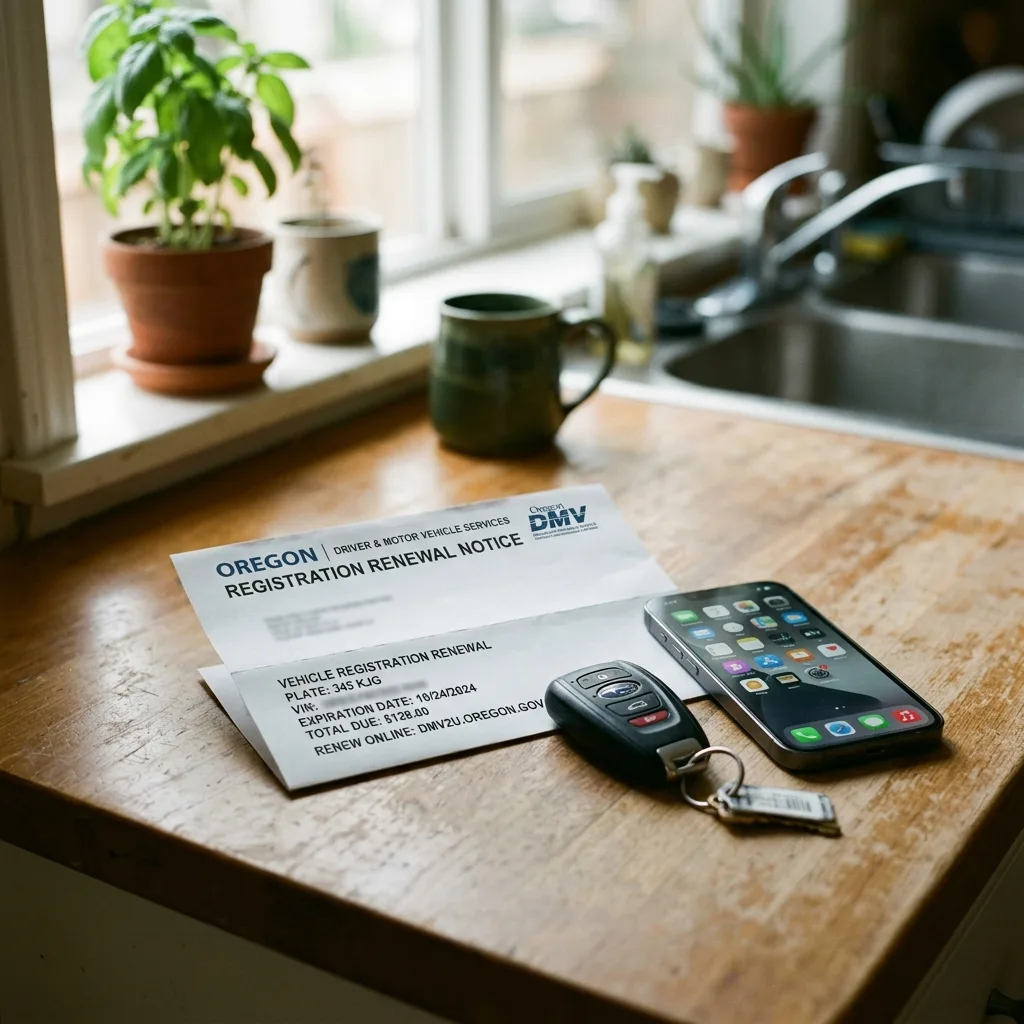
The privilege tax is the headline. The registration fees are the recurring charge. Oregon bills registration in two-year cycles, which has the convenient effect of making each individual bill look smaller than it really is. New vehicles receive a four-year registration at first purchase. After that, you renew every two years.
The base rates depend on fuel economy. As of December 31, 2025, new figures are in effect, with a $30 annual surcharge layered on top for vehicles in the 40-plus MPG and electric tiers. The current schedule:
Then come the county add-ons. Multnomah County, the Portland metro core, charges an additional $112 per two-year cycle. Washington County and Clackamas County tack on $60. So a Portland EV owner looks at the total like this: $188 a year in state EV registration plus $56 a year in Multnomah County fees, for $244 annually before any other vehicle expense.
Stack five years of these costs against the privilege tax for several common Oregon vehicles, and the picture comes into focus. The right-hand column shows what Montana LLC registration costs over the same period under current Zero Tax Tags pricing.
The honest read: For a typical Oregon resident with a sub-$100,000 vehicle, Montana LLC registration costs more on a five-year horizon than simply paying Oregon’s privilege tax and registration. This is the unusual state where the math doesn’t favor Montana for the average buyer today. The case for Montana lives in three places: ultra-luxury vehicles at purchase, EV owners facing the proposed Road Usage Charge, and anyone planning a future purchase under pending legislation. We’ll show you exactly where the lines cross.
Oregon’s EV Fee Trap: Going Green Gets Expensive
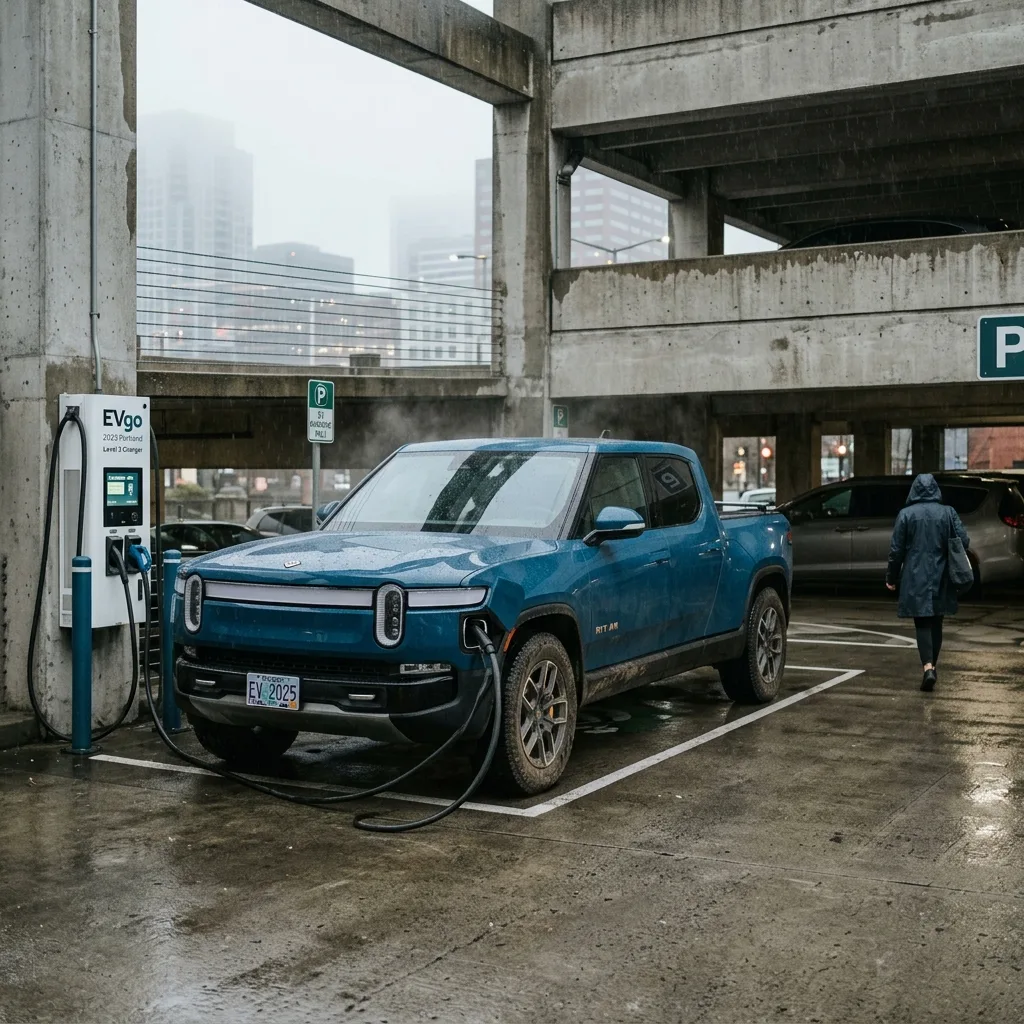
If you bought an electric vehicle in Oregon believing the state was rewarding your environmental choices, the registration office has news for you. EV registration jumped from $316 per two years to $376 per two years in a single rate cycle. That’s a 19% increase, applied overnight, with no transition period. The $30 annual surcharge baked into the new schedule for the 40-plus MPG and electric tiers is the legislature’s way of recouping gas-tax revenue from drivers who don’t buy gas.
For a Portland EV owner in Multnomah County, the annual stack now reads: $188 in state EV registration, $56 in Multnomah County fees, $244 a year in non-fuel vehicle costs. Compare that to a Honda Civic owner in the same garage, paying roughly $124 a year for the same registration purpose. The “EV is cheaper to own” pitch erodes one fee schedule at a time.
The proposed Road Usage Charge in HB 2025 would add another layer. The current proposal: a flat $340 a year for EV and PHEV owners, or a pay-per-mile equivalent, optional starting July 2026 and likely mandatory thereafter. If passed, your Portland Rivian’s annual fee stack jumps from $244 to $584 a year. Over five years, that’s $2,920 in registration-related costs alone, before any privilege tax on the original purchase.
Montana, by comparison, charges $130 a year for battery-electric vehicles under 6,000 pounds. Not $244. Not $584. $130. For an EV owner in Portland watching this trajectory, the question isn’t whether to consider Montana — it’s when.
Warning: Oregon’s EV registration fees jumped 19% in one cycle. The proposed Road Usage Charge would add $340 a year on top of that. EV owners who set up a Montana LLC before the RUC takes effect lock in Montana’s $130-a-year rate and avoid the entire compounding fee stack. Once the RUC passes, the savings flip from marginal to substantial.
The 2% Threat: Oregon’s Proposed Vehicle Transfer Tax

Tucked inside HB 2025, the Transportation Reinvestment in Infrastructure Plan, is a quiet provision that would multiply Oregon’s privilege tax by four. The proposal: raise the vehicle privilege tax from 0.5% to 2% on new vehicle purchases, plus a new 1% tax on used vehicles over $10,000. The same legislation would push gas tax from 40 cents per gallon to 50 cents in 2026 and 55 cents in 2027, raise new-vehicle registration from $43 to $113, and add $66 per two-year cycle to existing vehicle renewals.
The 2% transfer tax is the provision that should make every vehicle buyer in the state pay attention. At 0.5%, a $200,000 vehicle carries a $1,000 line item that most buyers don’t notice. At 2%, that same vehicle carries a $4,000 line item that nobody can miss. Here’s how the math changes across price points:
Whether HB 2025 passes in its current form, an amended form, or fails entirely is genuinely unknown. Some provisions face a likely November 2026 voter referendum. The legislature has compromised before. But the underlying pressure isn’t going anywhere. Oregon’s transportation funding gap is real, gas tax revenue is shrinking as EV adoption grows, and the legislature has been signaling higher vehicle-related fees for three sessions running. Buyers who structure their Montana LLCs now are protected against whatever version of “more revenue” eventually emerges.
Caution: This legislation has not yet passed. But Oregon’s transportation funding gap is real, the political pressure to raise vehicle-related revenue is not going away, and the privilege tax is a tempting target precisely because most voters don’t even know they pay it. Smart buyers are structuring their Montana LLCs now, before the math changes from “marginal” to “obvious.”
The Montana Solution: How It Works for Oregon Residents
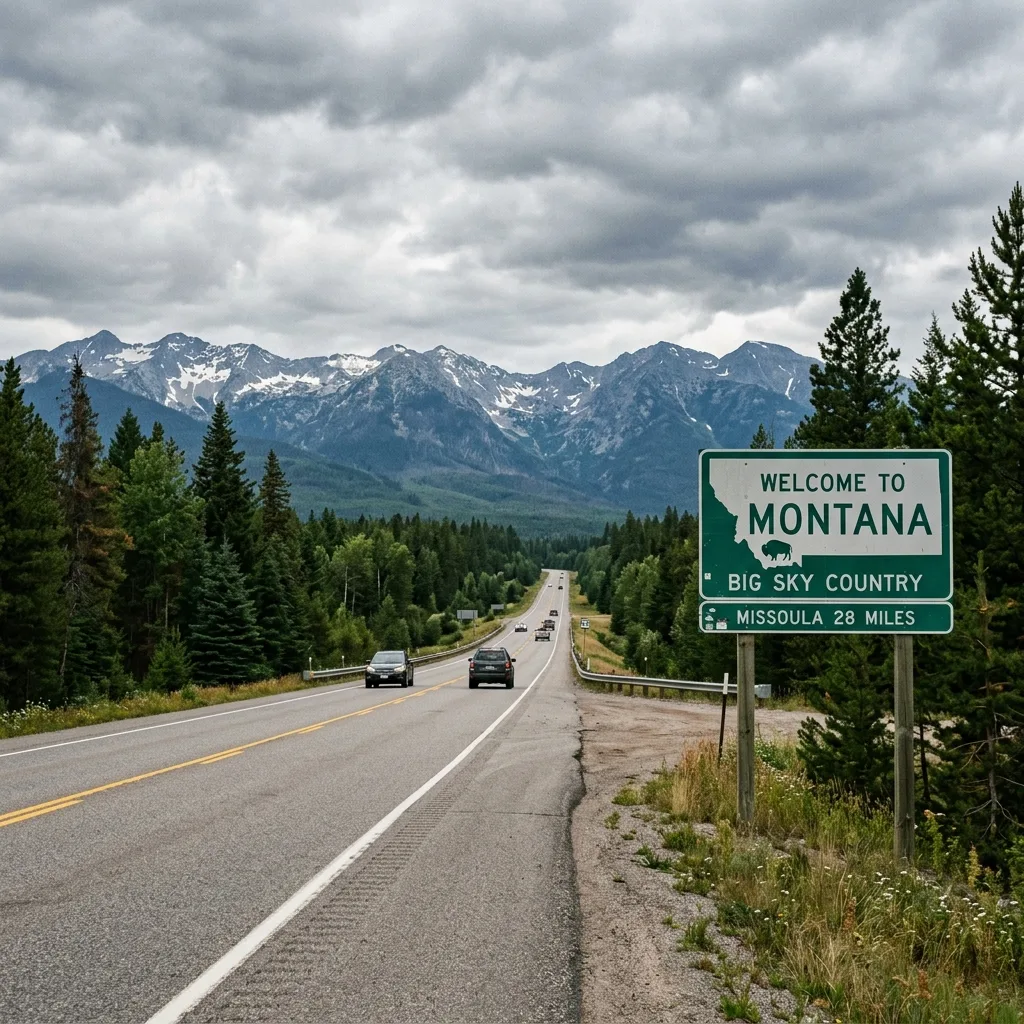
Montana operates the most vehicle-friendly registration system in the country, and it has done so since statehood. Zero state sales tax. Zero vehicle privilege tax. Zero personal property tax on vehicles. No emissions testing. No annual safety inspections. Permanent plates available on vehicles 11 years old and older. The structure isn’t a loophole. It’s the way Montana has chosen to fund its government, and it’s been on the books longer than most of us have been alive.
For Oregon residents, here’s how it works. Form a Montana limited liability company. Title your vehicle in the LLC’s name. Receive Montana plates by mail. The LLC owns the vehicle. The LLC is domiciled in Montana. The vehicle is registered in Montana. None of those facts trigger Oregon’s privilege tax, because Oregon’s own statute carves out an exemption for vehicles “primarily stored or used outside Oregon” and titled to non-Oregon owners. The Montana LLC is the non-Oregon owner.
For a $200,000 luxury vehicle, the Year 1 comparison looks like this: Oregon hits you with $1,000 in privilege tax plus $63 in registration. Montana, through Zero Tax Tags, runs $1,724 for the over-$150K tier in Year 1. Net Oregon advantage at purchase: $661. But that’s where the comparison gets interesting, because Oregon’s number stays roughly flat across renewals, while Montana’s $368 annual renewal compounds against Oregon’s $63. Over five years under current law, Oregon costs $1,315 and Montana costs $3,196.
Now run the same vehicle under the proposed 2% transfer tax. Oregon’s purchase-year hit becomes $4,000 instead of $1,000. Five-year Oregon total: $4,315. Montana’s number doesn’t change at all: $3,196. Net savings flip to $1,119 in Montana’s favor — and that’s before the proposed registration increases under the same legislation.
Why it holds up: Montana has charged zero vehicle sales tax since statehood. The LLC mechanism has been used by collectors, RV travelers, and luxury vehicle buyers for over thirty years. Oregon owners with expensive vehicles, EVs facing the proposed RUC, or any vehicle they plan to keep through the next legislative cycle are increasingly choosing this structure.
Is Montana LLC Vehicle Registration Legal for Oregon Residents?

Yes. The structure has existed for decades, has been challenged in court, and has consistently been upheld when properly executed. The Constitutional foundation rests on the Commerce Clause, which permits states to set their own residency and registration rules and prohibits other states from extraterritorially taxing assets owned by out-of-state entities. Montana law allows any LLC formed in the state to title vehicles in its name. Federal law allows that LLC to own assets and operate across state lines.
Oregon’s own statutes contain the exemption that makes the structure work. The Vehicle Use Tax explicitly excludes vehicles “primarily stored or used outside Oregon” and vehicles owned by non-Oregon entities. That language was written by the Oregon legislature, not by tax planners. The Montana LLC is the non-Oregon entity. The vehicle, owned by that entity, is not subject to Oregon’s privilege tax on purchase.
Court precedent reinforces the structure. In Thomas v. Bridges (2013), the Louisiana Supreme Court ruled that a Louisiana resident could legitimately use a Montana LLC to register vehicles, and the state could not impose its sales tax on a vehicle owned by an out-of-state entity. The reasoning has been cited and followed across other jurisdictions. The structure works because it has the right components: a real LLC, a real registered agent in Montana, real corporate maintenance.
What you cannot skip is legitimacy. The LLC must be properly formed, the registered agent must be active, the vehicle must actually be titled to the LLC, and the entity must be maintained year over year. A shell with no registered agent and no annual filings invites scrutiny. A correctly maintained LLC does not. This is the difference between tax planning and tax evasion, and the difference is operational discipline.
The fit: This structure is built for vehicle owners with multi-state use patterns — RV travelers, collectors with out-of-state storage, second-home owners, track-day participants. If your vehicle never leaves Portland’s city limits, the case is weaker. If you genuinely use the vehicle across state lines, the case is strong, and so is the legal foundation. Consult a tax advisor about your specific situation. We work with one we’ll happily refer you to.
Four Oregon Vehicle Owners Who Made the Switch
1. David — Portland, 2025 Rivian R1T ($78K EV) in Multnomah County

David is a software architect in the Pearl District who bought a Rivian R1T in 2025. He charges at home, drives to Hood River and the Gorge most weekends, and keeps the truck in his condo’s secured garage. His Oregon costs read like a quiet escalation: $390 privilege tax at purchase, $188 a year in EV registration, $56 a year in Multnomah County fees. Five-year Oregon total under current law: $1,610.
Then David started reading the language of the proposed Road Usage Charge. If the RUC passes at the proposed $340-a-year flat rate starting July 2026, his five-year fee stack jumps to roughly $2,970. Montana through Zero Tax Tags runs $899 in Year 1, $368 in renewals (years 2 through 5), plus Montana’s own EV fee of $130 a year — five-year total $3,021.
Under current law, Montana costs more than Oregon for a Rivian owner in Portland. Under the proposed RUC, the gap narrows to roughly $51 — essentially parity, with Montana providing a hedge against every subsequent fee increase Oregon adds. David didn’t set up his Montana LLC because the math was dramatic today. He set it up because Oregon’s EV fee trajectory is unmistakable, and every legislative session brings the gap closer to obvious.
2. Rachel — Lake Oswego, 2024 Porsche 911 GT3 RS ($235K) in Washington County

Rachel is a litigation partner who keeps a 911 GT3 RS in her Lake Oswego garage. The car is purpose-built: she drives it to track days at Portland International Raceway, Thunderhill in Northern California, and Spring Mountain in Nevada. She typically logs 4,500 miles a year, half of which are out of state.
Her Oregon costs are low on the surface: $1,175 privilege tax at purchase, $30 a year in Washington County, $63 a year in registration. Five-year Oregon total: $1,640. Montana through Zero Tax Tags for an over-$150K vehicle: $1,724 in Year 1, $368 in renewals, five-year total $3,196.
Under current law, Montana costs Rachel $1,556 more over five years. So why did she do it? Two reasons. First, her vehicle genuinely has multi-state use. Second, the proposed 2% transfer tax. When Rachel sells the GT3 RS in three years and buys her next track car at a similar price point, the Montana LLC saves her $4,700 on that single purchase if the legislation passes — covering the entire five-year cost gap on the current vehicle and then some. The structure is already in place.
3. Mike — Bend, Class A Motorhome ($285K)
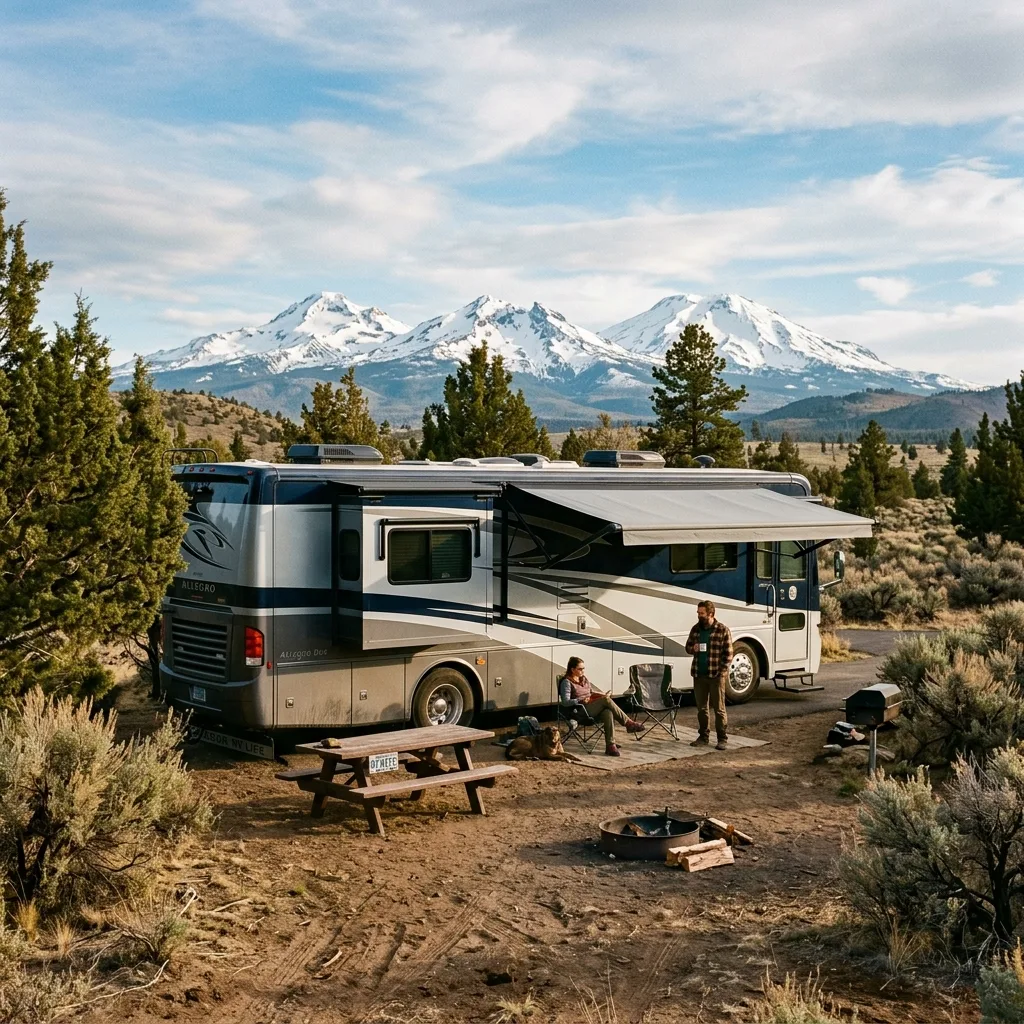
Mike is a retired engineer who bought a Tiffin Allegro Bus in 2024 to spend his retirement on the road. His pattern: eight months a year traveling, mostly through the Southwest in winter and the Pacific Northwest and Mountain states in summer, with the coach stored in a covered facility in Pahrump, Nevada through January and February.
Oregon would charge him $1,425 in privilege tax at purchase plus $63 a year in registration. Five-year Oregon total: $1,740. Montana through Zero Tax Tags for an over-$150K RV: $1,724 in Year 1, $368 in renewals, five-year total $3,196.
The straight-up math says Montana costs $1,456 more over five years. But Mike’s situation makes the comparison incomplete. The coach is genuinely stored out of state for two months. He traverses 12 to 14 states a year. The Montana plate eliminates the need to explain to every state trooper why an Oregon-plated coach is parked in Quartzsite all of February. And on his next coach in five or six years, if the 2% tax has passed, the Montana structure pays for itself many times over. For Mike, the LLC is a use-case fit first and a savings play second.
4. Jennifer — Portland, Three-Vehicle Household
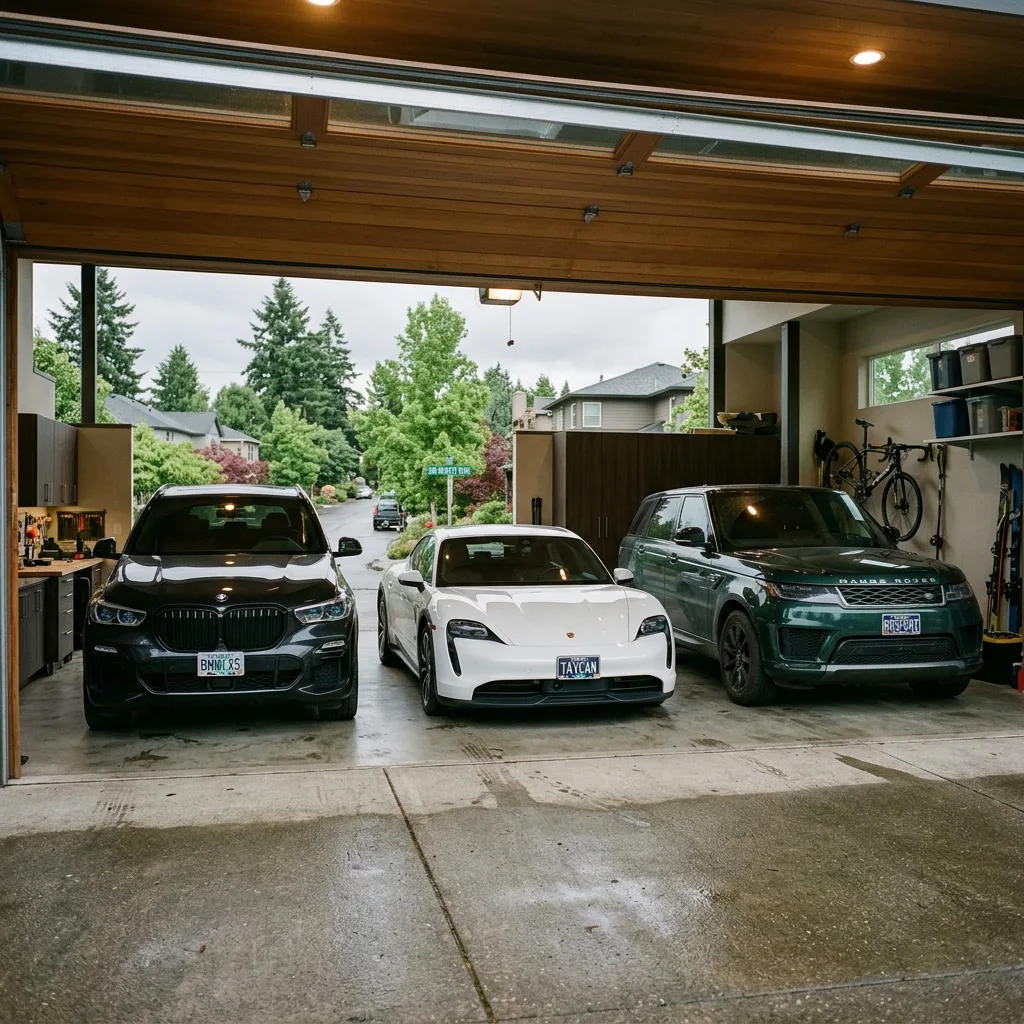
Jennifer is a partner at an investment firm in the West Hills with a household garage that includes a 2024 BMW X5 M60i ($104K), a 2023 Porsche Taycan ($127K), and a 2022 Range Rover Sport ($97K). She drives the X5 daily, her husband drives the Taycan, and the Range Rover handles the family’s Eastern Oregon ski trips and Sunriver visits.
Oregon’s bill across all three vehicles: $520 + $635 + $485 = $1,640 in privilege taxes. The BMW and Range Rover (both under 20 MPG) each run $63 a year in registration plus $56 a year in Multnomah County fees. The Taycan’s EV registration runs $188 a year plus $56 in county fees. Five-year Oregon total across all three: approximately $4,050.
Montana under Zero Tax Tags pricing: Year 1 of $899 for the BMW (which includes the $200 LLC formation), $699 for the Porsche (LLC already exists), $699 for the Range Rover. Year 1 total: $2,297. Years 2 through 5: $368 a year per vehicle, $1,104 a year × 4 years = $4,416. Montana also charges $130 a year in EV fees for the Taycan — $650 over five years. Five-year Montana total across all three: $7,363.
Under current law, Montana costs Jennifer’s household $3,313 more over five years. Honest. But the calculus shifts the moment she or her husband buys their next vehicle. If the 2% transfer tax passes by then, a single $150,000 purchase moves from $750 in privilege tax to $3,000 — and any vehicle bought through the existing Montana LLC pays neither. One luxury purchase nearly erases the gap. Two purchases more than cover it. The household has structured for the next decade, not just the current quarter.
Who Benefits Most from Montana LLC in Oregon
Oregon is the rare state where the case for Montana isn’t universal. For a buyer of a $30,000 Honda Civic in Multnomah County, the math doesn’t favor the structure. We’ll tell you that on the first call.
Where it does work is concentrated. Ultra-luxury buyers are the clearest case. At a $300,000 price point, the Year 1 privilege tax of $1,500 starts approaching Montana’s Year 1 cost. By $500,000, you’re saving money the moment you sign the dealer’s paperwork. By $750,000, the savings are significant enough that the conversation shifts from “should I” to “why didn’t I.”
EV owners watching the Road Usage Charge proposal move through committee are the second group. The structure works on a hedge basis: if the RUC passes at $340 a year, your Montana LLC has already paid for itself before the new fee schedule takes effect. If it doesn’t pass this session, the next session is six months away and the funding gap has only widened.
Anyone planning a vehicle purchase in the next 1-3 years at a meaningful price point rounds out the picture. The 2% transfer tax is the provision that should be on every prospective buyer’s radar. Setting up the Montana LLC before that legislation passes locks in a structure that pays for itself on a single purchase.
- Ultra-luxury buyers at $300K and above — the math works today
- EV owners hedging against the proposed Road Usage Charge
- Multi-vehicle households with three or more vehicles in rotation
- RV owners with genuine multi-state travel patterns
- Anyone planning a $100K+ purchase before the 2% transfer tax potentially passes
- Collectors who buy and sell vehicles every 2-3 years (each transaction avoids privilege tax)
How Zero Tax Tags Gets You Registered in Montana
We run the entire structure for you. You don’t form the LLC. You don’t drive to Helena. You don’t argue with a county treasurer. You don’t track which forms are due in which month. We do all of it, and we maintain the entity year over year so the structure stays clean.
The pricing is in dollars, not asterisks. For vehicles under $150,000 MSRP, Year 1 is $899: that’s $699 for our service plus $200 in Montana state LLC formation fees, paid once for the LLC’s lifetime. For vehicles over $150,000 MSRP, Year 1 is $1,724, which adds the luxury surcharge that Montana applies to higher-value vehicles. Annual renewal for the first four years runs $368 — $268 in state registration plus $100 in our annual maintenance fee. Years 5 through 10 drop to $237 a year. At 11 years old, the vehicle qualifies for Montana’s permanent plate: a one-time $899 charge with $0 a year after that, indefinitely.
Multi-vehicle households get the meaningful break: the $200 LLC formation is paid once, not per vehicle. Adding a second vehicle to an existing LLC is $699 in service. Three, four, ten vehicles — same LLC, same registered agent, same annual maintenance.
| Day 1: | Submit your paperwork through the Zero Tax Tags portal. We review the same day and file your Montana LLC immediately. |
| Days 1-2: | LLC formation complete. Same business day in most cases, Day 2 at the latest, with the Montana Secretary of State’s confirmation in your inbox. |
| Days 2-4: | Vehicle title transferred into the LLC’s name at the Montana county treasurer. We handle the paperwork in person. |
| Days 4-7: | Permanent Montana plates shipped directly to your door, registration documents in the same package. You’re done. |
Who This Is Built For
Our typical Oregon client doesn’t fit one profile. They fit several. The luxury vehicle buyer in West Hills who closed on a $400,000 SUV and wants the privilege tax savings to flow to their kids’ college fund instead of Salem. The Lake Oswego executive with a Porsche track car and a Range Rover daily-driver. The Bend retiree who spends half the year in a coach that’s never in the same state for more than three weeks at a time. The Eugene household with three EVs and a clear-eyed view of where Oregon’s fee structure is headed.
The Portland EV owner who bought into the “going green saves money” pitch, then watched their registration jump 19% in a single rate cycle, and read the fine print of HB 2025. The collector in Sunriver with a garage full of air-cooled Porsches who buys and sells one every couple of years and is exhausted by the privilege tax line item on every transaction. The wine country physician with a vacation property in Sun Valley who genuinely operates across state lines.
If your vehicle is under $30,000 and you keep it for the entire ten-year ownership cycle in Multnomah County, the math today doesn’t favor a Montana LLC. We’ll tell you that on the first call. But for anyone buying above $75,000, anyone with an EV in the proposed RUC’s crosshairs, anyone with a multi-vehicle garage, or anyone planning to transact again before the next legislative session closes, the conversation is worth having. Most of our Oregon clients call us six months before their next purchase, not after.
Frequently Asked Questions
1. Does Oregon chase Montana-plated vehicles?
Oregon’s enforcement focus is on residents who title and store vehicles in-state while attempting to avoid the privilege tax through paperwork tricks. A properly formed Montana LLC, with a real registered agent and a vehicle that has genuine multi-state use, sits squarely outside that enforcement profile. The Oregon Department of Revenue’s published guidance acknowledges the out-of-state vehicle exemption directly. We structure entities to fit cleanly inside that exemption.
2. Do I need to physically visit Montana?
No. Zero Tax Tags handles every step. We file the LLC paperwork with the Montana Secretary of State, transfer the title at the county treasurer’s office in person on your behalf, and ship the permanent plates directly to your address in Oregon. Our clients have completed the entire process from their Portland kitchen table.
3. What happens when I sell the vehicle?
The LLC sells the vehicle. The buyer takes title from the LLC. There is no Oregon privilege tax triggered by the sale of a vehicle owned by an out-of-state entity to another out-of-state buyer, and Oregon doesn’t tax sales between non-residents. If you’re rolling the proceeds into another vehicle, you keep the LLC and title the new vehicle into the same entity. Same plate setup, same registered agent, same annual maintenance.
4. Can I insure a Montana-plated vehicle in Oregon?
Yes. Major insurers — State Farm, GEICO, Progressive, USAA, and the specialty carriers like Hagerty and Grundy — all write policies on Montana-plated vehicles owned by an LLC where the principal driver lives in another state. The premiums are typically comparable to Oregon-plated equivalents. Some clients see modest premium reductions because Montana’s overall risk profile is favorable. We can recommend agents who handle this structure routinely.
5. Does this work for leased vehicles?
Generally not. Leasing companies retain ownership of the vehicle and typically refuse to title in an LLC because it complicates their lien position and end-of-lease return process. The Montana LLC structure is built for vehicles you own outright, finance through a traditional auto loan that allows LLC titling, or pay cash for. If you’re considering Montana, the conversation should happen before the lease decision, not after.
6. How much does Zero Tax Tags charge?
Vehicles under $150,000 MSRP: $899 in Year 1 (includes $699 service and $200 LLC formation), $368 a year in renewals. Vehicles over $150,000 MSRP: $1,724 in Year 1, $368 a year after. Vehicles 11 years and older qualify for Montana’s permanent plate: a one-time $899 charge with no ongoing renewals. Adding a second vehicle to an existing LLC is $699 in service only.
7. Can I register multiple vehicles under one LLC?
Yes, and this is one of the real advantages for multi-vehicle households. The $200 LLC formation is a one-time charge. Vehicles two, three, four, and beyond all register under the same LLC at the standard service rate. We have clients with 8 and 9 vehicles under a single Montana LLC. The annual renewal economics improve significantly with each additional vehicle.
8. What if Oregon’s vehicle tax laws change?
The Montana LLC structure is built on Montana law and federal commerce clause protections, neither of which Oregon can amend. If Oregon raises its privilege tax, registration fees, or adds new charges like the proposed Road Usage Charge, your Montana-titled vehicle remains outside Oregon’s tax base because it’s owned by a Montana entity. The structure was designed for exactly this scenario: state-level changes happen, and your registration is insulated from them.
See how Montana LLC registration helps owners in other high-cost states:
- Arizona Vehicle License Tax: Stop Paying $1,000 Every Year
- Virginia Car Tax: Stop Paying the Highest Vehicle Tax in America
- Washington Vehicle Tax: The RTA Trap and Why Seattle Drivers Are Choosing Montana
- North Carolina Vehicle Tax: The Tag Tax Trap
- California Vehicle Tax: How California’s VLF and DMV Fees Stack Up
Ready to Stop Overpaying Oregon Vehicle Taxes?
Oregon’s privilege tax is just the beginning. EV fees are rising. The legislature is eyeing a 2% transfer tax. Oregon vehicle owners with expensive or electric vehicles are setting up Montana LLCs now — before the law changes.