26 min read
On this page
- + What is a manufacturer certificate of origin?
- + What’s inside an MCO: the 7 required fields
- + The lifecycle of an MCO
- + Who actually needs to handle the MCO?
- + The Montana LLC and the MCO: the golden ticket
- + The ELT Problem: Electronic Titles and Montana Registration
- + The 5 biggest MCO nightmares (and how to fix them)
- + Imported vehicles: the grey market challenge
- + Kit cars, trailers, and powersports MCO
- + State-by-state MCO requirements
- + Frequently asked questions
- + Conclusion
You just paid cash for a $95,000 truck. The dealer slid the contract across the desk, you signed, the keys hit your palm, and the salesperson smiled and said, “We’ll mail you the certificate of origin in a week or two.” Three weeks later, the mailbox is still empty. Your phone calls go to voicemail. Without that single piece of paper, you cannot title the vehicle, you cannot register it, you cannot legally drive it. A six-figure truck is sitting in your driveway, and a flimsy slip of bank-note paper somewhere in another state is the only thing standing between you and ownership.
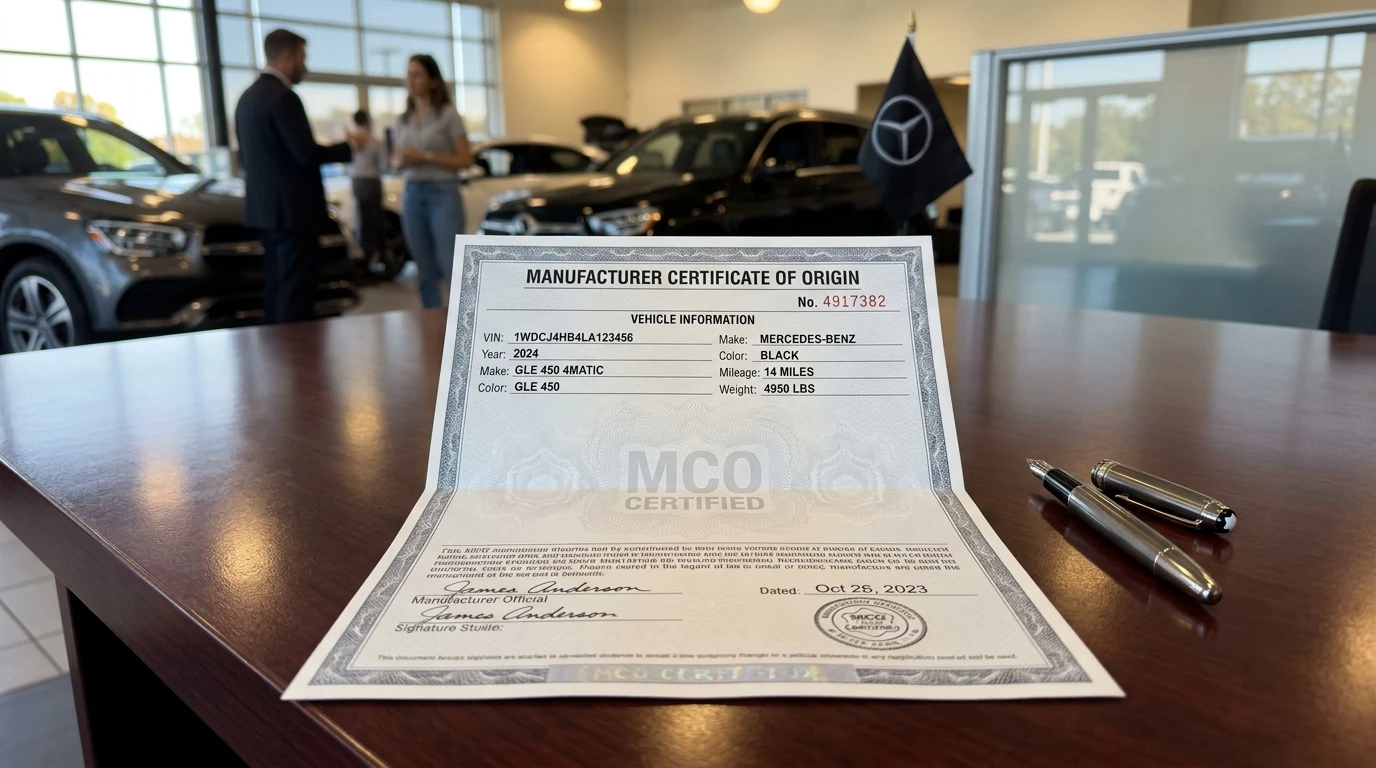
That document is the Manufacturer Certificate of Origin, often shortened to MCO or MSO. It is the most important document in vehicle ownership that almost no consumer has ever heard of. It proves the vehicle exists, was built legally, and has never been titled before. Without it, your title application stops dead. With it, you can register through any state in the country, including Montana, where smart buyers form an LLC and pay zero sales tax on luxury vehicles, RVs, and exotics.
This guide explains what the MCO is, what it contains, who needs to handle it, how Montana LLC buyers must intercept it before the dealer makes a fatal mistake, and what to do when the document goes missing, gets misprinted, or never shows up. The standards governing this document are set by the American Association of Motor Vehicle Administrators, and every state DMV in the country adheres to them. Read this carefully. The certificate of origin is the foundation of vehicle ownership, and most dealers will not explain it to you until something has already gone wrong.
What is a manufacturer certificate of origin?
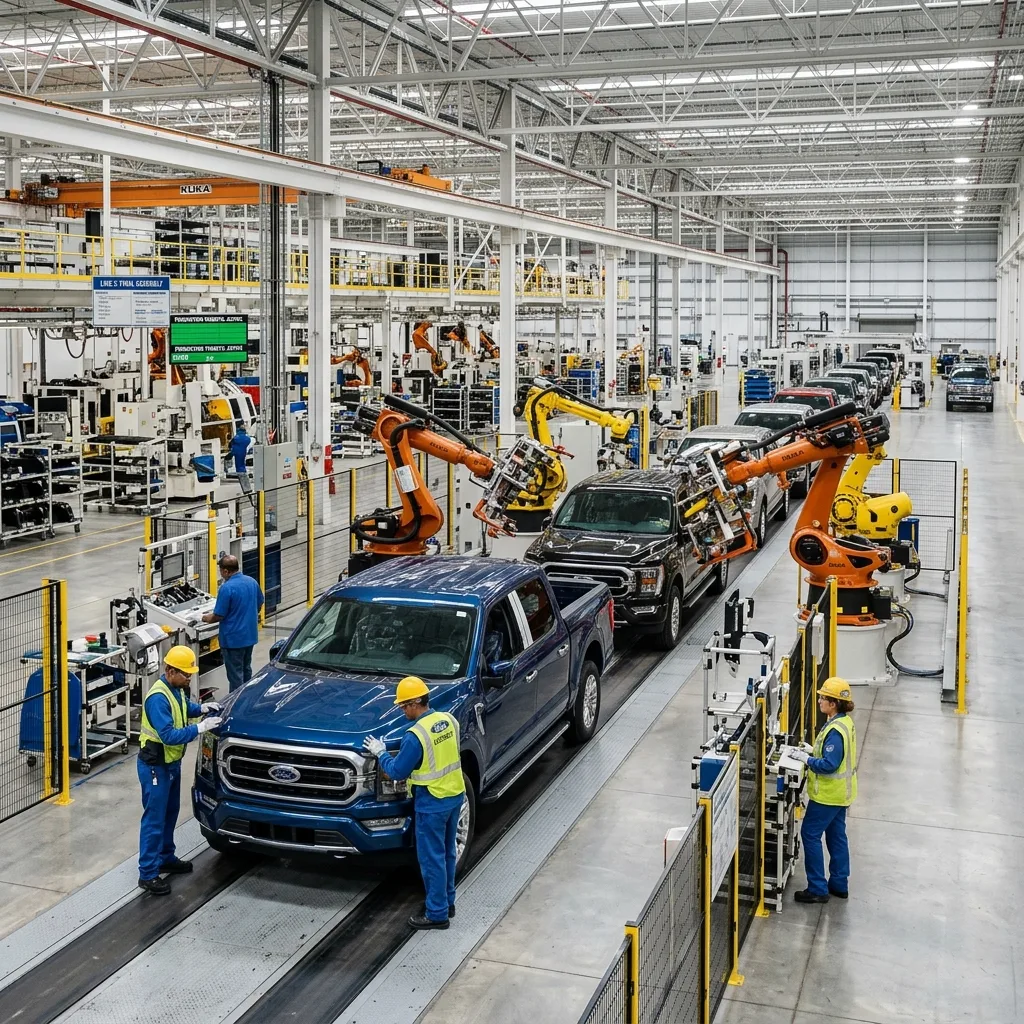
Think of a vehicle’s life the way you think of your own. A hospital issues a birth certificate, which lets parents apply for a Social Security number, which later allows the person to obtain a state ID. The ID is what people carry every day, but it could not exist without the birth certificate that came first. Vehicles work the same way. The factory builds the vehicle, the manufacturer issues the certificate of origin, the buyer surrenders that certificate to a state DMV, and the DMV issues a title.
You will see two terms used interchangeably: Manufacturer Certificate of Origin (MCO) and Manufacturer Statement of Origin (MSO). They are the same document. Ford prints “Certificate” on theirs, while Toyota prints “Statement.” Functionally there is zero difference.
The single most important thing to understand about the certificate of origin is that it is a single-use document. Once it has been surrendered to a DMV and used to create a title, the MCO is retired. You cannot have an active MCO and an active title for the same VIN at the same time. This is the core security principle that prevents the same vehicle from being titled twice by two different fraudsters. When the title is born, the MCO dies.
The single-use rule is also why the document is so dangerous to lose. Replacing it requires an act of the manufacturer and is treated as if you were asking for a duplicate currency note. The replacement, when it arrives, is stamped DUPLICATE in red ink, and the DMV will run a search to verify the original was never used. If the original was already used to create a title, you do not get a replacement at all.
What’s inside an MCO: the 7 required fields
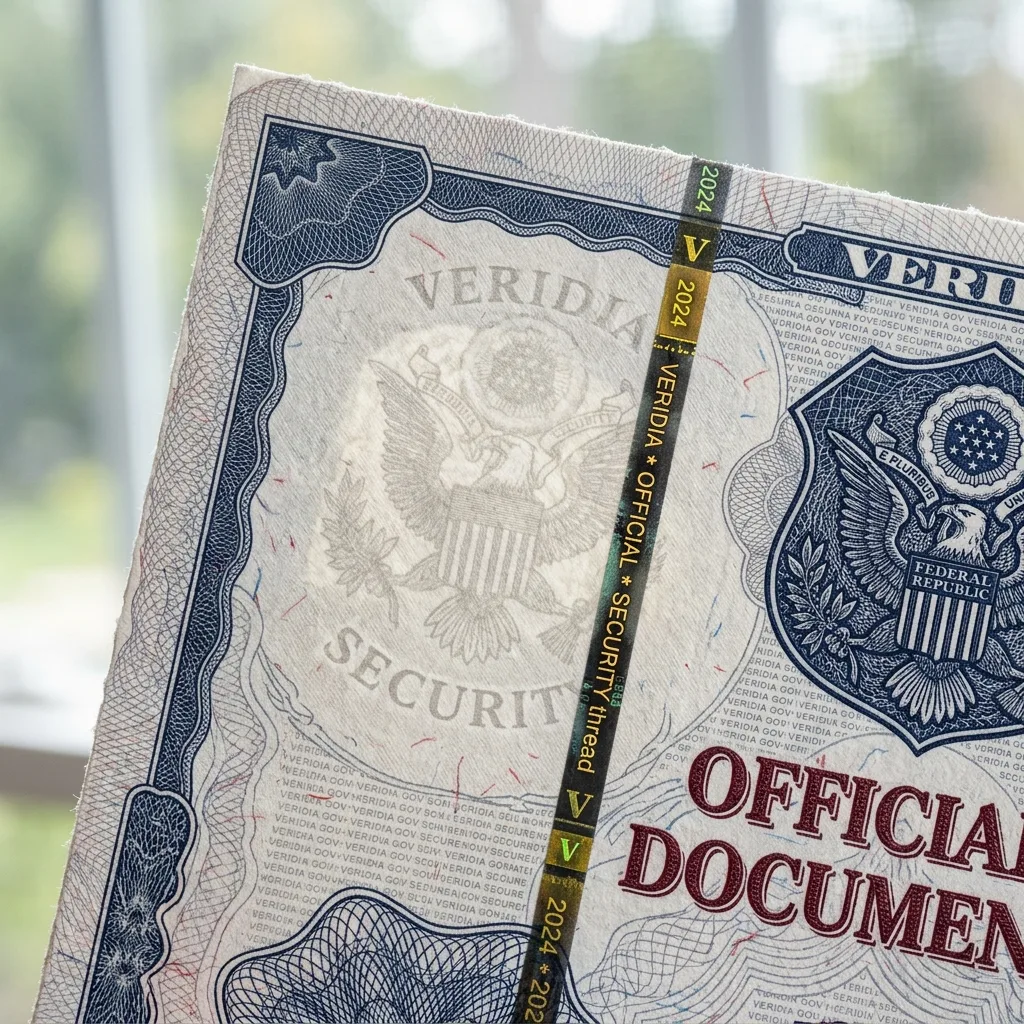
The American Association of Motor Vehicle Administrators publishes a uniform standard governing what every certificate of origin must contain. State DMVs will reject any MCO that is missing one of these required fields. The seven mandatory data points are the Vehicle Identification Number (VIN), the year and make, the body type and series, shipping weight along with gross vehicle weight rating, horsepower or number of cylinders, the manufacturer’s name and address, and a first-assignment block where the dealer transfers ownership to the first retail buyer.
The VIN is the most important entry. Every digit must match the VIN stamped on the vehicle’s frame, the dashboard plate visible through the windshield, the federal compliance sticker on the driver’s door jamb, and the engine block where applicable. A single transposed digit will cause the DMV to reject the title application. The clerk will hand the paperwork back and tell you to return when the manufacturer has corrected the document, which is a multi-week process you do not want to endure.
The document itself is engineered like currency. AAMVA requires the MCO be printed on sensitized security paper that reacts visibly to common chemical solvents, so any attempt to bleach or alter the document leaves a permanent stain. The text is produced using intaglio printing, the same raised-ink technique used on US dollar bills, and you can feel the texture with your fingertip. A watermark visible only against a light source confirms authenticity, and a copy void pantograph is woven into the background pattern. The pantograph makes the word VOID appear in large letters when the document is photocopied, which is why no DMV will accept a photocopy.
Counterfeiting one of these documents is a federal crime. It carries felony penalties because the MCO is treated, legally, as a financial instrument. The combination of bank-note paper, intaglio printing, watermarks, and the copy void pantograph makes the document extremely difficult to forge. Filling out a blank MCO template found on the internet is not a clever workaround but a fast track to federal charges.
The lifecycle of an MCO
The certificate of origin moves through five distinct stages between the factory floor and your driveway, and understanding this lifecycle is the difference between a smooth registration and a multi-month nightmare. Each stage involves a different party with different incentives, and at every handoff there is a potential point of failure.
Stage two is where most consumers run into delays they do not understand. Dealers do not pay cash for inventory. They borrow against a line of credit known as floor plan financing, and the floor-plan bank physically holds the MCO for every vehicle on the lot until the dealer wires payment for that specific unit. Until the dealer pays the bank for your vehicle, no MCO is moving anywhere.
Crucial: The MCO is a single-use document. Once a Title exists, the MCO is usually destroyed. You cannot have both an active MCO and a Title for the same VIN. Anyone offering you both for the same vehicle is committing fraud, full stop.
Who actually needs to handle the MCO?

For the average buyer in their home state, the MCO is invisible. The dealer collects sales tax, fills out the assignment block, ships the document to the state DMV, and a title arrives in the mail weeks later. Five specific situations, however, require the buyer to handle the MCO directly.
The first is a cash or out-of-state purchase where the dealer will not process the registration. The dealer hands you the MCO at closing along with a bill of sale and odometer disclosure. You walk out with a stack of bank-note paper that you must deliver, intact, to a DMV.
The second is a Montana LLC registration, the most error-prone scenario in the industry and the one with the highest financial stakes. The certificate of origin must be assigned to the LLC, not the human being. If the dealer writes “John Smith” in the first-assignment block instead of “Smith Holdings LLC,” the entire structure collapses. You must intercept the MCO before the dealer’s pen touches the assignment line.
The third is an imported vehicle. Foreign vehicles do not arrive with a US-format MCO. They arrive with a foreign title or export certificate, accompanied by CBP Form 7501 (Entry Summary, proof of duties), DOT Form HS-7 (safety standards declaration), and EPA Form 3520-1 (emissions declaration). Most state DMVs require additional verification before issuing a title.
The fourth is a kit car or home-built vehicle. If you assemble a vehicle from a kit or build one from scratch, you are the manufacturer. There is no MCO because no manufacturer ever issued one. You go through your state’s specially constructed vehicle process, where the state inspects the build and assigns a unique VIN.
The fifth is an export buyer. Buyers who purchase a vehicle in the US with the intention of exporting it skip the US titling step entirely. They use the MCO as proof of ownership at the export port, and the vehicle is titled in the destination country.
The Montana LLC and the MCO: the golden ticket
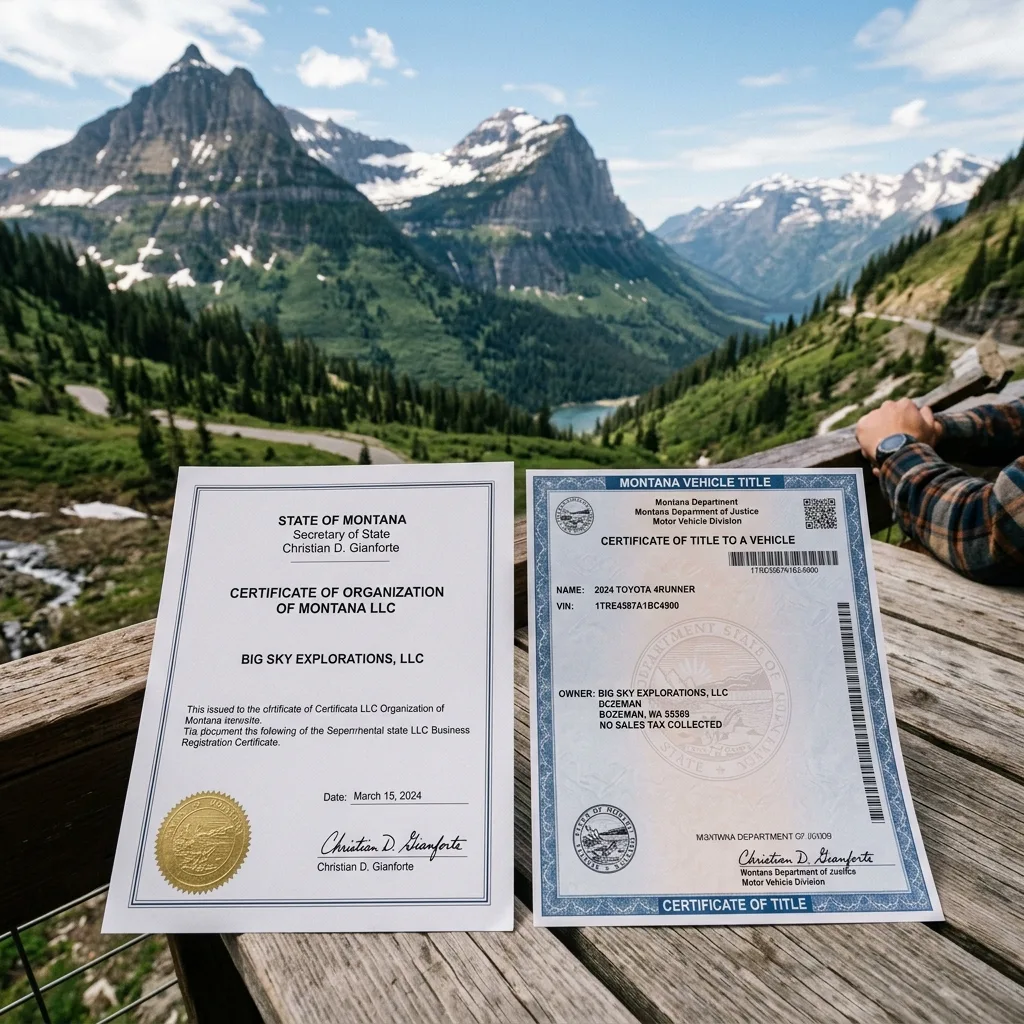
Montana has no general sales tax. None on groceries, none on furniture, and critically, none on vehicles. A Montana resident or a Montana LLC that takes ownership of a vehicle pays zero state sales tax. For a buyer in Texas (6.25%), Arizona (5.6% plus county), Nevada (8.25%), or California (7.25% plus local), the savings on a high-value vehicle are extraordinary. On a $100,000 truck, a Texas buyer would write a check for $6,250 in motor vehicle sales tax. A Montana LLC pays $0.
The mechanism that makes this work is the certificate of origin. The Montana LLC is the new owner of the vehicle from the moment the dealer fills in the first-assignment block. The dealer assigns the MCO directly to “Smith Holdings LLC” rather than to “John Smith.” The MCO never enters Texas, Arizona, Nevada, or California. It travels from the dealership directly to the Montana county treasurer’s office, where it is surrendered for a Montana title in the LLC’s name. The vehicle’s legal home is Montana from the very first second of ownership, and no other state ever has the opportunity to collect sales tax.
This is why the assignment step is the single most important moment in a Montana LLC purchase. Tell the dealer your LLC name before they write anything. Have a copy of your Articles of Organization printed and in your hand when you sit down at the finance desk. Many dealers will reflexively type your personal name into the assignment block because that is what their software defaults to. Once the pen has touched the paper, correcting the assignment requires a Reassignment addendum and the cooperation of the dealer’s title clerk, who has no incentive to help you.
At Zero Tax Tags we form the Montana LLC for you, provide the Articles of Organization to send to the dealer in advance, receive the MCO at our Montana office, surrender it to the county treasurer, register the vehicle, and FedEx the plates to your door. The Montana title arrives by mail two to five weeks later. Pricing is $899 for the first year, which includes the LLC formation, registration, and first-year service, and $270 per year thereafter for the renewal and registered agent service.
See how Montana LLC registration helps owners in other high-tax states:
- Arizona Vehicle Tax: The VLT Problem and How to Stop Paying $1,000 Every Year
- Nevada Vehicle Tax: The 8.25% Car Tax Hidden Cost
- Virginia Vehicle Tax: Stop Paying the Highest Vehicle Tax in America
The ELT problem: electronic titles and why they complicate Montana registration

A growing number of states have moved to a system called Electronic Lien and Title, or ELT. Under ELT, the dealer transmits title and lien data digitally to the state DMV, no paper certificate of origin is mailed, and no paper title is printed unless someone specifically requests one. As of 2024, at least sixteen states use ELT: Arizona, Georgia, Idaho, Illinois, Indiana, Michigan, Mississippi, New York, North Carolina, Ohio, Oregon, Pennsylvania, South Carolina, Utah, Virginia, Washington, and West Virginia.
For a buyer registering in their home state, ELT is invisible and convenient. The DMV sends a card or letter confirming the title exists, and the lender holds the electronic lien notation. Nothing prints. Nothing gets lost in the mail. For a buyer who wants to register a vehicle in Montana through an LLC, however, ELT is a serious problem. Montana does not participate in ELT. Montana is paper-only. The Montana county treasurer cannot accept an electronic title transmission from Virginia or Pennsylvania. The treasurer needs a physical certificate of origin or a physical paper title in hand.
The mechanics of getting that paper out of an ELT state are not obvious. In Virginia, for example, the title is held in what the DMV calls “print held” status until somebody requests a paper copy. To convert the electronic title to a paper document, the lienholder of record (or the dealer, in a cash deal where no lien exists) must contact the Virginia DMV and request that the print held flag be removed. The DMV then prints the title overnight and mails it. Start to finish, this takes anywhere from three to six weeks, and that timeline assumes the dealer cooperates promptly. In a cash purchase, where the dealer has no continuing financial interest in your vehicle, getting the dealer to make that request can be like pulling teeth.
If you are buying in an ELT state and intend to register through a Montana LLC, take these four steps in order. First, tell the dealer before you sign anything that you need a physical paper MCO or paper title. Second, have the dealer add a line to the sales contract stating that a paper MCO will be issued at the dealer’s expense, with a target delivery date. Third, do not assume the paper will arrive in a week. Build a three to six week buffer into your plans. Fourth, do not take physical delivery of the vehicle without a written commitment about the paper. A vehicle that you possess but cannot register is a paperweight in your driveway.
Warning: If you are buying in Florida, Virginia, New York, Ohio, or Pennsylvania and plan to register through a Montana LLC, get the paper MCO commitment in writing before you sign anything. Verbal promises will not survive the moment the deal closes and the dealer’s interest in helping you ends.
The 5 biggest MCO nightmares (and how to fix them)

The certificate of origin is one of the most reliable documents in commerce when it works correctly. When something goes wrong, however, the consequences cascade quickly. Here are the five problems we see most often and how each one is resolved.
1. The Tesla Delay. Tesla operates a direct-sales model in most states rather than a traditional franchise dealer network, and that has created documented MCO problems throughout 2024 and 2025. Buyers have reported waiting weeks past delivery to receive any document, MCOs printed with the wrong owner names, and in cases in Texas and Georgia, the same VIN appearing on two different MCOs assigned to two different owners. The fix is persistence and documentation. Save every email, every chat, every voicemail. If thirty days pass with no MCO, escalate to the state dealer licensing board, because failing to deliver title documents within thirty days violates dealer licensing law in most states.
2. Dealer Refuses to Release MCO. Some dealers refuse to hand over the MCO at closing because they fear the buyer will export the vehicle in violation of the manufacturer’s distribution agreement. The solution is to sign a non-export agreement stating the vehicle will be registered domestically, and to escalate to the General Manager or Finance Director if the floor salesperson balks. If you are using a Montana LLC, providing a copy of the Articles of Organization usually resolves the concern.
3. Lost or Destroyed MCO. The MCO is a bearer instrument, which means whoever physically holds it has constructive possession. The replacement procedure starts with the original selling dealer, who contacts the manufacturer’s records department. Ford charges between $50 and $150 and takes two to six weeks. GM (Chevrolet, GMC, Cadillac, Buick) processes through Detroit headquarters with documented delays of several months. Toyota requires the requestor to certify the vehicle has not been titled within sixty days and to sign a formal indemnification agreement. Every replacement is stamped DUPLICATE in red, and the DMV will check that the original was never used before accepting it.
4. Wrong Name on the MCO. The dealer wrote your personal name in the first-assignment block instead of your LLC’s name. This is the most common Montana LLC failure mode, and it is fixable but only with speed. Contact your Zero Tax Tags representative immediately. The dealer can usually correct the assignment with a Reassignment addendum if the MCO has not yet been submitted to any DMV. Once it has reached a DMV, correction becomes far more difficult and may require the manufacturer to issue a duplicate.
5. ELT State Cross-Registration. You bought in Virginia, Pennsylvania, or another ELT state, and the title is stuck in electronic limbo. The fix is described in detail in the previous section. Get a paper MCO commitment in writing before signing, build in a three to six week buffer, and follow up with the dealer weekly until the paper is in your hand.
Imported vehicles: the grey market challenge

Importing a vehicle from Japan, Germany, or anywhere else outside the United States introduces an entirely different paperwork regime, and the rules turn primarily on the age of the vehicle. The National Highway Traffic Safety Administration applies a 25-year rule, which means a vehicle that is twenty-five or more years old, calculated from its manufacture month and year (not the model year), is exempt from Federal Motor Vehicle Safety Standards compliance. The Environmental Protection Agency applies a separate 21-year exemption for vehicles in original unmodified condition. These two timelines run in parallel, not in sync, and you must satisfy both agencies independently.
A vehicle younger than twenty-five years must be brought into FMVSS compliance by a Registered Importer, a small group of NHTSA-certified specialists who modify foreign-spec vehicles to meet US standards. The list of eligible vehicles is short, the work is expensive, and for most modern foreign-market cars there is no Registered Importer available. The practical effect is that nearly every newer European, Japanese, and Australian vehicle is unimportable until it crosses the 25-year threshold.
At the port of entry, three federal forms travel with the vehicle. CBP Form 7501 (Entry Summary) proves duties have been paid. DOT Form HS-7 is the safety standards declaration. EPA Form 3520-1 is the emissions declaration. Most state DMVs want to see all three.
For an imported vehicle, the equivalent of a US-format MCO is the foreign title or export certificate from the country of origin. Guard this document. If you lose the foreign MCO on a 25-year-old vehicle from Japan or Germany, replacing it from the original manufacturer is nearly impossible. Toyota Japan does not maintain accessible records on a 1999 Hilux Surf for an American consumer.
Warning: If you import a vehicle, the original foreign title or export certificate is irreplaceable. Make multiple high-resolution photographs and certified copies before you ever ship it. The original document must travel with the vehicle, but the photos give you a fighting chance if customs misplaces it.
Kit cars, trailers, and powersports MCO
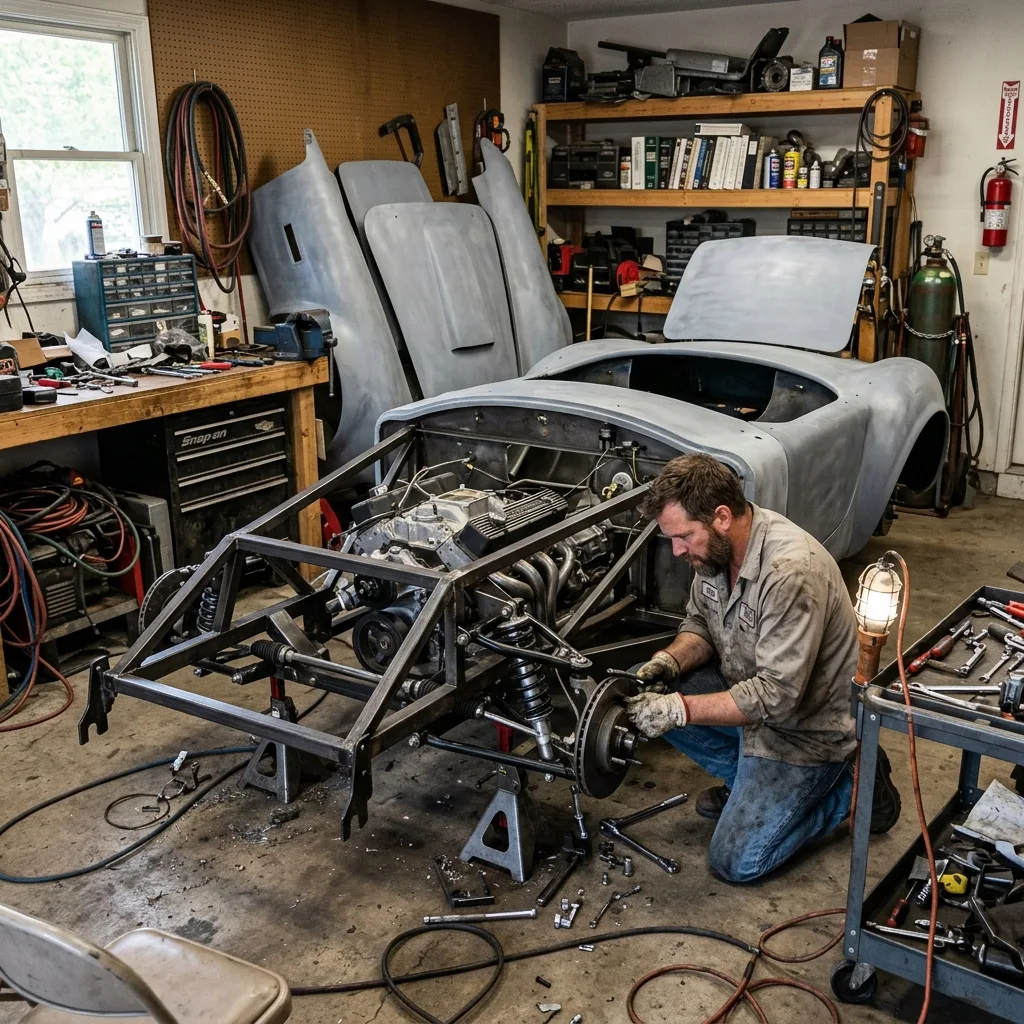
Three categories of vehicles fall outside the standard dealer-MCO pipeline and follow their own paperwork tracks. Kit cars and home-built vehicles are the first. If you build a Cobra replica from a kit, assemble a Lotus Seven clone, or construct a custom rod from raw frame stock, you are the manufacturer. There is no kit-supplier MCO that satisfies a state DMV because the kit is not a complete vehicle. Instead, every state has a specially constructed or assembled vehicle process. You document the build with receipts and photographs, take the finished vehicle to a state inspection, and the state assigns a unique VIN that is then physically stamped or affixed to the vehicle. The state issues a title directly. There is no MCO stage in this pipeline at all.
Trailers are the second category, and the rules vary sharply by state. Georgia is a useful example because its rules are detailed in statute. Trailers with a shipping weight over 2,001 pounds require a manufacturer’s statement of origin issued by a dealer with a valid 12-digit dealer number. Trailers with a shipping weight of 2,000 pounds or less do not require an MSO and are processed with tag fees only. Boat trailers, regardless of weight, always require an MSO. The lesson is that a small utility trailer behaves like a piece of cargo equipment, while a heavier or specialized trailer behaves like a vehicle and needs a certificate of origin.
Powersports is the third category. ATVs, UTVs, motorcycles, and snowmobiles all use MCOs, but the dealer process is somewhat different from automobile dealerships. Powersports dealers like Polaris, Can-Am, Kawasaki, and Yamaha franchisees typically charge a $40 to $50 MCO document processing fee at the time of sale. Delivery of the actual MCO document to the dealer (and from there to the buyer) takes anywhere from three to twenty-one business days because the manufacturer’s records department processes powersports MCOs in batches. The information required to produce the MCO includes the VIN, the engine number, and a capture code provided by the dealer at the time of order. Some states (Arizona, Kentucky, Louisiana, Montana, North Carolina, Ohio, Oklahoma, and Pennsylvania) require the powersports MCO to be notarized at the time of ownership transfer, which adds approximately $30 to the closing cost.
One last warning that applies across all three categories. Blank MCO templates are available for download on certain corners of the internet, and they look superficially convincing. Filling out one of these templates and presenting it to a DMV is not a clever workaround. It is fraud. Specifically, it is felony forgery of a financial instrument, and the bank-note paper, intaglio printing, and copy void pantograph that characterize a real MCO are precisely the features a downloaded template will lack. The DMV clerk will spot it instantly.
State-by-state MCO requirements
Although AAMVA sets a uniform national standard for the certificate of origin itself, the rules around how that document is processed vary significantly by state. The differences usually involve notarization, security feature verification, ELT participation, and which agency physically processes the title application. Below is a working summary of the seven states our customers ask about most often.
The list of notarization-required states extends beyond Pennsylvania, Ohio, and Montana. Oklahoma, North Carolina, Louisiana, Kentucky, and Arizona all require notarization on certain MCO transfers. California, perhaps surprisingly given its general bureaucratic enthusiasm, does not require notarization on the MCO itself even when a notary block exists on the document. Treat notarization as a state-by-state question and verify before signing.
This is exactly why our team asks which state you are buying in before we start the registration. The notary requirements, ELT participation, paper printing timelines, and assignment-block conventions vary significantly, and a process that takes five business days in one state can take six weeks in another.
Frequently asked questions

Is an MCO the same as a title?
No. The MCO is the pre-title document. The title is issued by the DMV in exchange for the MCO. You cannot have both active for the same vehicle. The MCO exists from the moment the vehicle leaves the factory until it is surrendered for a title, and at that point it is retired permanently.
My dealer says they handle registration. Do I still need the MCO?
If you are registering in your home state through the dealer, no, they handle it for you. If you are forming a Montana LLC, yes, you absolutely need the MCO assigned to the LLC before the dealer submits anything to any DMV. The assignment block is the make-or-break moment in the entire transaction.
Can I register with a copy of the MCO?
Never. MCOs must be original documents. Photocopies trigger the copy void pantograph, which causes the word VOID to appear in large letters across the page, and no DMV in the country will accept a photocopied certificate of origin. If your dealer says they will send you a copy and you can take that copy to the DMV, the dealer is wrong, and the DMV will reject the application on sight.
What if the MCO has a typo: wrong VIN digit, wrong name?
Do not sign it. Do not accept it. Have the dealer correct it before the vehicle leaves the lot. Correcting an MCO after the fact requires manufacturer involvement and significant delays of weeks to months.
How do I know if my state uses ELT?
Arizona, Georgia, Idaho, Illinois, Indiana, Michigan, Mississippi, New York, North Carolina, Ohio, Oregon, Pennsylvania, South Carolina, Utah, Virginia, Washington, and West Virginia all use ELT as of 2024. If you are buying in one of these states, assume the certificate of origin will not be mailed to you automatically. You must request a paper copy at the time of sale.
What does floor planning mean and why does it affect my MCO?
Dealers usually finance their inventory through a bank using a credit line called floor plan financing. Until the dealer pays the bank for your specific vehicle, the bank physically holds the MCO. This is why some dealers say “the MCO isn’t here yet” even though the vehicle is parked on the lot. They have not paid their floor plan balance for that unit.
Can I get an MCO for a vehicle I bought years ago?
If the vehicle was already titled, the MCO was surrendered to the DMV at that time and is gone permanently. You would need to work with the existing title, not the MCO. Requesting a duplicate MCO for an already-titled vehicle is not possible because the original was retired when the title was issued.
Conclusion
The certificate of origin is the foundation of vehicle ownership in the United States. Lose it, mishandle it, or let a careless dealer assign it to the wrong name, and you face a registration delay measured in months, a tax bill in the thousands, or a vehicle you legally cannot drive sitting in your driveway. Understand it, intercept it at the right moment, and route it through the correct state, and you save thousands in sales tax, register in days rather than weeks, and avoid the cascade of paperwork problems that trap so many consumers.
For Montana LLC buyers in particular, the certificate of origin is not a formality, it is the entire game. The first-assignment block on the MCO is the legal moment when ownership transfers, and that single line item determines whether your vehicle is taxed in your home state or registered tax-free in Montana. Get the LLC name in front of the dealer before they touch the pen. Get the paper MCO commitment in writing in ELT states. Get a team behind you that handles thousands of these transactions every year and knows exactly what each state requires.
Read more about avoiding vehicle taxes through Montana LLC registration:
- Arizona VLT Problem: How to Stop Paying $1,000 Every Year
- Nevada’s 8.25% Car Tax: The Hidden Cost Nobody Tells You About
- Virginia Car Tax: Stop Paying the Highest Vehicle Tax in America
Ready to Get Your MCO Right the First Time?
Thousands of buyers have saved millions in vehicle sales tax with Montana LLC registration. The certificate of origin is the key, and getting it assigned correctly is the difference between a five-business-day registration and a six-month nightmare. You’re next.