13 min read
On this page
- + The Dream vs. The DMV Reality
- + The 20-Day Ticking Clock
- • The Financial Shock: VLF and Use Tax
- + The Logistical Labyrinth
- • The Smog Check Hurdle
- • The CHP VIN Verification Nightmare
- + Special Cases of Hell
- + The Strategic Solution: The Montana Move
- + Real-World Scenarios
- + The Pre-Move Checklist
- + Frequently Asked Questions
- + Don’t Pay the Welcome Tax
Moving to California with a vehicle? Learn about the nightmare of importing out-of-state vehicles—from CHP VIN verifications to the dreaded smog check—and discover the Montana LLC strategy that saves you thousands.

Moving to California: The Dream vs. The DMV Reality
You’ve got the job offer. Maybe it’s a Senior Engineer role at a FAANG company in Menlo Park, a production gig in Burbank, or perhaps Uncle Sam is stationing you at Camp Pendleton. The excitement is palpable. You’re picturing the Pacific Coast Highway, the weather, and the new chapter of your life.
You have your housing sorted. You’ve hired the movers. You think you’re ready.
But there is a monster lurking in the details of your relocation plan that you likely haven’t accounted for. It is a bureaucratic beast that has reduced grown adults to tears and drained bank accounts before the first paycheck even clears.
It is the California Department of Motor Vehicles (DMV), and specifically, the out-of-state vehicle import process.
Most people assume that moving a car is as simple as swapping plates at a kiosk. In many states, it is. In California, it is an administrative nightmare designed to extract maximum revenue and patience from new residents.
If you are moving to California with a vehicle you already own, you are walking into a minefield of use taxes, “value-based” registration fees, smog compliance checks, and mandatory law enforcement inspections that are currently backed up for months.
However, there is a strategic workaround used by savvy relocators, military families, and car enthusiasts: The Montana Strategy.
By establishing a Montana LLC before you move, you can bypass the California import nightmare entirely. But before we get to the solution, you need to understand exactly why the California system is broken.
The 20-Day Ticking Clock
California Law (CVC 4000.4) states that you must register your vehicle within 20 days of establishing residency or accepting employment.
Twenty days.
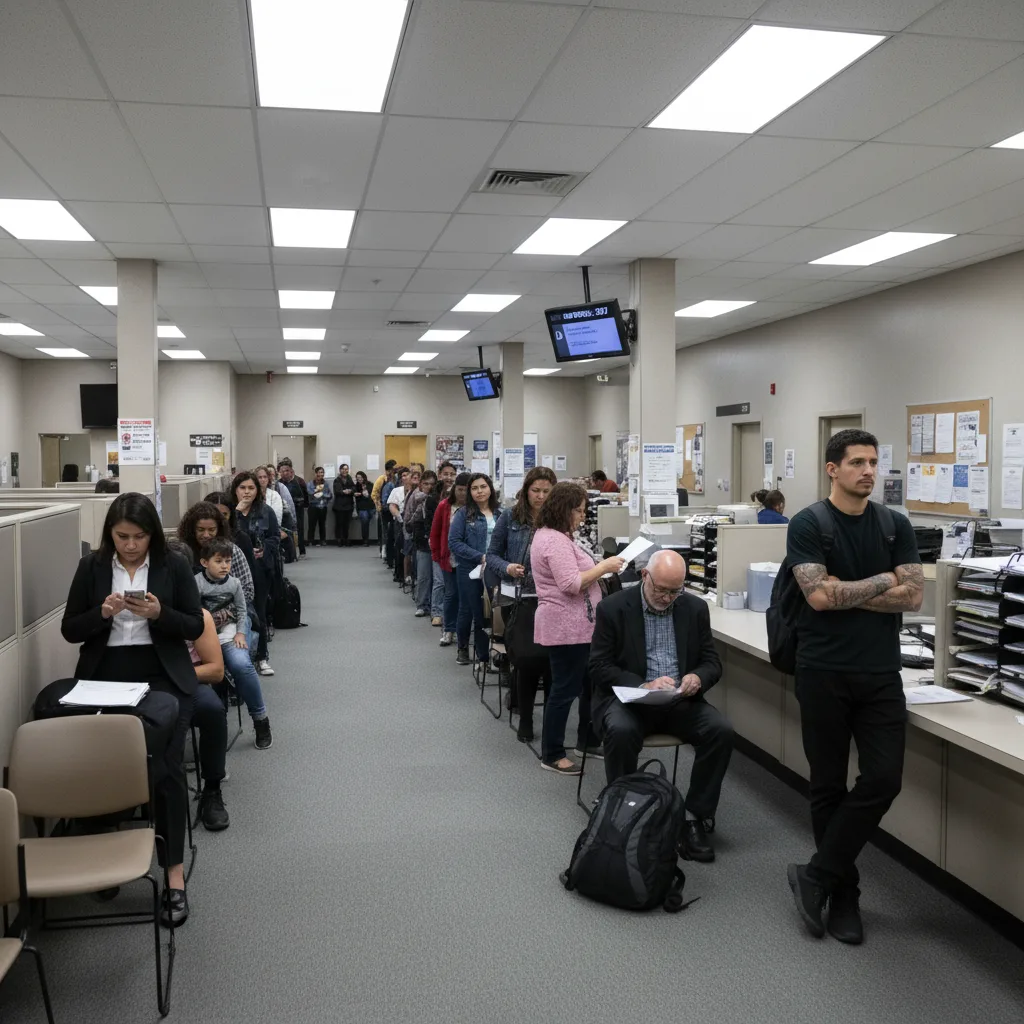
Think about the chaos of moving. You are unpacking boxes, setting up utilities, learning a new commute, and starting a high-pressure job. In the middle of that, California expects you to navigate a multi-step, in-person bureaucratic gauntlet.
If you miss that 20-day window? The penalties begin. And unlike other states where a late fee is $20, California’s penalties compound quickly. But the deadline is just the tip of the iceberg. The real pain comes when you see the bill.
The Financial Shock: VLF and “Use Tax”
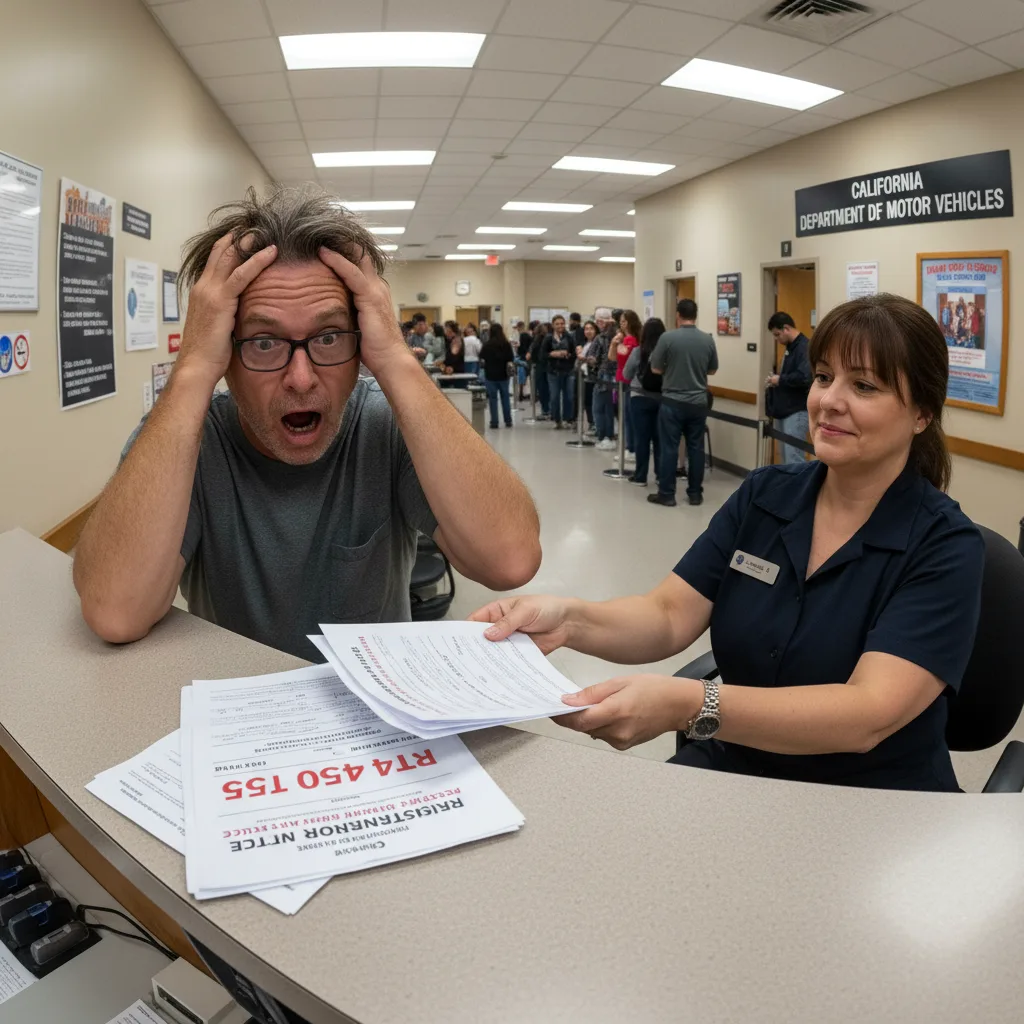
When you walk into the DMV (after waiting in line for three hours because you couldn’t get an appointment), you will be handed a bill that might make you audibly gasp.
1. The Vehicle License Fee (VLF): In most states, registration is a flat fee or based on weight. In California, your registration fee is effectively a property tax based on the current value of your vehicle.
- Moving with a 2022 Tesla Model Y? Expect to pay $600-$800 per year just for the sticker on your plate.
- Bringing a luxury SUV or a high-end sports car? Your registration could easily top $1,000 annually.
2. The Use Tax Trap: This is where new residents feel truly punished. If you purchased your vehicle less than 12 months before moving to California, the state may demand you pay the difference in sales tax. Did you buy a car in Oregon (0% sales tax) six months ago? California wants their cut—up to 10.25% depending on your zip code. On a $40,000 car, you could be handed a bill for $4,000 on the spot.
3. The “Smog Abatement” Fee: Even if your car is relatively new, you will pay extra fees. If it’s older, you pay for the privilege of testing it.
The Logistical Labyrinth: Why AAA Can’t Save You
“I’ll just go to AAA,” you think. “I’m a member.”
Think again. While AAA is fantastic for simple renewals, many Southern California and Bay Area AAA branches cannot process out-of-state transfers that require VIN verification or complex title work. They will politely hand you a number and point you toward the DMV.
Here is the step-by-step reality of importing a car to California:
1. The Smog Check Hurdle
Before you can even apply for registration, you must pass a California smog check. California has the strictest emissions standards in the country.
- The Check Engine Light: If your check engine light is on for any reason—even a minor sensor issue unrelated to emissions—you fail.
- The “Not Ready” Monitors: If you recently disconnected your battery (common during shipping or repairs), your car’s computer monitors might not be reset. You fail.
- The Cost: You pay for the test whether you pass or fail.
2. The CHP VIN Verification Nightmare
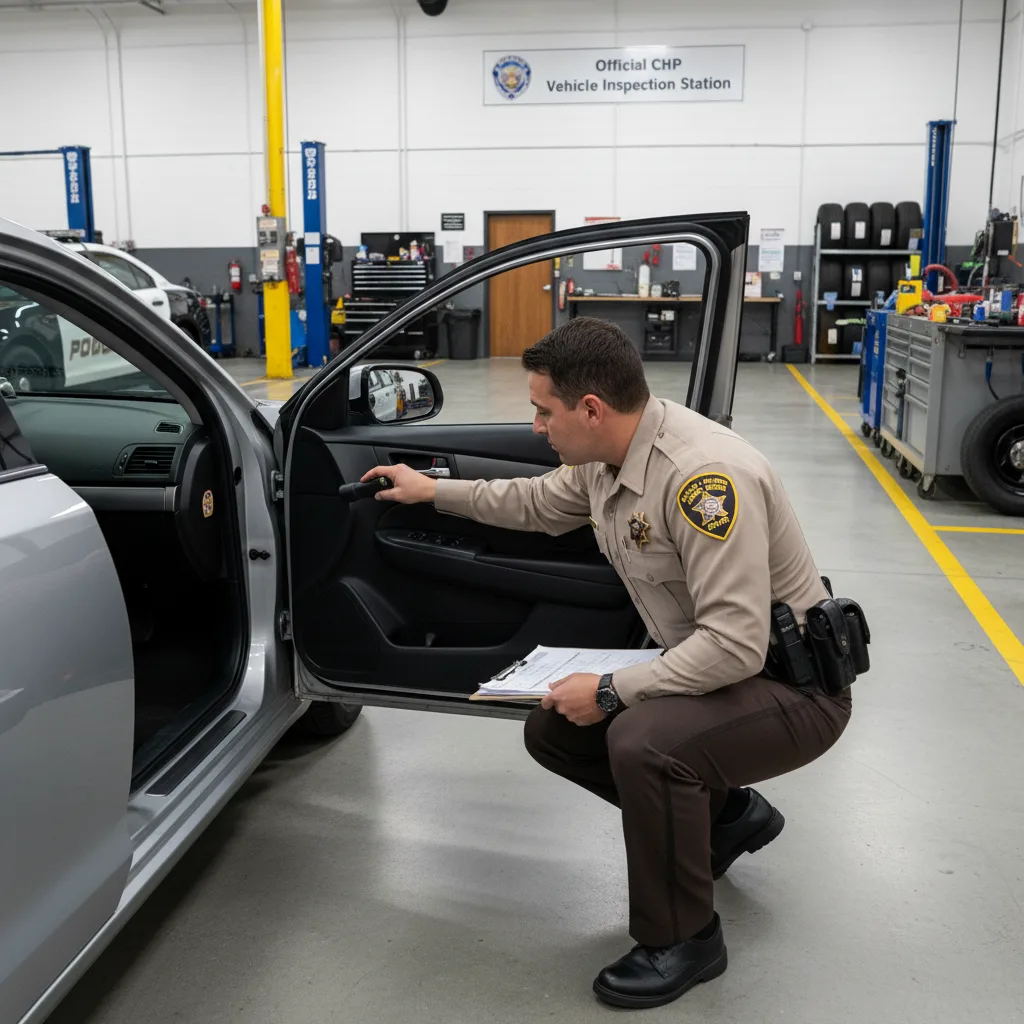
This is the current bottleneck causing panic across the state. To register an out-of-state vehicle, a verified official must physically inspect the car to ensure the VIN matches the title and meets Federal Motor Vehicle Safety Standards.
You can sometimes do this at the DMV, but the line to have a car inspected can be hours long. Furthermore, if your vehicle is older, has no emissions label, or is a motorcycle, the DMV often refuses to do it and refers you to the California Highway Patrol (CHP).
The Reality:
- CHP offices in Los Angeles, San Francisco, and San Diego are overwhelmed.
- You cannot just drive up. You must make an appointment.
- Current wait times for CHP VIN verification appointments are running 6 to 8 weeks in some areas.
- Remember the 20-day registration law? If the CHP can’t see you for 8 weeks, you are in a legal limbo, driving with potentially expired out-of-state temporary tags while waiting for an officer to look at a sticker on your door jamb.
3. The Title Surrender
You must surrender your out-of-state title to California.
- Lost Title: If you can’t find your paper title from your home state, you cannot register. You must first contact your old state, get a duplicate (4-6 weeks), and then apply in California.
- Lienholders (Leased/Financed Cars): If you are financing or leasing your car, you don’t hold the title—the bank does. You must ask the DMV to send a request to your bank to release the title. Banks are notoriously slow at this. It is not uncommon for a lease transfer to take 3 to 4 months to finalize. During this time, your registration is incomplete.
Special Cases of Hell
If the standard process sounds bad, consider these specific scenarios where the system actively works against you.
The Car Enthusiast: The BAR Referee
Did you modify your Subaru WRX, Ford Mustang, or BMW M3 in your home state? Maybe a cold air intake, an aftermarket exhaust, or a tune? In Florida or Texas, that’s just a “car.” In California, that is an “illegal gross polluter.”
If the smog technician sees non-stock parts that don’t have a specific California Executive Order (EO) number, you will be flagged. You will be sent to a State Referee (BAR Referee). This is a comprehensive, forensic-level inspection of your vehicle. If they find anything non-compliant, you cannot register the car until you spend thousands of dollars reverting it to stock. Many enthusiasts sell their dream cars within months of moving to CA because the registration is simply impossible.
The Military Family
You didn’t choose to move to San Diego or Travis AFB; you were ordered to. Yet, military spouses are often dragged through the same mud. While the active-duty member has some exemptions, the spouse’s vehicle often does not. You are trying to get kids into new schools and find housing, and suddenly you are spending three days dealing with vehicle inspections.
The Remote Worker / Digital Nomad
You kept your job in New York but moved to Santa Monica for the lifestyle. You have a leased BMW. Because you moved voluntarily, California wants you to re-register immediately. But BMW Financial Services is slow to process the paperwork. Your New York plates expire. You can’t get CA plates yet. You are now driving a luxury car with expired tags in a city where parking enforcement is ruthless.
The Strategic Solution: The Montana Move
There is a way to opt out of this system. It is legal, it is efficient, and it is the best-kept secret of high-net-worth individuals and smart relocators.
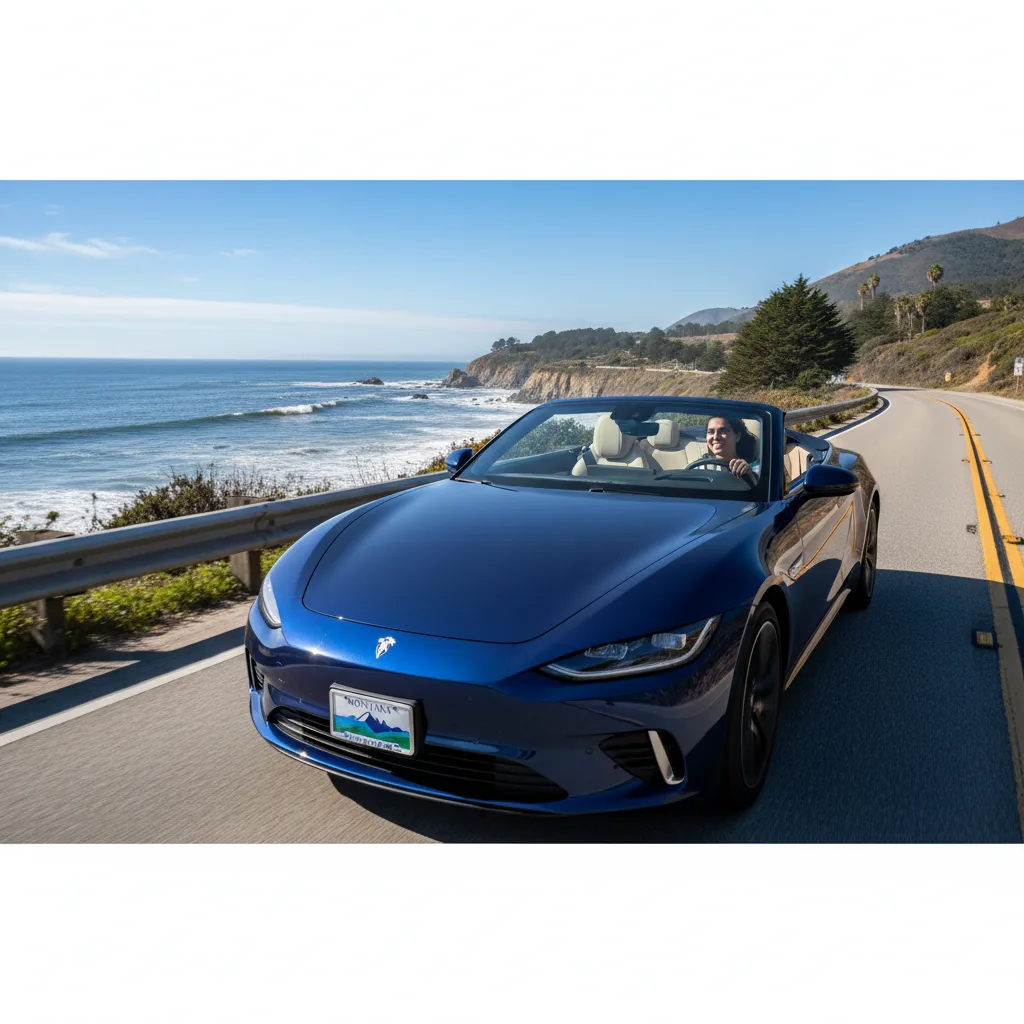
Register your vehicle in Montana via an LLC before you move.
Here is the strategy:
- Form a Montana LLC: You don’t have to live in Montana to own a business there.
- The LLC Owns the Car: You sell or transfer your vehicle to your new LLC.
- Montana Registration: Montana has no vehicle inspection, no smog check, and no sales tax on vehicle purchases.
- Permanent Plates: If your vehicle is 11 years or older, you get a permanent registration. You never pay for tabs again.
Why Do This BEFORE You Move?
This is a pre-emptive strike against bureaucracy.
1. Skip the “Use Tax”
If your vehicle is owned by a Montana LLC, you are not personally importing it as a resident owner in the traditional sense. You avoid the immediate shock of California sales tax assessments on recently purchased vehicles.2. No Smog Checks
Montana does not require smog checks. That modified WRX? It’s legal in Montana. That older truck with a check engine light for a minor sensor? Legal in Montana. You avoid the stress of the BAR Referee entirely.3. Privacy and Asset Protection
In California, your name and address are attached to your license plate. With a Montana LLC, the vehicle is registered to the business. This adds a layer of privacy for high-profile individuals in tech or entertainment.4. The “Visitor” Status
By arriving in California with valid, current Montana plates registered to a corporate entity, you buy yourself time and peace of mind. You are not scrambling to meet a 20-day deadline while your furniture is still in boxes. You are driving a corporate vehicle.
(Note: While California eventually wants all vehicles driven by residents to be registered in-state, having the vehicle in an LLC structure provides significant flexibility, asset protection, and ease of transfer compared to a personal import.)
Real-World Scenarios: Who Needs This?
The Pre-Move Checklist: How to Execute
If you are 30 to 60 days out from your move to California, now is the time to act. Once you cross the state line and sign a lease, the clock starts ticking.
| Step 1: | Contact Zero Tax Tags – Don’t try to do the paperwork yourself. We handle the LLC formation, the Registered Agent service, and the DMV interaction in Montana. |
| Step 2: | Gather Your Title – Locate your current title. If you have a lienholder, we can help navigate the paperwork to transfer registration to the LLC. |
| Step 3: | Get Your Plates – We will mail your Montana license plates and registration directly to your current home. Put them on your car before you drive out. |
| Step 4: | Drive to California – Enjoy the drive. When you arrive, you aren’t just another stressed transplant waiting in line at the DMV. You are a business owner driving a corporate vehicle. |
Frequently Asked Questions
Q: Can I just keep my home state plates?
A: Technically, no. Once you establish residency (get a job, rent an apartment), California law requires you to register. However, out-of-state plates eventually expire. When they do, you must switch. A Montana registration allows you to renew remotely, forever, without ever returning the car to Montana.
Q: What if my car won’t pass California smog?
A: This is the #1 reason to use Zero Tax Tags. If your car won’t pass CA smog, you literally cannot register it in California. It becomes a driveway ornament. Montana has no smog testing. Period.
Q: How much money will I save?
A: It depends on the vehicle. For a modern luxury car or heavy-duty truck, the savings in sales tax (if applicable) and recurring registration fees can range from $1,000 to $5,000 in the first year alone.
Q: Is the CHP VIN verification really that bad?
A: Yes. In major metros (LA, Bay Area), the backlog is real. We have heard horror stories of people driving on expired tags for two months waiting for an appointment, only to be turned away because they forgot one specific form (REG 31).
Q: Does this work for motorcycles?
A: Absolutely. California is notorious for making it difficult to import “49-state” motorcycles (bikes not originally manufactured with CA specific emissions gear). If your bike has less than 7,500 miles and wasn’t built for CA, you cannot register it there. Montana is the only solution for these owners.
Conclusion: Moving to California – Don’t Pay the “Welcome Tax”
Moving to California is expensive enough without the California DMV “welcome tax.” California is a beautiful place to live, but the cost of entry is steep. The state relies on the ignorance of new residents to generate revenue through exorbitant vehicle fees and taxes.
They count on you being too overwhelmed by your move to research your options. They count on you just handing over your credit card at the DMV counter because you just want the nightmare to end.
Don’t give them the satisfaction.
By planning ahead and utilizing the Montana LLC strategy, you can keep your money in your pocket, keep your car legal, and start your new California life on your own terms.
Ready to make the smart move? Visit ZeroTaxTags.com today. Let’s get your vehicle registered in Montana before you pack a single box.
Disclaimer: Zero Tax Tags provides services for Montana LLC formation and vehicle registration. We are not tax attorneys. California has specific laws regarding residency and vehicle registration (CVC 4000.4). This article is for informational purposes regarding the benefits of Montana registration prior to relocation. Always consult with a legal professional regarding your specific situation.