
24 min read
On this page
- + Iowa Vehicle Tax: The Double Tax State
- + The Real Cost of Iowa Vehicle Tax
- + Why Iowa Vehicle Tax Hurts More Than You Think
- + Who Iowa Vehicle Tax Hits Hardest
- + The Montana Solution: Legal Vehicle Tax Elimination
- + Is Montana LLC Vehicle Registration Actually Legal?
- + Four Iowa Vehicle Owners Who Made the Switch
- + Who Benefits Most from Montana LLC Registration
- + How Zero Tax Tags Gets You Registered
- + Who This Is Built For
- + Frequently Asked Questions
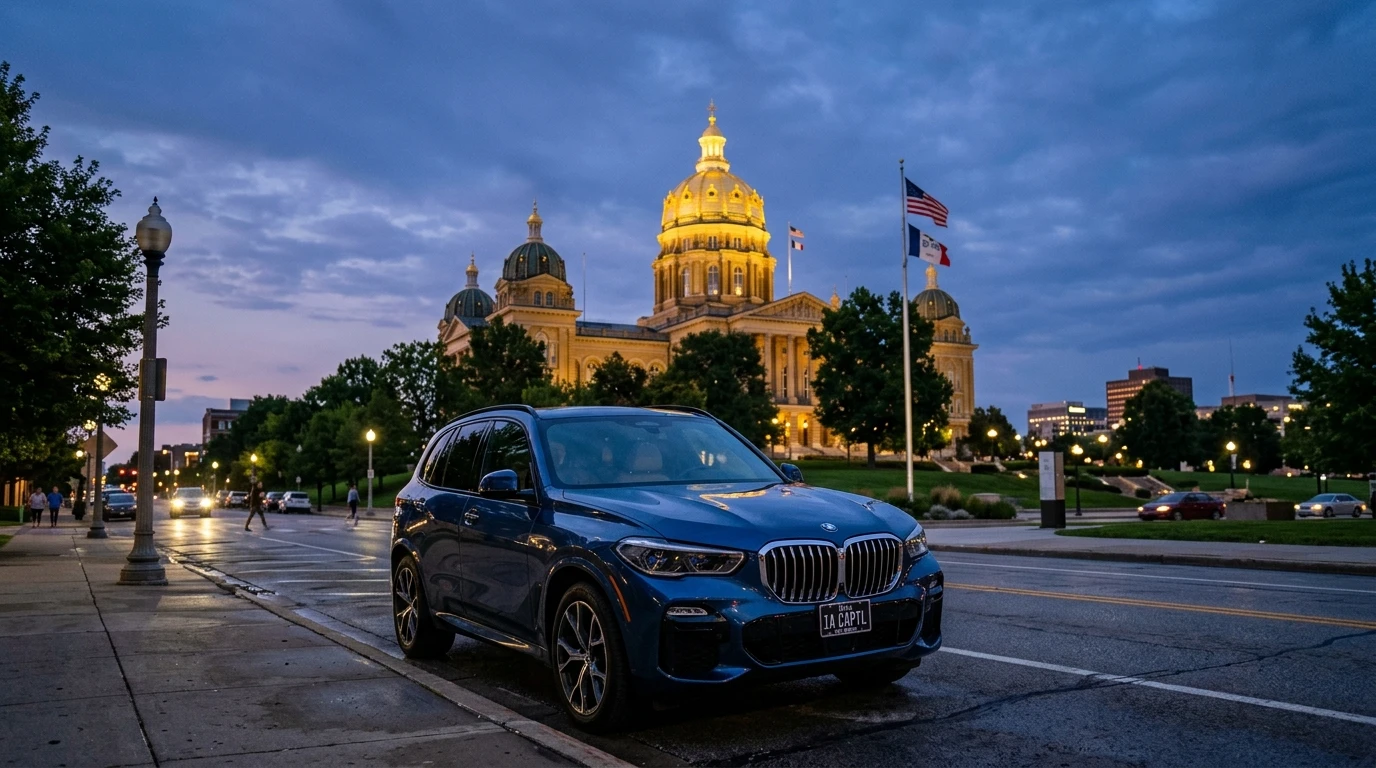
Iowa vehicle tax arrives in two waves, and the second one is the part nobody warns you about. The first wave hits at the dealership. You sign the paperwork on a 2024 BMW X5 in West Des Moines, and the finance manager slides over a line item labeled “Fee for New Registration.” It says $3,910. You ask what that is, and he shrugs and says it’s basically Iowa’s version of sales tax. Five percent of the sticker price, plus a ten-dollar handling fee. You pay it, drive off the lot, and consider the matter closed.
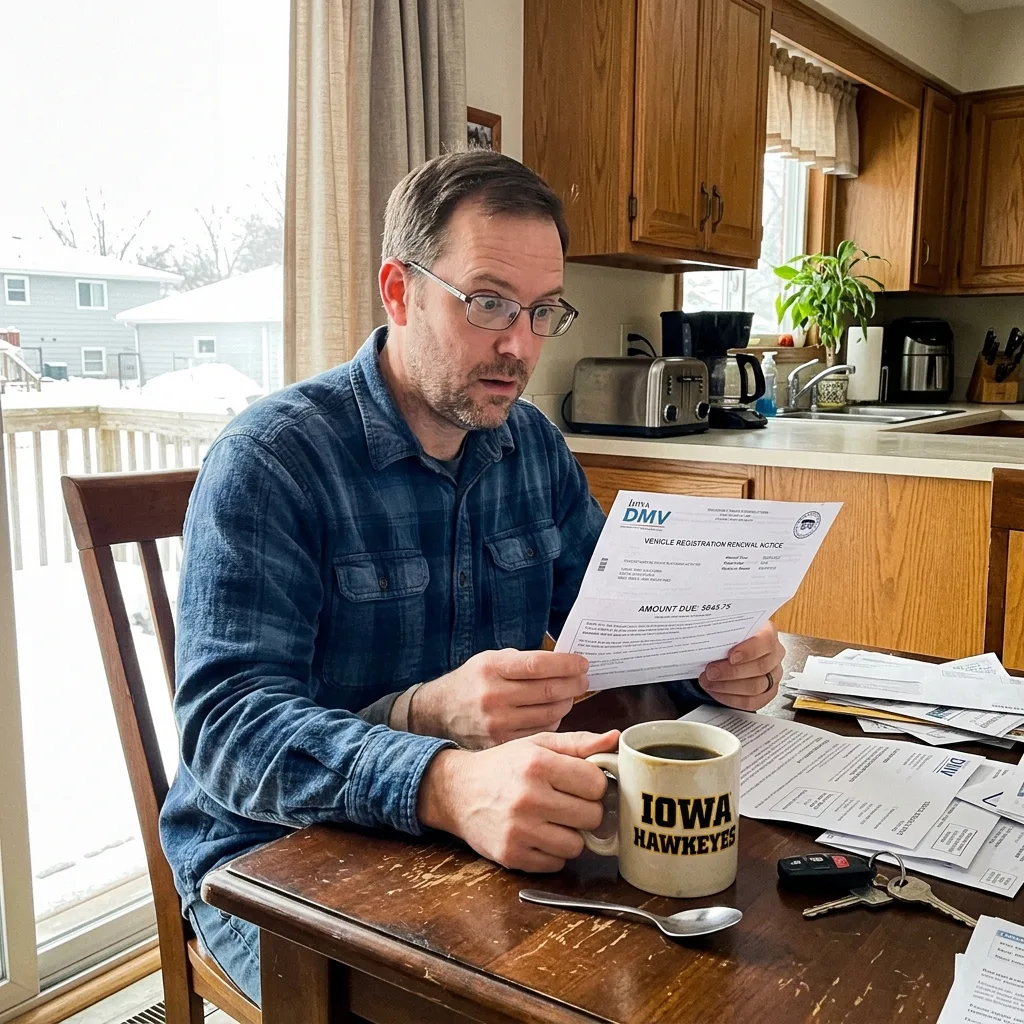
Twelve months later, the second wave arrives in your mailbox. Your annual Iowa registration renewal notice. Inside is a bill for $798. You read it twice. You assume the county made a mistake. Then you call the Polk County Treasurer’s office and discover that no, this is normal. Iowa charges you one percent of the original list price of your vehicle, every year, for the first seven years. On a $78,000 BMW, that’s $780 in list-price tax, plus an $18 weight fee. Every January. Until the calendar finally rolls into year eight.
Over five years, that BMW will cost you $7,900 in pure Iowa tax. The car itself depreciates. The bill does not. And the bill from the dealer was never a one-time event. It was an entry fee for a subscription you didn’t know you were signing up for.
What if you didn’t have to pay any of this?
Iowa Vehicle Tax: The Double Tax State
Most states pick one tax mechanism for vehicles. They either charge sales tax at purchase and a flat registration fee thereafter, or they skip the sales tax and charge a property-style annual tax. Iowa decided to do both. You get hit at the dealership with the Fee for New Registration, and then you pay an inflated annual registration fee for as long as you own the vehicle. The state legislature does not call this a property tax. It functions exactly like one.
The purchase-side charge is straightforward on paper. Five percent of the vehicle’s purchase price, plus a flat $10 administrative fee. On a $50,000 vehicle that is $2,510. On a $100,000 vehicle it is $5,010. The state allows a trade-in credit at franchised dealers, which means the taxable amount drops to your net price after trade. There is one quiet trap: the title names on the trade-in and the new vehicle must match exactly. Add your spouse or your adult child to the new title and you can disqualify the entire credit. There is no trade-in credit at all on private-party purchases. Buy a used car from a neighbor on Facebook Marketplace, and you owe the full five percent on the whole purchase price.
The annual registration fee is where Iowa quietly separates itself from sane states. It has two components stacked together.
The Iowa annual registration formula:
- Weight component: $0.40 per 100 pounds of vehicle weight
- List price component, based on original MSRP:
- Years 1 through 7: 1.00% of original list price
- Years 8 through 9: 0.75% of original list price
- Years 10 through 11: 0.50% of original list price
- Year 12 and beyond: flat $50 per year
BEVs add $130 per year. PHEVs add $65 per year. No county add-ons. The rate is identical in every Iowa county.
You can verify this yourself at the Iowa Department of Transportation. The formula has not changed in years. The legislature has had multiple chances to introduce relief and has passed on each one. Iowa ranks eighth highest in the nation for vehicle registration costs, with the statewide average sitting around $333 per year. That number includes roughly $180 in dealer documentation fees on the typical new-car transaction. Speaking of which: Iowa caps dealer doc fees at $250 by law, which sounds like consumer protection until you realize most dealers charge exactly $250.

The Real Cost of Iowa Vehicle Tax
The five-percent purchase fee gets all the attention because it is the number on the bill of sale. The annual registration fee gets ignored because the dealer never mentions it. When you stack the two together over a normal ownership period, the combined cost is brutal in ways the headline numbers obscure.

Run the math on five common Iowa vehicles. Each calculation assumes you keep the vehicle for five years, which is below the average length of car ownership in the United States. If you keep it for seven years, the list-price tax keeps compounding at the full one-percent rate the entire time. Relief does not begin until year eight.
Look at the BMW X5 row. The buyer is paying nearly eight thousand dollars in Iowa vehicle tax over five years on a single vehicle. The Montana alternative is $2,371 across the same period. The difference is $5,529, which is enough to cover a year of property tax on a nice home in Ankeny.
The Suburban and the F-350 numbers tell the same story. These are not exotic supercars or hand-built luxury sedans. They are mainstream family vehicles bought every day at dealerships in Cedar Rapids and Dubuque. The Iowa system extracts roughly $7,000 to $8,000 in tax over five years on any vehicle in the $70,000 range, regardless of whether you bought it for utility, towing capacity, or seating for seven kids.
The Class A RV row is where the system becomes openly absurd. Iowa caps annual registration on Class A motor homes at $400 per year, which is the one piece of mercy in the entire structure. But it does nothing to soften the purchase-side blow. A $245,000 Thor Palazzo triggers a $12,260 fee at first registration. That single line item is more than most people spend on a complete used car.
The seven-year wall. Iowa’s list-price tax holds at the full one-percent rate for seven consecutive years before any relief begins. Most vehicle owners trade or sell before they ever see the drop to 0.75 percent in year eight. The state is calibrated to extract maximum revenue across the entire useful life of the typical American car.
Why Iowa Vehicle Tax Hurts More Than You Think
The headline numbers are bad enough. The structural traps make them worse. Iowa’s system has three specific design features that quietly amplify the damage if you are unlucky, uninformed, or simply driving the wrong kind of vehicle.
Trap one: the seven-year treadmill. Iowa’s list-price tax is anchored to the vehicle’s original MSRP, not its current market value. A 2024 BMW X5 that lists at $78,000 today will trigger $780 in annual list-price tax for the next seven years, even after its actual resale value has dropped to $45,000 in year four. Depreciation does not enter the formula. The state taxes a number on a window sticker that no longer corresponds to anything in the real economy. By the time the rate finally drops to 0.75 percent in year eight, the average owner has already moved on to the next vehicle and started the clock over.
Trap two: the private-party penalty. If you buy your vehicle from an Iowa franchised dealer and trade in your old car, the state credits the trade-in value against the taxable amount. Net price taxation. Reasonable on its face. But the moment you buy privately, that credit evaporates. Buy a used Audi Q7 for $45,000 from a neighbor in Bettendorf, and you owe five percent on the full $45,000 with no offset for whatever you sold your old car for. The state effectively penalizes private commerce, which is exactly the kind of transaction that should be encouraged in any rational consumer market. There is one more quiet variant of this trap: even at a dealer, if you add a co-owner or your adult child to the new title and that name was not on the trade-in title, you can disqualify the credit entirely. Same vehicle, same dollar amount, but a clerical mismatch costs you thousands.
Trap three: the EV triple hit. Iowa charges a $130 annual surcharge on battery electric vehicles and $65 on plug-in hybrids, enacted in 2019 through House File 767. The state’s official justification is that EVs do not pay fuel tax. The unofficial reality is that EV owners get hit on three separate tax vectors. They pay five percent at purchase like everyone else. They pay one percent of the original list price every year like everyone else. And then they pay the EV surcharge on top of both. A Tesla Model Y owner in Iowa City is paying $667 per year in pure state vehicle tax on a $52,000 vehicle. The supposed environmental incentive is being clawed back at the registration counter.
The most expensive surprise. Most Iowa buyers do not understand that the annual registration fee is tied to original MSRP for seven full years. They assume registration drops as the car depreciates. It does not. The state is taxing the sticker price of a vehicle that no longer exists at that price anywhere on earth.
Who Iowa Vehicle Tax Hits Hardest
The Iowa system is not neutral. It hits specific buyer profiles particularly hard, and the pattern becomes obvious once you understand how the formula compounds. The professional class in Des Moines and Iowa City absorbs the heaviest blow per household, because the German luxury SUVs they buy carry list prices that anchor the annual tax in the high-$700 range for seven years straight. A cardiologist commuting from Clive to the Mercy hospital campus in a Porsche Cayenne is paying close to $900 per year in pure registration tax on a single vehicle, year after year, with no downward adjustment until the calendar reaches 2031.
Iowa RV snowbirds are the second cluster. Owners in Davenport, Council Bluffs, Ames, and the lake communities outside Spirit Lake who spend six months in Arizona or Florida and the other six in Iowa face the worst possible structural mismatch. Their motor home spends most of the year outside Iowa, but the state still extracts the full Class A annual fee plus the brutal five-percent purchase tax on rigs that frequently cost more than a starter home in Waterloo. A retired couple in their early seventies is paying $14,000 in Iowa fees over five years on a vehicle that does most of its work on Arizona highways.
EV early adopters get hit by the triple-vector problem described above. They believed they were doing something economically rational and environmentally constructive. Iowa’s response was to add a surcharge designed specifically to recapture the lost gas tax revenue, layered on top of a list-price tax that already runs higher on EVs than on equivalent gas vehicles because EV MSRPs tend to skew higher.
Collectors of vintage vehicles run into a different problem. The flat $50 rate finally kicks in at year twelve, but that is only useful if you are willing to wait a decade and a half to register a car that already qualifies as a classic. A 2015 Porsche 911 GTS bought today still has seven years of one-percent list-price tax ahead of it before relief begins, on a vehicle that is already entering collector status.
Small business contractors with diesel pickups face the same one-percent annual hit as the doctors with luxury SUVs, but the trucks earn their keep doing actual work. A $72,000 Ford F-350 in Cedar Rapids generates $743 per year in registration tax that the owner cannot capitalize into a project bid without losing on price.
The Montana Solution: Legal Vehicle Tax Elimination
Montana has no vehicle sales tax. None. There is no five-percent purchase fee. There is no Fee for New Registration. There is no list-price-based annual tax. Montana funds its roads through fuel taxes and a flat registration system that does not care what your vehicle’s MSRP was at the dealer. A $245,000 motor home and a $19,000 sedan pay registration based on weight and age, not sticker price.
The mechanism for accessing this is straightforward. You form a Montana limited liability company. The LLC owns the vehicle. The vehicle is registered in Montana under the LLC’s name with the local county treasurer. You receive a permanent Montana plate. Iowa never sees the vehicle on its registration rolls, because the vehicle is no longer Iowa property. It is the property of a Montana company, and Montana sets the rules for Montana-titled vehicles.
This is the same structure that fleet operators, exotic car dealers, RV resellers, and professional vehicle owners have used for decades. It is not exotic. It is not a gray area. It is a state-level corporate structure used exactly as state law permits.
Run the BMW X5 example forward across a full ownership cycle and the savings compound visibly.
The first-year savings already cover the entire Montana setup cost several times over. By year five, you have kept $5,500 that would otherwise have funded the Iowa road use trust fund. By year ten, you have kept more than $9,000 on a single vehicle. Scale that across two or three vehicles in a household, which is the realistic scenario for most Iowa professional families, and the lifetime savings cross $25,000 without any unusual circumstances.
Is Montana LLC Vehicle Registration Actually Legal?
Yes. The structure has been tested in court and survived. The most cited precedent is Thomas v. Bridges, in which a state attempted to disregard a properly formed out-of-state LLC for tax purposes and was rebuffed. The court drew the line clearly: a real LLC, properly formed, with a real registered agent and real filings, is a legitimate legal entity. States cannot ignore corporate structures simply because they reduce tax revenue. Tax minimization through legal entity selection is a foundational principle of American business law, and it applies to vehicle ownership in the same way it applies to any other asset.
The structure works because it is built on real documents, real filings, and a real Montana presence. Zero Tax Tags forms an actual LLC for you. We register the LLC with the Montana Secretary of State. We maintain a real registered agent address inside Montana. The LLC files its annual reports. The vehicle title sits inside the LLC. The plates are issued to the LLC. Every layer of the structure exists in physical and legal reality.
This structure is built for vehicle owners who travel. RV snowbirds, second-home owners, contractors with multi-state job sites, collectors who tour shows, and professionals who split time between Iowa and a warmer state. It is not built for a daily commuter who drives exclusively between West Des Moines and downtown five days a week with no out-of-state travel. If that describes you, call us anyway. We will tell you honestly whether the math works.
For everyone else, the legal foundation is solid. You are not hiding anything. You are not falsifying anything. You are choosing where to register a vehicle that you own through an entity that you legally control. Montana invites this business through its statutory framework. Iowa cannot reach across state lines to undo a valid Montana title any more than it can reach across state lines to undo a Delaware corporation.
Four Iowa Vehicle Owners Who Made the Switch
The math is one thing. The lived experience is another. Here are four Iowans who walked through the structure in the last eighteen months. Names changed at their request. Numbers exact.
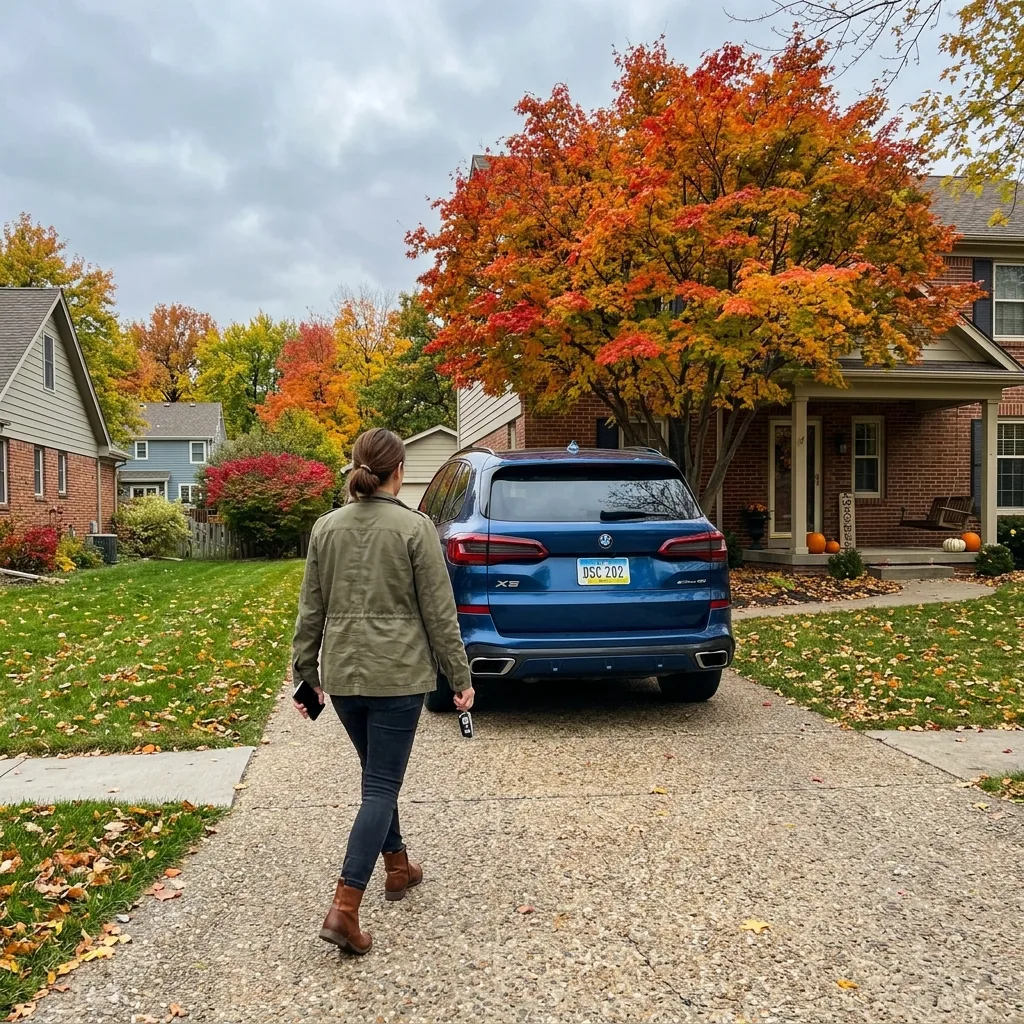
Rachel, Des Moines
Rachel is a cardiologist at one of the major Des Moines hospital systems. In early 2024 she replaced her aging family vehicle with a 2024 BMW X5 xDrive50e, list price $78,000. At the dealership she paid a $3,910 Fee for New Registration on top of the purchase price. Twelve months later her annual registration bill arrived: $798. She thought it was an error. After confirming with the Polk County treasurer that no, this was the standard formula, she ran the numbers forward. Five years of Iowa tax on the BMW would cost her $7,900. The Montana equivalent over the same period is $2,371. Rachel saved $5,529. “Nobody at the dealership mentioned the annual registration bill,” she said. “I thought the five percent was the tax. I had no idea there were two separate tax bills, and one of them was going to follow me for seven years.”
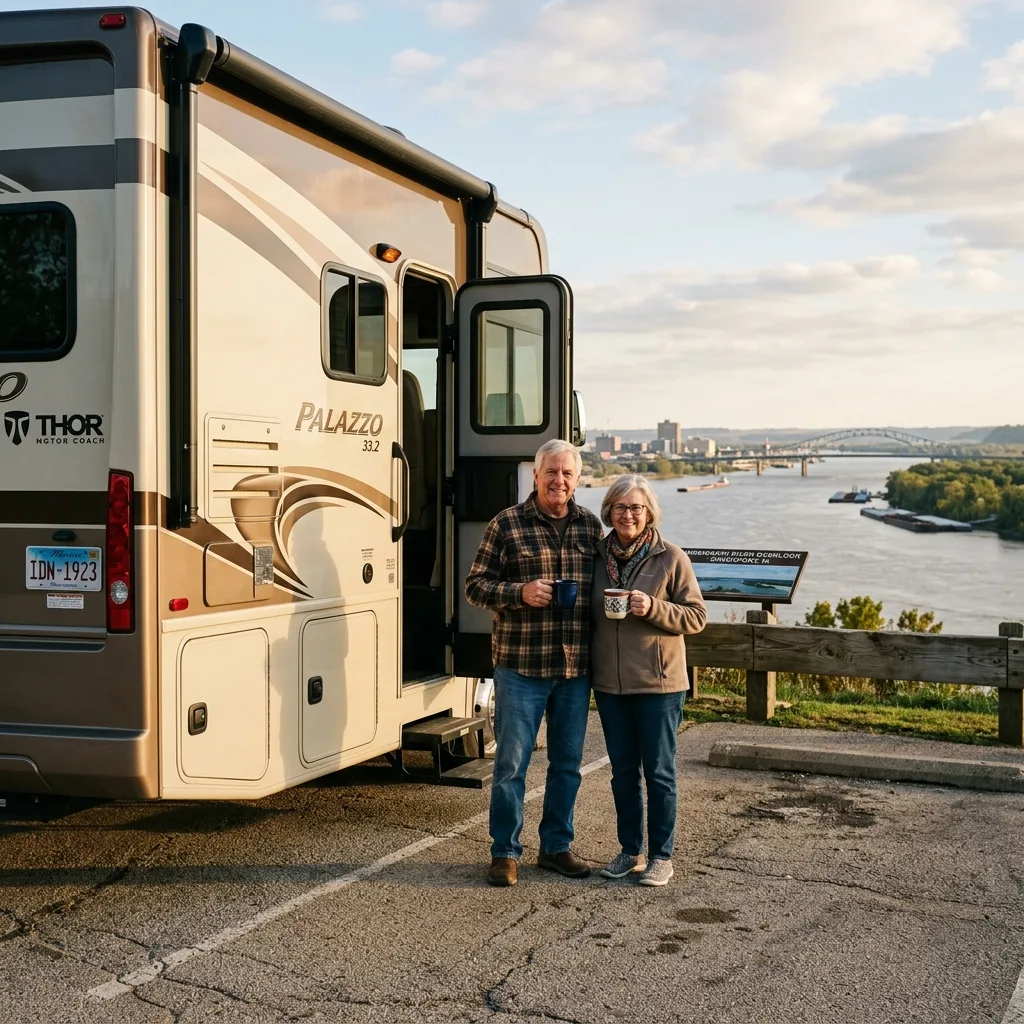
Dan and Susan, Davenport
Dan and Susan retired three years ago and bought a Thor Palazzo 33.5 Class A motor home, list price $245,000. They spend October through April in Arizona, May through September in Iowa and the upper Midwest. The Iowa Fee for New Registration on the Palazzo was $12,260 at first titling. Iowa’s annual Class A motor home rate of $400 added another $2,000 over five years, for a total Iowa cost of $14,260. The Montana equivalent across the same five years is $3,171, including the luxury surcharge that applies to RVs over $150,000 MSRP. Dan and Susan saved $11,089. Their multi-state usage pattern made the structure an obvious fit. The RV does most of its mileage in Arizona, New Mexico, and Texas. Iowa was extracting tax on a vehicle that spent half the year outside its borders.
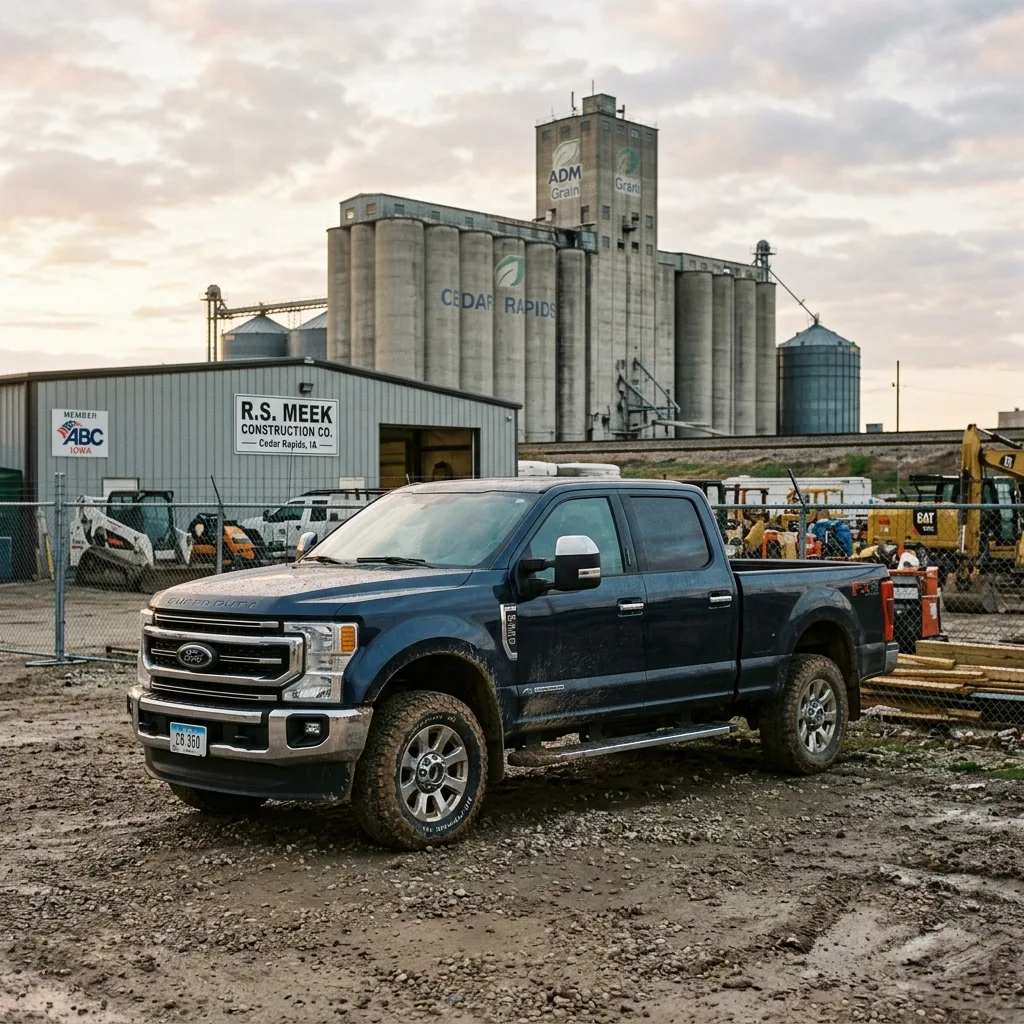
Marcus, Cedar Rapids
Marcus runs a residential remodeling business. In 2024 he replaced his work truck with a 2024 Ford F-350 King Ranch diesel, list price $72,000. Iowa hit him with a $3,610 Fee for New Registration at purchase. His annual registration bill landed at $743. Five-year Iowa total: $7,325. Montana five-year total: $2,371. Marcus saved $4,954 on the F-350 alone. Then he added his second work truck, a 2022 F-250, to the same Montana LLC. One LLC, two vehicles, one $200 formation fee paid once. The savings on the second truck rolled directly to his bottom line without any duplicate entity costs. For a contractor who bids tight margins on residential jobs, $5,000 of recovered annual cost flow is the difference between a hard year and a comfortable one.
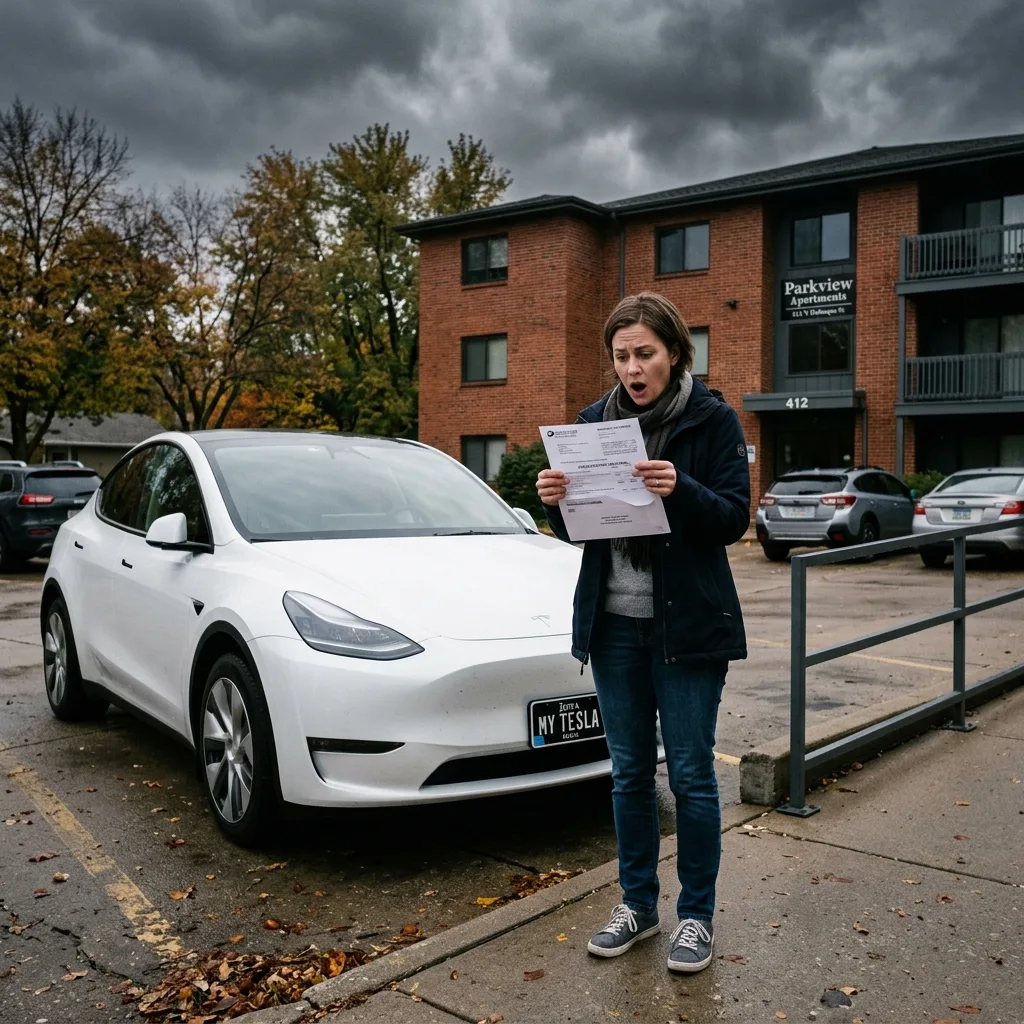
Jennifer, Iowa City
Jennifer is a software engineer who bought a 2024 Tesla Model Y Long Range, list price $52,000. She believed the EV was the environmentally responsible choice and assumed the state would treat it accordingly. Iowa charged her $2,610 in Fee for New Registration at purchase. Her annual registration arrived with the standard list-price tax plus a $130 EV surcharge, total $667 per year. Five-year Iowa total: $5,945. The Montana equivalent over five years is approximately $2,491, including Montana’s own $130 annual BEV fee for vehicles under 6,000 pounds. To be honest about it, Montana also charges an EV surcharge. The difference is that Montana stops there. Iowa stacks the surcharge on top of a list-price tax that Montana does not have. Jennifer saved $3,454. “The $130 EV surcharge felt like a penalty for going green,” she said. “Iowa wants me to drive electric and then punishes me for doing it.”
Who Benefits Most from Montana LLC Registration
Here are the owner profiles where the savings are most clear-cut, based on actual Zero Tax Tags client outcomes.
- Iowa luxury SUV owners ($65,000+ MSRP): Save $4,500 to $6,500 over five years on German and British SUVs that anchor the list-price formula at $650+ per year for seven straight years.
- Class A motor home owners: Save $9,000 to $14,000 over five years. The Iowa purchase fee alone on a $200,000+ rig exceeds $10,000.
- Diesel pickup contractors ($65,000+ trucks): Save $4,500 to $5,500 over five years per truck. Multi-truck operations multiply the savings under a single LLC.
- EV owners (Tesla, Rivian, Lucid, Polestar): Save $3,000 to $5,500 over five years even after accounting for Montana’s own BEV surcharge. The Iowa list-price tax is the dominant cost.
- Snowbird couples splitting time with Arizona or Florida: Save $5,000 to $11,000 over five years. The structure aligns the title with actual multi-state usage.
- Collectors of vintage performance vehicles: Save $4,000 to $8,000 over five years. Permanent Montana plates eliminate annual registration entirely on vehicles eleven years and older.
- Two-vehicle professional households: Save $8,000 to $13,000 over five years across both vehicles under a single shared LLC.
- Small business owners with company-titled vehicles: Save $4,500 to $7,000 over five years per vehicle, with clean separation between business and personal title structure.
How Zero Tax Tags Gets You Registered
You provide documents. We handle everything else. You never visit Montana, file paperwork with the Secretary of State yourself, or stand in line at a county treasurer’s office. The entire structure is handled remotely by people who do this every business day.
Pricing is fixed. The table below shows exactly what you pay.
One LLC covers every vehicle you ever register under it. The $200 LLC formation fee is paid once at the start of the relationship. After that, the LLC is yours for life, and additional vehicles roll in with no duplicate entity costs.
The timeline is fast. Most clients are holding a Montana plate in their hand inside a week.

| Day 1: | You submit documents. We review and file your Montana LLC the same business day. |
| Days 1–2: | LLC formation complete with the Montana Secretary of State. Same business day in most cases, Day 2 at latest. |
| Days 2–4: | Vehicle title transferred into the LLC name at the Montana county treasurer’s office. |
| Days 4–7: | Permanent Montana plates ship directly to your door. You are done. |
Who This Is Built For
The Montana LLC structure works best for owners who travel, own multiple vehicles, or hold vehicles whose value justifies the math. If you are buying any vehicle worth $25,000 or more in Iowa, the structure almost always pays for itself in the first eighteen months and continues paying for years afterward.
It works for the Des Moines surgeon with a luxury SUV and a weekend sports car. It works for the Cedar Rapids contractor running a two-truck fleet. It works for the retired couple in Davenport who bought a Class A motor home and spend half the year in Tucson. It works for the Iowa City software engineer who bought a Tesla and was blindsided by the EV surcharge. It works for the collector in Ames who finally pulled the trigger on a 1991 Porsche 964 and does not want to pay seven years of list-price tax before relief kicks in.
The only soft qualifier is mathematical. Vehicles under roughly $20,000 in MSRP produce smaller annual tax bills, which means the percentage savings remain strong but the absolute dollar gap narrows. If your vehicle sits in that range, call us anyway. We will run the specific numbers for you, free of charge, and tell you honestly whether the structure clears your break-even threshold. There is no obligation and no high-pressure follow up. We would rather lose a fit-check call than enroll a client who would have been better off paying the Iowa fee.
If you are buying a vehicle worth $25,000 or more, the math almost always works in your favor.
Frequently Asked Questions
Will Iowa flag my Montana plates?
Iowa cannot flag a properly registered out-of-state vehicle owned by a valid out-of-state legal entity. The vehicle belongs to a Montana LLC, and the Montana LLC owns the plates. Iowa has no jurisdiction over Montana corporate registrations. As long as the LLC is real, the title is real, and the registered agent is real, the structure operates exactly the way Montana state law contemplates.
Do I need to visit Montana?
No. The entire process is handled remotely by Zero Tax Tags. We file the LLC, maintain the registered agent address, handle the title transfer at the Montana county treasurer’s office, and ship the permanent plates directly to your home in Iowa. You will never set foot in Montana unless you happen to vacation there.
What happens when I sell the vehicle?
You sell the vehicle the same way you would sell any other titled vehicle. The LLC signs the title over to the buyer. If the buyer is in Iowa, they will register the vehicle in Iowa and pay the Iowa Fee for New Registration based on the sale price. That is their problem, not yours. The LLC simply transfers title and walks away. The LLC itself remains, ready to receive your next vehicle.
Can I insure a Montana-plated vehicle in Iowa?
Yes. Major insurance carriers including Progressive, State Farm, Allstate, Geico, and several specialty carriers all write commercial auto policies for vehicles titled to out-of-state LLCs. The policy is written to the LLC as the named insured with the principal operator listed. Premiums are typically very close to standard personal auto rates for the same vehicle and driver. We can refer you to brokers who write these policies daily.
Does this work for leased vehicles?
Generally no. Leased vehicles are owned by the lessor, not by you, which means you cannot transfer title into an LLC you control. This structure works for vehicles you own outright or finance through a loan, because in both cases you hold the title. If you are currently leasing and plan to buy out the lease, we can set up the structure at the moment of buyout so the title goes directly into the LLC.
How much does Zero Tax Tags charge?
Year 1 is $899 for cars, trucks, and SUVs under $150,000 MSRP. That $899 includes $200 for LLC formation and $699 for our full-service registration. Annual renewal is $270 to $370 per year, which covers registered agent fees, annual LLC reports, and Montana registration renewal. Luxury vehicles over $150,000 carry a one-time $825 Montana luxury fee in Year 1, bringing the total to $1,724. Vehicles eleven years and older qualify for a Montana permanent plate at a one-time cost of $899, with no annual renewal fee ever again.
Can I register multiple vehicles under one LLC?
Yes, and this is one of the cleanest features of the structure. The $200 LLC formation cost is paid once. Every additional vehicle you register under that same LLC pays only the Montana registration fee plus our service fee. No duplicate entity costs. A family with three vehicles is sharing one LLC across all three titles, which keeps the structure simple and the math compelling.
What if Iowa changes the law?
Iowa cannot change Montana law. The structure rests on Montana’s corporate framework and its registration system for Montana-titled vehicles. Iowa can adjust its own fees, raise the five percent purchase rate, or expand the EV surcharge, but it cannot reach across state lines to nullify Montana corporate filings. The Montana side has been stable for decades, and the legal precedent supporting interstate corporate structures runs back to the foundational years of the republic. Your structure stays intact regardless of what the Iowa legislature does.
See how Montana LLC helps owners in other high-tax states:
- Arizona VLT: How to Stop Paying $1,000 Every Single Year
- Virginia Car Tax: Stop Paying the Highest Vehicle Tax in America
- Kansas Vehicle Tax: The Johnson County Double Dip
- Maine Vehicle Tax: The MSRP Lock That Never Lets Go
Ready to Stop Overpaying Iowa Vehicle Tax?
Iowa vehicle owners have saved millions with Montana LLC registration. You’re next.