24 min read

On this page
- + The California penalty spiral
- • The immediate hit
- • The VLF multiplier
- • The smog check deadlock
- + Real penalty math by vehicle type
- + The real cost of waiting
- + The new resident 20-day trap
- + When the FTB comes knocking
- + Planned non-operation: the hidden trap
- + How they catch you
- + County fee variation
- + Real stories: three penalty scenarios
- + The Montana solution: a fresh start
- + The math: California vs. Montana
- + Is this legal?
- + How to get started
- + Frequently asked questions
- + Take your freedom back
California registration penalties can crush you. You know the feeling. It sits in the pit of your stomach every time you turn the key.

You check the rearview mirror constantly, not for safety, but out of fear. You skip the freeways. You take side streets. You park in the garage or back into the driveway so the plate isn’t visible to passing patrol cars. You drive at night when you can.
You are driving on expired tags.
If this sounds familiar, you aren’t a criminal. You aren’t irresponsible. You are one of the millions of Californians caught in the DMV Penalty Spiral, a system built with no grace period, automatic compounding, and zero hardship exceptions.
Maybe it started small. You missed the renewal deadline by a few weeks because rent was due. Then the first penalty hit. Then the second. Maybe your Check Engine light came on, and you couldn’t pass the smog check required to renew. A $300 registration fee ballooned into $500. Then $800. Then four digits with a comma in the middle.
A year or two later, you are staring at a bill for $1,500 or more. You can’t afford to pay it, but you can’t afford not to drive. You need the car to get to work to earn the money to pay the fees, but driving the car puts you at risk of losing it entirely. You feel trapped.
At Zero Tax Tags, we want you to know one thing: It is not your fault, and there is a way out. Below, you will find the exact penalty schedule the California DMV applies, real dollar examples for vehicles you actually own, and a legal escape route that thousands of Californians have already taken.
Registration penalties: the California DMV spiral designed to fail
The California DMV penalty system is unforgiving. Unlike a credit card bill or a utility payment where you might negotiate a payment plan or ask for a hardship extension, the DMV runs on a rigid, automated system of exponential punishment. There is no human to call. There is no supervisor who can wipe the late fees. The clock starts ticking the day after expiration, and the meter runs whether you knew about it or not.
The “immediate hit”
California has no grace period. None. The second your registration expires, you are technically delinquent. The DMV does not send a friendly reminder if you missed the renewal notice. They do not pause penalties because the notice was lost in the mail. They do not care if you were in the hospital. The system is automated, and it is brutal.
Source: California DMV Penalties schedule, current 2025-2026.
The “VLF” multiplier
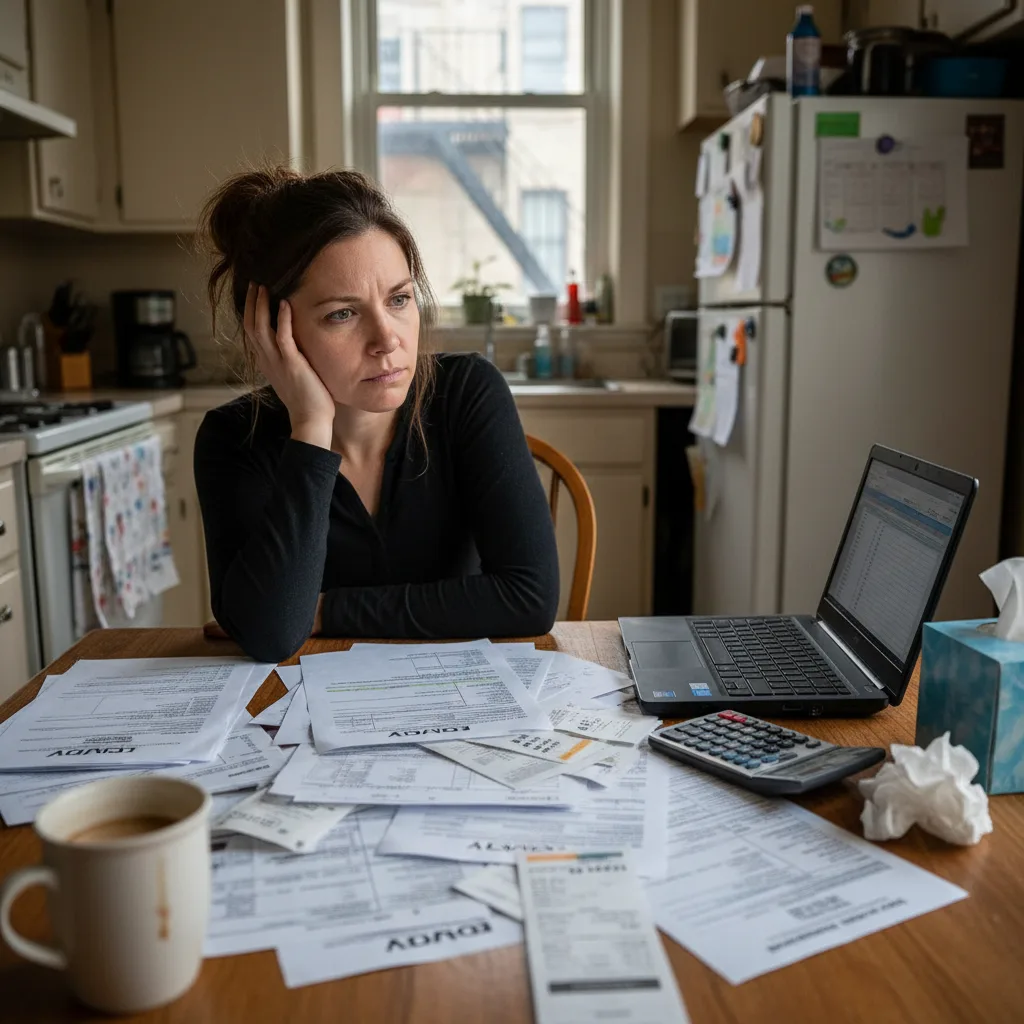
California registration is expensive because of the Vehicle License Fee (VLF), basically a property tax on your car based on its value. The VLF runs at 0.65% of vehicle value after a statutory 67.5% reduction from the nominal 2% rate. In Year 1, the DMV uses 100% of your purchase price. Each year after that, statutory depreciation knocks the value down until Year 11, when it stabilizes at 15% of your original purchase price.
When penalties kick in, they aren’t just flat fees. They are percentages of that high VLF. The more your car cost, the more brutal the penalty math becomes.
If you drive a newer truck or SUV, your base VLF might be $400. Once the late penalties max out at 160%, that single line item becomes $640 in penalties on top of the original VLF, plus $200 in flat fees, plus the entire current year and prior year registrations stacked together. The bill compounds in ways that catch people off guard every time.
The smog check deadlock
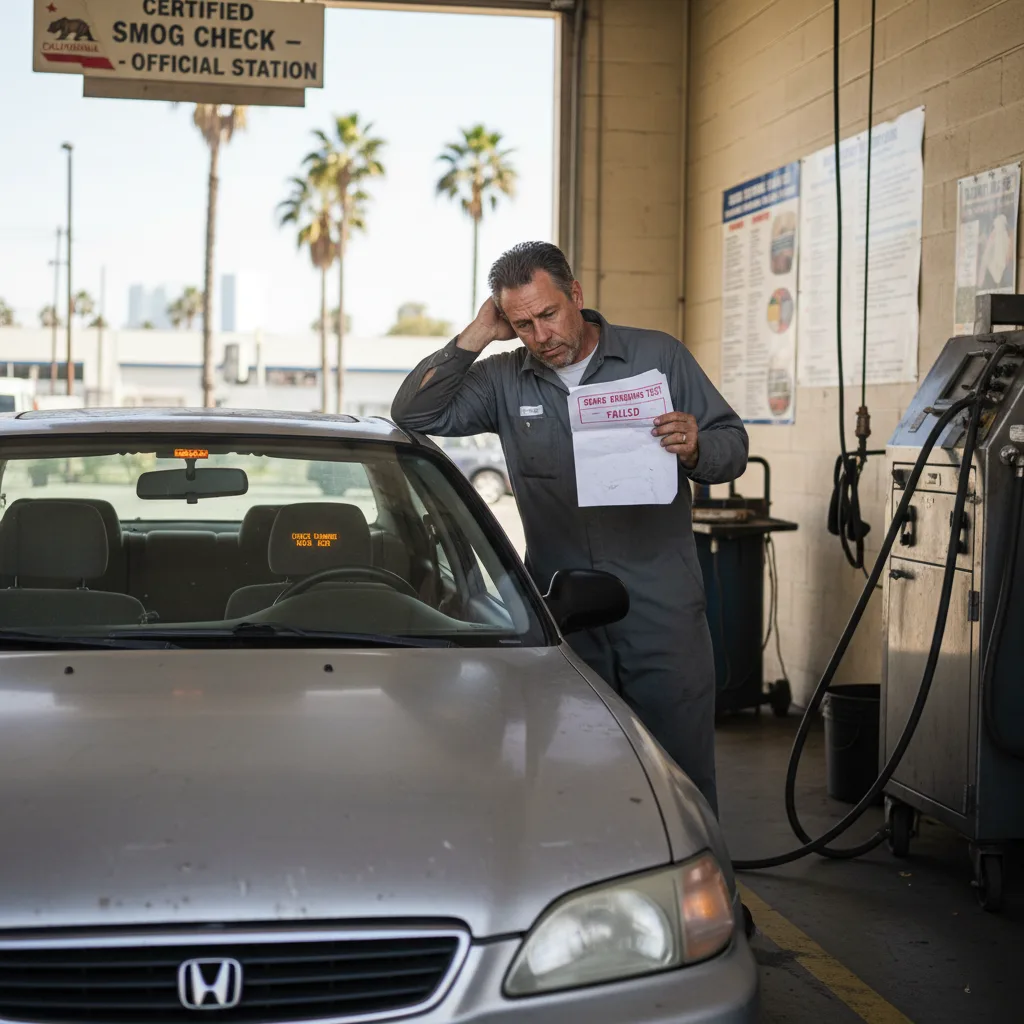
This is the most common trap we see. You go to renew your tags. The DMV says, “Smog Check Required.” Your car fails the smog check because of a catalytic converter issue or a bad sensor. The mechanic says it will cost $1,200 to fix the car so it can pass.
You don’t have $1,200. So you can’t renew. Because you can’t renew, the late penalties start stacking. Six months later, you finally save enough to fix the car, but now the DMV bill has doubled. The cycle keeps going until you give up.
It is a vicious cycle that keeps good people off the road or driving in fear.
Real penalty math by vehicle type
Generic warnings don’t move people. Specific dollar amounts do. Below are real penalty calculations for four common vehicle profiles, showing exactly what you owe at each stage of delinquency. The VLF figures use California’s statutory 0.65% rate against current depreciated value.
Scenario A: $32,000 Honda Pilot (4 years old)
Your VLF this year sits around $208. Look at what happens as you let it slide.
And remember, that $532.80 is just the penalty stack. You still owe two full years of registration on top of it. The total walk-up cost easily clears $1,000 once you account for the back registration owed.
Scenario B: $55,000 BMW X5 (3 years old)
The VLF lands at $358. The penalty curve is steeper because the underlying fee is bigger.
Scenario C: $95,000 Range Rover or Porsche Cayenne
This is where the system stops being annoying and turns financially abusive. Your VLF runs $617.50 in Year 1.
Scenario D: $145,000 Mercedes G-Wagon or Tesla Model X Plaid
Year 1 VLF reaches $942.50. Add a 160% maxed-out penalty and you’re looking at $1,508 in penalty alone. Combined with two years of stacked registration, the total walk-in tab clears $4,000 before you even start the smog repair conversation.
Reality check: The DMV is happy to let you walk away with a four-figure bill on a vehicle worth $30,000. The system was not designed to be fair. It was designed to be paid.
The real cost of “waiting it out”
People think, “I’ll just wait until I have the money.” But the California system is aggressive. It doesn’t wait for you to come to the counter. It comes after you, and it brings tow trucks, bank levies, and license plate cameras with it.
1. The risk of impound (CVC 22651(o))
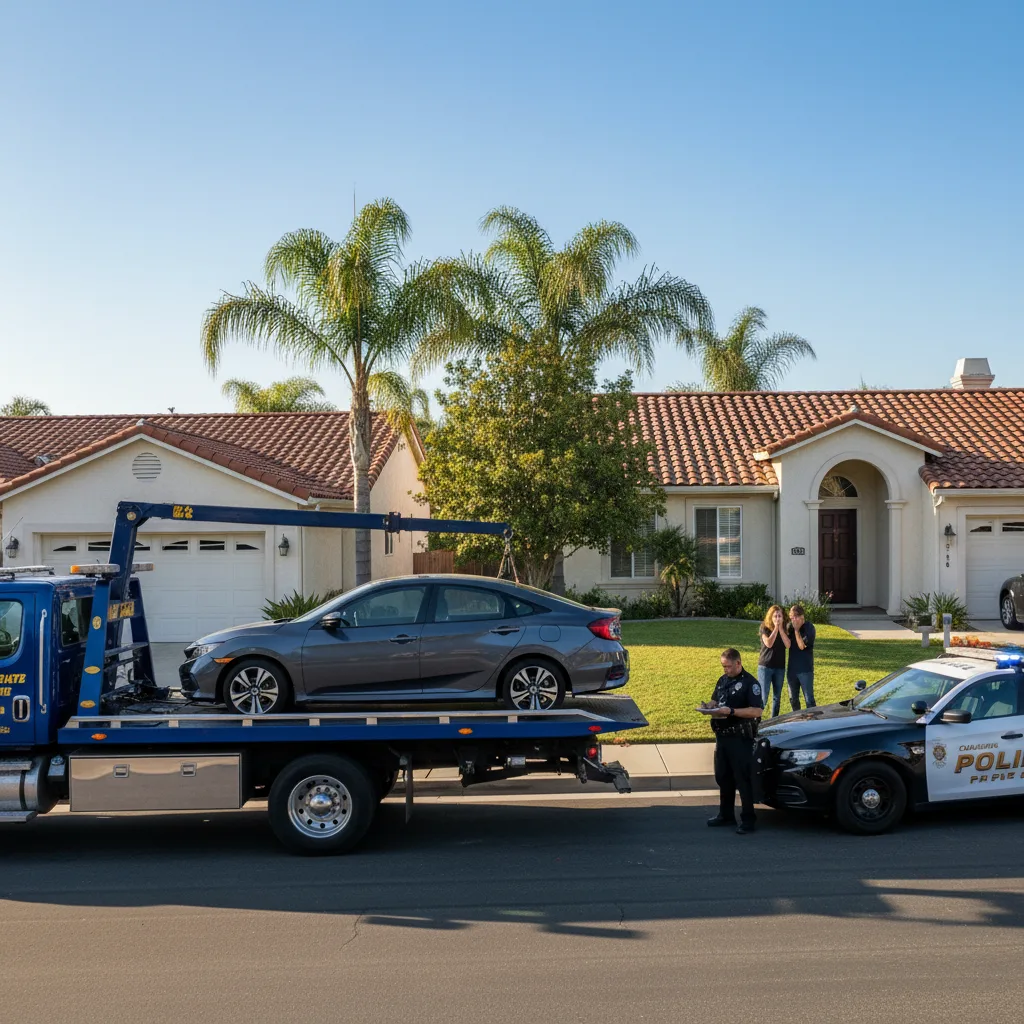
This is the nightmare scenario. Under California Vehicle Code 22651(o), if your registration has been expired for more than six months, police have the authority to tow and impound your vehicle immediately the moment they pull you over.
If this happens, the costs become catastrophic:
- Towing: $250 to $400
- Storage: $80 to $120 per day
- Release fee: $100+
- Back registration: you can’t get the car out until you pay every cent owed to the DMV
If you owe $1,500 to the DMV and your car gets towed, you’ll likely need $2,500+ in cash within 48 hours to get it back. If you can’t pay, the tow yard keeps the car, sells it at a lien sale, and you are left with no car and a debt that goes to collections.
2. The “unsellable” car
You decide to just dump the headache. You list the car on Craigslist or Facebook Marketplace. A buyer shows up, looks at the expired tags, and asks, “How much back registration is owed?” When you tell them it’s $1,800 in back fees, they walk away.
In California, the debt follows the car, not the driver. You cannot sell a car with back registration unless the buyer agrees to pay your debt (which they won’t), or you pay it off before the transfer. You’re stuck.
3. Insurance cancellation cascade
Most major insurers run periodic cross-checks on registration status. If your tags lapse for an extended period, your insurer may flag the vehicle as ineligible for coverage. Now you are uninsured and unregistered. Get pulled over in that state, and the citations stack: registration violation, no proof of insurance, and depending on the officer, a tow under CVC 22651(p).
The new resident 20-day trap
If you just moved to California from Texas, Nevada, Arizona, or anywhere else, here is something the welcome packet does not mention. You have 20 days to register your vehicles in California after you become a resident. Twenty. Not 30. Not 60. Twenty.
And the definition of “resident” is broader than you think. The DMV considers you a California resident if you do any of the following:
- Apply for a California driver’s license
- Register to vote in California
- Accept a job in California
- Enroll your children in a California public school
- Rent or purchase a residence with the intent of staying 6+ months in any 12-month period
- File for a homeowner’s property tax exemption
The DMV cross-references all of these data sources. They know when you start a job because of EDD payroll filings. They know when your kids enroll in school because of state education databases. They know when you register to vote because the Secretary of State shares the list. The 20-day clock starts the day you trip any of these wires, whether you realized it or not.
The trap: You moved from Phoenix in March. You started a remote job for a California-based company in April. You got your CA license in June because the bank wanted it. By June, you have already missed the 20-day window by roughly 60 days. You are now in the penalty system, even if you have never seen a renewal notice.
For a $45,000 SUV transferring in from another state, the new-resident penalty math typically looks like this. Full California registration ($350 to $450 in most counties), VLF based on current value ($292), use tax of 7.25% to 10.75% on the vehicle’s current market value ($3,200 to $4,800 depending on county), plus the tiered late penalties on top. The bill on a single SUV can cross $5,000 simply because you waited too long to walk into the DMV.
For owners moving from no-tax states, the use tax alone is often the moment people start looking for alternatives. A Montana LLC structure is set up before the move, and the vehicle never enters the California registration system in the first place.
When the FTB comes knocking
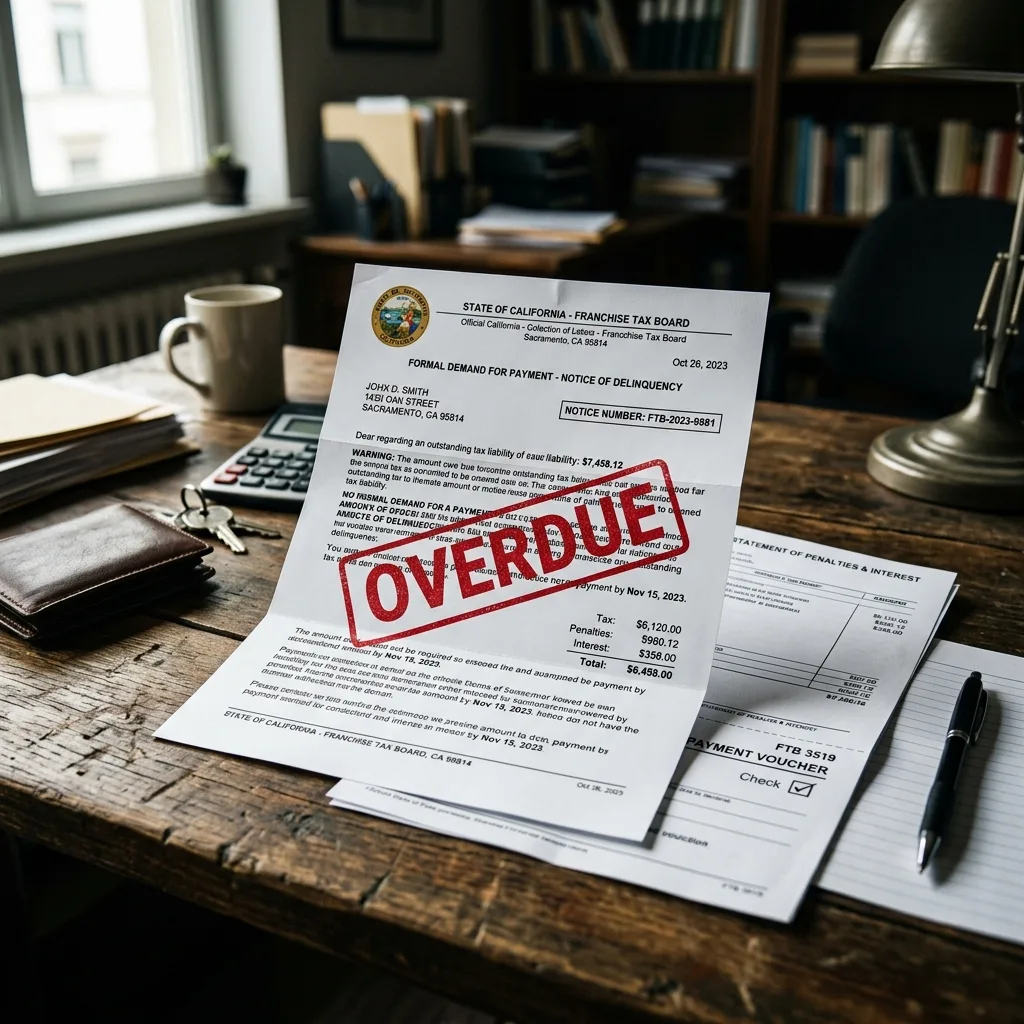
Here’s what most people don’t know about California DMV debt. The DMV does not collect on its own once you go significantly delinquent. After roughly 90 days of nonpayment, your file gets handed to the California Franchise Tax Board (FTB) Vehicle Registration Collections unit.
The FTB is the same agency that collects state income tax. Same enforcement powers. Your DMV bill stops being a parking-ticket-style annoyance and turns into tax debt.
What the FTB can actually do
- Wage garnishment: the FTB can take a percentage of every paycheck. California updated garnishment limits effective September 1, 2023, but the FTB still has authority to pull a meaningful slice of your earnings until the debt is satisfied.
- Bank levies: the FTB can issue an order to your bank that freezes your account and sweeps the balance up to the amount owed. You find out when your debit card declines at the grocery store.
- Tax refund offsets: expecting a refund this year? The FTB will intercept it and apply it to your DMV debt before you ever see the money.
- Credit reporting: FTB collections activity can show up on credit reports through public records databases, even though the DMV bill itself was never a credit account.
The cruel twist: Once your debt is at the FTB, you cannot pay it online through the DMV portal. You have to mail payment directly to the FTB Vehicle Registration Collections unit, or pay in person at a DMV or AAA office. The system is built to be inconvenient enough that people give up and let the wage garnishment ride.
Once your file is in FTB collections, getting the lien released after payment can take 30 to 60 days. During that window, the DMV will not issue you a new registration. You sit and wait while the bureaucracy catches up.
Planned non-operation: the hidden trap
You may have heard about Planned Non-Operation (PNO) status as a workaround for the penalty problem. The pitch sounds great. Pay just $28 instead of full registration, and tell the DMV your vehicle won’t be driven this year. Done.
The reality is messier, and the rules contain trapdoors that most people fall through without realizing.
The strict PNO rules
- File PNO on or before the expiration date. One day late and the full penalty schedule already applies on top of the $28.
- File 1 to 90 days after expiration, and PNO status is still possible, but you owe the $28 plus all standard late penalties against the VLF.
- Past 90 days, PNO is no longer an option. You owe full registration plus every penalty in the schedule. No escape hatch.
The “cannot drive or park” rule
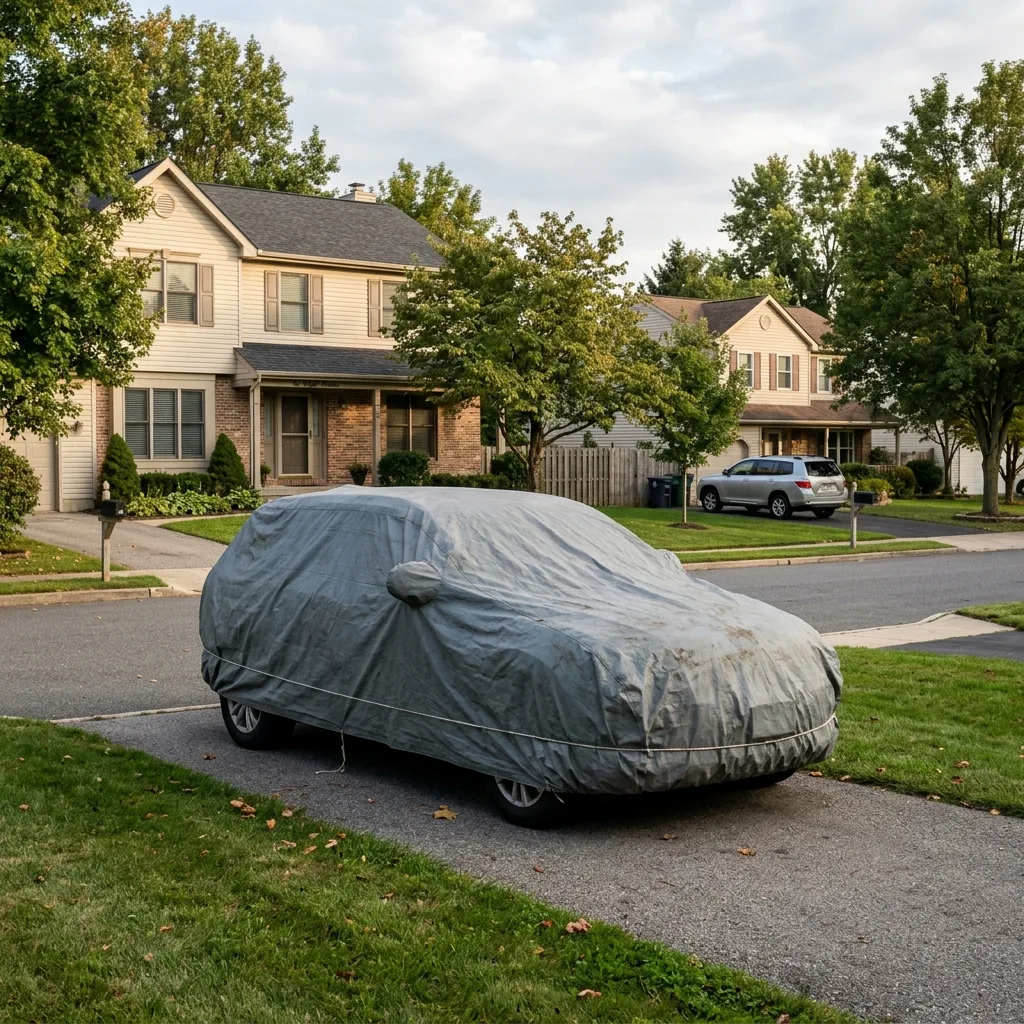
This is the part that catches people. While your vehicle is in PNO status, it cannot be driven, towed on its own wheels, stored, or even parked on any public street, road, alley, or highway. The vehicle has to live entirely on private property. A garage. A driveway. A fenced yard.
If a parking enforcement officer spots the vehicle on the street, even parked legally, the PNO status can be canceled retroactively. Now you owe full registration, all stacked late penalties from the original expiration date, and possibly the parking citation. People in apartments without dedicated parking spots cannot use PNO at all.
The PNO trap in practice: You file PNO on your project car because you can’t afford registration. Your neighbor reports the car as parked too long on the street. The city tickets you. The DMV cancels your PNO. You now owe $1,400 in back fees and penalties on a car that has not moved in eight months.
PNO is genuinely useful for collectors with garages and farm property owners who store vehicles long-term. For everyone else, it is a paper-thin solution that often makes the eventual bill worse.
How they catch you
You may think you can fly under the radar by avoiding freeways and parking carefully. The state has multiple detection systems running at the same time, and most of them don’t require a human officer to look at your plate.
License plate reader networks
Automated License Plate Readers (ALPR) sit on patrol cars, fixed at intersections, on toll bridges, in parking garages, and on private repossession vehicles cruising apartment complexes. They scan thousands of plates per hour and instantly cross-check each one against DMV databases. An expired plate triggers an alert. The officer pulls in behind you before you have any idea you’ve been flagged.
Insurance database cross-checks
California requires liability insurance to be maintained continuously. Insurers transmit policy data to the DMV. When your insurer cancels or non-renews, the DMV gets the notice. When you try to renew registration, the DMV sees the gap and either denies the renewal or requires SR-22 filings before processing.
Toll violation holds
Run a FasTrak gantry without an active transponder, and the system bills the registered owner. Ignore the bill, and the toll authority refers the debt to the DMV. The DMV then puts a registration hold on the vehicle. Even if you eventually pay back registration in full, you can’t complete the renewal until the toll debts are settled too.
Parking citation holds
Same mechanism. Five unpaid parking tickets from Los Angeles equals a registration hold. The DMV will not process renewal until each ticket is paid plus the city’s late fees added on top.
Smog referee and visual inspection programs
BAR (Bureau of Automotive Repair) referee stations and roadside inspection programs target older vehicles with histories of failed smog checks. If your vehicle is on the watch list and you let registration lapse, the next routine encounter triggers escalated enforcement.
The combined effect: Even if you avoid driving, the integrated detection grid catches most expired registrations within 6 to 12 months. The “wait it out” strategy almost always loses to the database eventually.
County fee variation: where you live matters
Two identical vehicles can have meaningfully different California registration totals depending on which county the owner lives in. County and district fees stack on top of state-level fees. Southern California counties consistently charge the most.
The difference between an LA County registration and a Modoc County registration on the same vehicle can run $40 to $60 per year in straight fees, before you factor in the difference in use tax on a sale. That gap widens dramatically once penalties begin compounding because penalty fees are calculated against the local total.
Real stories: three penalty scenarios
We hear stories every day from people drowning in this system. Three patterns repeat constantly.
The six-months-late SUV owner
David, a sales rep in Riverside, owns a paid-off 2021 Cadillac Escalade he bought used for $65,000. His tags expired in October. By April, he is six months delinquent. His VLF is roughly $423. Current registration owed: $74 base + $34 CHP + ~$45 county fees = $153. Add the 60% VLF penalty ($253.80), the $30 late registration penalty, and the $30 late CHP penalty. His total walk-up cost lands at roughly $466.80 just to get current, and that doesn’t include the prior-year unpaid registration he also owes. Real total: closer to $620. He kept driving the Escalade for those six months because he commutes 50 miles each way and couldn’t afford to take a week off work to figure it out. One ALPR ping on the 91 freeway is all it would have taken.
The new resident from Phoenix
Jessica accepted a remote engineering job for a Bay Area startup in February. She kept her Arizona plates because she was “still figuring out” whether she would stay. By August, she had a California driver’s license (the bank required it for the mortgage), a California gym membership, and her kids enrolled in a Mountain View elementary school. The 20-day registration clock had expired in February. When she finally walked into the Mountain View DMV in September to register her 2022 Lexus RX 350 and her husband’s 2019 Toyota 4Runner, the bill came to $7,840 across both vehicles: full registration on each, full VLF, use tax on both vehicles at 9.125%, and the maxed-out late penalty schedule. She had no idea she’d been delinquent the entire time.
The insurance-cancellation cascade
Marcus, a freelance graphic designer in Long Beach, had his auto insurance lapse for three months in 2024 because of a billing dispute. His insurer cleared the issue, but the gap was reported to the DMV. When his registration came up for renewal in early 2025, the DMV system flagged the insurance gap and refused to process the renewal until SR-22 filings were submitted. Marcus didn’t know that. He thought the renewal was just slow. By the time he figured out why his sticker never arrived, he was 5 months late, owed $385 in back registration plus penalties, and had to pay his insurer for an SR-22 filing on top. Total damage: $620 plus 90 days of stress.
The solution: a fresh start in Montana
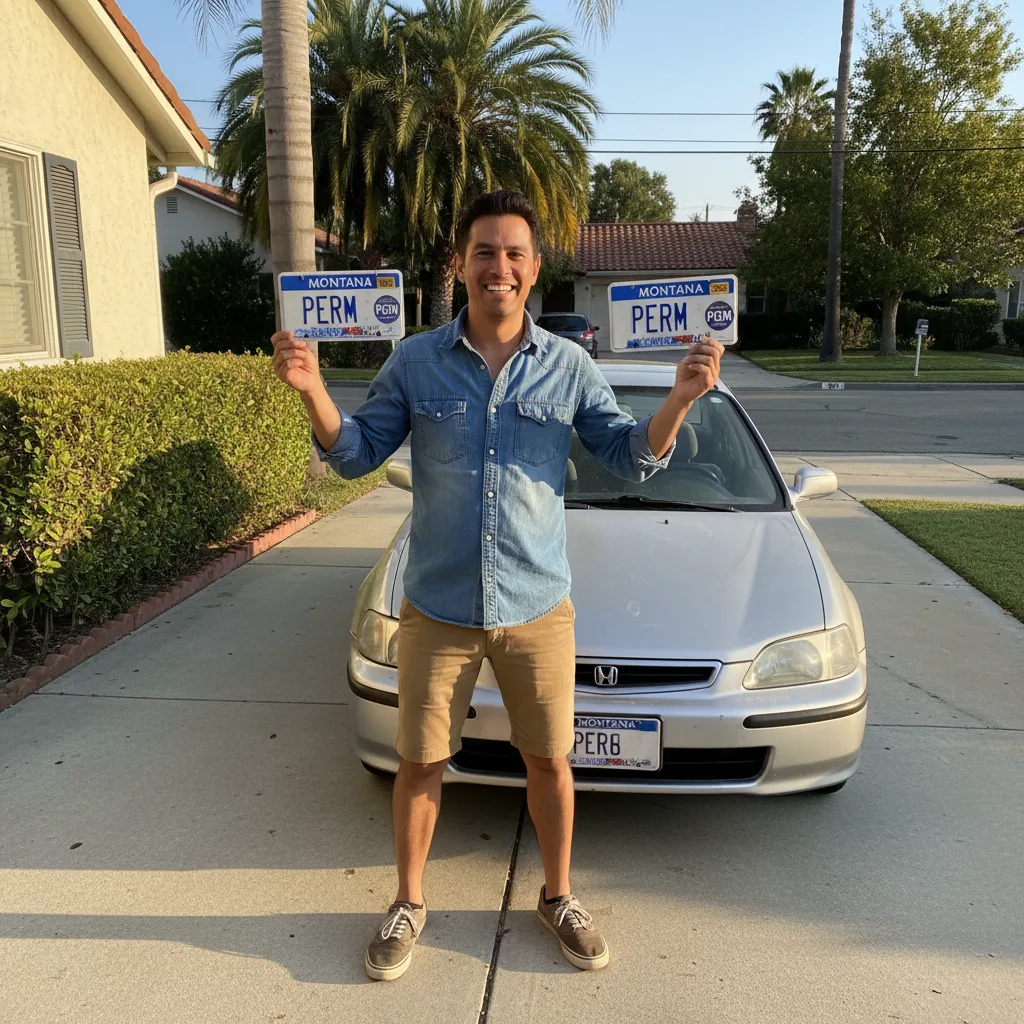
If you are reading this and your heart rate is spiking, take a breath. There is a legal, effective solution that stops the bleeding instantly.
You don’t have to pay the California penalties. You don’t have to pass a California smog check. You don’t have to hide your car anymore.
The solution is registering your vehicle in Montana with a Limited Liability Company (LLC) through Zero Tax Tags.
How it works: the “bankruptcy” for your car tags
Think of this process like declaring bankruptcy on your vehicle’s registration debt. When you file for bankruptcy, you wipe the slate clean to get a fresh start. Registering in Montana does the same thing for your car.
- We form a Montana LLC for you. You don’t have to live in Montana. We create a legal entity that you own 100%.
- The LLC buys your car. On paper, you transfer ownership of your vehicle to your new Montana LLC.
- Fresh registration. Since the LLC is a Montana resident, the vehicle is registered in Montana.
- No debt transfer. Montana doesn’t care about your California debt. You’re starting over from $0.
Why this saves you
1. Escape the penalty spiral. The moment your car is registered in Montana, you are done with the California DMV for that vehicle. That $2,000 bill? You don’t pay it to register in Montana. Clean slate.
2. No smog checks, ever. Montana doesn’t require emissions testing. If your car has a stubborn “Check Engine” light that prevents renewal in California, it doesn’t matter in Montana.
3. Permanent plates (the golden ticket). If your vehicle is 11 years or older, Montana offers Permanent Registration. You pay the registration fee once. You get a license plate sticker that says “PERM.” You never renew again.
4. Significantly lower costs. Even for newer cars, Montana registration fees are generally lower than California’s. Plus, Montana has 0% sales tax on vehicles, no annual VLF property-tax-equivalent, and no county-level add-on stack.
The math: California vs. Montana
Scenario: You own a 2012 Chevy Tahoe. Your tags have been expired for 18 months. You also need a smog check, but the sensor is broken ($400 repair).
With the Montana route, you aren’t just saving money today. You’re saving money forever. You’re breaking the cycle of annual payments that keep you broke.
Zero Tax Tags pricing snapshot
- Year 1: $899 total ($699 service + $200 LLC formation)
- Vehicles 0-4 years old (annual renewal): $268 state fee + $100 ZTT filing = $368/year
- Vehicles 5-10 years old (annual renewal): $137 state fee + $100 ZTT filing = $237/year
- Vehicles 11+ years old: permanent plates, no annual renewal
For an older vehicle eligible for permanent plates, the only ongoing cost is the $100 annual ZTT registered agent filing. There’s no VLF, no smog cycle, no county add-on, and no penalty schedule waiting to ambush you in 18 months.
Is this legal? (Addressing the elephant in the room)
This is the most common question we get. “Is this a scam?” “Is this legal?”
It is 100% legal to form an LLC in Montana. It is 100% legal for a Montana LLC to own a vehicle. It is 100% legal for that vehicle to be registered in Montana.
Thousands of Americans, from RV owners to classic car collectors to everyday drivers, use Montana LLCs to manage their assets. It is a recognized legal structure used by Fortune 500 companies, real estate investors, and asset protection attorneys for decades.
The “California resident” nuance: California has strict laws (CVC 4000.4) stating that if you are a resident, vehicles you own should be registered there. However, the LLC owns the vehicle, and the LLC is a resident of Montana. For many people, this is a matter of survival. The choice isn’t between “California Plates vs. Montana Plates.” The choice is between “Driving a car with Montana plates vs. Having no car at all because it was impounded.”
The most common practical use case is for vehicles that genuinely operate across multiple states: snowbirds, traveling consultants, RV owners who tour nationally, classic car collectors with vehicles housed in storage facilities, and small business owners with fleet vehicles. The Montana LLC structure has been a recognized vehicle ownership tool since the 1990s.
How to get started (it’s easier than you think)
You might be thinking, “I don’t know how to start a company. That sounds complicated.” That’s why Zero Tax Tags exists. We handle the paperwork. We deal with the Montana DMV. You just provide the information.
| Step 1: | Place your order. Visit our website. Choose the package that fits your needs. |
| Step 2: | Send us your title. We need the title to transfer ownership to your new LLC. |
| Step 3: | We do the heavy lifting. We file the LLC, obtain the Tax ID (EIN), and handle the Montana DMV. |
| Step 4: | Receive your plates. Montana license plates and registration arrive in your mailbox. |
| Step 5: | Drive with confidence. Screw on the new plates. Drive past a police officer. You are legal. |
Frequently asked questions
Q: Can I get insurance with Montana plates?
A: Yes. Most major insurance carriers will insure a vehicle registered to a Montana LLC. You list the LLC as the owner and yourself as the primary driver. Progressive, Geico, State Farm, and Nationwide all routinely write policies on LLC-owned vehicles.
Q: Does this clear my debt with California?
A: Registering in Montana stops the debt from growing and lets you drive legally. The old debt with California is technically still tied to your file, but California cannot impound a car with valid Montana registration for California back taxes. You have separated the debt from your ability to drive.
Q: My car is a 2005. Can I really get permanent plates?
A: Yes. Any vehicle 11 years or older qualifies. You pay for registration one time with us, and never pay a renewal fee again as long as the LLC owns the car.
Q: Can I do this if I have a lien/loan on my car?
A: It is harder if you have a loan because the bank holds the title. This service works best for vehicles that are paid off. If you have a loan, contact us to discuss your specific situation.
Q: What about the FTB collections action against me personally?
A: The FTB collection action is tied to your existing California vehicle file. Registering a different vehicle in Montana does not erase a pre-existing FTB lien on a separately-titled vehicle. We can help you structure the transition so that the Montana-registered vehicle is fully insulated from the California debt going forward.
Q: How long until my Montana plates arrive?
A: Typical turnaround is 2 to 3 weeks from the date we receive your title. We can issue you a temporary trip permit for the interim period so you have legal documentation in the car if you are pulled over.
Q: Will my insurance go up?
A: For most clients, the insurance rate is comparable to what they were paying with California plates. Some clients see slight reductions because of Montana’s lower-risk underwriting territory.
Conclusion: escape registration penalties, take your freedom back
Registration penalties from the California DMV feel like a shakedown. The system punishes the people who are struggling the most. It turns a temporary financial hardship into a permanent roadblock. It pulls in the FTB, the tow yards, the toll authorities, and parking enforcement until your one missed payment becomes a five-figure problem.
You don’t have to accept that. You don’t have to park your car around the corner. You don’t have to sweat every time you see flashing lights.
By forming a Montana LLC with Zero Tax Tags, you take control of your situation. You choose a legal, affordable path to get back on the road and stay there.
Imagine checking your mailbox and finding a set of shiny, valid license plates. Imagine the relief of knowing you won’t be towed. Imagine keeping that $2,000 in penalties in your own pocket for groceries, rent, or your family.
Ready to Stop the California Penalty Spiral?
California vehicle owners have saved millions with Montana LLC registration. You’re next.
Don’t let the DMV crush you. Break the spiral.
Visit ZeroTaxTags.com today and start your fresh registration.